Walmart Demand Forecasting Estimator
How Walmart Predicts What You'll Buy
Based on the article: Walmart's AI analyzes weather, local events, and historical sales to optimize inventory. Enter your data to see predicted demand.
Estimated Demand
Predicted sales increase: 0%
Recommended adjustment: 0 items
Walmart doesn’t just sell groceries and electronics-it runs one of the most complex retail machines on the planet. With over 10,500 stores in 19 countries and more than 2 million employees, keeping everything running smoothly takes more than human effort. That’s where AI comes in. Walmart uses artificial intelligence not as a flashy experiment, but as a daily tool to fix real problems: out-of-stock shelves, delivery delays, wasted food, and long checkout lines.
AI That Knows What’s on the Shelf
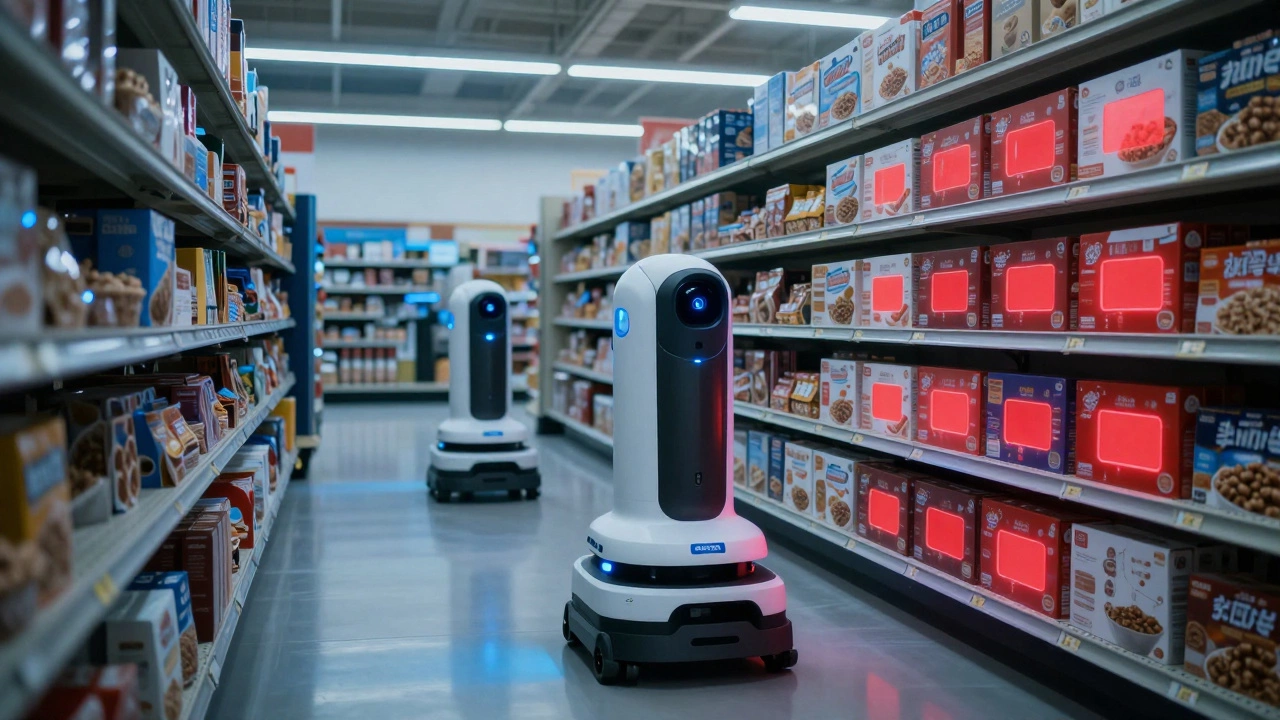
Picture this: It’s 3 p.m. on a Saturday. A customer walks into a Walmart store looking for their favorite cereal. They check the aisle-empty. This happens more often than you think. Walmart’s AI-powered shelf-scanning robots, called Astra, roll through aisles every night after closing. These robots use cameras and computer vision to scan every shelf, checking for missing items, misplaced products, or incorrect price tags. They don’t just report problems-they send alerts directly to floor staff with exact locations. In 2024, this system reduced out-of-stock items by 16% in tested stores. That’s not a small win. It means fewer frustrated customers and more sales.
AI That Predicts What You’ll Buy
Walmart’s online store handles over 1 billion visits a month. To serve that traffic, they use AI to predict what people will buy next. Their system, built on top of deep learning models, looks at past purchases, weather, local events, even traffic patterns. If a heatwave hits Texas, the AI doesn’t just boost AC unit stock-it also ups inventory on bottled water, fans, and sunscreen in nearby stores. It even suggests which products to move to front-of-store displays based on what’s trending in social media posts from that region. This isn’t guesswork. In 2025, Walmart reported that AI-driven demand forecasting cut overstock by 22% and improved inventory turnover by 18%.
AI That Runs the Backroom
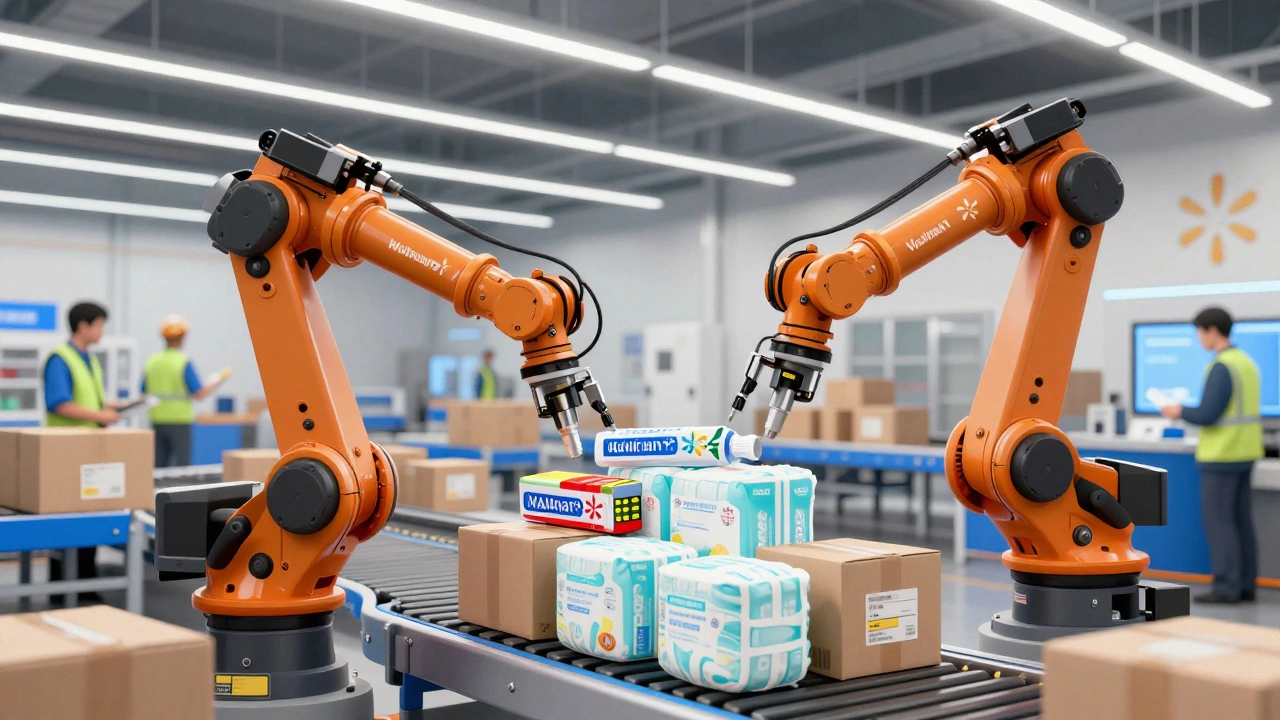
Behind every Walmart store is a warehouse that never sleeps. AI controls how items move from trucks to shelves. In 2023, Walmart rolled out AI-powered robotic arms in its distribution centers to pick and pack online orders. These arms can identify a toothpaste tube, a pack of batteries, or a baby diaper by shape and label-no barcodes needed. They work 24/7, picking up to 1,000 items per hour with 99.5% accuracy. In one Texas facility, this system reduced packing time by 40% and cut labor costs by 30%. The AI doesn’t replace workers-it helps them. Staff now focus on quality checks and handling fragile items, while robots do the heavy lifting.
AI That Cuts the Line
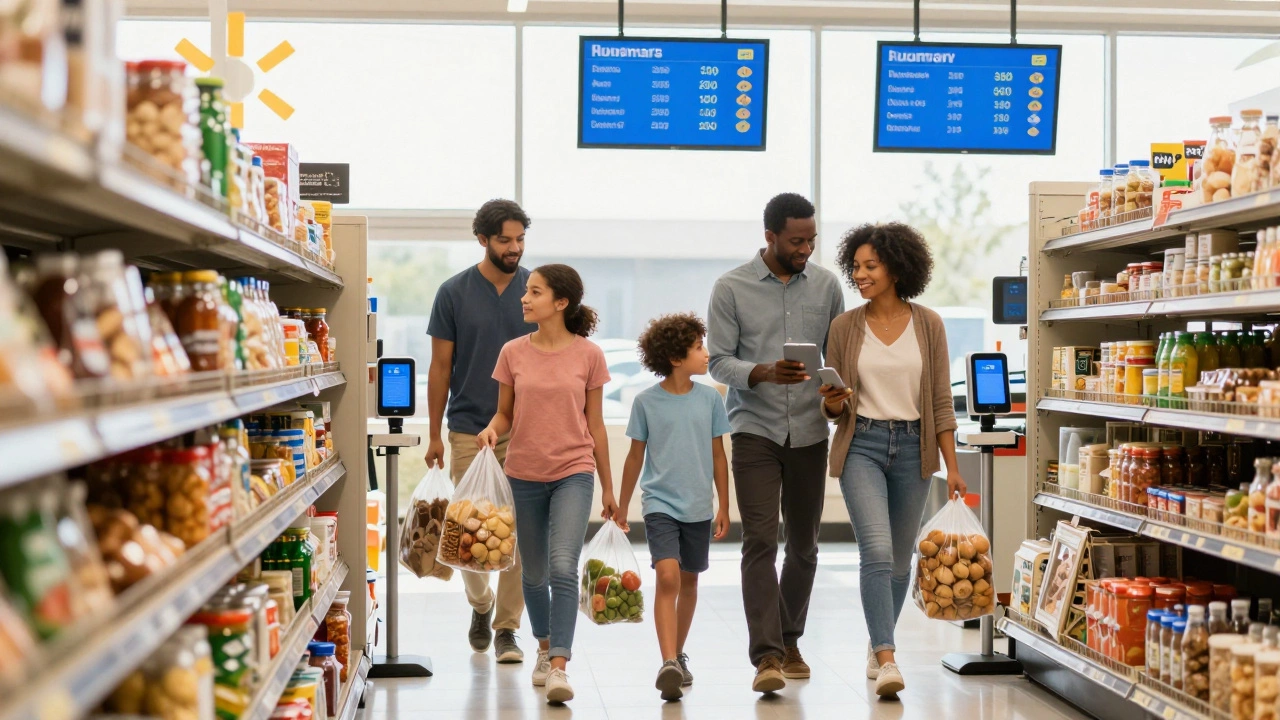
Long checkout lines? Walmart’s solution: Scan & Go and Just Walk Out. Scan & Go lets customers use their phones to scan items as they shop, then pay without waiting. But the real breakthrough is Just Walk Out, a system borrowed from Amazon but customized for Walmart’s scale. Using cameras, weight sensors, and AI tracking, the system knows exactly what you pick up. When you walk out, your card gets charged automatically. No app needed. No scanning. No lines. In pilot stores in Arkansas and Florida, customers spent 30% more time shopping because they weren’t stuck waiting. Walmart plans to expand this to 100 stores by the end of 2026.
AI That Stops Food Waste
Every day, Walmart throws away tons of perishable food. But AI is changing that. Their system, called WasteWise, uses machine learning to predict which fruits, veggies, and dairy items are likely to spoil before they’re sold. It looks at sales history, shelf life, temperature logs, and even how long items have been on the shelf. Then it alerts managers to discount those items before they go bad. In 2024, this system helped reduce food waste by 28% in U.S. stores. That’s not just good for the planet-it’s good for profits. Stores now donate unsold but still-safe food to local food banks, and the AI tracks donations for tax credits.
AI That Talks to Customers
Walmart’s customer service chatbot, powered by generative AI, handles over 15 million inquiries a month. It answers questions about returns, store hours, product availability, and even how to cook a turkey. Unlike older bots that repeat scripted answers, this one understands context. If you say, “I bought this blender last week and it’s broken,” the AI pulls up your receipt, checks the warranty, and offers a replacement or refund-all without human help. It works in English, Spanish, and even some regional dialects. The system has cut customer service costs by 35% and improved satisfaction scores by 22%.
AI That Optimizes Delivery
Walmart delivers over 10 million packages a week. To make it fast and cheap, they use AI to plan delivery routes. The system considers traffic, weather, package size, delivery windows, and even how long it takes to park and walk to a house. In 2025, they launched a pilot where AI assigned delivery routes to drivers in real time. One driver in Ohio went from 32 deliveries a day to 48-without working longer hours. The AI also predicts which neighborhoods will need extra delivery slots on holidays, like Thanksgiving or Christmas Eve. This means fewer missed deliveries and more on-time arrivals.
Why Walmart’s AI Isn’t Just for Tech Fans
Walmart’s AI isn’t about robots taking over. It’s about making everyday shopping easier, cheaper, and less wasteful. It helps a single mom find her kid’s favorite snacks without walking three aisles. It helps a farmer in Iowa get paid faster because AI matched his truckload of potatoes to the right store. It helps a store manager sleep better knowing her shelves won’t go empty. Walmart doesn’t need to be the most high-tech company in the world. It just needs to be the most reliable. And AI? It’s the quiet engine making that happen.
Does Walmart use AI in its online store?
Yes. Walmart’s online store uses AI for demand forecasting, personalized recommendations, fraud detection, and dynamic pricing. The system analyzes billions of data points-from weather patterns to local events-to predict what customers will buy next. This helps reduce out-of-stock items and ensures faster delivery times.
How does AI help Walmart reduce food waste?
Walmart’s AI system, called WasteWise, predicts which perishable items are likely to spoil before they’re sold. It uses data like shelf life, temperature logs, sales trends, and how long items have been on display. Managers then get alerts to discount those items or donate them to food banks. In 2024, this cut food waste by 28% across U.S. stores.
Are Walmart’s cashierless stores available everywhere?
No. Walmart’s Just Walk Out technology is still in pilot mode, currently tested in a handful of stores in Arkansas and Florida. Unlike Amazon Go stores, Walmart’s version doesn’t require an app-customers just walk out and are charged automatically. Full rollout is planned for 100 stores by late 2026.
Do Walmart’s AI robots replace human workers?
Not really. Walmart’s AI tools are designed to assist employees, not replace them. Shelf-scanning robots free up staff from manual inventory checks. Robotic arms in warehouses handle repetitive picking tasks, so humans can focus on quality control and customer service. In distribution centers, workers now oversee AI systems instead of lifting heavy boxes all day.
How accurate is Walmart’s AI in predicting demand?
Walmart’s AI models predict demand with over 90% accuracy in most tested categories. The system improves over time by learning from real-world sales, weather data, local events, and even social media trends. In 2025, stores using AI-driven forecasting saw a 22% reduction in overstock and a 18% increase in inventory turnover.
Can AI help Walmart lower prices?
Yes. By reducing waste, cutting labor costs, and improving supply chain efficiency, AI helps Walmart lower its operating expenses. These savings are often passed on as lower prices. For example, better inventory forecasting means fewer markdowns on expired goods, and automated warehouses mean lower shipping costs. In 2024, Walmart lowered prices on over 2,000 everyday items, partly thanks to AI-driven efficiency.