Nanotech & Emerging Tech Explorer
Select a technology sector below to view its current status, key advantages, and real-world applications as of 2026.
Carbon Nanotubes (CNTs)
Early CommercialReplacing silicon in high-performance computing. CNTs conduct electricity better and generate less heat than traditional transistors.
Use Case: Data centers cutting power bills; faster processors without thermal throttling.
Theranostics
Clinical TrialsParticles that diagnose and treat simultaneously. They light up on MRI scans and release drugs when triggered by ultrasound.
Impact: Precision medicine with fewer side effects (no hair loss/nausea).
Why Silicon is Struggling
- Quantum tunneling at 3nm
- Heat generation limits
- Moore's Law plateau
Nanotech bypasses these physical barriers by engineering matter at the atomic level (1-100nm).
Drug Discovery Acceleration
AI models molecular interactions at the atomic level.
Continuous Glucose Monitors
Nano-electrodes measure sugar levels every minute, shifting healthcare from reactive to proactive.
- Real-time phone alerts
- Doctor notifications before symptoms
| Technology | Key Advantage | Maturity (2026) | Primary Use Case |
|---|---|---|---|
| Lithium-Ion | High energy density | Mature | Consumer Electronics, EVs |
| Solid-State | Faster charging, safety | Early Commercial | Premium EVs, Aviation |
| Sodium-Ion | Low cost, abundant materials | Scaling Up | Grid Storage, Entry-level EVs |
| Nano-Capacitors | Instant discharge, long life | Niche | Rail braking, Regenerative systems |
The Solid-State Promise
Using nano-engineered solid ceramic electrolytes prevents dendrites (fire risk) and allows denser storage.
95%
Current Status: Fragile & Expensive
Today's quantum computers require temperatures colder than deep space and suffer from constant errors. Error correction requires thousands of physical qubits for one logical qubit.
The Nanotech Bridge
Researchers are exploring topological qubits made from nanowires. These structures resist noise naturally.
- Goal: Shrink room-sized fridges to rack-mounted servers.
- Path Forward: Hybrid systems where classical supercomputers handle routine tasks, and quantum cores solve specific complex equations.
Timeline Projection
You’re scrolling through your phone, and it feels like magic. But ask yourself: what’s actually happening under the hood? We’ve hit a plateau with silicon chips. Moore’s Law is gasping for air. So, if you’re wondering what technology will be the next big thing, stop looking at faster screens or better cameras. The real revolution isn’t on the surface; it’s in the invisible world of atoms.
Here’s the hard truth: we are running out of room to shrink transistors. That’s why the next decade belongs to Nanotechnology. It’s not just about making things smaller. It’s about engineering matter itself. If you think this sounds like sci-fi, look at what’s already shipping. From cancer treatments that hunt tumors to batteries that charge in minutes, nanotech is moving from the lab to your life right now.
The End of Silicon and the Rise of Atoms
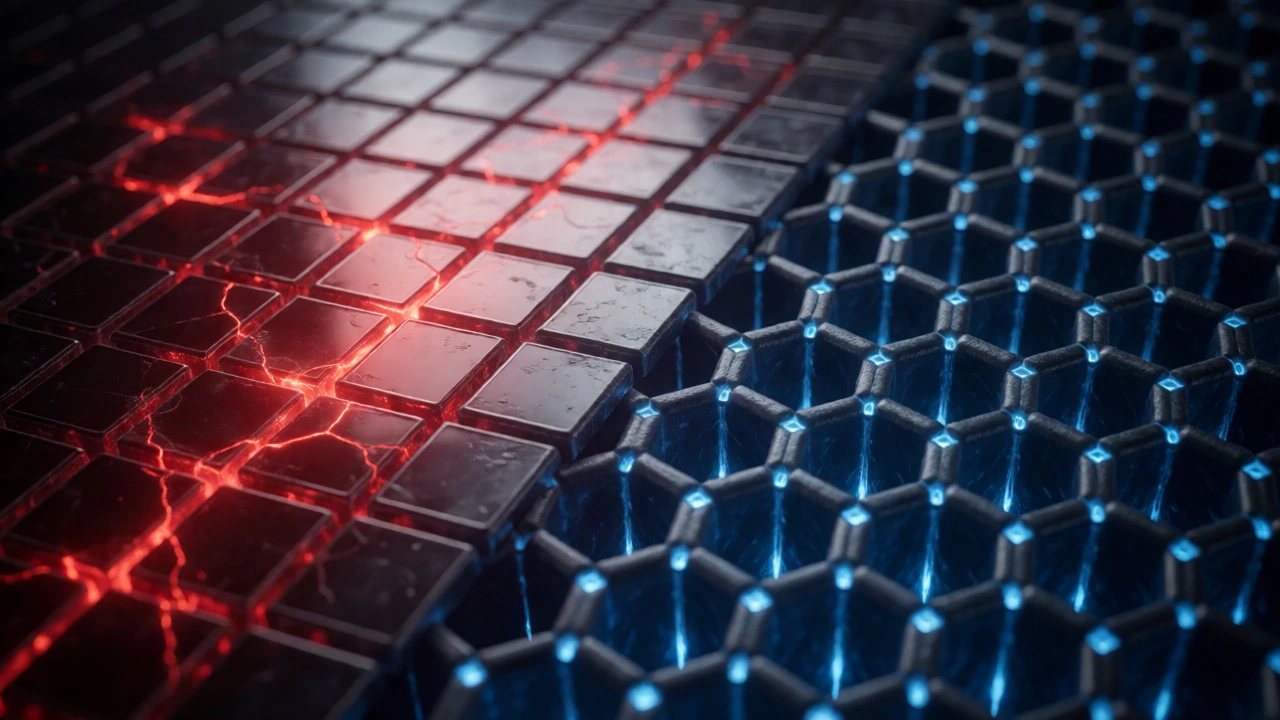
For fifty years, our digital world ran on silicon. We etched circuits into sand. But physics has limits. At 3 nanometers, electrons start leaking like water through a sieve. Quantum tunneling breaks the logic gates. This isn’t a software bug; it’s a hardware crisis. Enter nanotechnology. By manipulating structures between 1 and 100 nanometers, scientists bypass these physical barriers.
Consider Carbon Nanotubes (CNTs). Unlike silicon, CNTs conduct electricity better and generate less heat. IBM and Samsung have been testing carbon-based chips since the early 2020s. By 2026, we’re seeing the first commercial trials in high-performance computing. These aren’t just faster; they’re more energy-efficient. A data center using CNT processors could cut power bills by 40%. That’s not incremental change; that’s a new industrial standard.
But it’s not just about speed. It’s about function. Traditional materials do one thing. Nano-engineered materials can change properties on demand. Imagine a window that becomes opaque when sunlight hits it, saving AC costs. Or fabric that filters viruses while letting air pass. This versatility makes nanotech the foundational layer for almost every other emerging tech.
Where AI Meets the Microscopic World
People talk about Artificial Intelligence as the next big thing. They’re half-right. AI is the brain, but nanotech is the body. Without sensors small enough to monitor blood chemistry in real-time, AI health predictions are just guesses. With them, they become precise diagnostics.
AI-driven drug discovery is accelerating because of nano-simulation. Algorithms model how molecules interact at the atomic level. This cuts development time from ten years to two. In Bangalore, startups are already using these tools to design custom enzymes for industrial waste cleanup. The synergy is undeniable: AI designs the nano-structure, and nanotech executes the physical change.
This convergence creates a feedback loop. Better sensors feed more data to AI. Better AI designs smarter materials. You don’t need to choose between AI and nanotech. The winner is the intersection of both. If you’re investing in the future, look for companies building nano-sensors powered by edge AI.
Healthcare: The Silent Revolution
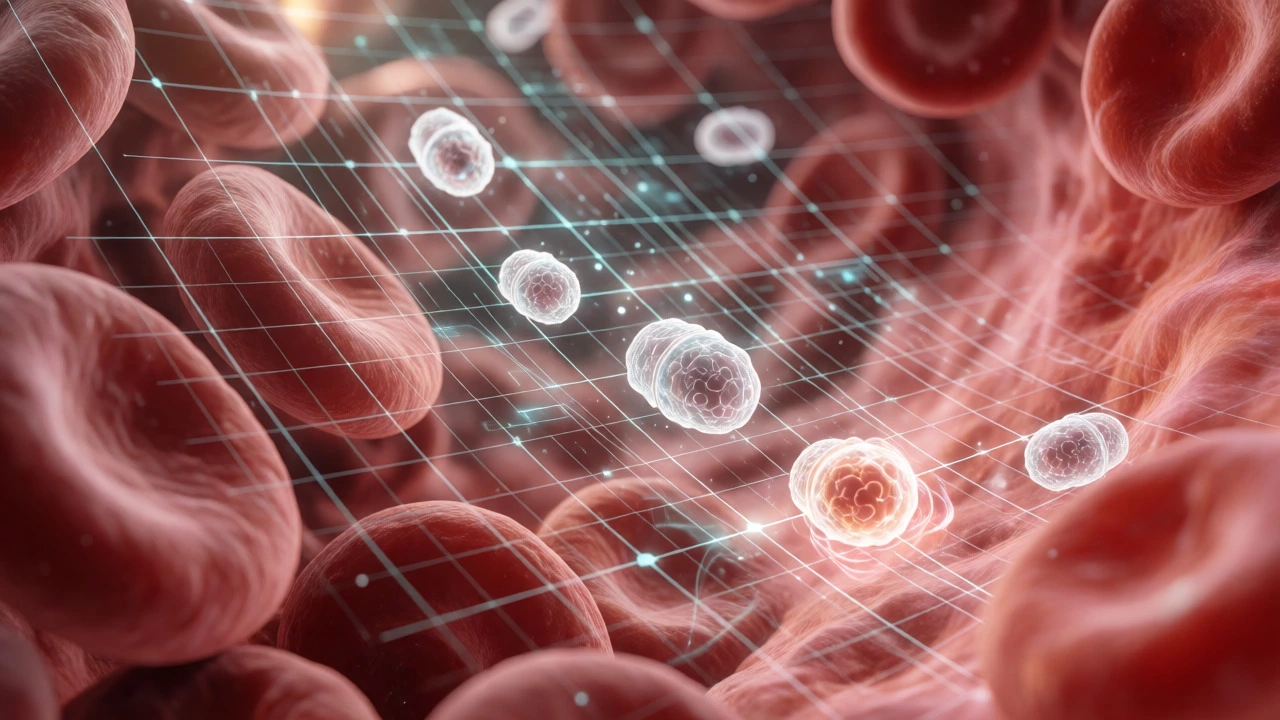
Forget robots doing surgery. The real game-changer is medicine that finds its own target. Targeted Drug Delivery uses nanoparticles as tiny capsules. They carry chemotherapy drugs directly to tumor cells, ignoring healthy tissue. No more hair loss. No more nausea. Just precision.
Liposomal formulations are already common in cancer care. But the next wave involves Theranostics. These particles diagnose and treat simultaneously. They light up on an MRI scan so doctors see the tumor, then release the drug when triggered by ultrasound. Clinical trials in 2025 showed a 30% higher survival rate in pancreatic cancer patients using theranostic nanoparticles compared to traditional chemo.
Beyond cancer, nanotech is fixing chronic diseases. Insulin pumps are getting smaller, but glucose monitors are getting smarter. Continuous Glucose Monitors (CGMs) use nano-electrodes to measure sugar levels every minute. Data flows to your phone. Your doctor gets alerts before you even feel symptoms. This shifts healthcare from reactive to proactive. And it’s all driven by microscopic engineering.
Energy Storage: Solving the Battery Bottleneck
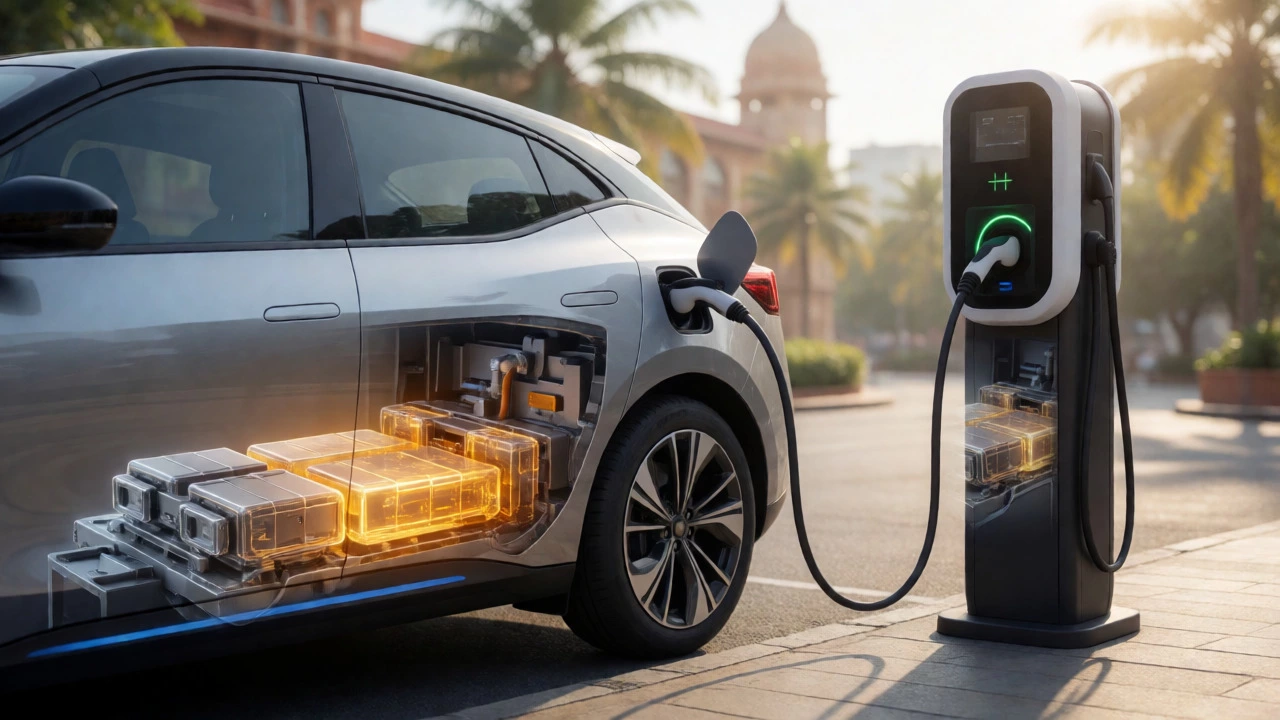
Electric vehicles stalled for years because batteries were heavy and slow to charge. Lithium-ion reached its theoretical limit. Then came Solid-State Batteries with nano-engineered electrolytes. Instead of liquid, they use solid ceramic materials structured at the nanoscale. This prevents dendrites-spiky metal growths that cause fires-and allows denser energy storage.
Toyota and QuantumScape are leading here. Their prototypes promise 80% charge in 15 minutes. For a driver in India, this means charging during a chai break. Range anxiety disappears. But it’s not just cars. Grid storage needs cheap, long-lasting batteries. Sodium-ion batteries with nano-cathodes are cheaper than lithium and safer. They’ll store solar power generated in Rajasthan, releasing it when Mumbai lights go on.
The environmental impact is huge. Mining lithium damages ecosystems. Nano-enhanced recycling processes extract metals more efficiently. Circular economy models become viable. You buy a battery, use it for ten years, recycle it for 95% material recovery, and build a new one. Nanotech closes the loop.
| Technology | Key Advantage | Maturity Level (2026) | Primary Use Case |
|---|---|---|---|
| Lithium-Ion | High energy density | Mature | Consumer Electronics, EVs |
| Solid-State | Faster charging, safety | Early Commercial | Premium EVs, Aviation |
| Sodium-Ion | Low cost, abundant raw materials | Scaling Up | Grid Storage, Entry-level EVs |
| Nano-Capacitors | Instant discharge, long cycle life | Niche | Rail braking, Regenerative systems |
Quantum Computing: The Distant Horizon?
Many experts say quantum computing is the next big thing. They’re right, but not yet. Today’s quantum computers are fragile. They need temperatures colder than deep space. They make errors constantly. Error correction requires thousands of physical qubits for one logical qubit. It’s expensive and bulky.
However, nanotech might save quantum. Researchers are exploring topological qubits made from nanowires. These structures resist noise naturally. Microsoft’s Majorana 1 chip, announced recently, hints at this direction. If stable topological qubits work, quantum computers shrink from room-sized fridges to rack-mounted servers. Then, and only then, does quantum become practical for everyday business problems like logistics optimization or financial modeling.
So, is quantum the next big thing? Not in 2026. It’s the thing after the next. The bridge to get there is built with nanomaterials. Keep an eye on hybrid systems where classical supercomputers handle routine tasks, and quantum cores solve specific complex equations. That’s the realistic path forward.
Practical Implications for You
You might think this doesn’t affect your daily life. Think again. Your sunscreen likely contains zinc oxide nanoparticles. Your tennis racket might have carbon nanotube reinforcement. Your phone screen uses indium tin oxide coatings applied via nano-deposition.
If you’re a student, focus on interdisciplinary skills. Biology plus coding. Chemistry plus data science. Pure specialists will struggle. The jobs of tomorrow require understanding how code controls molecules. If you’re an investor, avoid hype cycles. Look for companies with patents in scalable manufacturing. Making one nanoparticle in a lab is easy. Making a billion identical ones cheaply is the challenge.
Start paying attention to regulatory news. The EU and US are tightening rules on engineered nanomaterials. Safety assessments take longer. This slows adoption but ensures consumer trust. Wait for clear guidelines before jumping into niche nano-products. The winners will be those who navigate compliance well.
Is nanotechnology dangerous to human health?
It depends on the type and exposure route. Inhaled free nanoparticles can cause lung inflammation, similar to asbestos in extreme cases. However, bound nanoparticles in products like sunscreen or medical implants are generally considered safe. Rigorous toxicity testing is required before market approval, and ongoing research focuses on long-term effects of cumulative exposure.
Will nanotechnology replace silicon chips entirely?
Not immediately. Silicon will remain dominant for general-purpose computing due to established infrastructure and low cost. However, specialized applications like AI accelerators, high-frequency trading, and aerospace will increasingly adopt carbon nanotubes and other nano-materials for their superior performance and efficiency. A hybrid ecosystem is more likely than a complete replacement.
How soon will we see nanobots in human bodies?
True mechanical "bots" are still far off, but functional equivalents exist today. Liposomes and polymeric nanoparticles act as autonomous delivery systems. They circulate, find targets, and release payloads without external control. Fully programmable, multi-function nanorobots capable of performing surgical tasks are projected for clinical use in the late 2030s, pending breakthroughs in power sources and navigation.
Which countries are leading in nanotechnology research?
The United States, China, and South Korea lead in patent filings and commercialization. Europe remains strong in fundamental research and regulation. India is rapidly growing, particularly in agricultural applications and affordable healthcare devices, with significant government investment through initiatives like the National Nanotechnology Mission.
Can nanotechnology help with climate change?
Yes, significantly. Nano-enabled solar cells are cheaper and more efficient. Carbon capture membranes use nanopores to filter CO2 from industrial exhaust. Lightweight nano-composites reduce fuel consumption in transport. Additionally, catalysts made from nano-materials improve the efficiency of hydrogen production, aiding the transition to clean fuels.