Technology Transfer Success Calculator
This tool calculates the likelihood of a successful technology transfer based on key factors discussed in the article. The higher the score, the more likely the transfer will reach end users effectively.
When a university patents a new drug formula, or a government lab shares solar panel tech with a startup, who actually wins? Technology transfer sounds like a smooth handoff of knowledge - but in reality, it’s a messy, uneven game. Not everyone gets a seat at the table. Some walk away with patents, funding, and global markets. Others never even hear the technology exists.
Universities and Research Labs: The Original Inventors
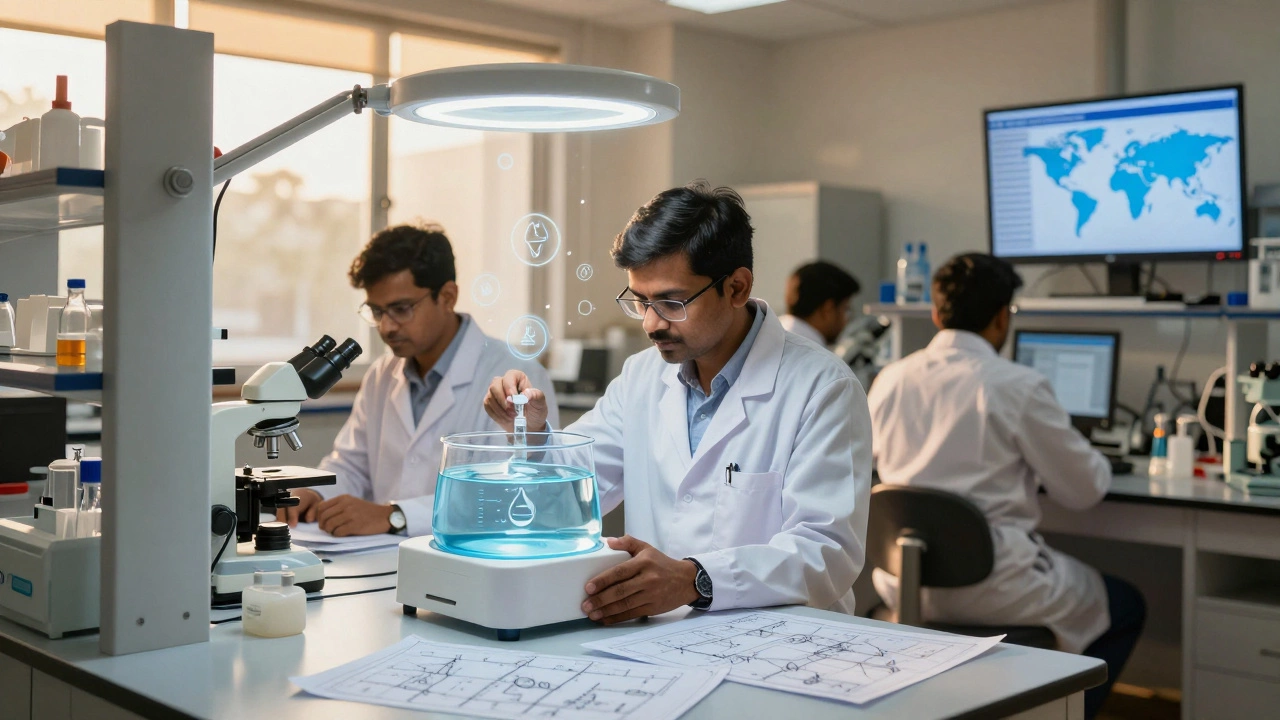
Most technology transfer starts in labs. Universities in the U.S., Germany, Japan, and India have spent decades building tech transfer offices. Take the Indian Institute of Science in Bangalore. In 2023, they licensed 47 new inventions - from low-cost water purifiers to AI tools for crop disease detection. These weren’t just academic exercises. Each one had a commercial path mapped out. The university gets royalties, but more importantly, it gains credibility. That reputation attracts more grants, better students, and corporate partnerships. It’s a cycle: research leads to patents, patents lead to funding, funding fuels more research.
Startups and Small Businesses: The First Adopters
Startups are the real engines of technology transfer. They don’t have the luxury of waiting for big corporations to catch up. A small biotech firm in Hyderabad picked up a malaria diagnostic tool from a public health lab in 2022. Within 18 months, they had scaled production to 500,000 units a year. That’s the power of early access. These companies don’t just use the tech - they adapt it. They make it cheaper, faster, or easier to use. And they often serve markets big players ignore. In rural Kenya, a drone-based soil sensor from a South African university now helps small farmers optimize fertilizer use. No multinational agribusiness would’ve bothered. But this startup did.
Developing Countries: The Overlooked Winners
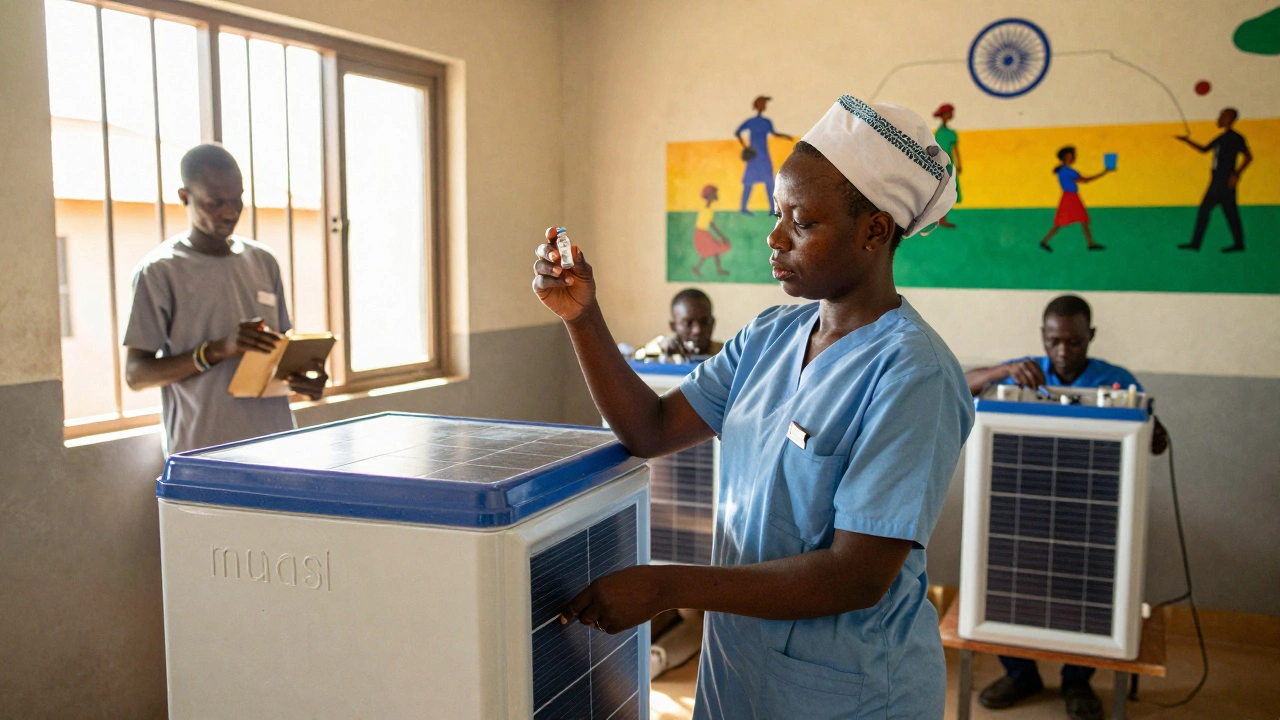
Here’s where the story gets surprising. Technology transfer isn’t just about rich nations giving to poor ones. It’s about tailored solutions. In 2024, a low-energy refrigeration system developed at the Indian Institute of Technology Madras was licensed to a manufacturer in Ghana. The original design was meant for Indian villages without stable electricity. The Ghanaian company modified it to run on solar panels and sold it to clinics across West Africa. That’s not charity - that’s smart adaptation. The tech wasn’t just transferred; it was reimagined for a new context. Countries like Vietnam, Bangladesh, and Nigeria are now building entire innovation ecosystems around imported tech that was never meant for them - and turning it into export-ready products.
Public Health Systems: The Silent Beneficiaries
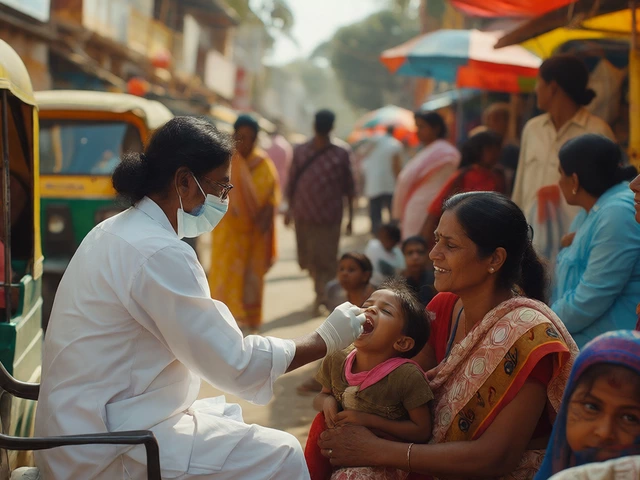
When a vaccine design is shared with a regional manufacturer, it’s not just about profit. In 2023, the WHO’s Technology Transfer Hub in South Africa helped local labs produce mRNA vaccines using tech originally developed in the U.S. and Germany. The result? Over 2 million doses produced in 10 months. No patent royalties. No corporate middlemen. Just public health infrastructure gaining independence. This isn’t rare anymore. In 2025, more than 15 low- and middle-income countries are producing their own diagnostics, vaccines, or medical devices using openly shared tech. The benefit? Faster responses to outbreaks, lower costs, and less reliance on foreign supply chains.
Large Corporations: The Strategic Buyers
Big companies don’t invent everything. They buy. Google didn’t build its AI image recognition from scratch - it licensed early research from Stanford. Tesla didn’t invent lithium-ion battery tech - it scaled up patents from national labs. For corporations, technology transfer is a shortcut. Instead of spending 10 years and $500 million on R&D, they pay $10 million for a proven solution. And they don’t just license - they acquire. In 2024, a major Indian pharma company bought a small startup that had licensed a novel drug delivery system from IIT Delhi. The startup got cash. The pharma giant got a competitive edge. It’s a win-win - if the terms are fair.
Who Doesn’t Benefit? The Missing Pieces
But not everyone wins. Farmers in remote parts of Odisha don’t get access to AI-driven farming tools because the licensing fees are too high. Rural clinics in the Congo can’t use a life-saving diagnostic kit because it requires internet connectivity they don’t have. The biggest gap? Access. Technology transfer often ignores the last mile. A lab might patent a water filter that works perfectly in a lab. But if it needs a $200 power supply and a technician with a degree, it’s useless in a village without electricity. The tech is transferred - but not to the people who need it most.
Why Some Transfers Fail
It’s not just about the tech. It’s about context. A 2023 study of 120 technology transfers from Indian universities found that 68% failed to reach the market. Why? Three reasons: First, the inventor didn’t understand the user’s real problem. Second, the licensing terms were too rigid. Third, no one helped adapt the tech to local conditions. One solar-powered irrigation pump worked great in a test field - but farmers in Rajasthan couldn’t fix it. No local repair shops carried the parts. The tech was brilliant. The support system? Nonexistent.

What Makes a Transfer Successful?
Successful transfers don’t just hand over a patent. They build bridges. The best examples share four things:
- Co-design: Local users help shape the tech from day one. In Nepal, a health clinic worked with researchers to redesign a portable ultrasound device so it could be used by nurses with no engineering training.
- Open licensing: No royalties for public health or small-scale use. The African Union’s vaccine tech transfer program uses this model - it’s why 12 African countries now produce their own vaccines.
- Local training: Not just the device - but how to fix it. A project in Indonesia trained 800 local technicians to maintain solar water pumps - and now they run a small business doing repairs.
- Long-term support: The tech doesn’t die after the first sale. A water filter project in Kenya included a 5-year maintenance plan funded by a microloan system.
The Bigger Picture: Technology as a Public Good
Technology transfer isn’t just about patents and profits. It’s about fairness. Right now, 85% of global R&D spending happens in just 10 countries. But 70% of the world’s population lives outside those countries. If we keep treating tech like a proprietary product, we’ll keep deepening the gap. The future belongs to models where knowledge flows - not just from rich labs to poor markets, but between all of us. When a farmer in Bihar uses a mobile app built from a university’s soil data model, and then helps improve it - that’s true technology transfer. Not a handout. A partnership.
Who benefits the most from technology transfer?
Startups and small businesses often benefit the most because they’re agile enough to adapt new tech quickly and serve niche markets. Public health systems in developing countries also gain huge advantages when technologies are licensed openly for essential needs like vaccines or diagnostics. Universities and research labs benefit through funding and reputation, while large corporations use tech transfer to accelerate innovation without heavy R&D costs.
Can developing countries really benefit from technology transfer?
Yes - but only if the transfer is designed for their context. A solar pump that works in a U.S. lab might fail in rural India if it needs internet or expensive parts. Successful cases - like Ghana making solar fridges from Indian designs - show that when local needs drive adaptation, the results are powerful. Open licensing, local training, and maintenance support turn tech transfer from a one-time handoff into a lasting system.
Why do so many technology transfers fail?
Most fail because they ignore real-world conditions. The tech might be brilliant, but if users can’t afford it, fix it, or access it, it won’t spread. Poor licensing terms, lack of training, no local supply chains, and no feedback loops are common reasons. A 2023 study found that 68% of university-led transfers in India never reached users because they were designed without input from the end users.
Is technology transfer only about patents and licenses?
No. Patents are just the legal framework. Real transfer happens when knowledge flows - through training, collaboration, open data, and co-design. A vaccine developed in Germany means little to a clinic in Nigeria unless technicians there learn how to store, use, and maintain it. The best transfers include manuals, workshops, repair networks, and feedback systems - not just a PDF.
What’s the biggest barrier to fair technology transfer?
The biggest barrier is profit-driven licensing. When universities or labs charge high royalties or restrict use to wealthy markets, the tech becomes inaccessible. The most effective models - like the WHO’s vaccine hub - use open licenses for public health needs, waive fees for low-income countries, and invest in local manufacturing. Equity, not exclusivity, is the key.
What Comes Next?
The future of technology transfer isn’t about more patents. It’s about more partnerships. Imagine a world where every major research lab has a local innovation partner in a different country - not to export tech, but to co-create it. A lab in Bangalore works with a clinic in Nairobi. A university in Brazil teams up with a maker space in Indonesia. That’s how we stop the leak of innovation - and start building a global knowledge commons.