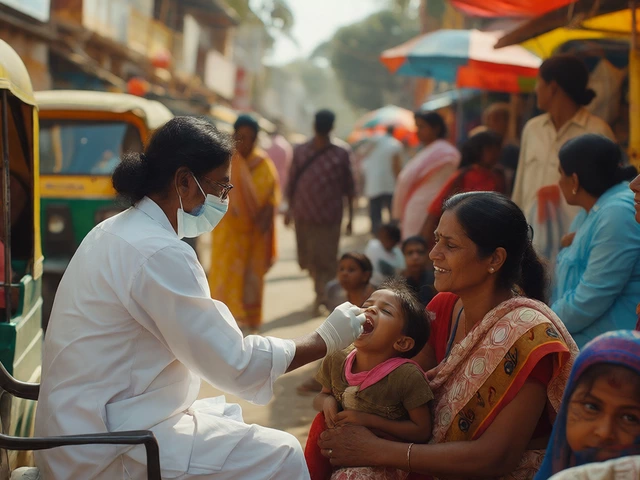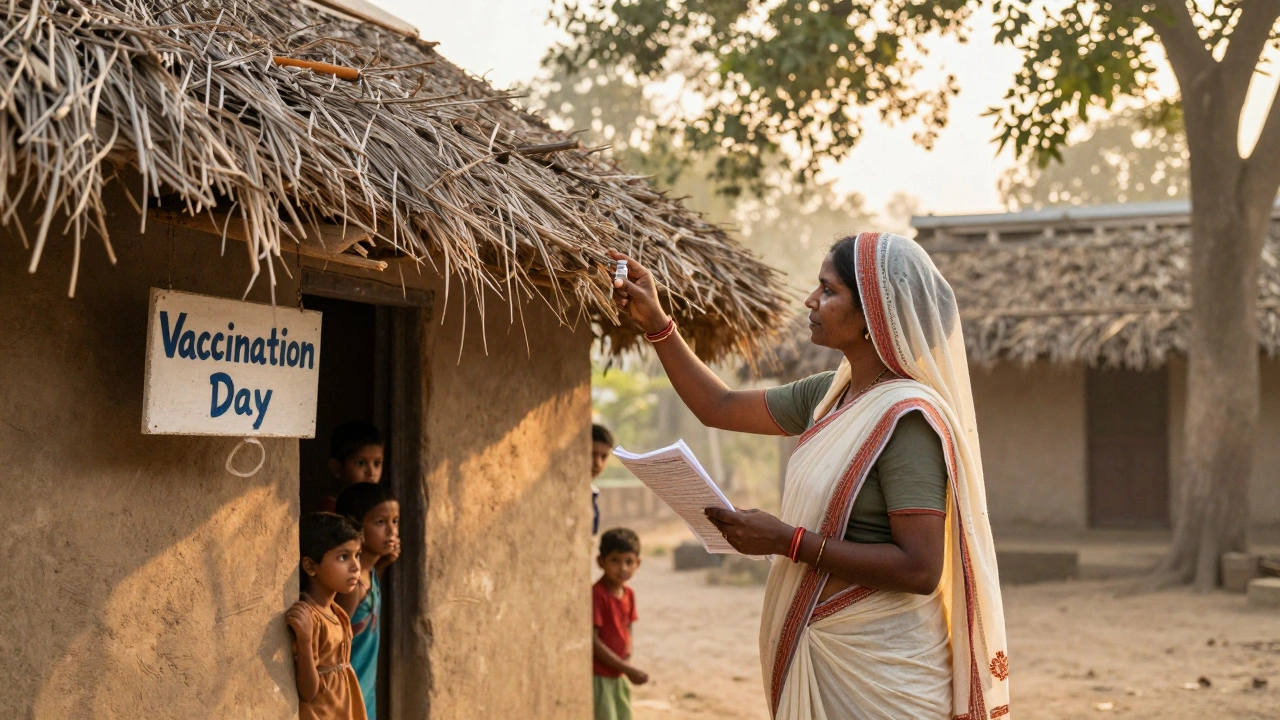
Think about the last time you got a vaccine, walked past a clean water tap, or saw a sign telling people to wash their hands. Those aren’t accidents. They’re the result of public health initiatives - quiet, steady efforts that keep entire communities alive and well. Most people don’t notice them until something goes wrong. But when they work, they save lives every single day.
They stop outbreaks before they become epidemics
In 2020, India saw its first major wave of COVID-19. Hospitals overflowed. Oxygen ran short. But in places like Kerala and Tamil Nadu, public health teams had already set up contact tracing units, temperature checkpoints, and community health worker networks. These weren’t new ideas. They’d been built over years through routine immunization drives, sanitation campaigns, and training local volunteers. When the virus hit, those systems kicked in. That’s the power of public health initiatives: they’re not about reacting to crises. They’re about preventing them.
Smallpox was eradicated globally in 1980 because of coordinated vaccination campaigns. Polio is now nearly gone in most countries because of door-to-door immunization drives. Tuberculosis screening programs in rural India have cut transmission rates by over 40% in the last decade. These aren’t theoretical wins. They’re real, measurable results from sustained public health work.
They reduce health gaps between rich and poor
Why do children in slums die from diarrhea while kids in gated communities don’t? It’s not because one group is more careless. It’s because clean water, proper sanitation, and access to basic medicines aren’t equally distributed. Public health initiatives target these gaps head-on.
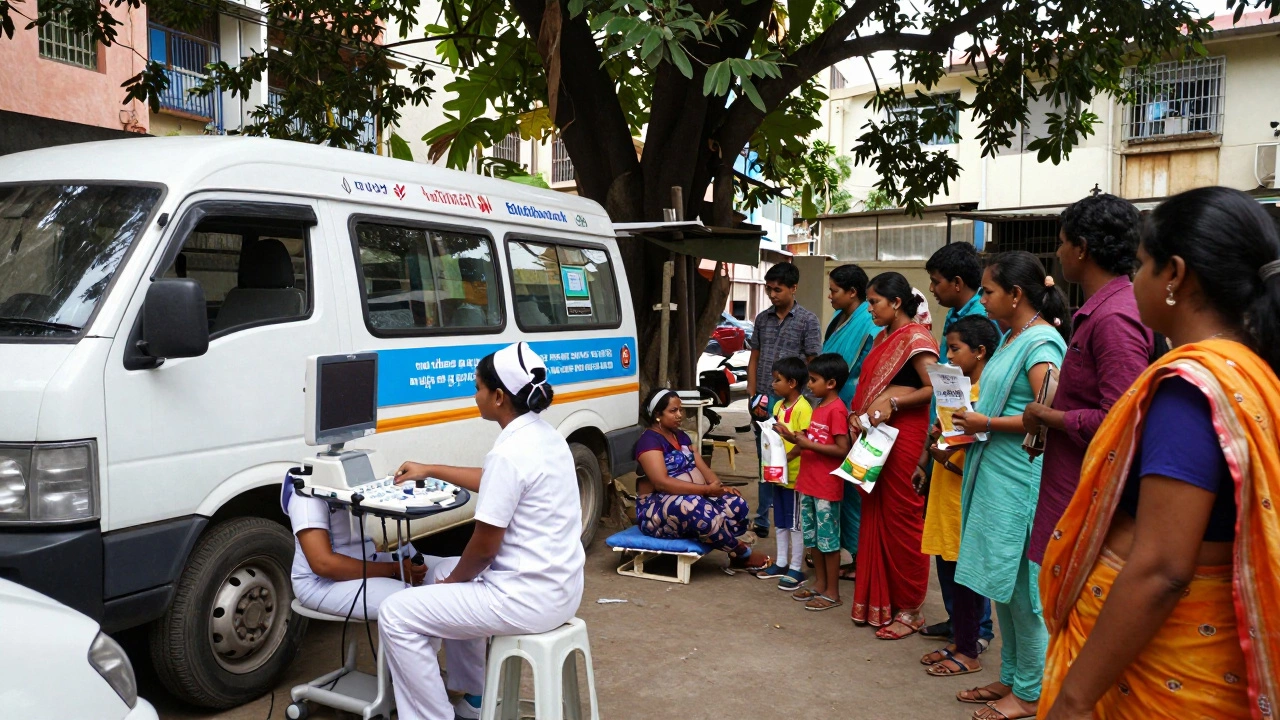
In Bangalore, the Urban Health Mission runs free maternal care clinics in 200+ informal settlements. They don’t wait for women to come to hospitals. They send nurses with portable ultrasound machines and blood pressure monitors right into the neighborhoods. As a result, maternal mortality in those areas dropped by 32% in just three years. Similar programs in Odisha and Jharkhand have slashed child malnutrition by linking nutrition supplements with school feeding programs.
These aren’t charity projects. They’re smart investments. Every rupee spent on preventing disease saves six rupees in emergency care later. And they don’t just help the poor - they protect everyone. When a disease spreads in an underserved area, it doesn’t stop at the edge of the neighborhood. It moves with buses, markets, and migrant workers. Public health initiatives break those chains.
They make daily life safer and healthier
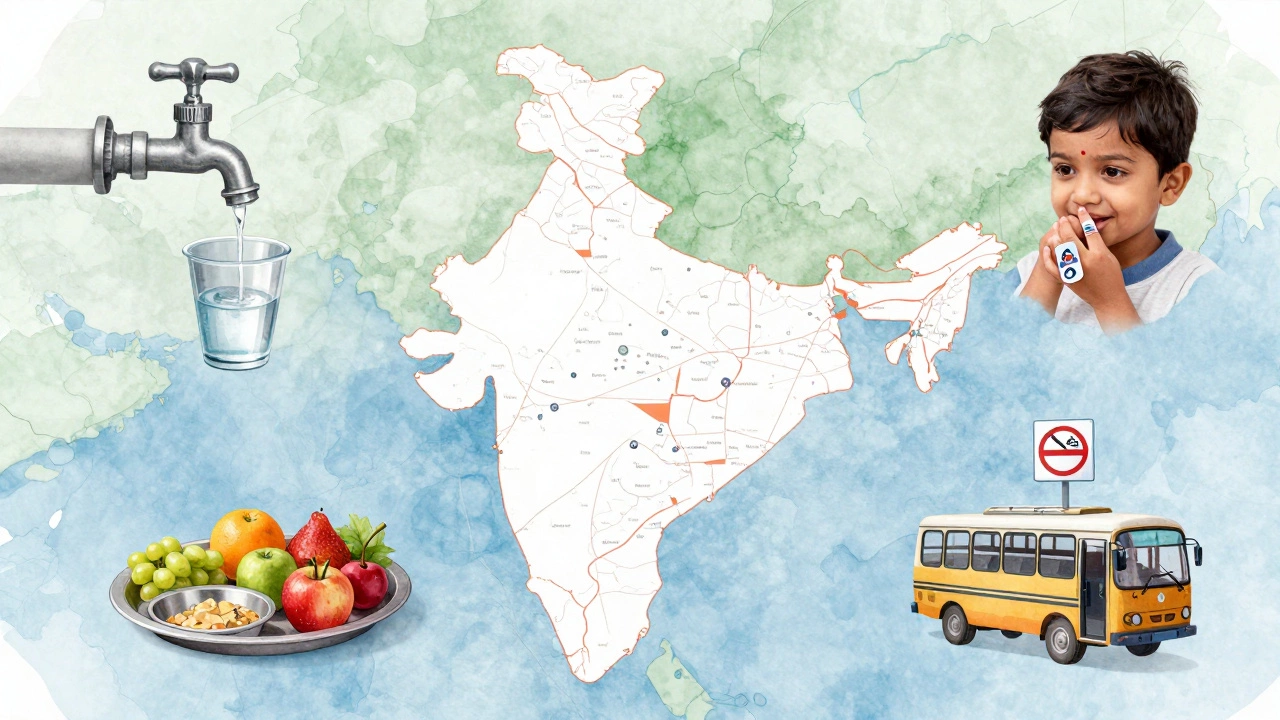
Ever wonder why cigarette packs have graphic warnings? Why restaurants display hygiene ratings? Why school cafeterias serve fruits instead of chips? That’s public health policy in action.
India’s 2019 ban on single-use plastics was driven by public health data showing microplastics in drinking water and breast milk. The 2022 sugar tax on sugary drinks led to a 17% drop in consumption among teens in Mumbai and Delhi. Smoke-free zones in public transport and hospitals cut secondhand smoke exposure by 50% in urban areas.
These changes didn’t happen because people suddenly became health-conscious. They happened because public health officials used data, ran campaigns, and pushed for laws that made the healthy choice the easy choice. You don’t have to be a doctor to benefit. You just have to live in a city, go to school, or eat food.
They save money - a lot of it
People often think healthcare costs are about hospitals and medicines. But the biggest cost comes from preventable illness. Diabetes, heart disease, lung cancer - many of these are tied to lifestyle and environment. Public health initiatives attack the root causes.
A 2024 study by the Indian Council of Medical Research found that for every ₹100 spent on clean water and sanitation, the healthcare system saved ₹520 in treating waterborne diseases. For every ₹100 on tobacco control, ₹890 was saved in treating lung and oral cancers. That’s not just efficiency. That’s economic survival.
When a child gets vaccinated, the family doesn’t lose a day of work. When a factory installs proper ventilation, workers don’t get chronic lung disease. When communities get safe walking paths, people exercise more and avoid obesity. These aren’t luxury upgrades. They’re cost-cutting measures that keep families and economies running.
They build trust in systems
During the pandemic, people in some areas refused vaccines because they didn’t trust the government. In others, they lined up for hours. The difference? Years of consistent public health engagement.
In villages where ASHA workers had been visiting homes for a decade, delivering antenatal care and explaining immunization schedules, vaccine uptake was over 90%. In places where health services were sporadic or dismissive, misinformation spread fast. Trust isn’t built with ads. It’s built with reliability - showing up, listening, and following through.
Public health initiatives create a social contract: the state protects your health, and you help protect others. That’s how communities survive outbreaks, natural disasters, and food shortages. It’s not about control. It’s about connection.
They’re not optional - they’re the foundation
Some people think healthcare means doctors, hospitals, and high-tech treatments. But that’s the last line of defense. Public health is the first line. It’s the water filter, the vaccine fridge, the health educator at the local anganwadi, the policy that bans lead paint.
Without these initiatives, even the best hospital in the world can’t keep up. One doctor can treat 10 patients a day. A public health program can protect 10,000.
And it’s not just about disease. It’s about dignity. It’s about giving every child a fair start. It’s about letting people work, learn, and grow without being held back by preventable illness.
Public health initiatives aren’t glamorous. They rarely make headlines. But they’re the reason you can send your kids to school without fearing they’ll come home sick. The reason you can drink tap water in some cities. The reason your grandparents lived longer than their parents.
They matter because they work - quietly, consistently, and for everyone.
What are some examples of public health initiatives in India?
India runs several large-scale public health initiatives, including the National Health Mission (NHM), which supports maternal and child care in rural areas; the Pulse Polio program, which eliminated polio through door-to-door vaccination; the Swachh Bharat Mission, which improved sanitation and reduced open defecation; and the Ayushman Bharat scheme, which provides free health insurance to over 500 million low-income citizens. Local programs like ASHA worker networks and urban health missions also play a critical role in delivering care at the community level.
How do public health initiatives differ from regular healthcare?
Regular healthcare treats individuals after they get sick - a doctor sees you for a fever, a hospital performs surgery, a pharmacy gives you medicine. Public health initiatives work before people get sick. They focus on entire populations: making sure water is clean, vaccines are available, food is safe, and education reaches everyone. Instead of fixing problems, they stop them from happening in the first place.
Why do public health efforts sometimes fail?
Public health initiatives fail when they’re underfunded, poorly planned, or disconnected from the communities they serve. Top-down programs that ignore local culture or language often don’t stick. For example, a sanitation campaign that doesn’t involve women in planning may fail because they’re the ones managing household hygiene. Lack of trained staff, inconsistent supply chains for medicines, and political short-term thinking also weaken results. Success requires long-term commitment, community trust, and data-driven adjustments.
Can individuals make a difference in public health?
Absolutely. Public health isn’t just government work. When you vaccinate your children, dispose of waste properly, wash your hands, or speak up about unsafe food in your neighborhood, you’re part of the system. Community volunteers, schoolteachers, local shopkeepers, and even social media users can help spread accurate health information. Small actions - like supporting clean water projects or reporting mosquito breeding sites - add up. Public health thrives when everyone plays a role.
Are public health initiatives expensive?
They cost far less than treating diseases after they spread. For example, vaccinating a child against measles costs about ₹200. Treating a child who gets measles and develops complications can cost over ₹15,000 - not counting lost wages for parents. A clean water system might cost millions upfront, but it prevents thousands of hospital visits each year. Studies show public health spending returns 5 to 9 times the investment in savings and productivity. It’s not an expense. It’s the cheapest insurance you can buy.
If you’ve ever been protected from a disease you didn’t even know was out there - that’s public health. If your child was born healthy because a nurse came to your home - that’s public health. If your city has clean air because of a policy you never heard of - that’s public health. It’s not flashy. But it’s everything.