
If you're thinking about becoming a data scientist, one of the first questions you'll hear-or ask-is: Do data scientists code a lot? The answer isn't yes or no. It’s more like: It depends. But here’s the truth most job postings won’t tell you: if you can’t write code, you won’t last long in this role.
What data scientists actually do all day
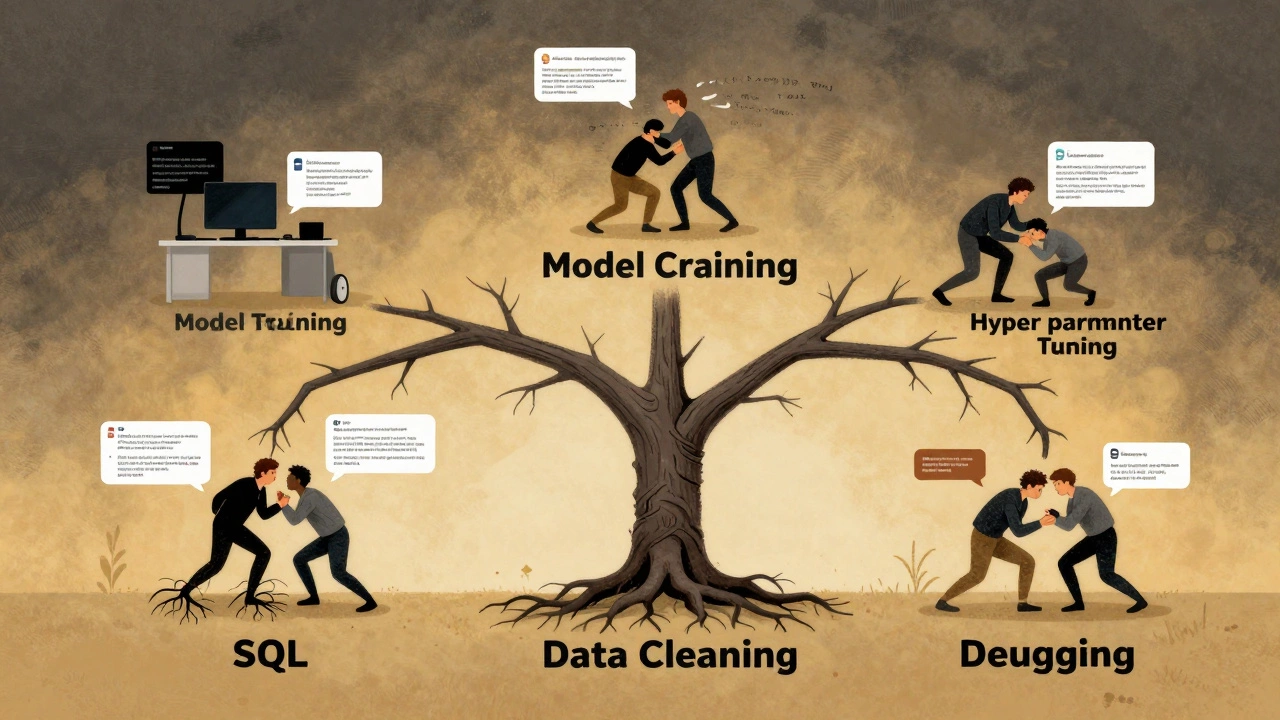
Most people picture data scientists as people who stare at dashboards, build fancy AI models, or explain complex stats to executives. That’s part of it. But the real work? It’s messy. It’s repetitive. And a huge chunk of it happens in a text editor or Jupyter notebook.A typical day for a data scientist in Bangalore might start with cleaning up a CSV file that’s full of typos, missing values, and inconsistent date formats. Then they’ll write a Python script to merge three different databases-each with its own naming convention. After that, they’ll train a model, realize it’s overfitting, tweak the hyperparameters, and re-run everything. All of this? Done in code.
According to a 2025 survey of 1,200 data professionals across India and Southeast Asia, 68% spent more than 50% of their workweek writing or debugging code. Only 12% spent most of their time on visualizations or presentations. The rest? Meetings, emails, and waiting for data pipelines to finish.
What kind of coding do they actually do?
Not every data scientist writes production-grade software. But they all write code that gets things done. Here’s what that looks like:- Python is the undisputed king. Over 90% of data science roles require it. You’ll use pandas to clean data, scikit-learn to build models, and matplotlib to make plots.
- SQL is non-negotiable. Even if you’re not a database engineer, you need to pull data from warehouses. Writing efficient queries matters more than you think.
- R is still around-especially in academia, biotech, and finance-but it’s shrinking fast. If you’re applying to startups or tech firms, Python is safer.
- Shell scripting and bash? Surprisingly common. Automating data pulls, restarting servers, or checking log files? That’s often done with simple scripts.
- Git isn’t optional. If you can’t commit, push, and resolve merge conflicts, you’ll slow down the whole team.
It’s not about being a software engineer. You don’t need to build apps from scratch. But you do need to be fluent enough to turn ideas into working code-fast.
What if you’re not a coder?
You can still enter data science without a coding background-but only if you’re willing to learn. A lot.Many people come from stats, biology, or economics. They’re great at thinking about problems. But they hit a wall when they realize they can’t automate anything. One data scientist I worked with in Pune started with zero coding experience. She spent six months learning Python on weekends, built three small projects, and landed a junior role. Today, she leads a team.
The problem isn’t intelligence. It’s patience. If you hate debugging syntax errors or waiting for code to run, you’ll burn out. Coding in data science isn’t about writing elegant algorithms. It’s about making things work, even when you’re tired, the data is bad, and the deadline is tomorrow.
Tools that reduce coding-but don’t replace it
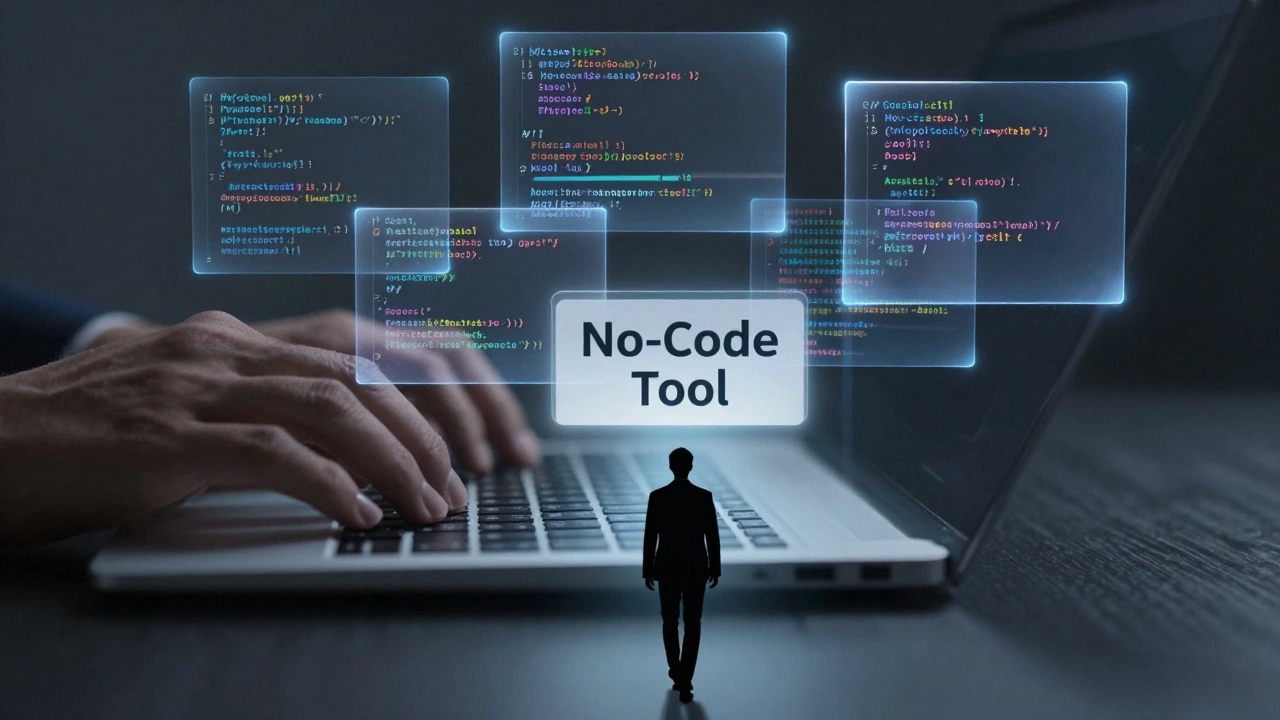
There are tools that claim to let you do data science without code: drag-and-drop platforms like DataRobot, H2O.ai, or Google’s AutoML. They’re great for quick prototypes. But they’re not magic.Here’s the catch: if something goes wrong, you need to understand why. If the model’s accuracy drops, you can’t just click a button and fix it. You need to dig into the data, check for bias, adjust features, and retrain. That requires code.
Companies that rely only on no-code tools end up with models that work on paper but fail in production. Real data science teams use these tools to speed things up-not to avoid coding entirely.
How much coding is enough?
You don’t need to be a senior software developer. But you do need to be able to:- Write clean, readable functions (not just one giant script)
- Use version control to track changes
- Debug errors without panicking
- Automate repetitive tasks (like daily data pulls)
- Read and understand code written by others
That’s it. You don’t need to know advanced algorithms like dynamic programming. You don’t need to optimize memory usage down to the byte. But if you can’t write a for loop or use a pandas groupby, you’re not ready.
What about AI tools like GitHub Copilot?
AI assistants are changing how people code. They help generate SQL queries, suggest Python functions, or even fix bugs. But they’re not replacements-they’re assistants.I’ve seen junior data scientists rely too much on Copilot. They copy-paste code they don’t understand. Then, when the model fails in production, they have no idea why. The best coders use AI to speed things up, not to skip learning.
Think of it like a calculator. You don’t need to do long division by hand anymore. But if you don’t understand math, the calculator won’t save you.
Bottom line: yes, you need to code
If you’re asking whether you can be a data scientist without coding, the answer is no-not in any meaningful, sustainable way.It’s not about being the best coder on the team. It’s about being the person who can turn questions into answers using code. If you love solving problems, hate manual work, and are willing to learn a few key tools, you can do this.
But if you’re hoping to avoid code entirely? You’ll end up stuck in entry-level roles, stuck on repetitive tasks, or stuck outside the field altogether.
Start small. Learn Python. Practice SQL. Build one small project-predicting house prices, analyzing sales data, or tracking your own fitness stats. Code every day, even for 30 minutes. That’s how people make it.
What if you’re already in the field and hate coding?
If you’re already a data scientist and you’re tired of writing code, you’re not alone. Many people feel this way after a few years.Some pivot to roles like:
- Data analyst (less modeling, more reporting)
- Product manager (focus on strategy, less code)
- ML engineer (more engineering, less stats)
- Business intelligence lead (dashboard-heavy, less modeling)
But even those roles require some coding. There’s no escape from it completely. The key is finding the right balance.
Do data scientists need to know advanced math?
Not as much as you think. You need to understand basic statistics-mean, median, p-values, confidence intervals. Linear regression and basic probability matter. But you don’t need to derive calculus formulas by hand. Most libraries handle the math for you. What matters more is knowing when to use which model and how to interpret results.
Can I become a data scientist without a degree?
Yes. Many data scientists in India come from non-traditional backgrounds-engineering, commerce, even journalism. What matters is your portfolio. If you can show you’ve cleaned real data, built a working model, and explained the results clearly, employers will hire you. Certificates help, but projects matter more.
Is Python enough, or do I need other languages?
Python is enough to start and to land most jobs. SQL is also required. R is useful in some industries but not essential. Java or C++? Only if you’re working in very large-scale systems or fintech. For 95% of data science roles, Python and SQL are all you need.
How long does it take to learn coding for data science?
You can get job-ready in 4-6 months with consistent practice. Focus on Python basics, pandas, SQL, and one machine learning library. Build three projects. Don’t just watch tutorials-write code every day. Most people who quit do so because they learn passively. Active practice is what sticks.
Do data scientists code in production?
Sometimes. Most data scientists work on models in development environments. Once a model is ready, ML engineers or software teams take over to deploy it. But you still need to write clean, documented code so others can use it. If your code is a mess, it won’t make it to production.
Final thought: coding is your superpower
Data science isn’t about being the smartest person in the room. It’s about being the person who can make things happen. And in this field, coding is how you make things happen.It’s not glamorous. You’ll spend hours fixing a single line of code that broke because of a missing comma. But when that model finally works-and it predicts customer churn, detects fraud, or saves millions in costs-that’s when you know why you stuck with it.
If you’re ready to code, you’re already ahead of half the people who want this job. Now go write your first script.