
Microgravity Comfort Advisor
Based on current ISS protocols and physiological data, select your scenario to see the recommended attire.
Select options and click "Get Recommendation"
You’ve probably seen the memes. You’ve definitely heard the jokes. But here is a question that actually matters for anyone interested in how humans survive off-planet: do female astronauts wear bras in space?
The answer isn’t just "yes" or "no." It’s about physics, psychology, and the sheer awkwardness of trying to get dressed when nothing stays where you put it. In microgravity, your body changes. Your face puffs up. Your spine stretches. And yes, your chest behaves differently too. So, do they wear them? Sometimes. Do they need to? Not really. Let’s break down what actually happens on the International Space Station (ISS) regarding underwear, comfort, and why this topic is less about modesty and more about practical engineering.
The Physics of Going Braless in Orbit
Think about what a bra does on Earth. It fights gravity. It lifts tissue against the downward pull of 9.8 m/s². On the ISS, gravity doesn’t disappear-it’s just balanced by freefall. You are in continuous orbit, which means you are constantly falling around the Earth. This creates microgravity, where objects float because there is no normal force pushing back against them.
In this environment, breast tissue doesn’t sag. It doesn’t droop. It essentially floats in place relative to the torso. There is no weight pulling it down, so the primary mechanical function of a bra-support-is rendered obsolete. Many female astronauts report that wearing a traditional underwire bra feels restrictive and unnecessary. Without gravity pulling the tissue down, an underwire can dig into the ribcage uncomfortably during sleep or movement.
However, saying they never wear bras is misleading. Some astronauts prefer the compression and security of a sports bra. Why? Because while gravity isn’t pulling things down, inertia still exists. If you push off a wall to move across the module, your body accelerates. Your tissues have mass. They lag behind your bones slightly. A snug sports bra keeps everything secure so you aren’t adjusting yourself every time you flip end-over-end to grab a snack.
What Astronauts Actually Wear Up Top
If you look at photos from the ISS, you won’t see many lace balconettes or push-up styles. The wardrobe is strictly utilitarian. Most female crew members opt for one of two things:
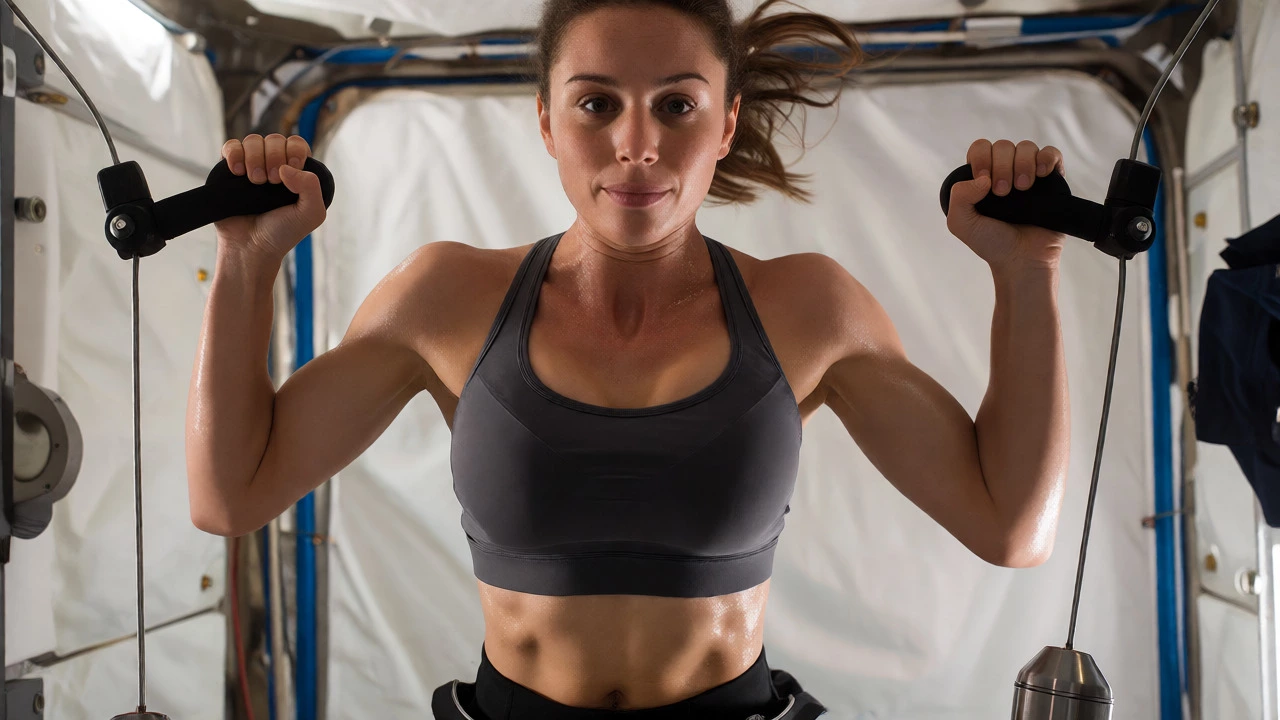
- Sports Bras: These are popular because they provide compression without the rigid structure of wires. They keep tissue close to the body, reducing movement during exercise (which is mandatory in space).
- Layered Tops: Many women simply wear tight-fitting t-shirts or tank tops over bare skin. The fabric provides enough mild compression to feel secure without the hassle of hooks and straps.
There is also a cultural and personal aspect. NASA does not mandate underwear. It’s a personal choice based on comfort. Some astronauts find going braless liberating; others feel exposed or uncomfortable without that layer of protection. Remember, the ISS is a small, shared space. While there are private sleeping quarters, the rest of the station is communal. Privacy is limited. For some, a bra is a psychological barrier between their body and the world, regardless of whether physics requires it.
| Clothing Item | Primary Function in Microgravity | Comfort Level | Frequency of Use |
|---|---|---|---|
| Sports Bra | Compression and security during exercise/movement | High | Very Common |
| Traditional Underwire Bra | Aesthetic preference (rarely functional) | Low (can dig in) | Rare |
| Tight T-Shirt/Tank Top | Mild compression and modesty | High | Very Common |
| Braless | Maximum freedom and airflow | Variable | Common |
Hygiene and Laundry Constraints
Here is the real reason clothing choices matter in space: laundry. The ISS has no washing machine. Every piece of clothing worn by the crew is eventually thrown away. When you pack for a six-month mission, you pack a specific number of shirts, pants, and undergarments. Once you run out, you’re done until resupply ships arrive-or you wait until you return to Earth.
This constraint drives minimalism. Bras, especially those with complex hooks, padding, and multiple fabrics, take longer to dry if hand-washed (which astronauts sometimes do with water pouches). They also take up more volume in packing containers. A simple cotton tank top dries faster, packs smaller, and serves double duty as both outerwear and innerwear. From a logistical standpoint, fewer layers mean less waste and less weight launched into orbit.
Furthermore, hygiene in microgravity is tricky. Sweat doesn’t drip off you; it clings to your skin in sticky beads. You don’t shower daily-you use wet wipes and rinse-free shampoo. Wearing heavy, non-breathable fabrics like synthetic bra materials can lead to skin irritation or rashes when sweat gets trapped against the skin for days. Natural fibers or moisture-wicking athletic gear are preferred for this reason.
Physiological Changes That Affect Fit
Your body literally changes shape in space. One of the most well-documented effects of microgravity is fluid shift. On Earth, gravity pulls blood and fluids toward your feet. In orbit, that fluid redistributes evenly throughout your body. This causes facial puffiness and congestion, but it also affects soft tissue volume elsewhere.
Some astronauts report a slight increase in chest circumference due to this fluid retention. Conversely, muscle atrophy occurs in other areas. If an astronaut brings a bra fitted perfectly on Earth, it might fit poorly after three weeks in orbit. The band might feel tighter, or the cups might feel different. This unpredictability makes adjustable, flexible garments like sports bras far superior to rigid, sized lingerie.
Another factor is spinal elongation. Without gravity compressing your spine, you grow up to 2 inches taller. Your torso lengthens. This changes the ratio of your upper body measurements. A strap that sat comfortably on your shoulder on Earth might dig into your neck or slide off entirely once your spine decompresses. Again, flexibility wins over structure.
The Male Perspective and Social Dynamics
It’s worth addressing the elephant in the room: male astronauts. Do they care? Generally, no. Crew training emphasizes professionalism and desexualization of the workplace. The ISS is a laboratory, not a social club. Male crew members are trained to treat female colleagues as peers first. Clothing choices are rarely commented on unless they pose a safety hazard (e.g., loose jewelry that could fly into equipment).
That said, early space missions had stricter dress codes. In the Apollo era, gender dynamics were different, and there was more emphasis on appearing "professional" in a traditional sense. Today, the focus is purely on function. If a female astronaut chooses to go braless because it helps her sleep better in a tethered bag, her male counterparts likely won’t even notice, let alone comment. The shared experience of living in a tin can hurtling through vacuum tends to level social hierarchies quickly.

Special Cases: Exercise and EVA Suits
Exercise is non-negotiable in space. To prevent bone density loss and muscle wasting, astronauts spend two hours a day on specialized equipment like the ARED (Advanced Resistive Exercise Device). During high-intensity workouts, even in microgravity, movement creates inertial forces. Bouncing or jarring motions can cause discomfort without support.
For this reason, most female astronauts wear supportive sports bras during exercise sessions. It’s not about gravity holding things down; it’s about keeping things stable while performing squats or deadlifts using vacuum cylinders for resistance. After the workout, many switch to looser, breathable tops or go braless again for relaxation.
What about Extravehicular Activities (EVAs)-spacewalks? Inside the bulky EMU (Extravehicular Mobility Unit) suit, underwear matters less. The suit itself is tight and structured. However, the Liquid Cooling and Ventilation Garment (LCVG), which is worn underneath the pressure suit, fits like a second skin. Adding a bra underneath can create pressure points or chafing spots that become painful over a 6-hour spacewalk. Most astronauts skip the bra for EVAs to ensure maximum comfort and range of motion inside the LCVG.
Why This Question Persists
So why do we still ask this? Because space exploration remains deeply humanized through media coverage. We project our earthly norms onto extraterrestrial life. We wonder about romance, privacy, and bodily functions because those are universal human concerns. Asking about bras is a proxy for asking: "How do women maintain dignity and identity in an extreme environment designed largely by men?"
The reality is mundane yet empowering. Female astronauts adapt. They prioritize function over fashion. They navigate a unique blend of biological challenge and social nuance. Whether they wear a bra depends on the hour, the activity, and personal preference. It’s a small detail, but it highlights a bigger truth: space travel isn’t just about rockets and math. It’s about making a fragile human body feel at home in the void.
Do female astronauts wear underwear in space?
Yes, most female astronauts wear underwear, typically briefs or boyshorts made of breathable, moisture-wicking material. Like bras, these are often discarded after use rather than washed. Some may choose to go commando for comfort during sleep or low-activity periods, but hygiene and modesty in shared spaces usually favor wearing some form of undergarment.
Why don't astronauts wash their clothes in space?
Water is extremely precious on the International Space Station. Recycling systems recover urine and humidity, but using clean water for laundry would be inefficient and wasteful. Instead, astronauts wear clothes for several days, spot-clean them with disinfectant wipes if needed, and then throw them away when they run out of fresh supplies or when the clothing becomes too soiled.
Does gravity affect breast size in space?
Gravity doesn't change actual breast tissue volume, but fluid shifts in microgravity can cause temporary swelling or puffiness in soft tissues, including the chest area. Additionally, the lack of gravitational pull changes how the tissue sits on the torso, making it appear different visually compared to Earth, but the physical mass remains the same.
Can astronauts sleep naked in space?
Yes, astronauts can sleep in whatever they are comfortable with, including sleeping bags without pajamas or underwear. However, most prefer wearing light, loose-fitting clothing or a dedicated sleep shirt to protect their skin from the rough fabric of the sleeping bag and to maintain a sense of routine and modesty in case they need to exit their quarters quickly.
Are there special spacesuits for women?
Historically, spacesuits were designed primarily for male body types, requiring women to wear ill-fitting sizes. Modern suits, like the xEMU (Exploration Extravehicular Mobility Unit) being developed for Artemis missions, include modular components specifically designed to accommodate female anthropometry, improving fit, comfort, and mobility for all genders.