
Nanobot Procedure Cost Estimator
This tool estimates patient out-of-pocket costs for various nanobot applications based on current R&D trends and projected market adoption curves (2026–2030+). Adjust the parameters below to see how location and insurance affect your bill.
Adjust parameters and click Calculate to see projections.
You’re probably imagining tiny robots swimming through your bloodstream like something out of a sci-fi movie. But here’s the reality check: as of September 2026, you can’t walk into a pharmacy and buy a box of nanobots. The technology exists in labs and early clinical trials, but commercial availability is still years away for most applications. So, when people ask "how much will they cost," they are really asking two different questions: what does it cost to develop them now, and what will patients pay once they hit the market?
The short answer? It depends entirely on what job the nanobots are doing. A simple diagnostic sensor might cost pennies per unit at scale, while a complex therapeutic robot capable of clearing arterial plaque could run tens of thousands of dollars per treatment initially. Let’s break down the numbers based on current R&D trends, manufacturing complexities, and historical parallels from other tech revolutions.
Why There Is No Single Price Tag Yet
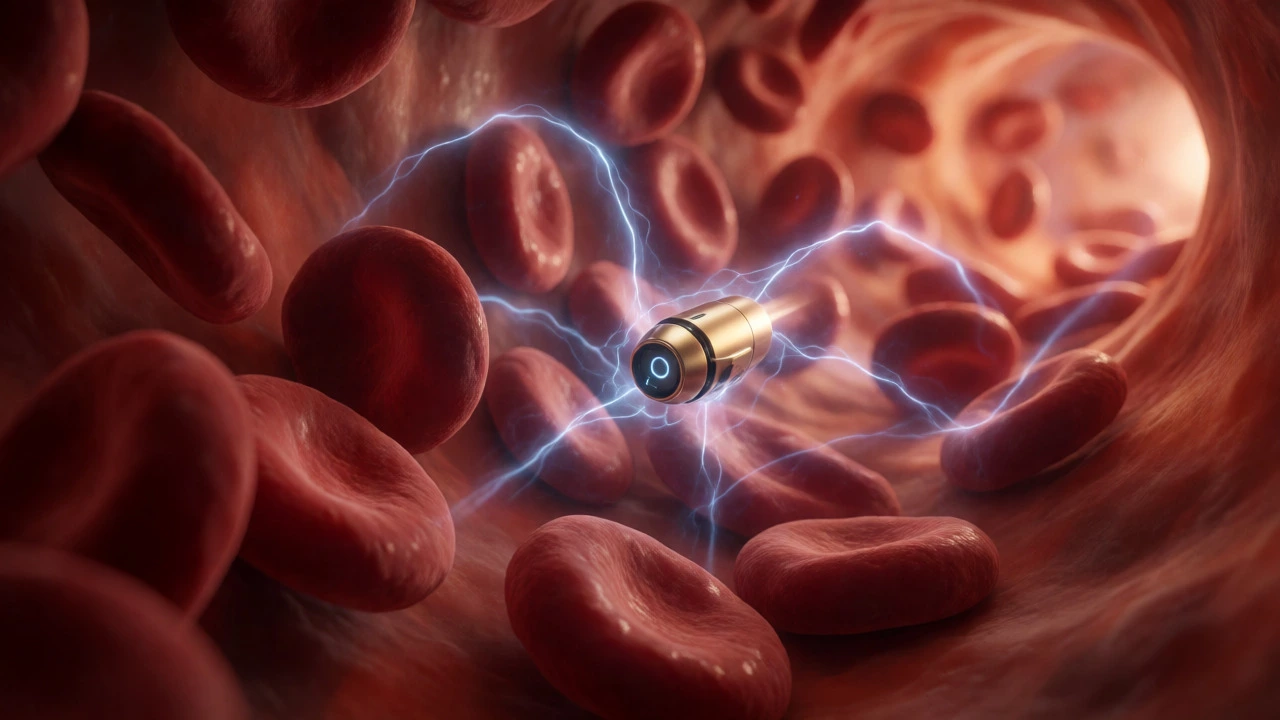
Nanotechnology isn't one thing; it's a spectrum. When we talk about nanobots, we're referring to devices ranging from 1 to 100 nanometers. At this scale, physics behaves differently. You aren't just building a smaller car; you're dealing with Brownian motion, electrostatic forces, and quantum effects. This complexity drives costs up before any product even leaves the prototype stage.
Right now, the industry is split between three main categories, each with its own cost structure:
- Passive Nanocarriers: These are essentially smart pills or lipid nanoparticles that release drugs in specific areas. They don't have motors. Think of them as advanced versions of the mRNA vaccines we saw during the pandemic. These are already hitting the market.
- Active Micro/Nano-swimmers: These use magnetic fields or chemical reactions to move. They are currently used in experimental cancer treatments and targeted biopsies.
- True Autonomous Nanorobots: These have onboard logic and sensors. We are still largely in the simulation and early prototyping phase for these. No consumer pricing exists because no consumer product exists.
The Current Cost of Development vs. Production
If you look at where the money is going today, it’s not in buying units-it’s in making them. Developing a single viable medical nanorobot platform can cost between $50 million and $200 million over ten years. Why so high? Because precision manufacturing at the molecular level is brutally expensive.
Consider the materials. Many leading designs use gold, platinum, or specialized polymers like PEGylated lipids. Gold alone adds significant material cost, though only microscopic amounts are needed per bot. The real killer is yield rate. In traditional electronics, if a chip fails, you scrap it. In nanotech, if a batch has a 5% defect rate, those defective bots might cause immune responses instead of healing tissue. That safety margin demands rigorous testing, which inflates the per-unit cost drastically in the early stages.
| Application Type | Current Unit Cost (R&D/Lab) | Projected Consumer Cost (2030+) | Primary Cost Driver |
|---|---|---|---|
| Diagnostic Biosensors | $10 - $50 per test kit | $1 - $5 per test | Mass production scaling |
| Drug Delivery Carriers | $500 - $2,000 per dose | $50 - $200 per course | Regulatory compliance & sterility |
| Therapeutic Swimmers | $10,000+ per trial session | $5,000 - $15,000 per procedure | Magnetic control systems & imaging |
| Autonomous Repair Bots | Not commercially available | $50,000+ (initially) | Complexity of AI integration |
Historical Parallels: How Tech Prices Drop
It helps to look at similar technologies to predict where nanobot prices will settle. Remember when genome sequencing cost $100 million? Now it’s under $600. Or consider CRISPR gene editing therapies. Zolgensma, a one-time treatment for spinal muscular atrophy, launched at $2.1 million. Today, newer CRISPR-based treatments are aiming for the $500,000 range, with pressure to drop further.
Nanobots will likely follow a similar curve. The first generation will be luxury-tier medical procedures, accessible mostly through insurance in wealthy nations or via clinical trials. As manufacturing techniques shift from top-down lithography (carving structures) to bottom-up assembly (building atom-by-atom), costs should plummet. Bottom-up methods are cheaper but slower right now. Once we crack scalable self-assembly, the price per unit could drop by 90% within a decade.
What Will Actually Determine Your Bill?
When you eventually see a bill for a nanobot procedure, it won't just say "nanobots: $X." The final price tag will be a composite of several factors:
- The Imaging Requirement: You can't steer a nanobot blindly. Most active nanorobots require real-time MRI or ultrasound tracking. An hour-long MRI costs $500-$1,000 in many places. If the procedure takes four hours, add $4,000 right there.
- Specialist Fees: A radiologist or interventional cardiologist needs to oversee the deployment. Their time is billed separately.
- Reusability: Some diagnostic bots are disposable. Therapeutic swimmers might be retrieved after the job. Retrieval adds complexity and cost, but reusable hardware lowers long-term expenses.
- Insurance Coverage: This is the wildcard. Initially, insurers may classify nanobots as "experimental." That means out-of-pocket costs. Once proven effective against standard care, coverage kicks in, effectively lowering the patient's share to copays and deductibles.
Industrial Nanobots: Cheaper Than You Think
While medical nanobots grab headlines, industrial applications are closer to market and significantly cheaper. Imagine coatings for solar panels that self-clean using nano-structures, or concrete mixed with nanomaterials that prevent cracking. These aren't moving robots; they are passive nanotechnology products.
For example, adding graphene oxide to concrete increases strength and durability. The cost premium is about 10-15% higher than standard concrete, but the lifespan doubles. For a construction company, that’s a net saving. Similarly, water filtration membranes using nanofibers are becoming affordable enough for household use. A home system might cost $300 upfront plus $50/year for filter replacements. Compare that to bottled water, and the ROI is clear.
Regional Differences: Why Location Matters
If you live in Bangalore, India, or the US, your access and costs differ. In the US, healthcare pricing is opaque and high. A novel therapy often carries a premium markup due to administrative overhead and liability insurance. In India, countries like Singapore, and parts of Europe, regulatory pathways for novel devices can sometimes be faster, potentially bringing costs down sooner for local populations.
Furthermore, manufacturing hubs matter. China and South Korea are aggressively scaling nanomanufacturing facilities. This competition drives down component costs globally. By 2030, we might see "nanobot tourism"-patients traveling to regions where the technology is approved and priced lower, much like dental tourism today.
The Hidden Costs: Maintenance and Upgrades
Think of nanobots less like surgery and more like software updates. If you get an implantable sensor network, you’ll need periodic checks to ensure calibration hasn’t drifted. Unlike a hip replacement, which lasts 20 years untouched, some nanodevices might need recharging or recalibration every few months.
Subscription models are emerging in health-tech. Instead of paying $10,000 for a device, you might pay $200/month for continuous monitoring. This shifts the financial burden from a massive upfront capital expense to a manageable operational expense. For hospitals, this is attractive because it spreads revenue. For patients, it makes cutting-edge care accessible without draining savings accounts overnight.
Realistic Timeline for Affordable Access
So, when do you actually pay a reasonable amount? Here is a realistic forecast based on current adoption curves:
- 2026-2028: Early adopters pay premiums ($10k-$50k). Mostly covered by clinical trials or elite private care. Focus is on cancer and cardiovascular interventions.
- 2029-2032: Insurance starts covering proven therapies. Prices stabilize around $2k-$5k per procedure. Diagnostic uses become widespread and cheap (<$100).
- 2033+: Mass manufacturing kicks in. Home-use kits for chronic conditions appear. Prices drop below $500 for common maintenance tasks.
This timeline assumes no major regulatory setbacks. One bad press event regarding side effects could freeze approvals for years, keeping prices artificially high due to limited supply.
Is It Worth the Hype?
People often compare nanobots to smartphones, expecting instant ubiquity. But biology is messier than silicon. The human body fights foreign objects. Ensuring a nanobot doesn't trigger an allergic reaction or get filtered out by the liver before reaching the target is a massive engineering hurdle. Every failure in a clinical trial sets the industry back millions, costs that get passed down to the eventual consumer.
However, the potential return on investment is huge. If a $5,000 nanobot treatment prevents a $100,000 heart bypass surgery, it’s economically brilliant. The initial sticker shock fades when viewed through the lens of long-term health savings and quality of life improvements.
Are nanobots available for purchase in 2026?
No, true autonomous nanobots are not yet available for general consumer purchase. However, passive nanocarrier drug delivery systems (like lipid nanoparticles) are widely available and used in medications such as mRNA vaccines and certain chemotherapy drugs. Active therapeutic nanorobots are currently in late-stage clinical trials.
How much will a nanobot procedure cost compared to traditional surgery?
Initially, nanobot procedures will likely cost 20-50% more than traditional surgeries due to the novelty and specialized equipment required. However, because recovery times are shorter and complications are fewer, the total cost of care (including hospital stays and rehab) may end up being lower within five years of launch.
Will insurance cover nanobot treatments?
Coverage varies by provider and region. Currently, most insurers categorize advanced nanotherapies as "investigational," meaning they are not covered. Once large-scale Phase III trials prove efficacy and cost-effectiveness, major insurers are expected to begin covering standard applications like targeted drug delivery by 2028-2030.
Why are nanobots so expensive to make?
The high cost stems from low production yields, expensive raw materials (like gold and specialized polymers), and the need for extreme precision. Additionally, the requirement for real-time medical imaging to track the bots during procedures adds significant operational costs to each treatment session.
Can I buy nanobots for cleaning my house?
Not yet. While "nano-cleaning" sprays exist, they use passive nanomaterials, not active robots. True cleaning nanobots that can scrub surfaces autonomously are still in the research phase. Expect basic industrial applications first, followed by consumer home gadgets perhaps 10-15 years from now.