
Why working alone is becoming obsolete
Imagine walking into a hospital where the nurse doesn't speak to the doctor, the pharmacist keeps their head down, and the social worker is in a completely different building. It sounds chaotic, doesn't it? Yet, this is what happens when Interprofessional Collaboration is a process where professionals from different disciplines work together to achieve common goals missing from the equation. In 2026, the complexity of modern problems means no single expert has all the answers. Whether you are curing a disease, designing a city, or launching a new technology, the days of the lone genius are largely over.
We often hear the term tossed around in academic papers or policy meetings, but what does it actually look like on the ground? It isn't just about sitting in the same room. It is about shared decision-making, mutual respect, and blending different skill sets to create a result that is better than the sum of its parts. If you are a student, a practitioner, or a manager, understanding these examples helps you see where you fit in the bigger picture.
Defining the core concept
Before we jump into specific scenarios, we need to be clear on what we are talking about. Interprofessional Collaboration differs from multidisciplinary work, where professionals work side-by-side but independently. In true collaboration, the boundaries blur. A physical therapist doesn't just "refer" a patient to a dietitian; they discuss the patient's mobility issues together to create a unified care plan.
This concept applies heavily in healthcare, but it is equally vital in science and technology. When researchers from biology, data science, and engineering join forces, they aren't just sharing data; they are co-creating hypotheses. The World Health Organization has long emphasized this approach to improve health outcomes, but the principle extends to any field where complex systems interact. The goal is always the same: to reduce errors and increase innovation through diverse perspectives.
Healthcare: The most visible examples
Healthcare remains the primary playground for interprofessional collaboration. Here, the stakes are life and death, making the need for seamless teamwork undeniable. Consider the case of a patient with diabetes and heart disease. A cardiologist might focus on the heart, while an endocrinologist manages the blood sugar. Without collaboration, their treatments might conflict.
Here is how it works in practice:
- Roundtable Rounds: Instead of a doctor dictating orders, a team including nurses, pharmacists, and social workers reviews the patient's case together. The pharmacist might spot a drug interaction the doctor missed. The social worker might identify that the patient cannot afford the prescribed medication.
- Emergency Response: In an ambulance or ER, paramedics, nurses, and physicians operate as a single unit. Roles shift based on the situation. If a nurse notices a change in breathing patterns, they speak up immediately without waiting for permission. This flat hierarchy saves time.
- Chronic Disease Management: For long-term conditions, a care team is assigned. This might include a primary care physician, a mental health counselor, and a nutritionist. They share a digital health record and communicate weekly to adjust the plan based on the patient's progress.
These examples show that collaboration isn't just about being nice to colleagues; it is a safety mechanism. Studies consistently show that when teams collaborate effectively, hospital readmission rates drop and patient satisfaction rises. It turns a fragmented system into a cohesive safety net.
Scientific research and innovation
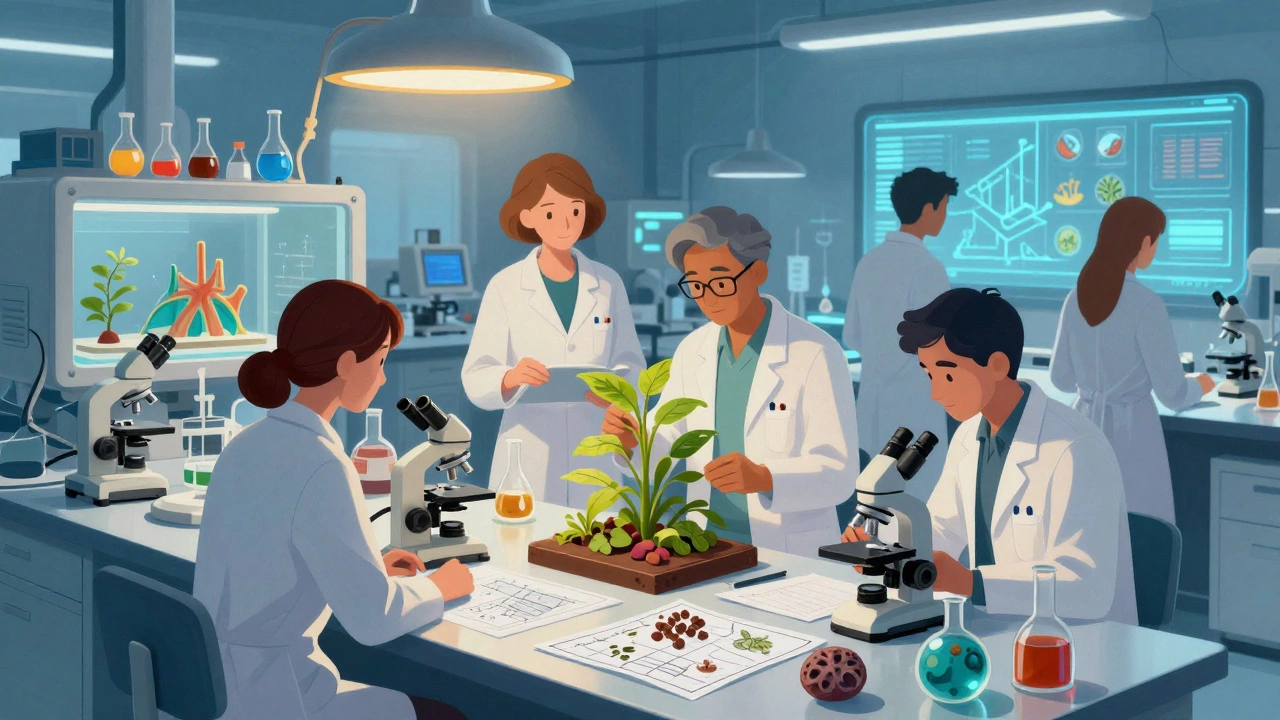
While healthcare gets the spotlight, Scientific Collaboration is driving the biggest breakthroughs of the 21st century. Modern science has become too specialized for one person to master. You cannot be an expert in genomics, machine learning, and environmental policy all at once. So, teams form.
Think about climate change research. Biologists study the impact on species, while data scientists model future scenarios. Engineers design carbon capture technologies. If these groups work in silos, the data doesn't align. But when they collaborate, they create comprehensive models that policymakers can actually use.
Another strong example is in pharmaceutical development. A drug discovery project might involve:
- Chemists synthesizing compounds.
- Biologists testing them on cell cultures.
- Regulatory experts ensuring compliance with safety standards.
- Statisticians analyzing trial results.
When these professionals meet regularly, they identify roadblocks early. A regulatory expert might say, "We can't test this way because of new 2025 guidelines," saving the chemists months of wasted work. This cross-pollination of ideas accelerates innovation. It is why major research institutes now mandate cross-departmental projects for funding.
Education and social services
Collaboration isn't limited to labs and hospitals. Schools and social service agencies rely on it to support vulnerable populations. A child struggling in school might have underlying issues at home. A teacher alone cannot fix this.
Here is a typical collaborative workflow in education:
- A teacher notices a student's declining grades and behavioral changes.
- They alert the school counselor, who assesses the student's emotional state.
- The counselor connects with a social worker from the local community agency.
- Together, they create a support plan that involves family meetings, tutoring, and mental health resources.
This approach ensures the child is seen as a whole person, not just a student. Similarly, in urban planning, architects, sociologists, and environmental engineers collaborate to design neighborhoods that are not just visually appealing but socially sustainable. They consider traffic flow, community access to green spaces, and economic viability simultaneously.
| Aspect | Siloed Work | Interprofessional Collaboration |
|---|---|---|
| Communication | One-way, hierarchical | Open, bidirectional |
| Decision Making | Individual or leader-driven | Shared and consensus-based |
| Outcome Focus | Department-specific goals | Unified system goals |
| Error Rate | Higher due to blind spots | Lower due to checks and balances |

Why it matters: The tangible benefits
You might be wondering if all this coordination is worth the effort. The answer is a resounding yes. When professionals collaborate, they reduce redundancy. Imagine three different departments ordering the same supplies because they don't talk to each other. Collaboration cuts that waste.
In healthcare specifically, the benefits are measurable. A report from the Institute of Medicine highlighted that poor communication between providers contributes to a significant percentage of medical errors. By fostering a culture where a nurse feels safe questioning a doctor's order, you prevent mistakes before they happen.
Furthermore, it boosts job satisfaction. Working in isolation can be draining. When you have a team that supports you, shares the burden, and celebrates wins together, burnout rates decrease. This is crucial in high-stress fields like emergency medicine or disaster relief. It also leads to better resource allocation. Instead of duplicating efforts, teams pool their expertise to solve the root cause of a problem rather than just treating symptoms.
Barriers to effective teamwork
It sounds ideal, but it doesn't always happen smoothly. There are real obstacles in the way. One major hurdle is professional culture. Doctors, engineers, and artists are trained differently. They speak different jargon. A doctor might prioritize clinical outcomes, while a social worker prioritizes quality of life. Without translation, these priorities clash.
Hierarchy is another barrier. In traditional settings, junior staff or those from "support" roles might hesitate to speak up to senior leaders. If a pharmacist sees a potential issue but feels intimidated by the attending physician, the collaboration fails.
Technology can also be a double-edged sword. While digital health records connect teams, incompatible systems can create new silos. If the hospital's system doesn't talk to the pharmacy's system, data gets lost in translation. Overcoming these barriers requires intentional training and leadership that values input from all levels.
How to foster better collaboration
So, how do you move from theory to practice? It starts with shared education. Many medical and nursing schools now have joint classes where students learn together before they even enter the workforce. This breaks down stereotypes early.
In the workplace, regular interprofessional meetings are essential. These shouldn't just be status updates. They should be problem-solving sessions where everyone has a voice. Leaders need to model this behavior by admitting when they don't know something and asking for input from others.
Technology plays a role too. Using unified communication platforms ensures that everyone is on the same page. Clear documentation of roles and responsibilities helps prevent overlap. Finally, celebrating team successes rather than individual heroics reinforces the value of working together. When the reward is for the group, the focus shifts from competition to cooperation.
What is the main goal of interprofessional collaboration?
The primary goal is to improve outcomes for patients, clients, or communities by combining the expertise of different professions. It aims to reduce errors, increase efficiency, and provide holistic care that a single profession cannot achieve alone.
How does interprofessional collaboration differ from multidisciplinary work?
In multidisciplinary work, professionals work in parallel but independently, often handing off tasks. In interprofessional collaboration, they work together simultaneously, sharing decision-making and responsibilities to create a unified plan.
Why is communication key to this process?
Communication is the foundation. Without open, bidirectional communication, information is lost, leading to misunderstandings and errors. Effective communication ensures that every team member understands the shared goals and their specific role in achieving them.
Can collaboration happen between different industries?
Yes, absolutely. For example, tech companies often collaborate with healthcare providers to develop better medical apps. Urban planners work with environmental scientists to create sustainable cities. Cross-industry collaboration drives innovation by bringing fresh perspectives.
What are the biggest challenges to implementing it?
The biggest challenges include hierarchical barriers, professional jargon, incompatible technology systems, and lack of time. Overcoming these requires training, leadership support, and dedicated time for team meetings.