
Carbon Budget & Tipping Point Simulator
Current rate is ~40 Gt. Drag slider to simulate reduction strategies.
Tipping Point Risks
Arctic Summer Sea Ice Loss
Threshold: 1.5°CAlready occurring intermittently. Permanent loss likely with further warming.
Coral Reef Collapse
Threshold: 1.5°C - 2.0°C70-90% loss at 1.5°C. Near total collapse at 2.0°C.
Amazon Rainforest Dieback
Threshold: 2.0°C+Risk of savanna conversion increases significantly above 2°C.
Permafrost Thaw
Threshold: 2.0°C+Massive methane release accelerates warming independently.
Greenland Ice Sheet Melt
Threshold: 2.0°C+ (Long-term)Irreversible long-term sea level rise of ~7 meters if fully triggered.
Impact Summary
At current emission rates, we are on track to exceed safe limits within a decade. Immediate drastic reductions are required to avoid cascading failures.
There is a specific date when the planet crosses a line from which there is no return. You might have heard that we have only a few years left to stop climate change. But the truth is more complex than a simple countdown clock. Scientists do not see a single moment where everything breaks at once. Instead, they see a series of dominoes falling one after another.
The short answer is that we are already past some points of no return. However, the worst outcomes are not locked in yet. We still have a window of roughly ten to fifteen years to prevent the most catastrophic changes. This is not just a guess. It comes from hard data on carbon budgets and physical thresholds.
The Myth of the Single "Point of No Return"
Many people think of global warming as a light switch. They believe that one day it will be fine, and the next day it will be completely broken. This view creates panic but does not help us take action. In reality, the climate system works like a series of switches or triggers. These are called tipping points.
A tipping point is a threshold that, once crossed, leads to self-perpetuating change. For example, if enough ice melts, less sunlight is reflected back into space. This causes more warming, which melts more ice. This cycle continues even if we stop emitting carbon today. Understanding this helps you see why timing matters so much. We are not trying to stop all change. We are trying to stop the chain reaction.
Current Status: What Has Already Changed?
Let's look at where we stand right now in 2026. The world has already warmed by about 1.2 degrees Celsius above pre-industrial levels. This might sound small, but it has caused real damage. Glaciers are shrinking faster than predicted. Heatwaves are becoming common in places that never experienced them before.
We have likely already passed some minor tipping points. The loss of summer sea ice in the Arctic during certain years is now a regular occurrence. Some coral reefs have died off due to ocean acidification and heat stress. These losses are permanent for our lifetime. However, these are not the end of the world. They are warning signs. The major systems that control global habitability are still intact, but they are under stress.
The Critical Decade: Why the Next 15 Years Matter
So, how many years do we have? Most leading researchers agree that the period between 2025 and 2040 is critical. This is the window where we can still keep warming below 1.5 degrees Celsius. If we miss this target, we move toward 2 degrees Celsius. That difference sounds tiny, but it makes a huge difference in human terms.
At 1.5 degrees, extreme weather events happen once every five years. At 2 degrees, they happen once every year. Sea levels rise faster. Crop failures become more frequent. The economic cost of adapting to these changes becomes unbearable for many nations. Therefore, the goal is not just to reduce emissions. The goal is to do it fast enough to stay within that safe zone.

Major Tipping Points to Watch
To understand the risk, you need to know what could break. There are several large-scale systems that scientists monitor closely. Here are the most dangerous ones:
- Amazon Rainforest Dieback: If deforestation and drought reach a certain level, parts of the Amazon could turn into savanna. This would release billions of tons of stored carbon and reduce rainfall across South America.
- Greenland Ice Sheet Melt: Complete melting of the Greenland ice sheet would raise global sea levels by about seven meters. While this takes centuries, the process is accelerating. Once it starts, it cannot be stopped.
- Permafrost Thaw: Frozen soil in the Arctic holds vast amounts of methane and carbon dioxide. As it thaws, these gases escape into the atmosphere. This creates additional warming independent of human emissions.
- Atlantic Meridional Overturning Circulation (AMOC): This ocean current system regulates weather patterns in Europe and North America. A collapse could lead to sudden cooling in some regions and severe storms in others.
Each of these systems has its own trigger temperature. Crossing one does not mean all will fail immediately. But each failure makes the others more likely. This is why the concept of a cascade is important.
The Role of Carbon Budgets
Scientists use a concept called the carbon budget to calculate how much time we have. This is the total amount of carbon dioxide that can be emitted while staying below a specific temperature limit. For a 50% chance of staying below 1.5 degrees, the remaining budget was estimated at around 250 gigatons of CO2 in recent reports.
At current emission rates, this budget could be exhausted in less than ten years. This means that every ton of carbon we emit reduces our chances of avoiding worse outcomes. It also highlights why renewable energy adoption is urgent. We cannot simply plant trees to fix this. We must stop adding new carbon to the atmosphere first.
| Warming Level | Sea Level Rise (by 2100) | Extreme Weather Frequency | Coral Reef Survival |
|---|---|---|---|
| 1.5°C | 0.3 - 0.5 meters | Once every 5 years | 70-90% lost |
| 2.0°C | 0.5 - 1.0 meters | Once every year | Nearly 100% lost |
| 3.0°C+ | Over 1.0 meter | Constant | Total collapse |
What Can Be Done Now?
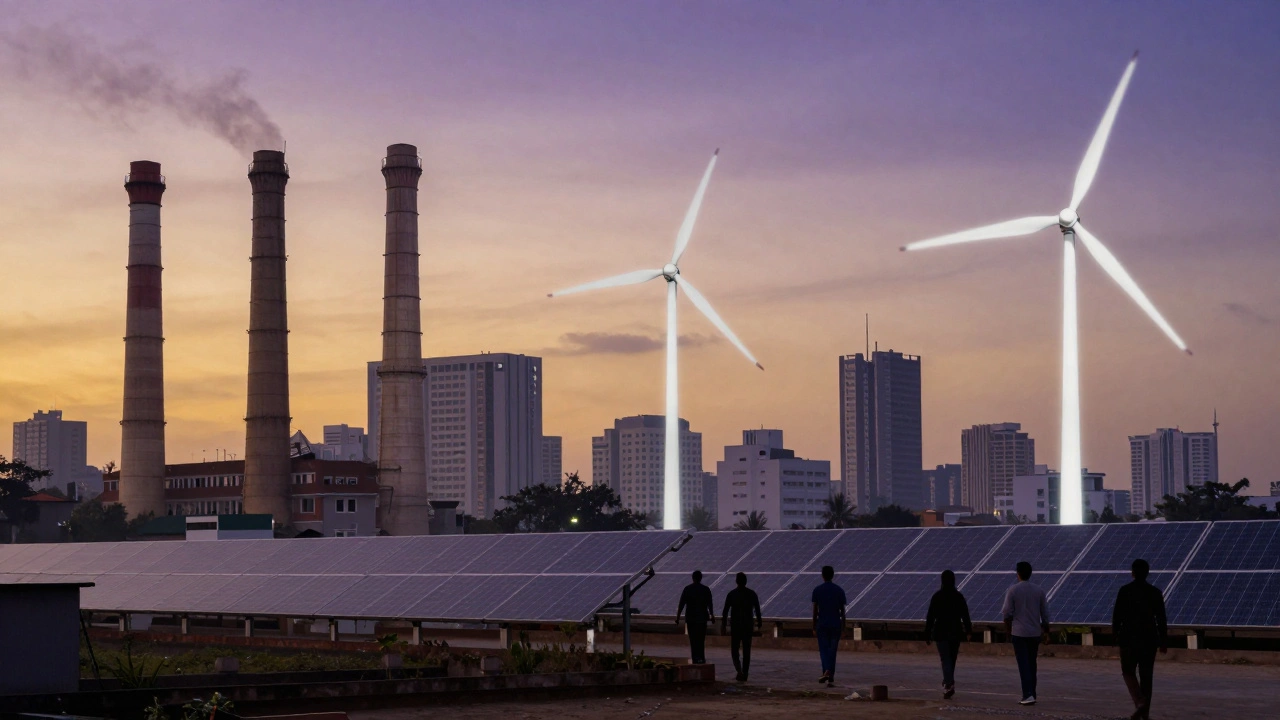
Knowing the timeline can feel overwhelming. But understanding the mechanics gives us power. We are not powerless against physics. We can influence the outcome through immediate actions. The focus must shift from distant goals to present-day reductions.
Individual actions matter, but systemic change is required. Governments must enforce stricter regulations on industries. Companies must invest in clean technology rather than lobbying for delays. Consumers can drive demand for sustainable products. Every sector plays a role in reducing the pressure on the climate system.
Technological solutions like carbon capture exist, but they are not a silver bullet. They are too expensive and slow to deploy at the scale needed right now. Relying on future tech is a risky strategy. The safest path is to cut emissions as quickly as possible using existing tools like solar, wind, and efficiency improvements.
Misconceptions About Reversibility
A common myth is that if we stop emitting carbon, the temperature will drop immediately. This is false. The oceans absorb heat slowly and release it slowly. Even if emissions hit zero today, temperatures would remain elevated for decades. This lag effect means we must act before the peak warming occurs.
Another misconception is that nature will heal itself automatically. Ecosystems have limits. Push them too far, and they collapse. Restoring forests helps, but it does not undo the chemical changes in the atmosphere. We need both mitigation (stopping emissions) and adaptation (preparing for changes).
Is climate change already irreversible?
Some aspects of climate change are already irreversible on human timescales, such as the melting of polar ice caps and rising sea levels. However, the most catastrophic effects, including widespread ecosystem collapse and extreme weather patterns, are not yet locked in. Immediate action can still limit further damage.
What happens if we cross the 1.5-degree limit?
Crossing the 1.5-degree limit increases the frequency and severity of extreme weather events, accelerates sea-level rise, and threatens biodiversity. While not an instant apocalypse, it significantly raises the risk of triggering multiple tipping points that could lead to runaway warming.
Can technology reverse climate change?
Technology can help mitigate climate change by providing clean energy and capturing carbon. However, current technologies are not sufficient to fully reverse the damage caused by historical emissions. Relying solely on future technological breakthroughs is considered a high-risk strategy by scientists.
Why is the next decade so critical?
The next decade determines whether we stay within the 1.5-degree warming limit. Current emission rates suggest we will exhaust our remaining carbon budget within ten years. Acting now allows us to avoid the most severe consequences and reduces the long-term costs of adaptation.
What are the biggest tipping points?
The most significant tipping points include the dieback of the Amazon rainforest, the melting of the Greenland ice sheet, thawing permafrost releasing methane, and the collapse of the Atlantic Meridional Overturning Circulation. Each of these could trigger cascading effects that accelerate global warming independently.