Hardware-Software Compatibility Checker
Select a Technology System
Required Components
Hardware Components
Software Components
When people talk about technology, they often think of gadgets, apps, or robots. But behind every device, every app, every system, there are just two fundamental building blocks: hardware and software. These aren’t just buzzwords-they’re the backbone of everything digital, from the smartphone in your pocket to the satellite orbiting Earth. Understanding these two types isn’t just academic-it’s essential if you want to make sense of how tech actually works in the real world.
Hardware: The Physical Side of Tech
Hardware is what you can touch. It’s the circuits, chips, wires, screens, and machines that make up the physical layer of technology. Think of it as the body of a computer. Without hardware, software has nowhere to live. You can’t run a video game on thin air, no matter how good the code is.
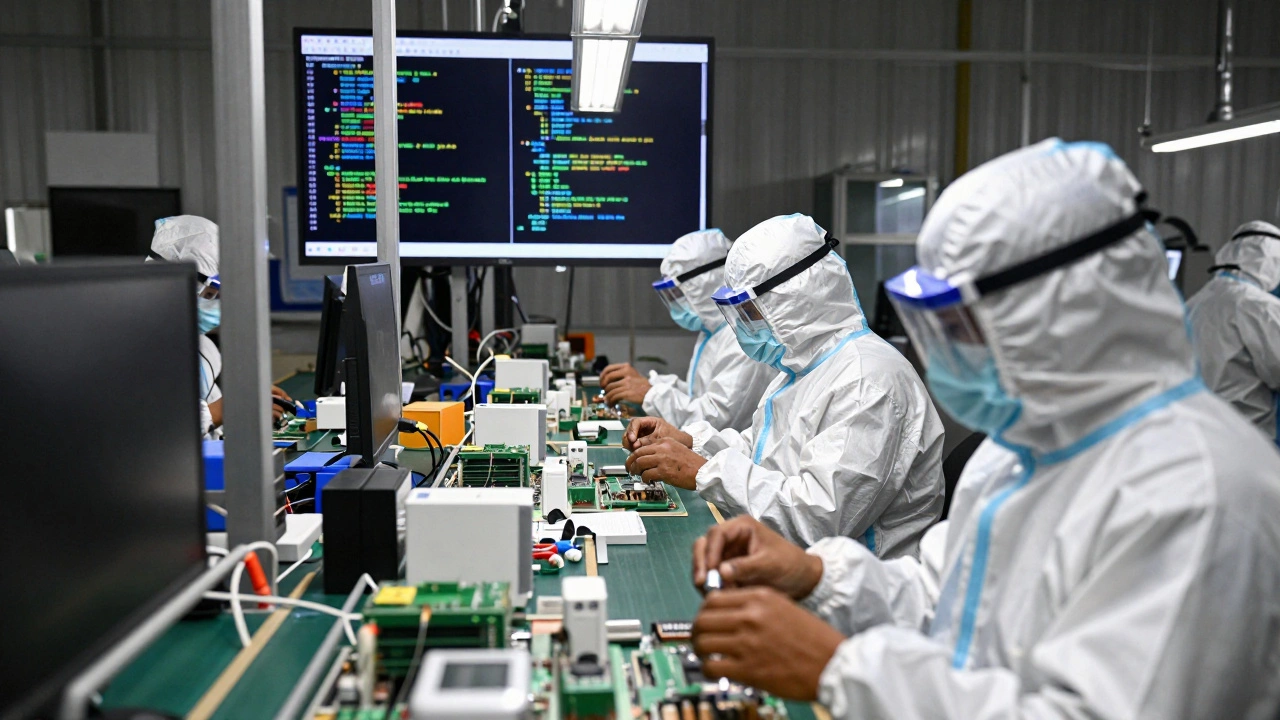
Modern hardware includes things like processors (CPUs), memory (RAM), storage drives (SSDs), sensors, cameras, and even the motors in a robotic arm. These components are made from materials like silicon, copper, and rare earth metals. They’re engineered to precise tolerances and often built in clean rooms thousands of miles away from where the final product ends up.
For example, the chips inside your smart thermostat are designed by companies like Qualcomm or MediaTek, then manufactured in Taiwan or South Korea. These chips then get shipped to factories in Mexico or Vietnam, where they’re assembled into devices that end up in homes across North America. That’s technology transfer in action: physical components moving across borders, being integrated into systems, and changing how people live.
Hardware doesn’t just mean consumer devices. In hospitals, MRI machines rely on powerful magnets and radiofrequency coils-high-precision hardware developed over decades. In agriculture, GPS-guided tractors use embedded sensors and control units to plant seeds with millimeter accuracy. This hardware is expensive, fragile, and hard to replicate without specialized factories and supply chains.
Software: The Invisible Engine
If hardware is the body, software is the brain. It’s the set of instructions that tells hardware what to do. Software includes operating systems, apps, algorithms, and code. You can’t hold it, but you feel its effects every time you unlock your phone, stream a movie, or get a weather alert.
Software is made of lines of code written in languages like Python, Java, or C++. But it’s not just about writing code-it’s about design, logic, and problem-solving. A simple weather app might seem basic, but behind it is a complex chain: data from satellites, processing models, cloud servers, user interfaces, and real-time updates. All of it is software.
One of the biggest shifts in technology transfer over the last 20 years has been the rise of software as a transferable asset. Unlike hardware, software can be copied and sent instantly across the globe. A research team in Kenya can use open-source climate modeling software developed at MIT to predict crop yields. A hospital in rural India can install diagnostic AI tools built in California, as long as they have internet access and compatible hardware.
This is why software is often the key to scaling innovation. A single algorithm can be deployed to millions of devices. A mobile app for tracking malaria outbreaks can be adapted for dengue, Zika, or even tuberculosis with minimal changes. Hardware needs factories. Software needs knowledge.
How Hardware and Software Work Together
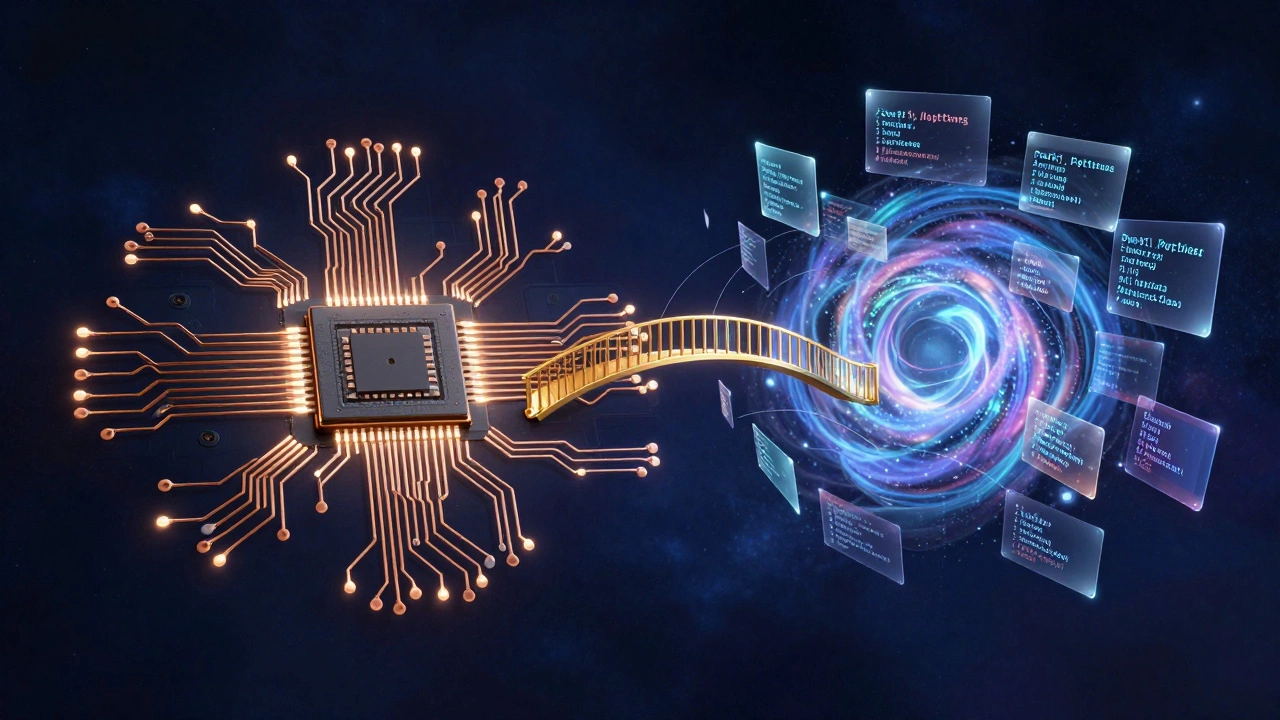
Neither hardware nor software works alone. They’re like a violin and sheet music-you need both to make a sound. A drone can’t fly without motors (hardware) and flight control software. A smart fridge can’t alert you when milk is low without sensors (hardware) and a cloud-connected app (software).
Technology transfer often fails when one side is neglected. A university might develop a brilliant diagnostic algorithm (software), but if the local clinic doesn’t have the right sensors or computing power (hardware), the tool sits unused. On the flip side, a factory might install expensive robotic arms (hardware), but if workers aren’t trained to use the control software, productivity stays low.
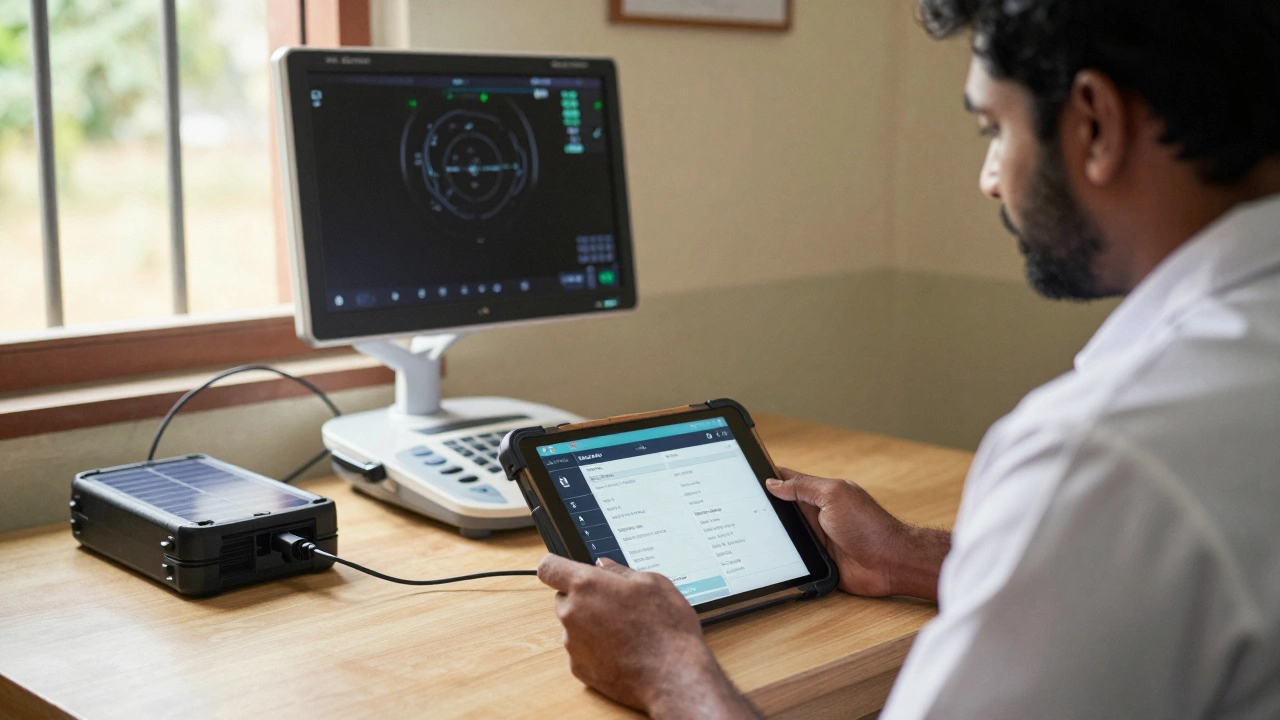
The most successful tech transfers-like the rollout of mobile health clinics in sub-Saharan Africa-combine both. They provide rugged, low-power tablets (hardware) loaded with offline-capable medical apps (software). These aren’t just gadgets; they’re systems designed to work together in environments with limited electricity and internet.
Why This Matters for Innovation
When governments or NGOs invest in technology, they often focus on one side. They buy a hundred laptops (hardware) but don’t train teachers to use educational software. Or they fund an AI model (software) but ignore that rural clinics lack the internet bandwidth to run it.
Real progress happens when both types are addressed together. Look at the success of solar-powered water pumps in Bangladesh. The hardware-pumps, solar panels, batteries-was imported and assembled locally. But the real breakthrough came when engineers built a simple SMS-based monitoring system (software) that let farmers know if their pump was working. No internet? No problem. Text messages worked.
This is the secret: innovation isn’t about having the fanciest tech. It’s about matching the right hardware with the right software for the context. A $5000 MRI machine won’t help a village without electricity. But a $50 ultrasound device with a battery-powered tablet and AI-assisted diagnosis? That’s transformative.
Where You See This Every Day
You don’t need to be an engineer to spot this divide. When your smart speaker stops responding, is it because the mic broke (hardware) or because the voice assistant crashed (software)? When your car’s navigation doesn’t update, is it a faulty GPS chip (hardware) or an outdated map app (software)?
Even your phone is a perfect example. The screen, processor, and battery are hardware. The iOS or Android operating system, your apps, and cloud sync are software. Apple doesn’t just sell hardware-they sell a software ecosystem. Google doesn’t just make search-it makes the software that runs on billions of devices made by others.
When you upgrade your phone, you’re not just getting a better chip. You’re getting faster software, better security updates, and new features built into the operating system. The hardware enables it. The software makes it useful.
What This Means for the Future
As we move into AI-driven systems, robotics, and smart cities, the line between hardware and software is blurring. Self-driving cars need cameras and radar (hardware) and neural networks that process real-time data (software). Quantum computers need supercooled circuits (hardware) and quantum algorithms (software).
But the core truth remains: if you want to transfer technology effectively, you need both. You can’t just ship code to a place without the right machines. And you can’t just give someone a machine without the knowledge to use it.
The future of global innovation won’t be decided by who builds the most powerful chips. It’ll be decided by who can pair the right hardware with the right software-and train people to use them.