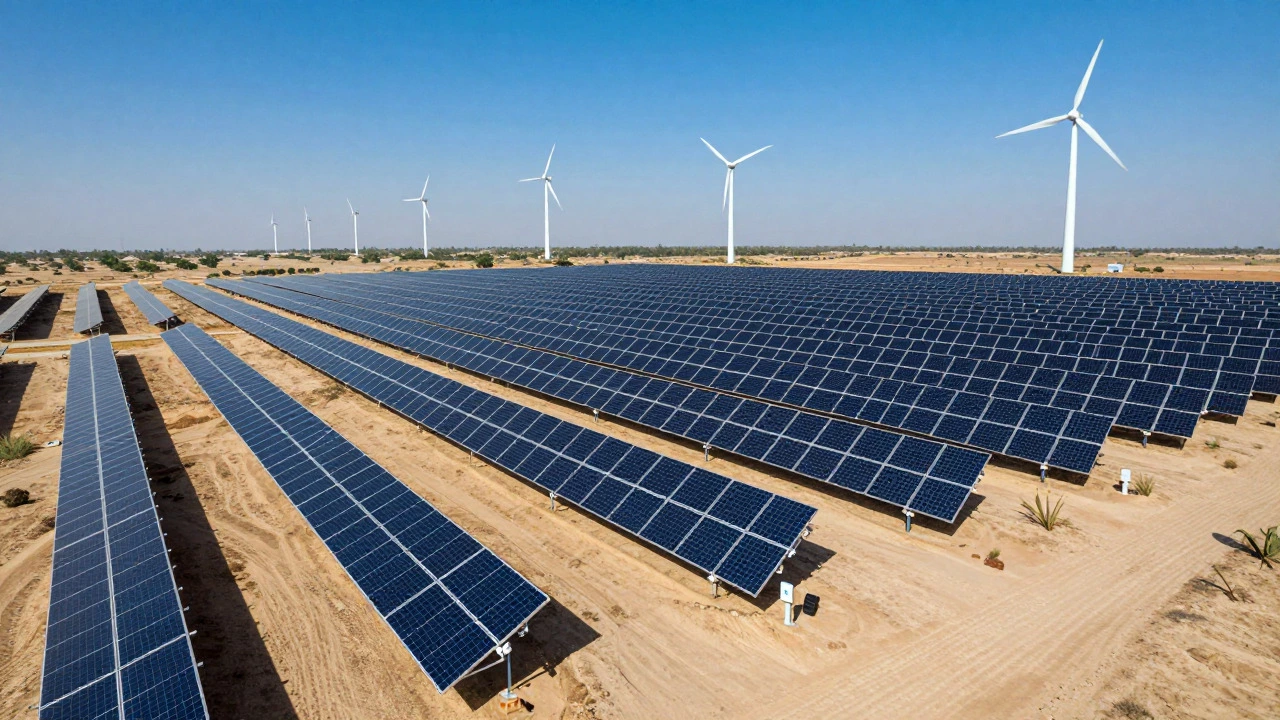
Renewable Energy Country Comparison Tool
Leadership in renewable energy depends on the metric. Switch between views to see how rankings change dramatically depending on whether you measure scale, purity, or momentum.
Rankings by Metric
Country Details
China
Rank #1Holds over 1,400 GW of solar PV alone. Accounts for ~50% of global new installations.
When people ask who leads the world in renewable energy, the answer isn't a single name. It depends on whether you are counting total installed capacity, share of electricity from clean sources, or financial investment. In 2026, the landscape has shifted dramatically, with emerging economies overtaking traditional industrial powers in sheer volume.
If you are looking for the country that generates the most renewable electricity in absolute terms, the answer is China is the global leader in total renewable energy capacity, accounting for nearly half of all new installations worldwide. However, if you measure by the percentage of domestic electricity coming from renewables, small island nations and hydro-rich countries like Norway often take the crown. This distinction matters because it highlights two different types of leadership: scale versus purity.
Defining the Leader: Capacity vs. Percentage
To understand who is "number one," we first need to agree on the metric. There are three main ways experts rank countries:
- Total Installed Capacity (GW): The total amount of power generation equipment currently operational. This measures scale.
- Share of Electricity Mix (%): The proportion of a country's total electricity generated from renewable sources. This measures reliance on clean power.
- New Annual Additions (GW/year): How much new capacity was added in the last year. This measures momentum.
Most global rankings, including those from the International Energy Agency (IEA) and IRENA, use total installed capacity as the primary benchmark for "leadership" because it reflects economic weight and infrastructure maturity. By this standard, China has held the top spot since 2015, but its lead has widened significantly in the last five years.
Why China Holds the Top Spot in 2026
China’s dominance is not accidental; it is the result of state-backed industrial policy and massive manufacturing capabilities. As of early 2026, China holds over 1,400 GW of solar photovoltaic (PV) capacity alone. To put that in perspective, the entire United States has roughly 30% of that figure.
The driving force behind this growth is the cost reduction of solar panels and wind turbines, technologies where Chinese manufacturers dominate global supply chains. Companies like LONGi Green Energy and Goldwind have driven prices down so low that renewables are now cheaper than fossil fuels in most parts of the country. This economic advantage allows China to install gigawatts of capacity every month, outpacing the rest of the world combined.
Beyond solar, China also leads in hydropower, thanks to the Three Gorges Dam and newer projects in the southwest. While hydropower growth has slowed due to environmental concerns, the existing base remains enormous, providing a stable backbone for the grid.
The Challengers: Europe, USA, and Emerging Markets
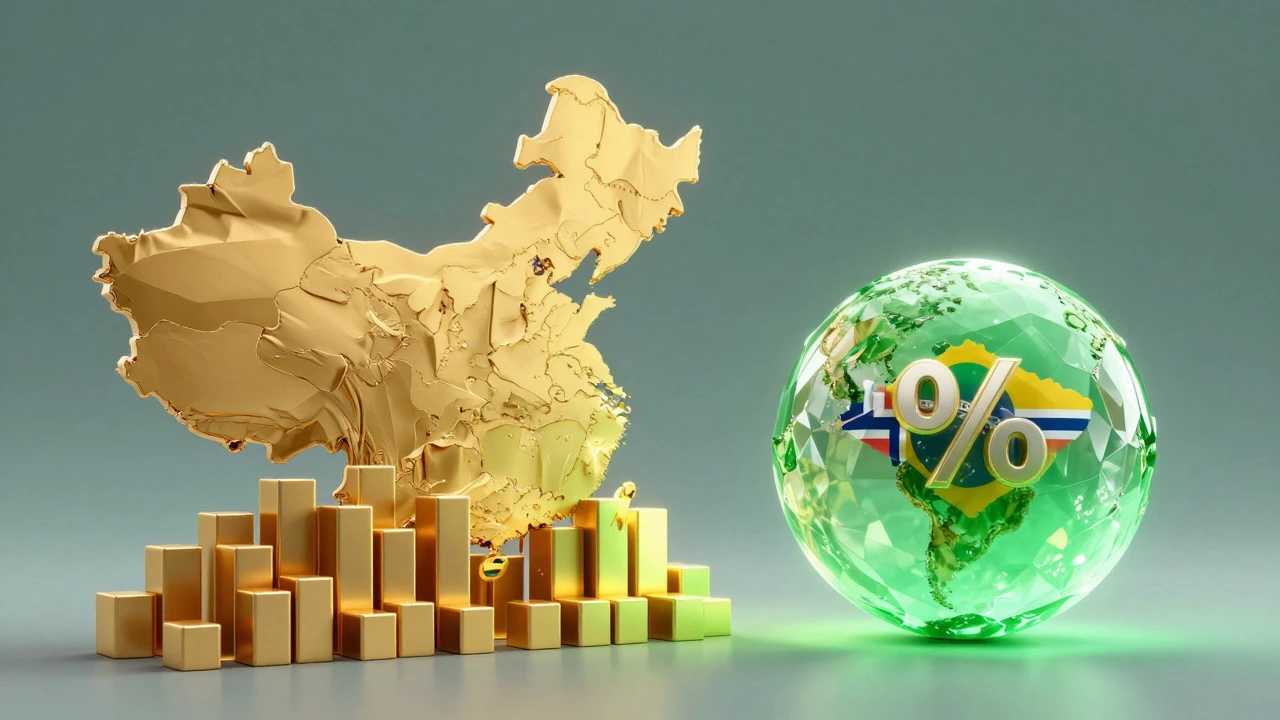
While China wins on volume, other regions lead in specific categories. Europe, particularly Germany and Spain, remains a pioneer in offshore wind technology. The European Union’s collective installed capacity is second only to China, but its growth rate has been slower due to higher regulatory hurdles and labor costs.
In North America, the United States has seen a resurgence in renewable investment following the Inflation Reduction Act. Texas and California are hubs for wind and solar, respectively. However, the US still lags behind China in total capacity by a factor of four. That said, the US leads in certain high-tech applications, such as utility-scale battery storage integration.
Then there are the surprises. India, Brazil, and Vietnam have emerged as aggressive adopters. Brazil, for instance, gets over 80% of its electricity from renewables, primarily hydropower and wind. If you look at the percentage of the grid, Brazil often ranks number one globally, even though its total capacity is less than a tenth of China’s. This shows that a country can be a "clean energy champion" without being the largest producer.
Comparing the Top Five: A Data Snapshot
To make the differences clear, let’s look at the approximate figures for the top five countries in terms of total renewable capacity as of mid-2026. These numbers illustrate the gap between the leader and the rest of the pack.
| Rank | Country | Total Capacity (GW) | Primary Source | Key Driver |
|---|---|---|---|---|
| 1 | China | ~1,650 | Solar PV | Manufacturing scale & policy support |
| 2 | United States | ~450 | Wind & Solar | Tax incentives & private investment |
| 3 | India | ~200 | Solar & Hydro | Government targets & rising demand |
| 4 | Brazil | ~190 | Hydro & Wind | Natural resources & grid stability |
| 5 | Germany | ~180 | Wind & Solar | Historical policy (Energiewende) |
Notice how the gap between #1 and #2 is massive. China’s capacity is more than three times that of the United States. This disparity is why global climate negotiations often focus on China’s actions; their output affects the global average more than any other single nation.
Beyond Electricity: The Broader Picture
It is important to remember that electricity is only part of the energy equation. Transportation, heating, and industry still rely heavily on oil, gas, and coal. When we talk about "renewable energy leaders," we are usually discussing the power sector. But true leadership includes decarbonizing these other sectors.
In this broader context, countries like Norway and Iceland stand out. They use geothermal energy for heating and electric vehicles for transport. Their overall carbon footprint per capita is among the lowest in the world, even if their total renewable capacity is modest compared to China. This highlights a key nuance: a small, wealthy nation can be "greener" in lifestyle and efficiency metrics, while a large, developing nation leads in raw production volume.
Furthermore, the role of energy storage is becoming critical. A country might have abundant solar power, but if it cannot store excess energy for night use, its grid reliability suffers. Leaders in this space are shifting from just building panels to integrating lithium-ion batteries and pumped hydro storage. China again leads here, having installed the majority of the world’s grid-scale battery systems by 2025.
What Does "Number One" Mean for the Future?
As we move deeper into the 2020s, the definition of leadership is evolving. It is no longer just about who builds the most plants; it is about who integrates them most efficiently. The "number one" country will likely be the one that achieves the highest penetration of renewables in its total final energy consumption, not just its electricity mix.
For investors and policymakers, this means watching multiple indicators. If you are tracking market trends, look at China’s manufacturing output. If you are studying grid stability, look at Brazil’s hydro-wind hybrid models. If you are interested in consumer adoption, look at Norway’s EV sales. Each offers a different piece of the puzzle.
The race is not a zero-sum game. As costs continue to fall, more countries will join the top tier. The goal is not to have a single winner, but to accelerate the global transition so that every nation benefits from cleaner, cheaper, and more reliable power.
Is China really the number one country in renewable energy?
Yes, by total installed capacity and annual additions, China is the undisputed leader. It accounts for approximately 50% of the world's new renewable energy capacity added each year. However, if you measure by the percentage of electricity generated from renewables, smaller countries like Brazil or Norway may rank higher.
Which country has the highest percentage of renewable electricity?
Countries like Iceland, Norway, and Brazil consistently rank at the top for the share of renewable electricity. Iceland uses almost 100% renewable sources (geothermal and hydro), while Brazil relies heavily on hydropower and wind to generate over 80% of its power.
Why is China leading in solar energy specifically?
China dominates the solar supply chain, producing over 80% of the world's solar panels. This vertical integration keeps costs low and ensures a steady supply of components, allowing for rapid deployment of large-scale solar farms across the country.
Does renewable energy leadership include transportation?
Traditional rankings focus on electricity generation. However, when considering total energy use, countries with high electric vehicle adoption and biofuel usage, such as Norway and the United States, gain ground. A comprehensive ranking would weigh both electricity and transport sectors.
How does India compare to China in renewable energy?
India is the third-largest holder of renewable capacity globally. While its total capacity is about one-eighth of China's, India has set ambitious targets to reach 500 GW of non-fossil fuel capacity by 2030, making it one of the fastest-growing markets in the sector.