Climate Research Gap Assessment Tool
Assess which areas of climate research are most critical for your specific context. Answer the questions below to see where scientific inquiry is most urgently needed.
The results will highlight specific scientific and social science gaps relevant to your situation, such as hyper-local modeling, behavioral economics, or techno-economic analysis.
You might think we know everything about climate change. We have the data, the models, and the warnings. But here’s the twist: knowing the planet is warming isn’t enough. The real crisis lies in what we don’t yet understand. How fast will sea levels rise in specific coastal cities? Which crops will survive the next heatwave? How do we actually deploy carbon capture at scale without breaking the economy?
If you’re wondering what research is needed for climate change, you’re asking the right question. We are moving from an era of diagnosis to one of treatment. That shift requires a massive pivot in scientific inquiry. It’s not just about measuring CO2 anymore; it’s about solving complex, messy human-environment interactions.
Key Takeaways
- Precision Matters: Global averages are useless for local decisions. We need hyper-local climate projections for agriculture and urban planning.
- Social Science Gap: Technology alone won’t fix this. We urgently need research into human behavior, policy acceptance, and equitable transition strategies.
- Tipping Points: Current models struggle to predict abrupt changes like ice sheet collapse or Amazon dieback. This remains our biggest uncertainty.
- Adaptation vs. Mitigation: Funding has skewed heavily toward cutting emissions (mitigation). We now need equal focus on helping societies adapt to unavoidable changes.
- Data Integration: Combining satellite data with ground-level sensors and AI is critical for real-time monitoring and early warning systems.
The Precision Problem: From Global Models to Local Reality
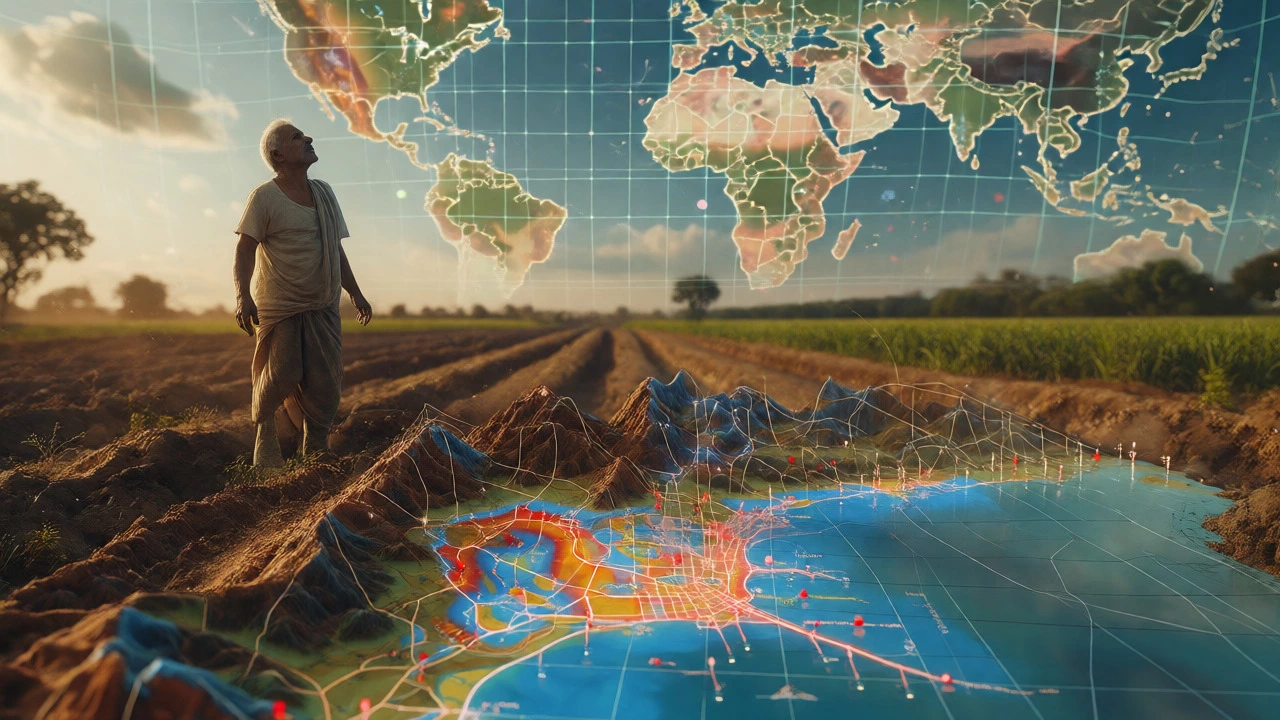
For decades, climate science focused on the big picture. The Intergovernmental Panel on Climate Change (IPCC) provided global temperature trajectories that were scientifically robust but practically vague for a farmer in Karnataka or a city planner in Mumbai. The core issue? Resolution. A global model might say India will get hotter by 2°C. But does that mean monsoon rains will fail in July or August? Will the humidity spike in Bangalore make outdoor labor impossible?
We need downscaling research. This involves taking broad climate data and refining it to match local geography, topography, and microclimates. Without this, adaptation plans are just guesses. For instance, understanding how urban heat islands interact with regional warming patterns is crucial for designing cooling infrastructure in dense cities. If we don’t know exactly where the floodwaters will go, we can’t build the right walls.
Understanding Tipping Points and Non-Linear Changes
Climate change isn’t a straight line up. It’s a staircase with hidden traps. These traps are called tipping points. Once crossed, these thresholds trigger self-reinforcing feedback loops that are nearly impossible to reverse. Think of the melting of the Greenland Ice Sheet. As it melts, it reflects less sunlight, causing more warming, which causes more melting. Simple linear models often miss these abrupt shifts.
Research must prioritize identifying these thresholds. Where is the point of no return for the Amazon rainforest turning into a savanna? What happens to ocean currents if the Atlantic Meridional Overturning Circulation slows down? These aren’t just academic questions. They determine whether we have ten years or fifty years to act. Current climate models are improving, but they still lack the computational power and observational data to predict these events with high confidence. We need better paleoclimate data-studying ice cores and sediment layers-to calibrate these models against past rapid changes.

The Human Dimension: Why Social Science is Urgent
Here is a hard truth: we already have many of the technological tools to fight climate change. Solar panels work. Electric vehicles exist. So why aren’t we using them faster? The answer lies in sociology, economics, and psychology. Social science research is arguably the most underfunded area in climate studies today.
We need to understand barriers to adoption. Why do some communities resist wind farms despite the economic benefits? How do cultural values influence dietary choices, which impact land use? Research needs to explore the "last mile" of implementation. It’s not enough to propose a carbon tax; we need studies on how different income groups react to price hikes and how political systems can manage the transition without social unrest.
| Focus Area | Traditional Approach | Required Future Research |
|---|---|---|
| Scale | Global averages | Hyper-local, community-specific impacts |
| Discipline | Physics and Chemistry dominant | Integration of Sociology, Economics, and Ethics |
| Goal | Predict future temperatures | Design resilient systems and policies |
| Timeframe | Long-term (2100) | Short-term actionable insights (2030-2050) |
Scaling Mitigation Technologies: Beyond the Lab
Carbon capture and storage (CCS) sounds great in a white paper. But can we build a million of these plants? Can we afford them? Techno-economic analysis is vital here. We need research that moves beyond proof-of-concept to industrial scalability.
Consider green hydrogen. It’s hailed as the fuel of the future. But producing it requires massive amounts of renewable energy and water. In drought-prone regions like parts of India, this creates a conflict. Research must address these trade-offs. How much water does a solar farm consume for cleaning panels in arid zones? What is the true lifecycle carbon footprint of battery recycling? We need rigorous, independent audits of emerging tech, not just marketing claims.
Furthermore, nature-based solutions need scrutiny. Planting trees is popular, but planting the wrong species in the wrong place can backfire. Monoculture plantations may sequester carbon but destroy biodiversity and soil health. Ecological research must guide restoration projects to ensure they deliver multiple co-benefits: water retention, habitat creation, and carbon storage.
Adaptation Finance and Equity
The Global South contributes the least to historical emissions but suffers the most. Yet, most climate finance flows to mitigation projects in wealthy nations. We need research into loss and damage. This concept covers the irreversible impacts of climate change, such as lost homes, livelihoods, and culture.
How do we quantify the cost of losing a small island nation’s heritage? Who pays for it? Economic models currently fail to capture these non-market losses. Research is needed to develop new metrics for resilience. Instead of just looking at GDP growth, we need indicators that measure community stability, food security, and health outcomes under stress.
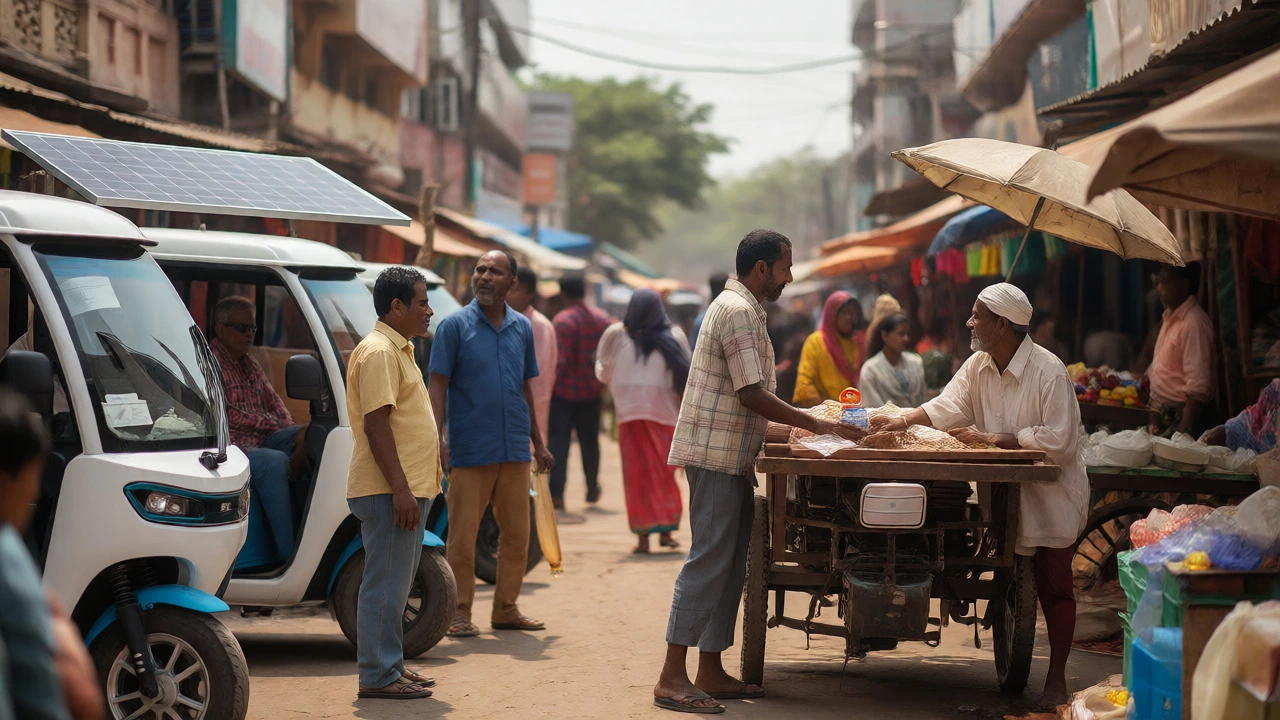
Equity also demands studying who gets left behind. Transitioning to electric cars helps the middle class. But what about the street vendor whose cart runs on diesel? Research must identify vulnerable populations and design targeted support mechanisms. Without this, climate action could deepen existing inequalities.
Next Steps for Researchers and Policymakers
If you are involved in policy or science, where should you look next? First, demand interdisciplinary teams. A climate problem cannot be solved by physicists alone. You need anthropologists, economists, and engineers in the same room.
Second, prioritize open data. Siloed information slows progress. We need standardized datasets that allow researchers worldwide to compare results easily. Third, focus on actionable knowledge. Ask yourself: "Can this finding help a mayor make a decision next month?" If not, refine the question.
Finally, engage the public. Science communication is part of the research process. Complex findings about tipping points or carbon budgets must be translated into clear narratives that drive public support for difficult policies.
Why is local climate data more important than global averages?
Global averages mask regional variations. A 1.5°C global rise might mean a 4°C rise in your specific city, affecting health and infrastructure differently. Local data allows for precise adaptation strategies, such as adjusting crop varieties or building codes.
What are climate tipping points?
Tipping points are thresholds where small changes cause large, often irreversible shifts in the climate system. Examples include the collapse of ice sheets or the dieback of rainforests. Research aims to identify these points before they are crossed.
Why is social science research critical for climate action?
Technology alone doesn't solve climate change. Social science explains human behavior, policy resistance, and equity issues. It helps design interventions that people will actually accept and adopt, ensuring smooth transitions.
What is the difference between mitigation and adaptation research?
Mitigation research focuses on reducing greenhouse gas emissions (e.g., renewable energy). Adaptation research focuses on managing the impacts of unavoidable climate change (e.g., flood defenses, drought-resistant crops). Both are essential, but adaptation funding has historically lagged.
How does AI help in climate research?
AI processes vast amounts of satellite and sensor data much faster than traditional methods. It improves weather forecasting accuracy, identifies deforestation patterns in real-time, and optimizes energy grids for renewable integration.