Planetary Walkability Analyzer
Select a planet to analyze its surface conditions and determine if it is possible for a human to walk there.
Mercury
Rocky World
Venus
The Trap
Earth
Home Base
Mars
Red Planet
Jupiter
Gas Giant
Saturn
Gas Giant
Uranus
Ice Giant
Neptune
Ice Giant
Analysis
Surface Composition
Environment
Survival Scenario
Imagine standing on the surface of a planet, looking up at a sky filled with swirling storms. Now imagine that as you take a step, your foot doesn't hit solid ground. Instead, it sinks into thick, crushing gas or deep, churning liquid. This isn't science fiction; it is the reality for most of our neighbors in the solar system. When people ask which planet can you not walk on, they are usually thinking of the massive worlds that dominate our cosmic neighborhood: Jupiter, Saturn, Uranus, and Neptune.
The short answer is that you cannot walk on any of the four outer planets because they lack a solid surface. But the story is more complex than just "no ground." To understand why these worlds are unwalkable, we have to look at what they are made of, how their atmospheres behave, and the extreme physics that rule them. It turns out that even the inner rocky planets might surprise you if you dig a little deeper into the definition of "walking." ## The Gas Giants: Jupiter and Saturn
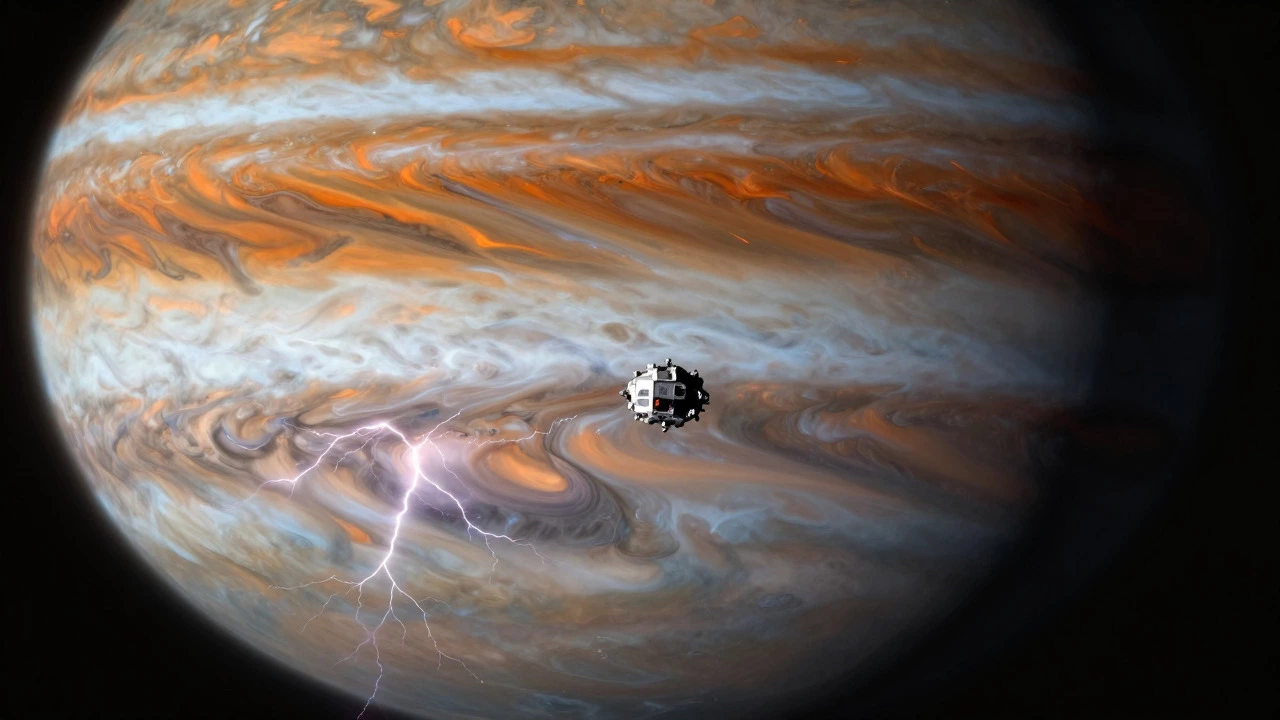
Jupiter is the largest planet in our solar system, composed primarily of hydrogen and helium with no defined solid surface. If you were to drop a probe onto Jupiter, it would never touch down. It would simply keep falling. As it descended, the atmospheric pressure would increase dramatically. Within hours, the probe would be crushed by forces millions of times stronger than Earth's atmosphere.
Jupiter is often called a "failed star" because its composition is similar to the Sun. It consists mostly of molecular hydrogen. As you go deeper, the pressure becomes so intense that the hydrogen changes state. It transitions from a gas to a liquid, and eventually to metallic hydrogen-a strange form of matter that conducts electricity like copper but flows like water. There is no crust, no bedrock, and no place to plant your feet. You would float, sink, and then be compressed until you ceased to exist as a distinct entity.
Saturn shares this fate. In fact, Saturn is less dense than water. If you could find a bathtub big enough, Saturn would float. Its atmosphere is also dominated by hydrogen and helium. Like Jupiter, it has a deep interior where pressures are immense. While scientists believe Saturn may have a small rocky core, it is buried under thousands of kilometers of fluid layers. Reaching it would require surviving temperatures of tens of thousands of degrees and pressures that turn matter into exotic states. Walking is impossible here because there is nothing to stand on until you are long dead.
| Planet | Type | Primary Composition | Surface Status |
|---|---|---|---|
| Jupiter | Gas Giant | Hydrogen, Helium | No solid surface |
| Saturn | Gas Giant | Hydrogen, Helium | No solid surface |
| Uranus | Ice Giant | Water, Ammonia, Methane Ices | No solid surface |
| Neptune | Ice Giant | Water, Ammonia, Methane Ices | No solid surface |
While Jupiter and Saturn are gas giants, Uranus and Neptune are classified as ice giants. The name "ice" can be misleading. It does not mean they are covered in frozen water like an arctic landscape. Instead, "ices" in planetary science refers to volatile substances like water, ammonia, and methane that are hot and dense under high pressure.
Uranus is unique because it rotates on its side, likely due to a massive ancient collision. Its atmosphere is cold and blue-green due to methane. Below the visible clouds, the planet transitions into a supercritical fluid mantle. A supercritical fluid has properties of both a liquid and a gas. It can flow through solids like a gas but compress like a liquid. There is no sharp boundary between the atmosphere and the interior. If you tried to walk on Uranus, you would slowly sink into this slushy, super-dense ocean. The pressure would crush you long before you reached any potential rocky core.
Neptune is windier and stormier. It holds the record for the fastest winds in the solar system, reaching speeds of over 2,000 kilometers per hour. These winds blow across a featureless, cloudy expanse. Like Uranus, Neptune lacks a solid surface. Its interior is a mix of rock and ice mantles under extreme pressure. The concept of "ground" does not apply here. You would be suspended in a thick, turbulent fluid environment that gets denser and hotter the deeper you go.
## What About Venus? The Rocky TrapYou might think that since Mercury, Venus, Earth, and Mars are rocky planets, you can walk on all of them. Technically, yes, you can stand on their surfaces. However, Venus is a special case. It has a solid surface made of basaltic rock, similar to volcanic regions on Earth. So, you can put your foot down. But can you walk?
Venus is the hottest planet in the solar system, with surface temperatures around 465°C (870°F). This is hot enough to melt lead. The atmospheric pressure is 92 times that of Earth. Imagine being at the bottom of a kilometer-deep ocean on Earth, but instead of water, you are surrounded by carbon dioxide gas that is boiling hot. A human unprotected would die instantly from heat and pressure. Even with advanced technology, walking on Venus is practically impossible because the environment destroys machinery quickly. The Soviet Venera landers survived only a few hours before being crushed or fried. So, while Venus has a surface, it is effectively unwalkable for humans with current technology.
## Why Does This Matter?Understanding which planets are unwalkable helps us grasp the diversity of our solar system. It highlights the difference between terrestrial planets (rocky) and giant planets (fluid). This distinction is crucial for future space exploration. If we want to explore Jupiter or Saturn, we need floating probes or orbiters, not rovers. For Venus, we need extreme-temperature-resistant robots. Knowing the physical state of these worlds guides how we design our missions.
It also raises questions about exoplanets. Many planets discovered outside our solar system are "super-Earths" or "mini-Neptunes." Some may have solid surfaces, while others might be entirely gaseous or liquid. Understanding the physics of our own unwalkable planets helps astronomers predict what these distant worlds might be like.
## The Role of Gravity and AtmosphereGravity plays a huge role in whether a planet can hold onto a solid surface. Small bodies like asteroids and moons have low gravity and retain whatever material they formed with. Large planets like Jupiter have such strong gravity that they pull in vast amounts of hydrogen and helium from the early solar nebula. This gas forms a thick envelope that hides any internal structure. The sheer mass creates pressure that prevents the formation of a rigid crust at the top. Instead, the materials remain in fluid states throughout most of the planet's volume.
Atmospheric density is another factor. On Earth, our atmosphere is thin compared to our size. On Venus, the atmosphere is so thick it acts almost like a fluid ocean. On the gas giants, the atmosphere *is* the planet. There is no clear line where the air ends and the planet begins. This gradual transition makes the idea of a "surface" meaningless for these worlds.
## Future Missions and TechnologyScientists are developing new technologies to study these unwalkable worlds. For Jupiter, NASA's Juno mission orbits the planet, studying its magnetic field and atmosphere from above. Future missions might include atmospheric entry probes designed to withstand high pressure and temperature for short periods. For Venus, concepts for aerostats-floating balloons that ride the upper atmosphere-are being explored. These vehicles could stay aloft for months, studying the climate without ever touching the deadly surface.
These innovations show that even though we cannot walk on these planets, we can still explore them. By adapting our tools to the environment, we continue to unlock the secrets of our solar system. The inability to walk on a planet is not a barrier to knowledge; it is a challenge that drives engineering creativity.
Can you walk on Pluto?
Yes, technically you can walk on Pluto. Although it is now classified as a dwarf planet, Pluto has a solid surface made of nitrogen ice, water ice, and other frozen gases. NASA's New Horizons spacecraft imaged mountains and plains on Pluto, confirming its solid nature. However, the temperature is extremely cold, around -230°C (-380°F), so you would need specialized gear to survive.
Is there any solid ground inside Jupiter?
Scientists believe Jupiter may have a dense core made of rock and metal, but it is buried deep beneath thousands of kilometers of hydrogen and helium. Reaching this core would require surviving immense pressure and heat. For all practical purposes, Jupiter has no accessible solid surface. Any "ground" is inaccessible and surrounded by fluid layers.
Why can't we land on Saturn?
Saturn lacks a solid surface. It is composed mainly of hydrogen and helium, similar to Jupiter. As you descend into Saturn's atmosphere, the pressure increases until the gases become liquids and then metallic fluids. There is no crust to land on. Probes sent to Saturn would sink and eventually be crushed by the increasing pressure and temperature.
What is the difference between gas giants and ice giants?
Gas giants like Jupiter and Saturn are primarily made of hydrogen and helium. Ice giants like Uranus and Neptune contain more "ices"-volatile compounds like water, ammonia, and methane-in addition to hydrogen and helium. Both types lack solid surfaces, but ice giants have a different internal composition and structure, with thicker mantles of supercritical fluids.
Could humans ever walk on Venus?
With current technology, walking on Venus is nearly impossible due to extreme heat (465°C) and pressure (92 times Earth's). While the surface is solid, the environment destroys electronic equipment quickly. Future advancements in materials science might allow for short-duration robotic walks, but human presence remains unlikely for the foreseeable future.