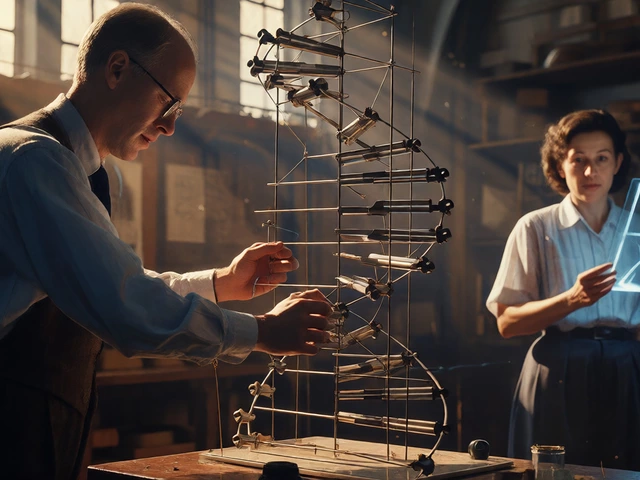
Artificial intelligence didn’t pop up out of nowhere. It wasn’t invented by one person in a garage or a single lab. The idea of machines thinking like humans has been around for centuries - but the real, working foundation of AI? That came from a handful of scientists, engineers, and thinkers who refused to accept that machines could only follow orders. They asked: What if machines could learn?
Alan Turing: The First Blueprint
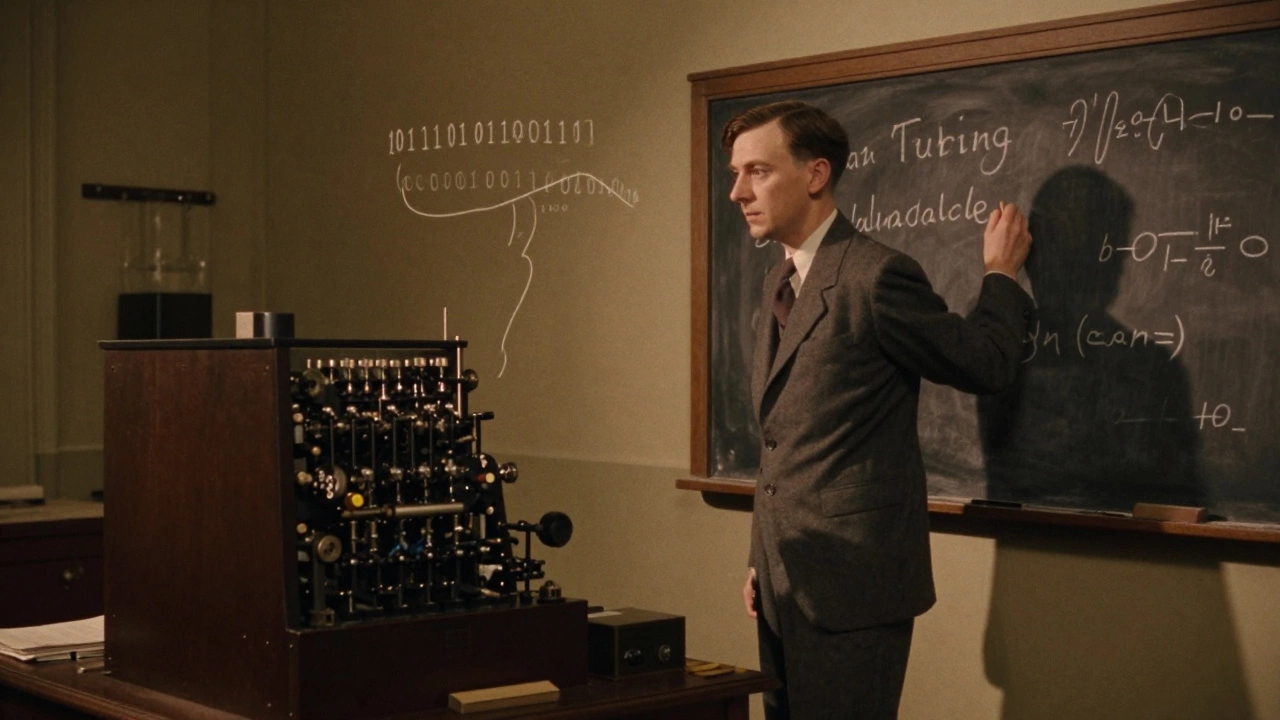
If you trace AI back to its earliest real spark, you land on Alan Turing. In 1950, he published a paper called Computing Machinery and Intelligence. In it, he didn’t just talk about computers doing math. He asked whether a machine could think. To test this, he proposed the now-famous Turing Test: if a human couldn’t tell whether they were talking to a machine or another person through text, then the machine was intelligent. That wasn’t science fiction back then - it was a radical challenge to how people saw machines. Turing didn’t build a thinking robot, but he gave AI its first clear goal: mimic human thought.
The Dartmouth Conference: AI Gets a Name
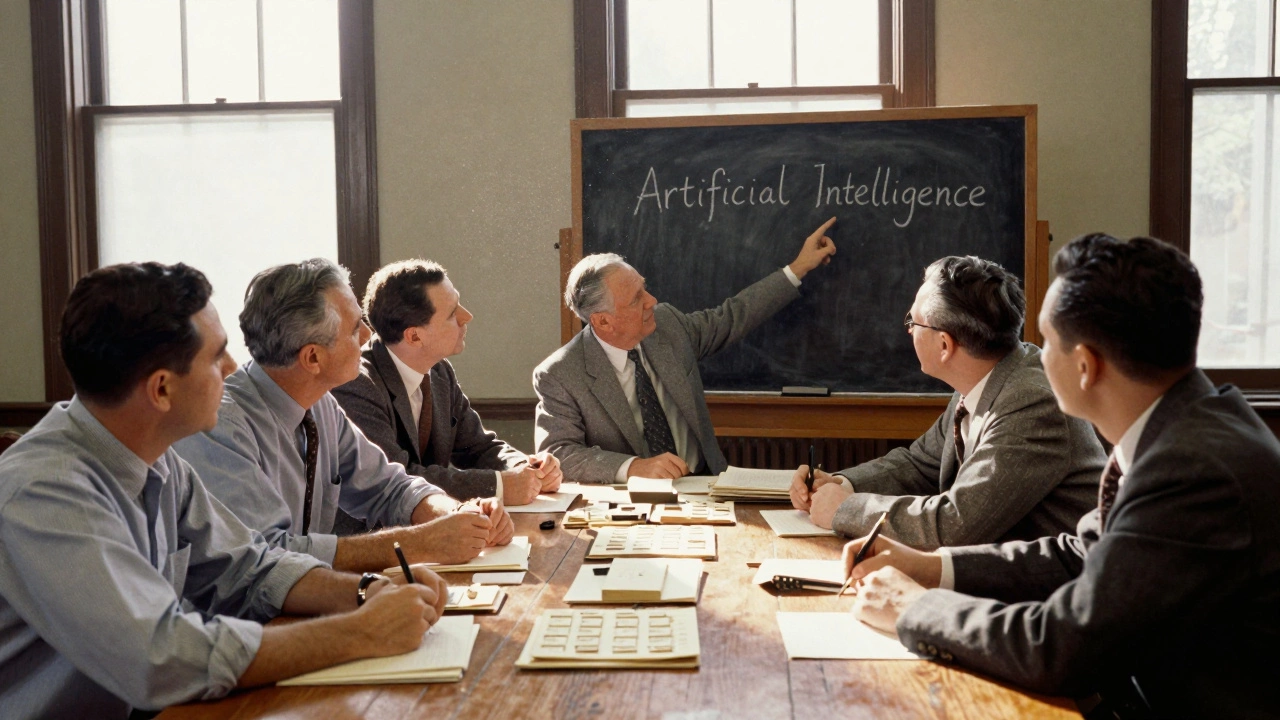
Turing’s ideas stayed mostly theoretical until 1956. That’s when a small group of scientists gathered at Dartmouth College in New Hampshire. They were funded by the U.S. government and had one mission: figure out how to make machines use language, solve problems, and even improve themselves. John McCarthy, a professor at Dartmouth, coined the term artificial intelligence during this meeting. He didn’t invent the concept, but he gave it a name. The group included Marvin Minsky, Claude Shannon, and Nathaniel Rochester - all brilliant minds who later built early AI programs. One of them, Arthur Samuel, created the first program that learned to play checkers better over time. That wasn’t programmed to win - it learned from mistakes. That was the moment AI stopped being just theory.
Early Breakthroughs: Logic, Learning, and Limits
By the 1960s, AI had its first real wins. Herbert Simon and Allen Newell built Logic Theorist, a program that could prove mathematical theorems. It even found a better proof than one published by a human mathematician. That shook the academic world. Around the same time, Frank Rosenblatt invented the Perceptron, the first neural network model. It could recognize simple patterns - like letters or shapes - by adjusting its own settings. These weren’t smart like humans, but they were learning. And that was new.
But AI hit a wall. Computers were slow. Data was scarce. Funding dried up. By the 1970s, people called it the AI winter. Many thought the dream was dead. But a few kept working. In Japan, researchers built expert systems - programs that could mimic doctors or engineers by following rules. In the U.S., researchers like Geoffrey Hinton kept studying neural networks, even when no one else cared. They knew the idea was too powerful to abandon.
The Rise of Machine Learning
The real turning point came in the 2000s. Computers got faster. Data exploded - think Google searches, social media, online shopping. Suddenly, machines had enough information to learn from. Hinton and his students cracked a problem that had stalled neural networks for decades: how to train deep layers of artificial neurons. In 2012, their deep learning model beat every other system in an image recognition contest. It wasn’t programmed to recognize cats. It learned to spot them from millions of photos. That’s when AI stopped being a lab curiosity and became something companies could use.
Who Gets the Credit?
There’s no single person who created AI. It was built step by step, by people who didn’t always agree with each other. Turing gave it a question. McCarthy gave it a name. Samuel gave it the ability to learn. Hinton gave it the power to see. Others built the tools: the internet, GPUs, open-source libraries like TensorFlow. No one person could’ve done it alone. AI is a team sport - played over 70 years, across continents, by scientists who refused to give up.

Why It Matters Today
When you ask Siri a question, when Netflix recommends a show, when your phone unlocks with your face - you’re using AI built on those early ideas. The people who created it didn’t know how far it would go. They just wanted to know if machines could think. Today, we’re answering that question every day. And the answer? Machines don’t think like humans - but they don’t have to. They think differently. And that’s what makes AI powerful.
What’s Next?
AI isn’t finished. The same people who built the first learning systems are now asking new questions: Can AI understand emotions? Can it be fair? Can it explain why it made a decision? The next chapter isn’t about building smarter machines - it’s about building better ones. That’s the real legacy of Turing, McCarthy, Hinton, and the others. They didn’t just create a tool. They started a conversation.
Did one person invent AI?
No, AI wasn’t invented by one person. It evolved through decades of work by many scientists. Alan Turing laid the theoretical groundwork, John McCarthy named it, and others like Arthur Samuel, Marvin Minsky, and Geoffrey Hinton built key systems that made AI possible. It’s a collective effort, not a single breakthrough.
When was AI first created?
The term "artificial intelligence" was first used in 1956 at the Dartmouth Conference. But the first working AI program was Arthur Samuel’s checkers-playing program in the late 1940s and early 1950s. So while 1956 is when AI got its name, real AI systems existed before that.
Was AI created in the United States?
Most early AI research happened in the U.S., especially at institutions like MIT, Stanford, and Carnegie Mellon. But the foundational ideas came from Alan Turing, who was British. Later, researchers in Japan, Canada, and Europe made major contributions. AI is a global effort - even if the U.S. led funding and early development.
What was the first AI program?
The first program that could learn was Arthur Samuel’s checkers program, developed between 1947 and 1952. It didn’t follow fixed rules - it improved by playing against itself and adjusting its strategy. That made it the first true machine learning system, even before the term "machine learning" existed.
Why did AI have a "winter"?
In the 1970s and again in the late 1980s, AI funding dropped because early systems couldn’t deliver on big promises. Computers were too slow, data was too limited, and the math wasn’t advanced enough. This led to disappointment and loss of interest. But researchers kept working quietly. When computing power and data exploded in the 2000s, AI came back stronger than ever.