Nanoparticle Exposure Risk Calculator
Nanoparticles in everyday products pose invisible risks. This calculator estimates your personal exposure risk based on common products you use. Based on 2024 research, inhalation risks from spray products can be 5x higher than topical applications.
Your Nanoparticle Exposure Risk
When you hear the word nanotechnology, you might think of futuristic sci-fi gadgets or miracle medical treatments. And yes, nanotech has delivered on some of those promises-targeted cancer drugs, self-cleaning fabrics, stronger lightweight materials. But behind the hype lies a quieter, less talked-about truth: we’re using materials so small they behave in ways we don’t fully understand. And that’s where the danger starts.
Nanoparticles Don’t Behave Like Regular Materials
At the nanoscale-1 to 100 nanometers-materials stop acting like they do at the macro level. Gold, for example, is inert in jewelry, but when broken into nanoparticles, it becomes highly reactive. Titanium dioxide, safe in sunscreen, can turn toxic when inhaled as nanoparticles. This isn’t theory. A 2023 study from the University of California found that certain carbon nanotubes caused lung inflammation in lab mice at doses far lower than what’s needed to harm them with regular dust.
Why? Because size changes everything. Nanoparticles can slip through cell membranes, cross the blood-brain barrier, and accumulate in organs. Your body doesn’t have evolved defenses against something this tiny. It doesn’t recognize them as foreign invaders the way it does bacteria or viruses. So they just… stay.
They’re Already in Your Everyday Products
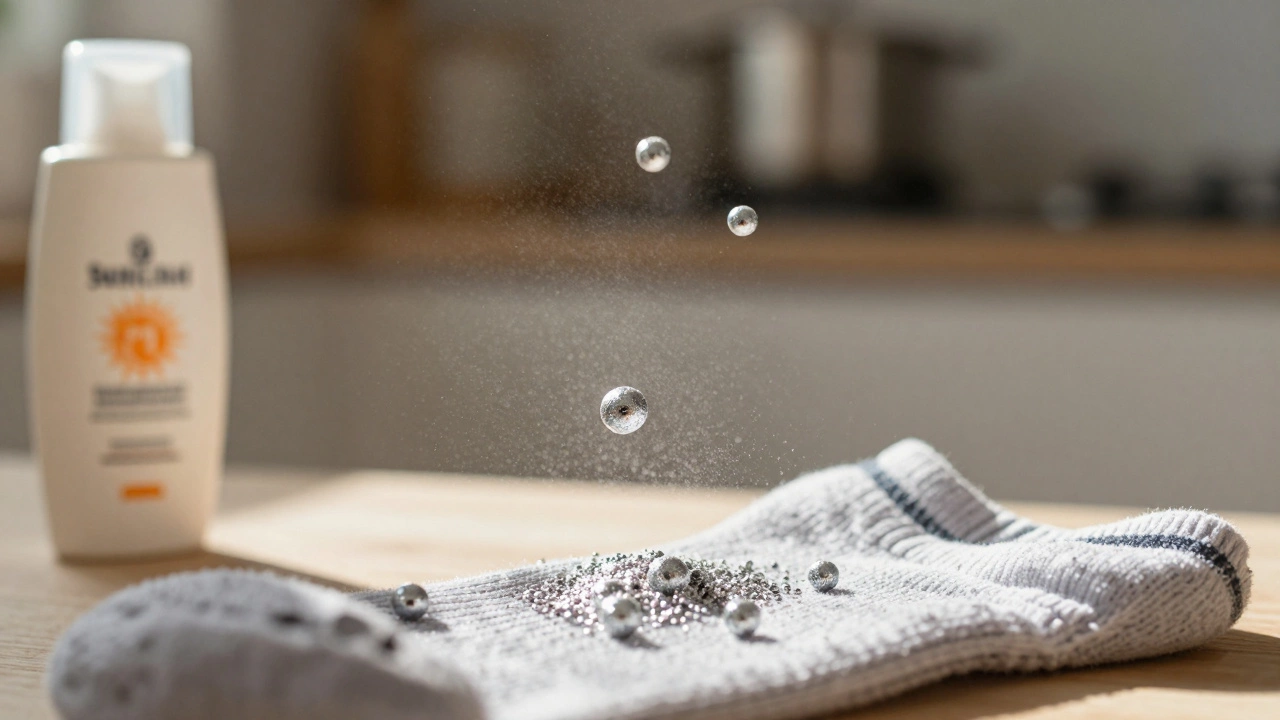
You don’t need a lab to be exposed. Nanoparticles are in your toothpaste, deodorant, socks, food packaging, and even baby bottles. Silver nanoparticles kill odor-causing bacteria in athletic wear-but they also wash off into wastewater. A 2024 analysis by the European Environment Agency found that over 60% of wastewater treatment plants in the EU can’t filter out these particles. They end up in rivers, soil, and crops.
And it’s not just environmental. A 2025 report from the U.S. Food and Drug Administration flagged 17 consumer products containing unlisted nanomaterials. One popular sunscreen had titanium dioxide nanoparticles labeled as ‘micronized,’ but tests showed over 80% were actually in the nano range. That’s not just misleading-it’s a hidden exposure risk.
Long-Term Health Effects? We Don’t Know Yet
Here’s the biggest problem: we’ve been using nanomaterials for about 20 years. But diseases like cancer or neurological disorders take decades to develop. We’re essentially running a global experiment with no long-term data.
Animal studies show troubling patterns. Zinc oxide nanoparticles, used in sunscreens, have been linked to liver damage in rats after chronic exposure. Carbon nanotubes, used in electronics and composites, resemble asbestos fibers in shape and size-and asbestos caused mesothelioma in thousands of workers. Some researchers now call them ‘asbestos-like.’
And it’s not just lungs and liver. A 2024 study from the National Institutes of Health found that certain quantum dots-nanoparticles used in medical imaging-accumulated in the spleen and kidneys of primates and triggered immune responses. We don’t know if this leads to autoimmune disease, but we can’t rule it out.

Workers Are at the Highest Risk
Most public concern focuses on consumer products. But the real danger zone is the factory floor. Workers handling raw nanomaterials-powders, aerosols, liquids-are breathing them in daily. In China and India, where much of the world’s nanotech manufacturing happens, safety standards are weak or poorly enforced.
A 2025 survey of 300 nanomaterial production workers in Bangalore found that 42% had no access to respirators. Only 18% had received any training on nanoparticle hazards. Many didn’t even know what ‘nanotech’ meant, let alone how to protect themselves. The same pattern repeats in factories across Vietnam, Mexico, and Eastern Europe.
This isn’t just a labor issue-it’s a public health time bomb. Workers carry particles home on their clothes. Their children play on floors dusted with nanomaterials. The exposure doesn’t stop at the factory gate.
Environmental Damage Is Already Happening
Nanoparticles don’t disappear. They don’t biodegrade. They just move-through water, air, soil, and food chains.
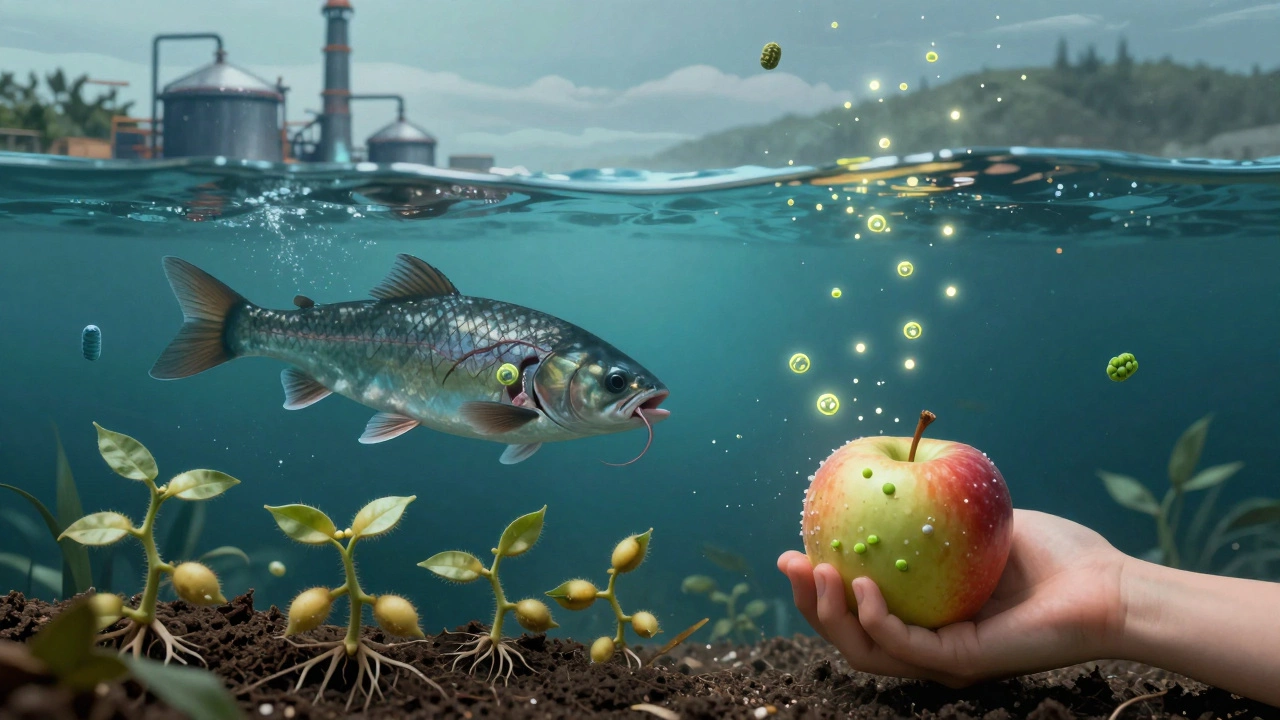
A 2023 study in the Ganges River found silver nanoparticles at concentrations 17 times higher than safe levels for aquatic life. Fish exposed to these particles showed damaged gills, reduced reproduction, and behavioral changes. In the Amazon, researchers detected nanosilver in piranha tissue-likely from upstream mining and manufacturing runoff.
Plants aren’t safe either. A 2024 field trial in Brazil showed that soybeans grown in soil with titanium dioxide nanoparticles had stunted roots and 30% lower yields. The nanoparticles blocked nutrient uptake. That’s not just an ecological problem-it’s a food security issue.
Regulation Is Playing Catch-Up
Here’s the kicker: most countries don’t regulate nanomaterials as new substances. They’re often approved under existing chemical safety laws-laws written for grams, not nanograms.
The U.S. EPA treats nanomaterials as ‘existing chemicals’ unless proven harmful. The EU has slightly stricter rules, but even there, over 80% of nanomaterials on the market haven’t undergone full toxicity testing. India has no specific nanotech safety guidelines at all. The same goes for most of Southeast Asia and Africa.
Companies aren’t required to label nanomaterials in consumer products. You can’t know if your shampoo contains nanoparticles. You can’t choose to avoid them. And if something goes wrong, there’s no clear way to trace it back.
What Can Be Done?
It’s not too late to fix this-but we need to act fast. Here’s what works:
- Precautionary labeling: Require clear labeling of nanomaterials in all consumer goods-just like allergens on food.
- Worker protections: Mandate respirators, ventilation, and training in all nanotech manufacturing facilities.
- Environmental monitoring: Track nanoparticle levels in water, soil, and air near production zones.
- Independent testing: Fund public labs to test nanomaterials for toxicity before they hit the market-not after.
- Global standards: No country should be a dumping ground for unsafe nanotech. The UN needs to set minimum safety rules.
Some companies are stepping up. A few in Germany and Japan now voluntarily test and label their nanomaterials. But voluntary isn’t enough. We need laws.
The Bottom Line
Nanotechnology isn’t evil. It’s a tool. Like fire, it can warm your home or burn it down. We’ve spent decades perfecting how to use it-and almost no time learning how to control its risks.
Every new drug, every smart fabric, every energy-efficient battery built with nanotech carries a hidden cost. The cost isn’t just money. It’s your lungs, your water, your children’s future.
We can’t stop progress. But we can demand it be safe. Before the next generation grows up with chronic illness from materials we didn’t bother to test, we need to ask: Who’s protecting us from the invisible?
Are nanoparticles in sunscreen dangerous?
It depends. Titanium dioxide and zinc oxide nanoparticles in sunscreen are generally considered safe for skin use-they don’t penetrate healthy skin deeply. But if the product is aerosolized (like spray sunscreens), you can inhale the particles, which may cause lung irritation. The bigger issue is that many products don’t clearly state if they contain nanoparticles, so you can’t be sure. Always choose lotions over sprays, and look for brands that voluntarily disclose nanomaterial use.
Can nanotechnology cause cancer?
There’s no direct proof yet that nanotechnology causes cancer in humans-but there’s strong evidence from animal studies. Certain carbon nanotubes, when inhaled, behave like asbestos and can cause mesothelioma-like tumors in rodents. Silver and quantum dot nanoparticles have also shown DNA damage in lab tests. The delay between exposure and disease means we won’t know the full human impact for another 20-30 years. That’s why precaution matters now.
Are there any safe nanomaterials?
Yes, some are considered low-risk under controlled conditions. For example, silica nanoparticles used in some cosmetics have been studied extensively and show minimal toxicity when not inhaled. But safety depends on shape, size, coating, and how they’re used. A material safe in a cream might be dangerous as a powder. There’s no universal ‘safe’ nanomaterial-each one must be tested individually.
Why aren’t nanomaterials regulated like other chemicals?
Because regulators treat them as variations of existing materials, not new substances. A nanoparticle of titanium dioxide is still called ‘titanium dioxide’ on safety forms, even though its behavior is completely different. This loophole means most nanomaterials enter the market without full toxicity testing. Only the EU and a few other countries have started closing this gap-and even there, enforcement is inconsistent.
How can I avoid exposure to nanomaterials?
You can’t avoid them completely-they’re in too many products. But you can reduce exposure: avoid aerosol sprays (deodorants, sunscreens), choose natural fiber clothing over antimicrobial synthetics, and support brands that disclose ingredients. Buy from companies that publish third-party safety reports. And push for labeling laws. Your voice matters more than your shopping cart.