Innovation Type Identification Quiz
Test Your Understanding
Identify which type of innovation each scenario describes.
1. A small bakery starts taking orders through Instagram, eliminating the need for a physical storefront and allowing customers to customize their cakes online.
2. A factory installs AI-powered sensors that predict machinery failures before they happen, reducing downtime by 40%.
3. A rural village starts offering basic healthcare diagnostics using smartphone-connected devices, initially dismissed by hospitals but now integrated into public health systems.
4. A company develops a new lightweight solar panel that generates 30% more energy per square foot than existing models.
5. A clothing brand starts renting out clothes instead of selling them, using a subscription model that allows customers to exchange items monthly.
When governments and companies talk about innovation, they often sound like they’re speaking a different language. But innovation isn’t just about high-tech labs or startup pitches. At its core, innovation is about change that creates value. And not all change is the same. There are four clear, well-documented types of innovation that show up everywhere - from small local shops to global tech giants. Understanding these four types helps you see why some ideas succeed while others fade, and how policy can actually make or break progress.
Product Innovation: New Things People Buy
Product innovation is the easiest to spot. It’s when something new is created - something people didn’t have before. Think of the first smartphone, a vaccine for a new virus, or a solar-powered charger that works in rural villages. These are all product innovations. They change what’s available in the market.
But here’s the catch: not every new product is a real innovation. If you just change the color of a phone or add a slightly better camera, that’s an improvement, not innovation. Real product innovation solves a problem people didn’t even know they had. The iPhone didn’t just make calls better - it turned a phone into a computer, camera, and music player all in one. That’s why it changed everything.
In innovation policy, governments often fund product innovation through grants, tax credits, or public procurement. India’s National Innovation Foundation supports grassroots product innovations - like a low-cost water purifier made from coconut shells - because these can scale and reach millions who need them most.
Process Innovation: Doing Things Better, Faster, Cheaper
Process innovation doesn’t always make headlines. You won’t see ads for it. But it’s often more powerful than new products. It’s about changing how things are made, delivered, or managed.
Think of Toyota’s production line in the 1950s. They didn’t invent the car. But they invented how to build it - with less waste, fewer errors, and lower cost. That’s process innovation. Today, a small clinic in Bangalore might use digital appointment systems and AI-powered triage tools to cut patient wait times by 60%. That’s process innovation too.
Process innovation is where most cost savings happen. A factory that reduces energy use by 30% through smarter machinery isn’t selling a new product - it’s saving money, cutting emissions, and staying competitive. Innovation policies that support process change often focus on training workers, upgrading infrastructure, or subsidizing automation tools for small manufacturers.
Business Model Innovation: Changing How You Make Money
This is the quiet giant of innovation. It’s not about what you sell - it’s about how you sell it. How you get paid. Who you serve. And who you partner with.
Netflix didn’t invent movies. But it killed Blockbuster by switching from renting DVDs to streaming on demand. Airbnb didn’t build hotels. It connected people with empty rooms to travelers. In India, companies like Ola and Swiggy didn’t own cars or kitchens - they built platforms that matched supply and demand. That’s business model innovation.
These models often rely on digital platforms, data, and network effects. They turn assets you didn’t own into revenue streams. For policymakers, this is tricky. Traditional tax systems, labor laws, and safety rules weren’t built for platform-based work. That’s why countries are now updating regulations to handle gig workers, data ownership, and platform accountability.
Business model innovation thrives when rules are flexible. Cities that let startups test new ideas in controlled zones - like regulatory sandboxes - see more of this kind of change.

Disruptive Innovation: When the Underdog Changes the Game
Disruptive innovation is the most misunderstood. It’s not just about being new or flashy. It’s about starting small, often ignored, and then moving up to replace the big players.
Think of digital cameras. In the early 2000s, they were low-quality, cheap, and used mostly by kids. Kodak, the giant of film, didn’t see them as a threat. But over time, digital cameras got better, cheaper, and eventually replaced film for almost everyone. Kodak went bankrupt.
In healthcare, mobile health clinics in rural India started offering basic diagnostics using smartphones and AI tools. At first, hospitals dismissed them as “not real medicine.” Now, those same clinics serve millions and are being integrated into public health systems.
Disruption doesn’t come from the top. It comes from the edges - where costs are low, expectations are small, and regulation is light. Innovation policy that wants to encourage disruption must protect space for these underdogs. That means avoiding over-regulation early on, funding pilot projects in underserved areas, and letting failure be part of the process.
Why These Four Matter for Policy
Most innovation policies focus only on product innovation - funding labs, patents, and R&D grants. But that’s like trying to fix traffic by only building faster cars. You ignore how people get around, how businesses operate, and how new systems take root.
True innovation ecosystems need all four types. A clean energy startup might create a new solar panel (product), build a faster manufacturing line (process), sell it via a subscription model (business model), and start in remote villages before scaling up (disruptive). That’s the full cycle.
India’s Atal Innovation Mission, for example, doesn’t just fund tech startups. It supports school-level innovation labs, helps small firms adopt digital tools, and tests new service models in public hospitals. That’s innovation policy that understands the full landscape.
What Happens When You Ignore One Type?
Look at the decline of India’s textile industry. For years, companies kept making better fabric (product innovation) and upgrading looms (process innovation). But they ignored business model innovation. They didn’t move to direct-to-consumer sales, didn’t use e-commerce, and didn’t adapt to fast fashion trends. Meanwhile, competitors in Bangladesh and Vietnam used digital platforms and flexible supply chains to undercut them.
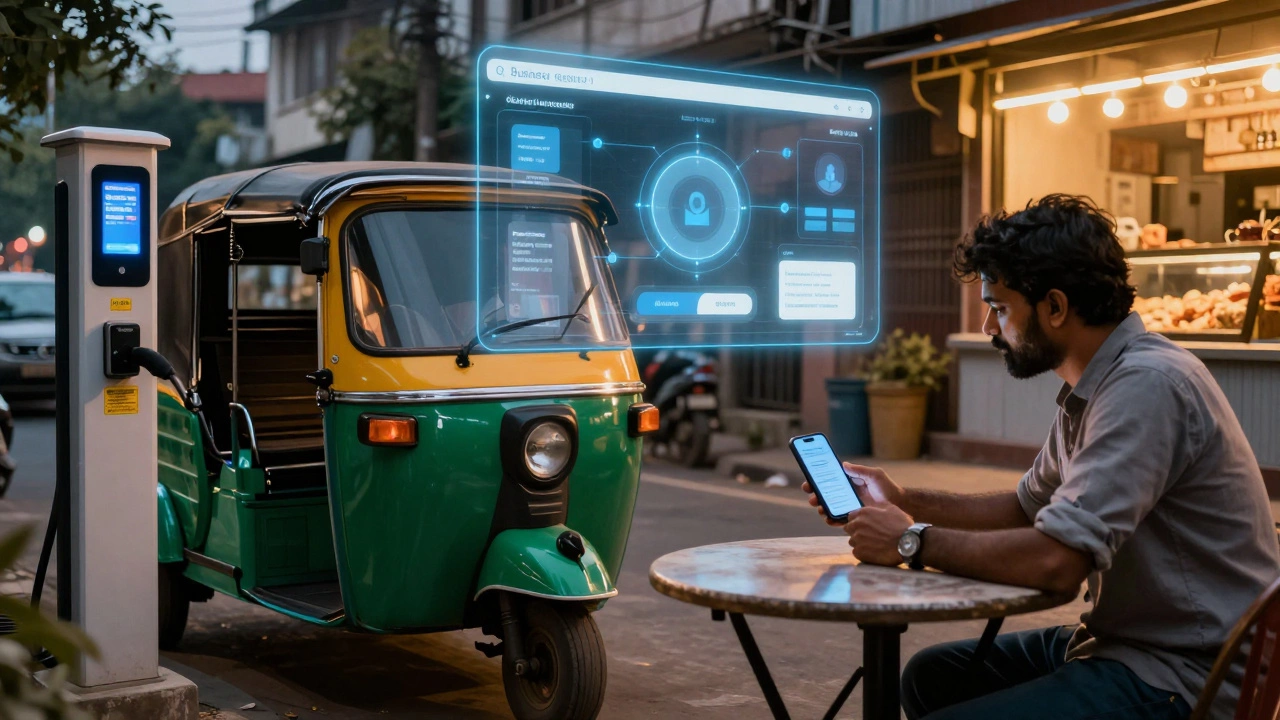
Or consider electric vehicles. If a country only subsidizes the cars (product) but doesn’t build charging infrastructure (process), doesn’t let companies offer battery leasing (business model), and doesn’t support small EV makers in tier-2 cities (disruptive), adoption will stall.
Innovation isn’t a single tool. It’s a toolkit. And every type has its role.
How to Spot Innovation in Your World
You don’t need a lab coat to see innovation. Ask yourself:
- Is this a new thing people can buy? → Product innovation
- Is this making a process faster, cheaper, or cleaner? → Process innovation
- Is this changing how money flows or who gets served? → Business model innovation
- Is this starting small, cheap, and ignored - but growing fast? → Disruptive innovation
Once you start looking, you’ll see them everywhere. A street vendor using UPI for payments. A school using WhatsApp groups for homework updates. A local bakery switching from wholesale to online pre-orders. These aren’t flashy. But they’re innovation - real, practical, and powerful.
What’s the difference between innovation and invention?
An invention is a new idea or device - something that’s created for the first time. Innovation is when that idea is adopted and creates value in the real world. The lightbulb was an invention. Making it affordable, reliable, and widely used across homes and streets was innovation.
Can one innovation belong to more than one type?
Absolutely. Most major innovations combine types. Tesla’s electric cars are product innovation. Their over-the-air software updates are process innovation. Their direct-to-consumer sales model is business model innovation. And by starting with luxury cars before moving to affordable models, they followed a disruptive path. Real-world innovation rarely fits neatly into one box.
Why do some countries innovate faster than others?
It’s not just about money. Countries that innovate faster usually have flexible rules, strong local networks, and tolerance for failure. They support all four types of innovation - not just high-tech R&D. Places like Bangalore, Tel Aviv, and Shenzhen succeed because they let small teams test ideas quickly, connect with users early, and scale without waiting for permission.
Is digital transformation the same as innovation?
No. Digital transformation is using digital tools - like cloud software or apps. Innovation is changing how value is created. You can use digital tools to do the same old thing faster. That’s not innovation. But if you use those tools to offer a new service, reach new customers, or cut costs in a way no one else can - that’s innovation.
How can small businesses or startups use these types of innovation?
Start small. Don’t try to invent the next iPhone. Look at your own operations: Can you automate a task? (process) Can you offer a subscription instead of one-time sales? (business model) Can you serve a niche group ignored by big players? (disruptive) Even a local tailor using Instagram to take orders is doing business model innovation. Innovation doesn’t need big budgets - just the right mindset.