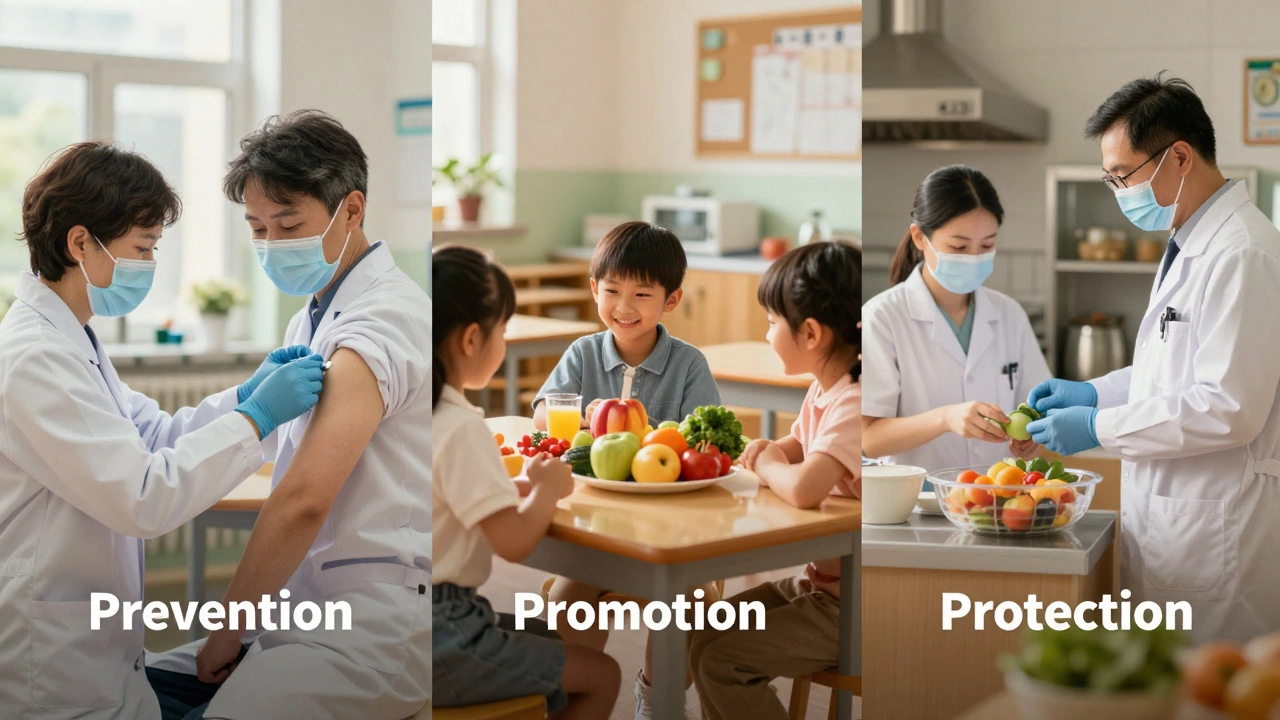
When you hear the word public health, you might think of hospitals, vaccines, or doctors. But real public health doesn’t start in a clinic-it starts with systems, policies, and everyday choices that keep entire communities healthy. At the heart of this work are the three P’s: Prevention, Promotion, and Protection. These aren’t just buzzwords. They’re the foundation of every successful public health program around the world.
Prevention: Stopping Problems Before They Start
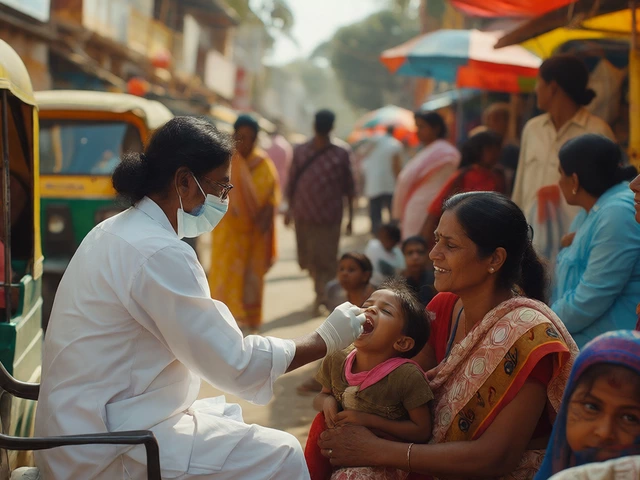
Prevention is the most cost-effective tool in public health. It’s about stopping diseases and injuries before they happen. Think of it like fixing a leaky roof before the rain floods your house. Vaccines are a classic example. In 2023, routine childhood immunizations prevented an estimated 4.5 million deaths globally, according to the World Health Organization. That’s more than the population of Denmark.
But prevention isn’t just shots. It’s clean water systems that cut cholera rates by 80% in rural areas. It’s smoke-free laws that reduced heart attack hospitalizations by 17% in cities like New York and Toronto within just two years. It’s seatbelt laws, bike helmet campaigns, and sugar taxes that lowered soda sales by 20% in Berkeley, California.
Prevention works because it targets the root cause-not the symptom. Instead of treating diabetes after someone develops it, public health programs teach kids how to eat well and move more. Instead of treating lung cancer, they ban smoking in workplaces. The goal isn’t to cure-it’s to make the disease rare enough that you almost forget it existed.
Promotion: Building Healthier Habits, One Community at a Time
Promotion is about making healthy choices the easy, normal, and attractive choice. It’s not about scaring people into being healthy. It’s about creating environments where health happens naturally.
Take walking. In cities like Copenhagen and Tokyo, sidewalks are wide, bike lanes are safe, and parks are everywhere. People walk more not because they were told to-but because it’s pleasant, practical, and built into daily life. That’s promotion in action.
Same with food. When school cafeterias serve fresh fruits and vegetables instead of processed snacks, kids eat better. When grocery stores in low-income neighborhoods get subsidies to stock affordable produce, families do too. Programs like the USDA’s Farmers Market Nutrition Program have increased fruit and vegetable intake among low-income women and children by over 30% in participating states.
Promotion also means mental health. Schools that teach mindfulness, workplaces that offer paid mental health days, and cities that design quiet public spaces all help reduce stress before it turns into anxiety or depression. It’s not about fixing broken people-it’s about building systems that help people stay well.
Protection: Shielding People from Harm
Protection is the safety net. It’s what happens when prevention and promotion aren’t enough-and something dangerous is already in the air, water, or food.
Think of food safety inspections. In the U.S., the FDA inspects over 15,000 food facilities each year. That’s how we avoid outbreaks from contaminated spinach or undercooked eggs. It’s how a single bad batch of peanut butter didn’t make thousands sick in 2009.
Protection also means clean air. The Clean Air Act in the U.S. has reduced six major pollutants by 78% since 1970, even as the economy grew. That’s protection in policy form. It’s regulations on lead paint, asbestos in buildings, and mercury in fish. It’s mandatory testing of drinking water for arsenic and nitrates.
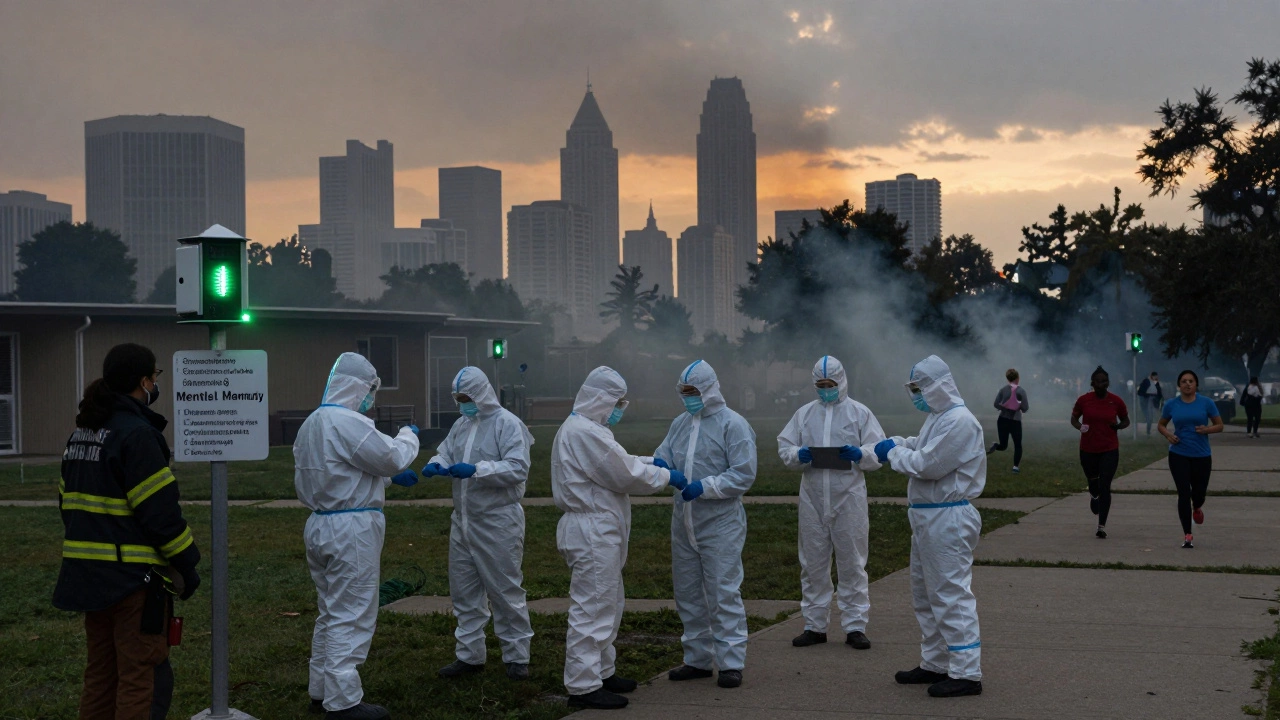
And then there’s emergency response. When a disease like Ebola or mpox shows up, public health teams trace contacts, isolate cases, and distribute vaccines. When a wildfire spreads smoke across a state, they issue air quality alerts and hand out masks. Protection doesn’t wait for permission-it acts fast, based on science, not politics.
How the Three P’s Work Together
These three areas don’t operate in silos. They feed into each other.
Take tobacco control. Prevention: banning ads targeting teens. Promotion: funding quit-smoking hotlines and free nicotine patches. Protection: enforcing smoke-free laws in restaurants and workplaces. Together, they cut smoking rates in the U.S. from 42% in 1965 to under 11% in 2023.
Or consider obesity. Prevention: taxing sugary drinks. Promotion: building walking trails and funding school nutrition programs. Protection: requiring calorie labels on chain restaurant menus. Each piece makes the others stronger.
Without prevention, you’re stuck treating problems forever. Without promotion, healthy choices feel like punishments. Without protection, people are left exposed to toxins, misinformation, and unsafe systems.
Real-World Impact: What Happens When You Skip One P?
Look at the opioid crisis in the U.S. Early on, prevention was weak-doctors overprescribed painkillers because they weren’t trained on addiction risks. Promotion failed-mental health support and job training weren’t offered to people in struggling towns. Protection? Too slow. Pill mills stayed open for years. The result? Over 700,000 overdose deaths since 1999.
Now, places that fixed all three P’s are seeing results. In Massachusetts, combining prescription monitoring (prevention), peer recovery programs (promotion), and safe injection sites (protection) cut overdose deaths by 28% between 2017 and 2022.
It’s not magic. It’s structure.
Why This Matters to You
You don’t have to be a doctor or a policymaker to care about the three P’s. You live in a community. You eat food. You breathe air. You send your kids to school. Public health touches every part of your day.
When your water is safe, that’s protection. When your local park has free fitness classes, that’s promotion. When your child gets a flu shot at school, that’s prevention.
And when one of these systems breaks down-when clean water is contaminated, when healthy food is too expensive, when vaccines aren’t available-you feel it. Not as a statistic. As a fear. As a loss.
Public health isn’t about grand gestures. It’s about the quiet, daily work of keeping people alive and well. And the three P’s? They’re the blueprint.
What are the three P’s of public health?
The three P’s of public health are Prevention, Promotion, and Protection. Prevention stops diseases before they start (like vaccines and clean water). Promotion encourages healthy behaviors through supportive environments (like safe parks and healthy school meals). Protection shields communities from harm (like food safety inspections and air quality laws).
Is prevention more important than promotion or protection?
None is more important-they’re interdependent. Prevention saves money and lives long-term, but it needs promotion to be accepted and protection to enforce boundaries. For example, a vaccine (prevention) won’t work if people don’t trust it (promotion) or if it’s not available in their neighborhood (protection). All three must work together.
How do the three P’s apply to mental health?
Prevention includes screening for depression in primary care clinics and teaching coping skills in schools. Promotion means reducing stigma through public campaigns and offering free counseling in workplaces. Protection involves laws that ensure mental health services are covered by insurance and that crisis centers are funded and accessible.
Can individuals help with the three P’s?
Yes. You can support prevention by getting vaccinated and encouraging others to do the same. You can help promotion by choosing healthy options and advocating for better parks or school lunches. You can support protection by reporting unsafe food, air, or water conditions to local health departments. Community action drives change.
What’s an example of a public health failure due to ignoring one of the P’s?
The Flint water crisis is a clear example. Prevention failed-no one tested the water for lead after switching sources. Promotion failed-residents weren’t given clear guidance on safe water use. Protection failed-regulators ignored warnings for over a year. The result: thousands of children exposed to toxic lead, with lifelong health impacts.
What Comes Next?
Public health is always evolving. Climate change is forcing new approaches-like protecting vulnerable populations from heatwaves or ensuring clean water after floods. Digital tools are helping track disease outbreaks faster. But the core hasn’t changed.
As long as people live in communities, we’ll need to prevent harm, promote well-being, and protect the vulnerable. The three P’s aren’t outdated. They’re timeless. And they’re the reason we’re living longer, healthier lives than any generation before us.