Agriculture Expert Finder
Match the farming challenge to the right specialist
Current Scenario:
Loading scenario...
Try Next Scenario
You might think the answer is simply "a farmer," but that is like calling a heart surgeon "a person who works in a hospital." While farmers are the masters of the land, the professional scientific experts who design the systems, analyze the soil, and engineer the crops have specific titles depending on what they actually do. Depending on whether they are focusing on the dirt, the plant, or the business side of the farm, an expert in agriculture could be called anything from an agronomist to a pomologist.
Quick Summary: The Many Names of Agri-Experts
- Agronomist: The most common general term for crop and soil scientists.
- Agricultural Engineer: Focuses on machinery, irrigation, and infrastructure.
- Horticulturist: Specializes in gardens, fruits, and ornamental plants.
- Soil Scientist: Focuses specifically on the chemical and physical properties of earth.
- Agricultural Economist: Manages the financial and market side of farming.
The All-Rounder: The Agronomist
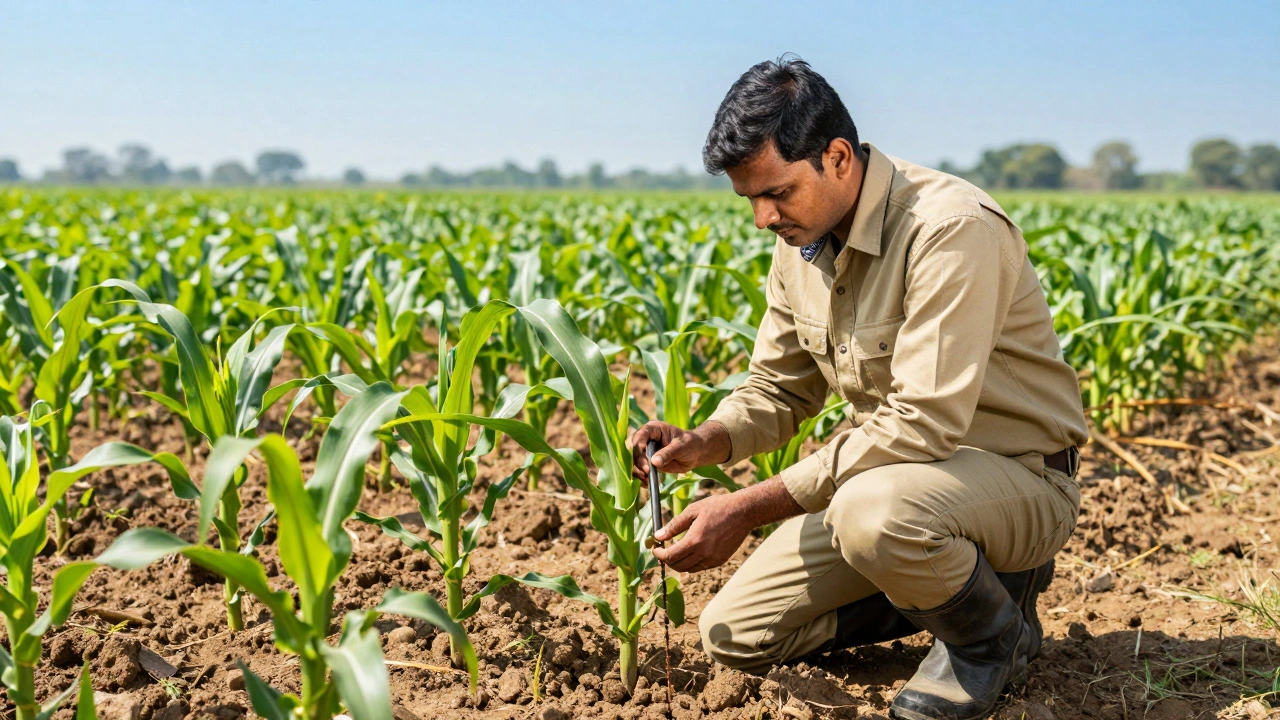
If you are looking for one word that covers the most ground, Agronomist is a professional scientist who specializes in crop production and soil management. They are essentially the "doctors of the field." An agronomist doesn't just plant a seed; they analyze the nutrient levels of the earth, determine which seed variety will survive a drought, and figure out how to stop a pest infestation without killing the surrounding ecosystem.
For example, if a corn farmer in Iowa notices their yield has dropped by 15% despite plenty of rain, they call an agronomist. The expert will take core samples of the soil, check for nitrogen deficiencies, and perhaps suggest a shift to a different hybrid of corn that is more resistant to local pests. They bridge the gap between laboratory research and the actual mud on the boots.
Specialists in the Dirt: Soil Scientists
Not all agricultural experts look at the plant. Some spend their entire career looking down. A Soil Scientist is an expert who studies the formation, classification, and mapping of soils. While an agronomist uses the soil to grow a crop, the soil scientist cares about the soil itself as a living organism.
They deal with things like soil horizons and cation exchange capacity. Imagine a construction company wanting to build a massive warehouse on reclaimed farmland; they need a soil scientist to tell them if the land can actually support the weight of the building or if the clay content is too high, leading to sinkholes. They use tools like X-ray diffraction to see exactly what minerals are present in a sample, ensuring that the land is treated according to its natural chemistry.
The Plant Architects: Horticulturists and Pomologists
When we move away from massive fields of wheat or soy and into orchards or greenhouses, the terminology shifts. A Horticulturist is a specialist in the art and science of growing garden plants, including fruits, vegetables, and flowers. Horticulture is more about the intensive cultivation of smaller plots of land compared to the extensive cultivation of agronomy.
Within this group, you'll find even more specific titles. A pomologist, for instance, focuses exclusively on fruits and nuts. If you've ever wondered why some apples are crisp while others are mealy, or how to graft a cherry tree to grow three different types of cherries on one trunk, that is the work of a pomologist. They study the genetics of the fruit and the environment required to make them taste better and last longer on a grocery shelf.
The Tech Wizards: Agricultural Engineers
Agriculture isn't just about biology; it's about physics and mechanics. An Agricultural Engineer applies engineering principles to farming. They don't spend their time studying the DNA of a plant; instead, they design the machines that harvest it or the systems that water it.
Modern farming relies heavily on Precision Agriculture. This involves using GPS-guided tractors, drones that map field health via infrared sensors, and automated irrigation systems that only release water when a sensor detects the soil is dry. An agricultural engineer is the one who builds these systems. They are the reason a farmer can now plant 1,000 acres with millimeter precision instead of guessing where the rows should go.
The Money and Policy Experts: Agricultural Economists
You can grow the perfect tomato, but if you can't sell it for more than it cost to grow, you don't have a farm-you have an expensive hobby. This is where the Agricultural Economist comes in. These experts study the production, distribution, and consumption of agricultural goods.
They analyze market trends, trade policies, and price volatility. For instance, if a sudden frost hits Brazil and destroys a huge portion of the coffee crop, agricultural economists predict how the price of a latte in New York will change. They help farmers decide whether to pivot from wheat to soy based on projected global demand for the next five years.
| Role | Primary Focus | Key Tool/Metric | Typical Outcome |
|---|---|---|---|
| Agronomist | Crop & Soil Interaction | Nutrient Analysis | Higher Crop Yields |
| Soil Scientist | Earth Composition | Soil Mapping | Land Classification |
| Horticulturist | High-Value Plants | Controlled Environments | Better Fruit/Flower Quality |
| Agri-Engineer | Machinery & Systems | CAD & Robotics | Increased Efficiency |
| Agri-Economist | Market & Finance | Econometric Models | Profitability & Policy |
How to Become an Agricultural Expert
Getting to this level of expertise usually requires a formal education in Agricultural Science. Most of these professionals start with a bachelor's degree in agronomy or plant science. However, for those who want to be top-tier researchers or consultants, a Master's or PhD is often necessary.
The path usually involves a mix of classroom theory and "field hours." You can't learn how a specific fungus reacts to a humid climate just by reading a book; you have to be in the field, taking samples and observing the decay in real-time. Many experts also obtain certifications in specific areas, such as Certified Crop Adviser (CCA), which proves they have the practical knowledge to give legal and financial advice to farmers.
Common Pitfalls and Misconceptions
One of the biggest mistakes people make is using "Agronomist" as a catch-all term. While it's the closest general term, calling a highly specialized agricultural engineer an "agronomist" is technically incorrect. One deals with the biological needs of the plant, while the other deals with the mechanical needs of the farm.
Another misconception is that these experts only work in rural areas. In reality, many spend their days in urban laboratories, corporate offices for seed companies, or government agencies drafting food security laws. The "expert in agriculture" is just as likely to be wearing a lab coat in a city as they are wearing boots in a field.
Is a farmer the same as an agronomist?
No. A farmer is the practitioner who manages the day-to-day operations of a farm. An agronomist is a scientist who provides the technical and biological research a farmer uses to improve their crops. While many farmers are highly knowledgeable, an agronomist typically has a formal degree in agricultural science and focuses on the research and diagnostic side of farming.
What do I call someone who specializes in grapes?
A specialist in grapes is called a viticulturist. Viticulture is a branch of horticulture that focuses specifically on the cultivation and harvesting of grapes, often for the purpose of wine production.
What is the difference between horticulture and agronomy?
Agronomy focuses on large-scale field crops (like corn, wheat, and soy) and the soil they grow in. Horticulture focuses on smaller-scale, intensive cultivation of plants, such as vegetables, fruits, and ornamental flowers, often in greenhouses or gardens.
Do agricultural engineers need to know about plants?
Yes, but from a different perspective. While they don't need to know the detailed genetics of a plant, they must understand the plant's physical requirements-such as how much water it needs, how it handles wind, and how the fruit can be harvested by a machine without being bruised.
What does an agricultural economist actually do?
They analyze the business side of farming. This includes studying crop prices, analyzing the impact of tariffs on exports, helping farmers manage risk through insurance, and creating models to predict food supply and demand on a global scale.
Next Steps for Aspiring Experts
If you are interested in becoming an expert in this field, start by identifying which "layer" of agriculture interests you most. If you love the biology of plants and the chemistry of earth, focus on Agronomy or Soil Science. If you are fascinated by robotics and automation, look into Agricultural Engineering.
For those already in the field, staying current means following the latest in Genomic Editing (like CRISPR) and Sustainable Intensification. The industry is shifting rapidly toward "regenerative agriculture," where the goal is not just to maintain the soil, but to actively improve its health while still producing high yields. Reading peer-reviewed journals and attending agricultural expos are the best ways to keep your expertise relevant in 2026.