Climate Impact Calculator
Projected 2026 Climate Impacts
Based on the latest IPCC data and global climate models. Calculate impacts for your region.
Your Region's Projected 2026 Impacts
Temperature Rise
Expected increase: 0°C
Carbon Emissions
Projected emissions: 0 billion tons
Food Security
Staple food prices: 0% increase
Climate Migration
Projected displacements: 0 people
Important Context
These projections are based on 2026 climate data as described in the article. Remember that:
- Global average temperature will reach 1.52°C above pre-industrial levels
- Emissions will plateau at 37.2 billion metric tons
- Extreme weather events will become weekly occurrences
- Renewables will supply 41% of global electricity
By now, you’ve heard the warnings. But what does 2026 actually look like? Not the scary headlines. Not the vague promises. We’re past the theory phase. The data is in, the models have been tested, and the real-world impacts are already unfolding. Here’s what’s happening this year - not what someone guessed five years ago, but what’s already on track.
Global Temperatures Hit a New High
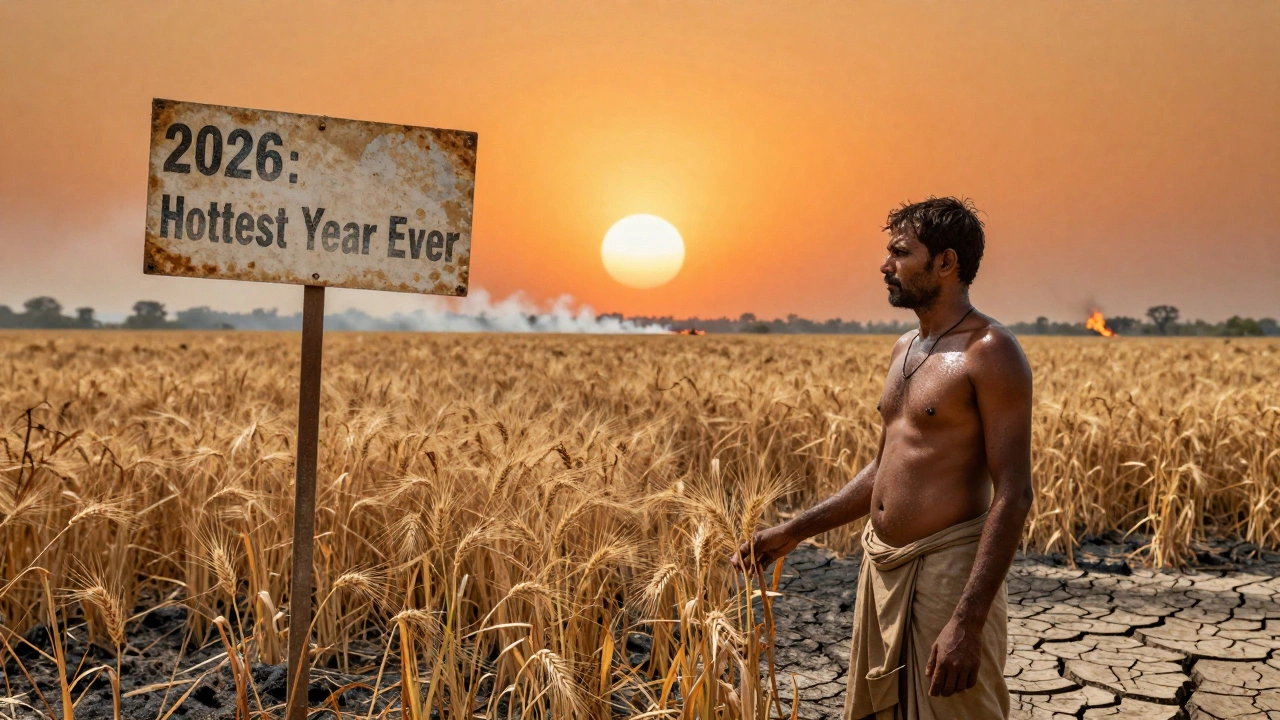
2026 will be the hottest year ever recorded. Not by a little. We’re looking at an average global temperature rise of 1.52°C above pre-industrial levels. That’s not a number on a chart - it’s what’s cooking your crops in India, flooding homes in Jakarta, and turning forests into tinderboxes in Canada. The El Niño cycle has faded, but the heat doesn’t disappear. The ocean has absorbed decades of excess heat, and now it’s releasing it back into the atmosphere. July 2026 will break the all-time monthly heat record, again. This isn’t a fluke. It’s the new baseline.
Carbon Emissions Don’t Drop - They Plateau
Remember the promises to cut emissions by 2030? In 2026, global CO₂ emissions hit 37.2 billion metric tons. That’s up 0.8% from 2025. Not a disaster. Not a victory. A flatline. Why? Because coal plants in India and Southeast Asia are still running. Because electric vehicle sales, while growing fast, haven’t replaced enough old cars yet. Because methane leaks from oil fields in Texas, Siberia, and the Middle East went unchecked. The IPCC report released in March 2026 confirmed: we’re not on track for 1.5°C. We’re on track for 2.1°C by 2040. The window didn’t close. It got smaller - and harder to squeeze through.
Extreme Weather Becomes the New Normal
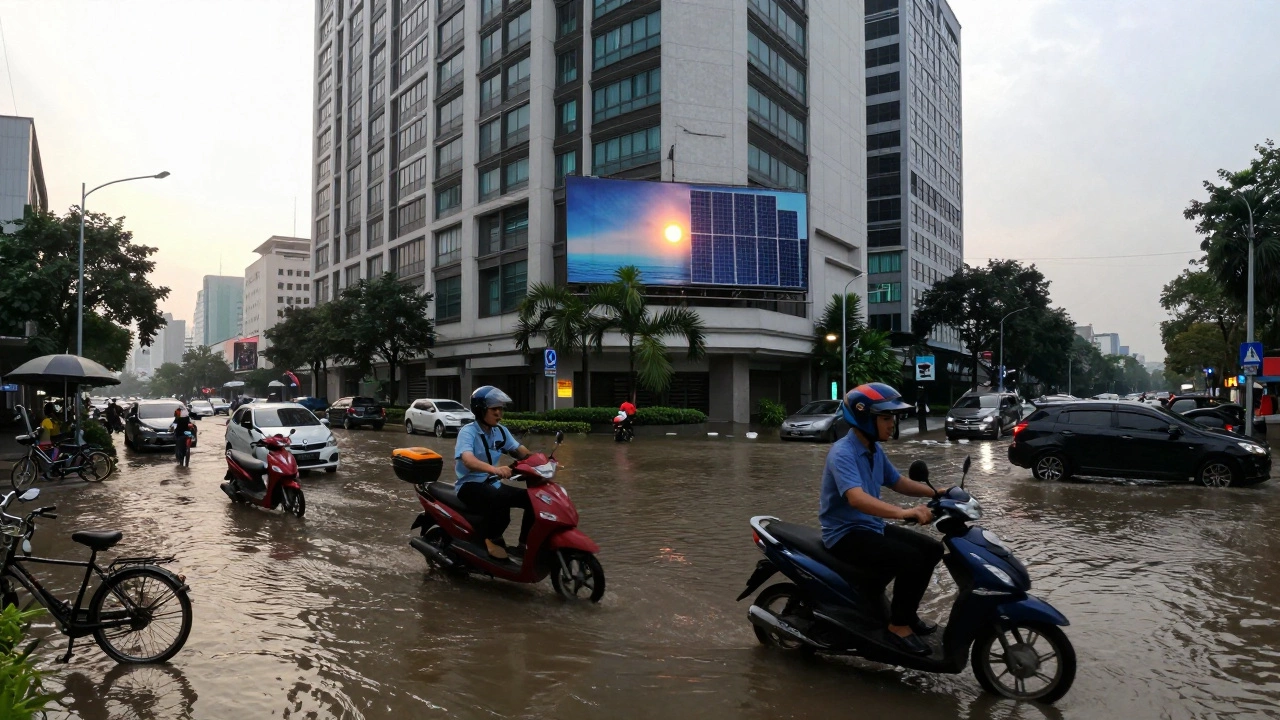
In 2026, extreme weather events aren’t rare. They’re weekly. Monsoon rains in Bengaluru dropped 140% above average in June. Floods submerged 300,000 homes. At the same time, Chennai faced its worst drought in 40 years. In the U.S., California had five major wildfires before June. Europe saw record-breaking heatwaves in May. The insurance industry stopped offering new policies for homes in flood zones in 12 countries. They’re not being reckless. They’re doing the math. And the math says: if you build there, you’re betting against reality.
Food Systems Start to Fracture
Wheat prices jumped 22% in the first quarter of 2026. Why? Because the Russian harvest failed. Because drought hit Ukraine’s Black Belt. Because India’s rice fields couldn’t handle the saltwater intrusion from rising seas along the coasts. Global food production dropped 4.3% from 2025. This isn’t about scarcity yet. It’s about instability. One bad harvest in one region ripples across continents. Supermarkets in Nairobi, São Paulo, and Mumbai started rationing staples. Governments in Egypt, Indonesia, and Bangladesh began emergency grain imports. The global food system is still standing - but it’s creaking.
Climate Migration Becomes Visible
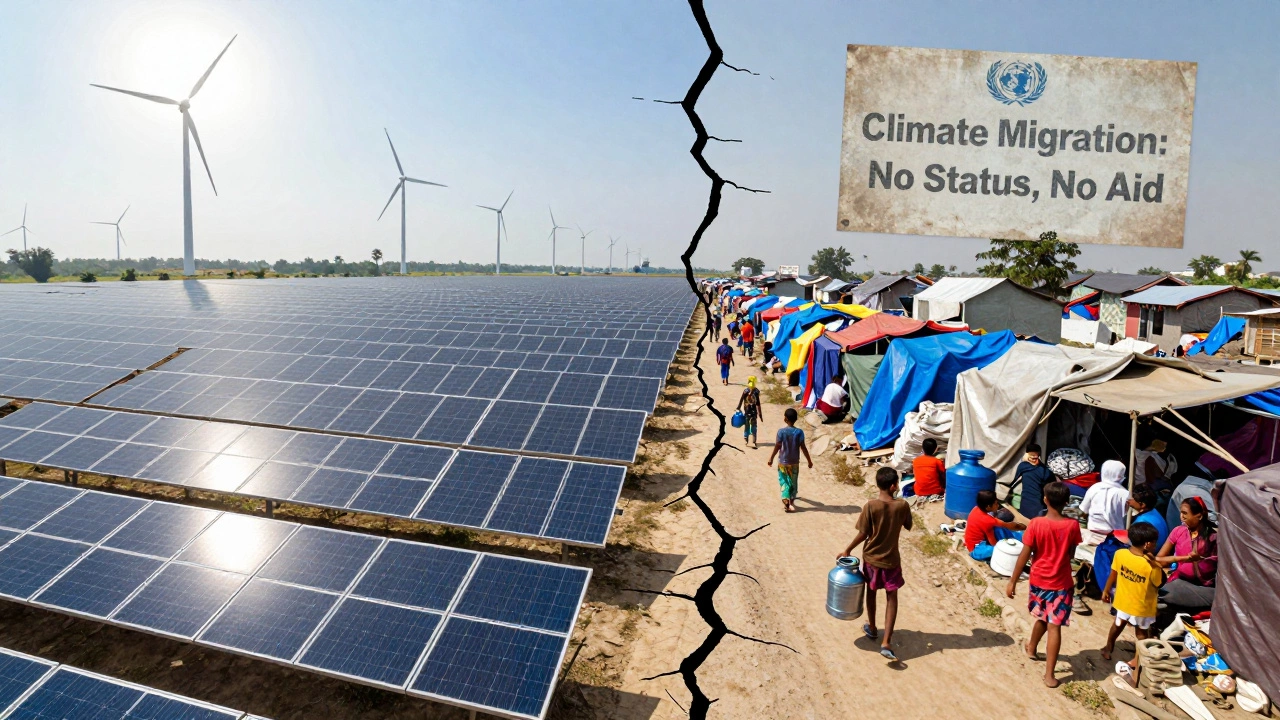
By mid-2026, over 2.1 million people had been displaced by climate-related disasters. Not just from islands sinking. From inland drought zones in Mali, from flood-prone districts in Bangladesh, from wildfire corridors in Australia. Many moved within their own countries. But cross-border migration rose too. In Europe, asylum applications tied to climate displacement jumped 37%. The UN didn’t declare a "climate refugee" status - yet. But cities like Lagos, Dhaka, and Mexico City are already seeing the strain. Schools are overcrowded. Water pipes are bursting. Jobs don’t exist for the new arrivals. This isn’t a future crisis. It’s a current urban emergency.
Renewables Are Winning - But Too Slowly
Here’s the good news: solar and wind made up 41% of global electricity in 2026. That’s up from 35% in 2023. In India, solar capacity hit 220 gigawatts. In Brazil, wind farms powered 30% of the grid. But here’s the catch: demand grew faster. Power use from AI data centers, electric vehicles, and air conditioning spiked. Renewables added 1.2 terawatts of new capacity. But we needed 1.8. So coal still filled the gap. The transition isn’t failing. It’s lagging. And lagging by a few percentage points can mean millions of lives at risk.
Adaptation Is the New Priority
Forget just cutting emissions. In 2026, the real money is going into adaptation. India spent $12 billion on climate-resilient infrastructure - elevated roads, smart drainage, drought-resistant crops. The Netherlands deployed floating neighborhoods. Miami built seawalls that double as public parks. The World Bank’s Climate Adaptation Fund reached $5.6 billion - triple its 2023 level. But only 18% of that went to low-income countries. The gap between what’s needed and what’s funded? $300 billion. The world is adapting. But not evenly. Not fast enough. And not for the people who need it most.
What Comes Next?
2026 isn’t the end. It’s a checkpoint. The science is clear. The trends are locked in. The question now isn’t whether we can avoid all damage. It’s how much we can still prevent. If we act aggressively from now on - cutting methane, accelerating renewables, protecting forests, funding adaptation - we can still keep warming below 2°C. But if we wait for 2027 to "start acting," we’ll cross the point of no return. The next five years aren’t about hope. They’re about hard choices. And the choices we make now will decide whether 2030 is a turning point… or a collapse.