Renewable Source Finder & Impact Estimator
System Configuration
Solar Photovoltaics
Utilizes daily sunlight restoration cycle.
Restoration Rate
Daily
CO2 Reduced
~2 Tons/Yr
Why this matches your profile:
- ✓ Fits limited urban space requirements.
- ✓ Provides reliable base-load power.
- ✓ Minimal maintenance compared to fossil boilers.
Enter your details to find the fuel source that restores itself perfectly for your needs.
You know that feeling when you turn on a light switch or start your car? You probably don't think about where that power comes from. But there is a specific term for energy sources that replenish themselves naturally. We call this Renewable EnergyA form of energy derived from natural processes that are replenished at a faster rate than they are consumed.. It stands in stark contrast to the fuels we've relied on for decades-coal, oil, and natural gas-which take millions of years to form and vanish the moment we burn them.
When people ask what is restored as we use it, they are looking at the lifecycle of the fuel. With Green Power, the resource isn't depleted; the flow continues. Imagine filling a bucket from a flowing river versus a stagnant pond. If you draw from the river fast enough, the upstream water keeps coming. That is the core logic behind sustainable power systems we deploy today.
How Nature Restores the Supply
The magic isn't really magic; it is physics and biology working on a massive scale. Unlike fossil fuels, which are essentially stored sunlight trapped in ancient plants and compressed under the earth, renewable sources tap into active flows. The sun, for instance, is a constant nuclear reactor firing photons toward us. It doesn't run out anytime soon. The wind is simply air moving due to heat differences. Water cycles through evaporation and rain. Even geothermal heat taps into the Earth's slow-cooling core.
This continuous regeneration changes how we plan our cities. In 2026, we see more emphasis on grid integration rather than just generation. When a fuel source renews itself daily or annually, the challenge shifts from "getting enough fuel" to "storing enough power." This distinction is vital for policymakers. We are moving away from scarcity models (where fuel is finite and expensive) toward abundance models (where availability is weather-dependent).
The Major Players in Sustainable Power
To understand this category fully, you have to look at the specific technologies driving the shift. Each source has its own unique way of being "restored." They aren't identical in how they work, but they share the same biological clock.
Solar Photovoltaics
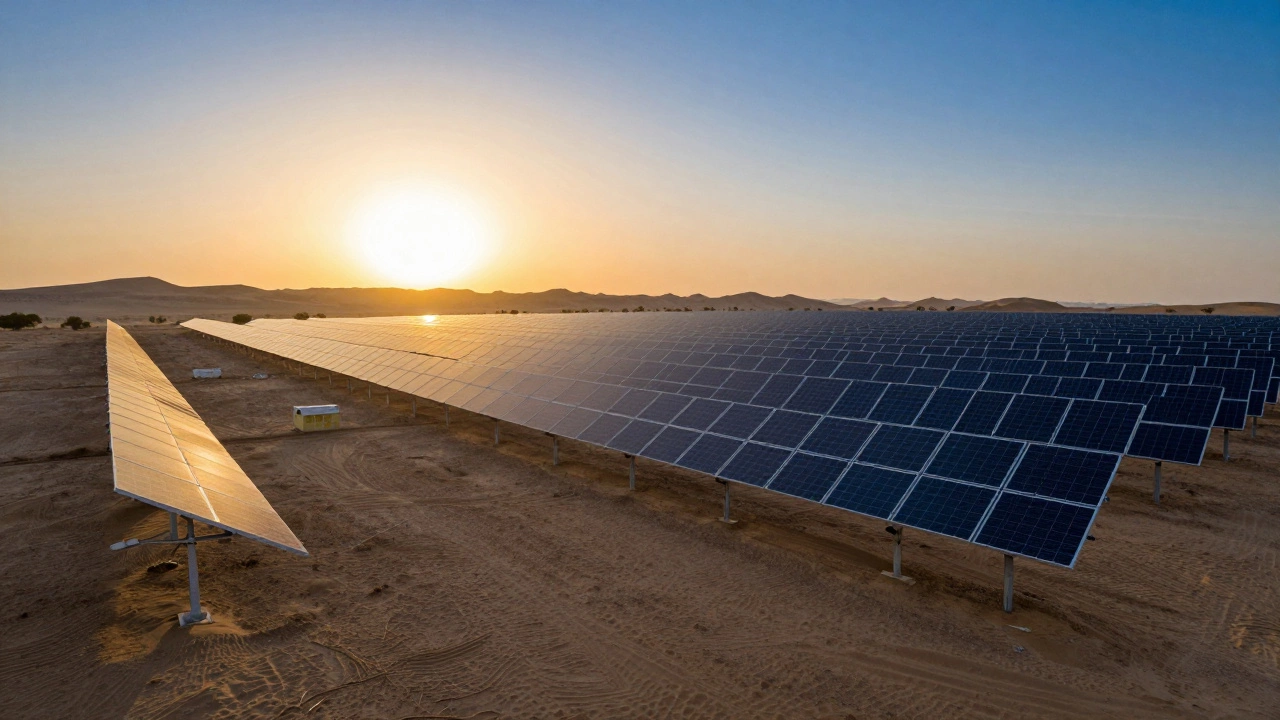
Solar EnergyElectricity generated by capturing sunlight using photovoltaic cells or solar thermal systems. is likely the most visible form. Panels sit on roofs in Bangalore or vast arrays in Rajasthan. Every morning, the sun rises. The fuel is ready again without us lifting a finger. It is intermittent, yes, but the restoration cycle is strictly 24 hours. As of 2026, solar costs have dropped so low that it competes directly with gas in many markets without subsidies. The technology has moved beyond basic silicon to perovskite layers that boost efficiency significantly.
Wind Turbines
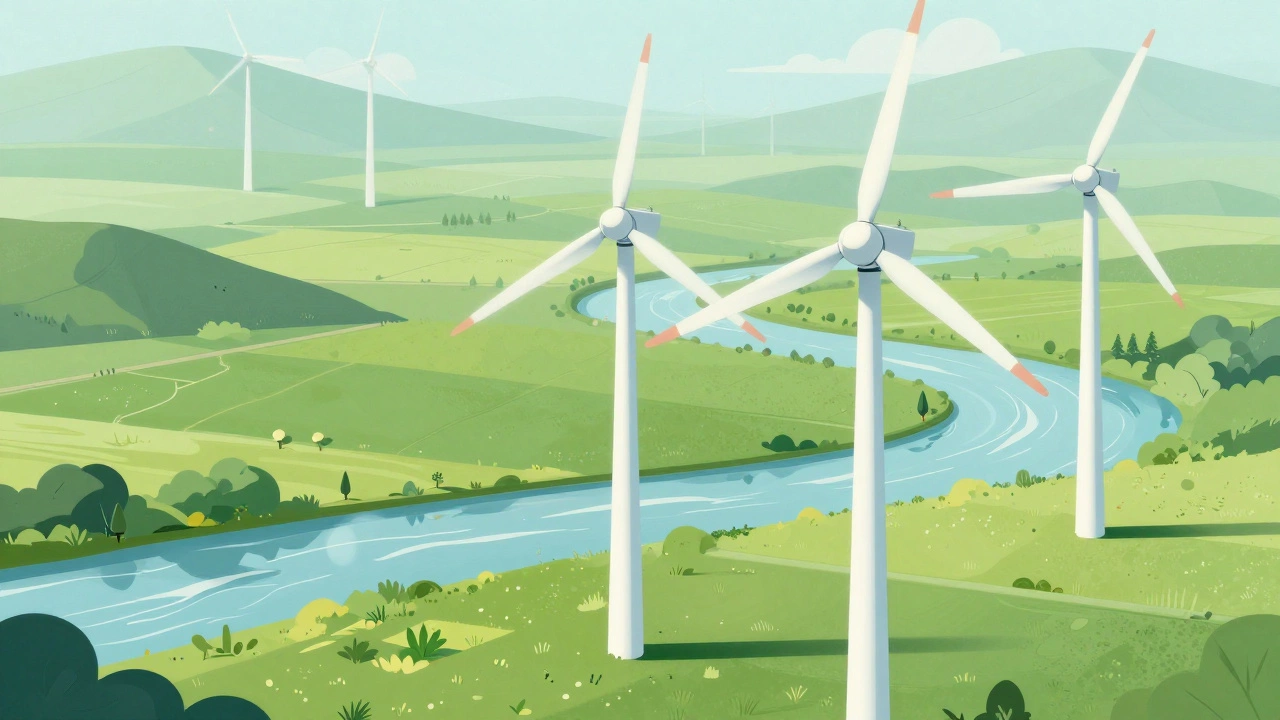
Wind energy works on different atmospheric dynamics. Turbines spin because high-pressure and low-pressure areas seek balance. Wind PowerMechanical energy harnessed from air currents converted into electricity via turbines. restores constantly, though sometimes violently. Offshore winds are stronger and more consistent than onshore ones. The restoration here is driven by global temperature gradients. As long as the sun heats the equator differently than the poles, the wind will blow. Recent innovations in vertical axis turbines allow us to place generators in denser urban environments where traditional horizontal blades wouldn't fit.
Hydroelectric Systems
Water is heavy and moves predictably in many regions. HydropowerEnergy produced by controlling the flow of water through turbines, often stored in reservoirs. relies on the water cycle. Rain falls, collects in rivers, and gravity pulls it down. We dam that flow to generate electricity. While large dams have environmental impacts on fish migration, small-scale run-of-the-river projects restore the energy supply continuously without needing massive reservoirs. This makes it a very reliable base load compared to solar.
Biomass and Bioenergy
Organic matter offers a different kind of restoration. BiomassSolid organic material used as fuel, derived from agricultural crops, wood waste, or algae. comes from living things that grow back. You burn a log, and trees can regrow over decades. You crop sugarcane for ethanol, and the plant grows again next season. The key attribute here is carbon neutrality-if the CO2 released during burning matches the CO2 absorbed during growth, the net impact is lower than fossil combustion. In India, bagasse from sugar mills remains a potent local fuel source.
Geothermal Heat
Deep underground, the Earth stays hot. Geothermal EnergyThermal energy extracted from the subterranean rock formations for heating or power generation. doesn't depend on weather. It draws from the radioactive decay of elements in the planet's core. This process takes billions of years, so on a human timescale, the resource is effectively infinite and instantly restored. Enhanced Geothermal Systems (EGS) in 2026 allow access to this heat in places previously considered unsuitable, opening up new frontiers for baseload power.
| Type | Restoration Time | Primary Source | Intermittency |
|---|---|---|---|
| Fossil Fuels | Millions of years | Ancient organic matter | None |
| Solar | Daily (Day/Night) | Photons from the Sun | High |
| Wind | Continuous | Atmospheric pressure | Moderate |
| Hydro | Seasonal | Gravity-driven water flow | Low |
| Geothermal | Centuries/Millennia | Earth's internal heat | Very Low |
Why Restoration Matters for 2026 and Beyond
By mid-2026, the conversation has shifted from "can we do it?" to "how fast can we scale it?". The reason this definition matters is economic. Finite resources create price volatility. When supply drops or wars interrupt trade routes, gas prices spike. A fuel source that restores itself decouples our economy from geopolitical conflict. It gives nations energy independence.
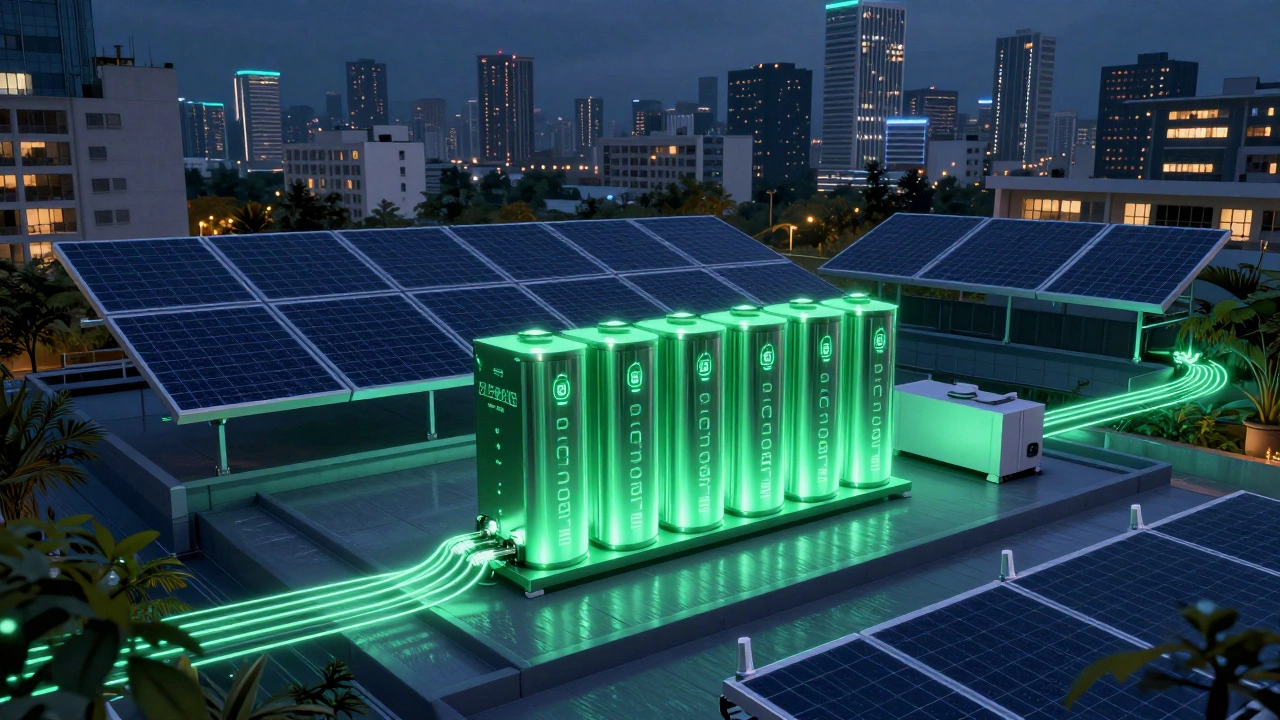
We also have to talk about the physical limits of storage. Since these sources aren't always available exactly when we flip the switch (think of cloudy days for solar), battery technology is the partner entity here. Lithium-ion batteries store the surplus. As of March 2026, solid-state battery prototypes are closer to mass production, promising better storage density and safety. Without this buffer, the restoration cycle creates gaps in supply.
Addressing the Sustainability Nuance
Just because something is renewable doesn't mean it's free of consequences. Mining the lithium for batteries or cutting down trees for biomass carries a cost. Land use is a major factor. A solar farm requires acreage. Trees require forests. True sustainability means balancing the energy gain with the ecological footprint. We must ensure the restoration of the fuel doesn't come at the cost of biodiversity loss. In 2026, regulations are stricter about end-of-life recycling for wind turbine blades and solar panels to prevent e-waste piling up in landfills.
The Economic Shift
The market is responding to this reality. Utility companies are no longer building coal plants because the math no longer works. Levelized Cost of Energy (LCOE) calculations favor renewables in almost every region of India. Maintenance costs are lower for a wind turbine than a coal boiler that burns ash and wears out pipes. Investors are moving capital from legacy fossil assets to green infrastructure funds. This financial flow ensures that the transition accelerates even if policy lags.
Is renewable energy truly infinite?
While the source (like sunlight or wind) is practically inexhaustible on a human timescale, the materials needed to harvest it (metals, glass, land) are finite. So, the energy itself is endless, but the hardware to catch it is recyclable and depletable.
Can a single household rely entirely on this power?
Yes, especially with hybrid setups combining solar panels and battery storage. Many off-grid homes in remote areas of Karnataka already operate independently of the national grid using these restored fuel sources.
Does the weather affect performance?
Significantly. Solar output drops during monsoon rains, and wind speeds vary by season. This is why diverse mixes of energy (solar + hydro + thermal) are necessary for grid stability in tropical climates like India.
How does this help climate change goals?
It reduces greenhouse gas emissions by avoiding carbon release from burning fossil fuels. The Paris Agreement targets require a massive shift to these restoration-based fuels to limit global warming to 1.5 degrees Celsius.
Are government incentives still available in 2026?
Most countries offer tax breaks or feed-in tariffs for renewable installations. In India, state-level policies in Kerala and Tamil Nadu continue to provide net-metering benefits to encourage rooftop adoption.
Navigating the Transition
If you are looking to adopt this technology, start small. Assess your roof space or local wind conditions. The barrier to entry has lowered dramatically. Community microgrids are emerging as a solution for rural electrification where the main grid is too far away. These communities pool their resources to maintain a local system of restored power.
The future looks bright, quite literally. As we move through 2026, the definition of energy security changes. It is no longer about hoarding barrels of oil. It is about managing a flow of data, electrons, and natural cycles. Understanding that the fuel restores itself is the first step in realizing that we don't need to fight for resources anymore. We just need to learn how to catch them efficiently.