Innovation Driver Analyzer
How to use: Think of a recent product or a company you admire. Select the drivers that you believe are pushing its progress to see how they interact.
Select Active Drivers:
Analysis Outcome
Most people think innovation is a lightning bolt-a single "eureka" moment where a genius creates something from nothing. But if you look at how the world actually changes, it's rarely about one person in a garage. Instead, it's about a set of forces that push, pull, and nudge people to solve problems in new ways. Whether it's a government passing a new law or a sudden shift in how we use our phones, certain drivers of innovation act as the fuel for progress. If you're trying to spark growth in a business or understand why some countries outpace others, you need to know which levers are being pulled.
Key Takeaways
- Innovation isn't random; it's triggered by specific economic, social, and political pressures.
- Technological convergence (when two different techs merge) is one of the fastest ways to create new markets.
- Policy and regulation can either be a brick wall or a springboard for new ideas.
- Human needs and demographic shifts often drive more sustainable innovation than pure profit motives.
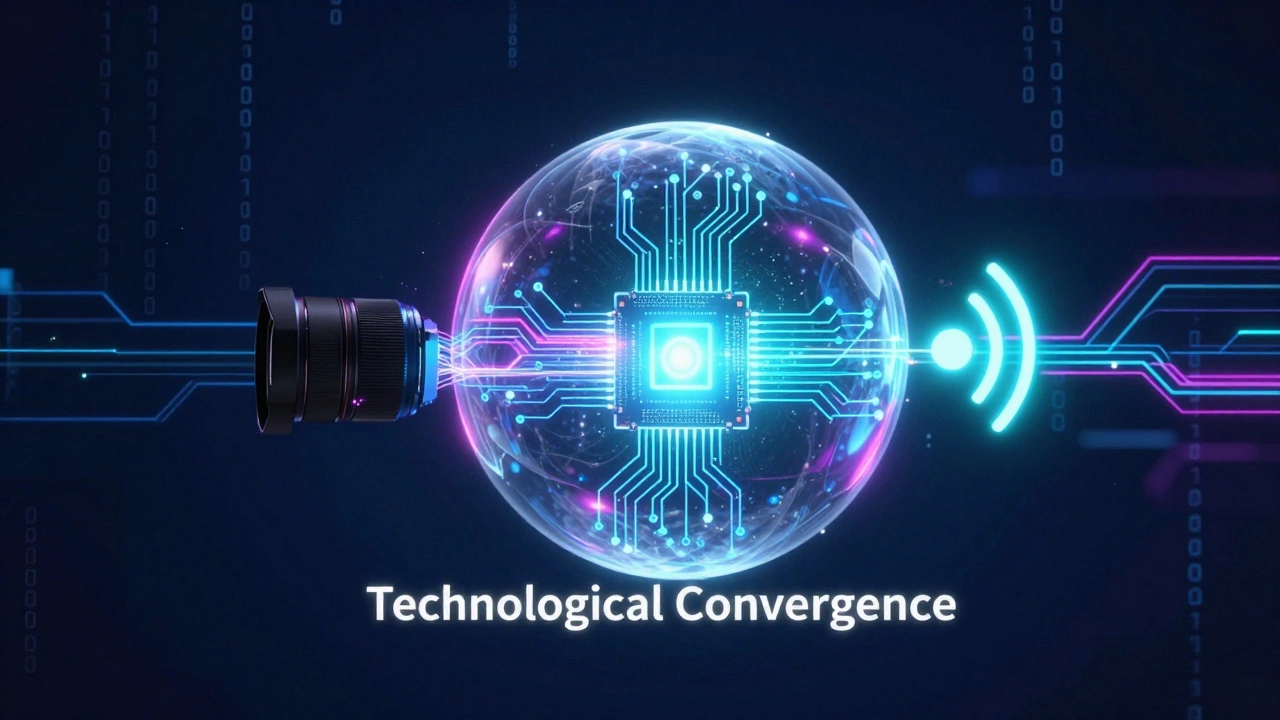
1. Technological Convergence
Innovation rarely happens in a vacuum. Most "new" things are actually just two or three existing technologies finally meeting. Technological Convergence is the process where previously separate technologies evolve to perform similar functions or merge into a single device. Think about the smartphone. It didn't invent the camera, the internet, or the phone; it just smashed them together into one piece of glass. When Artificial Intelligence met high-speed 5G networks, we didn't just get faster phones-we got the ability to process massive amounts of data in real-time for things like autonomous driving. When you see two different industries colliding, that's where the biggest breakthroughs hide.
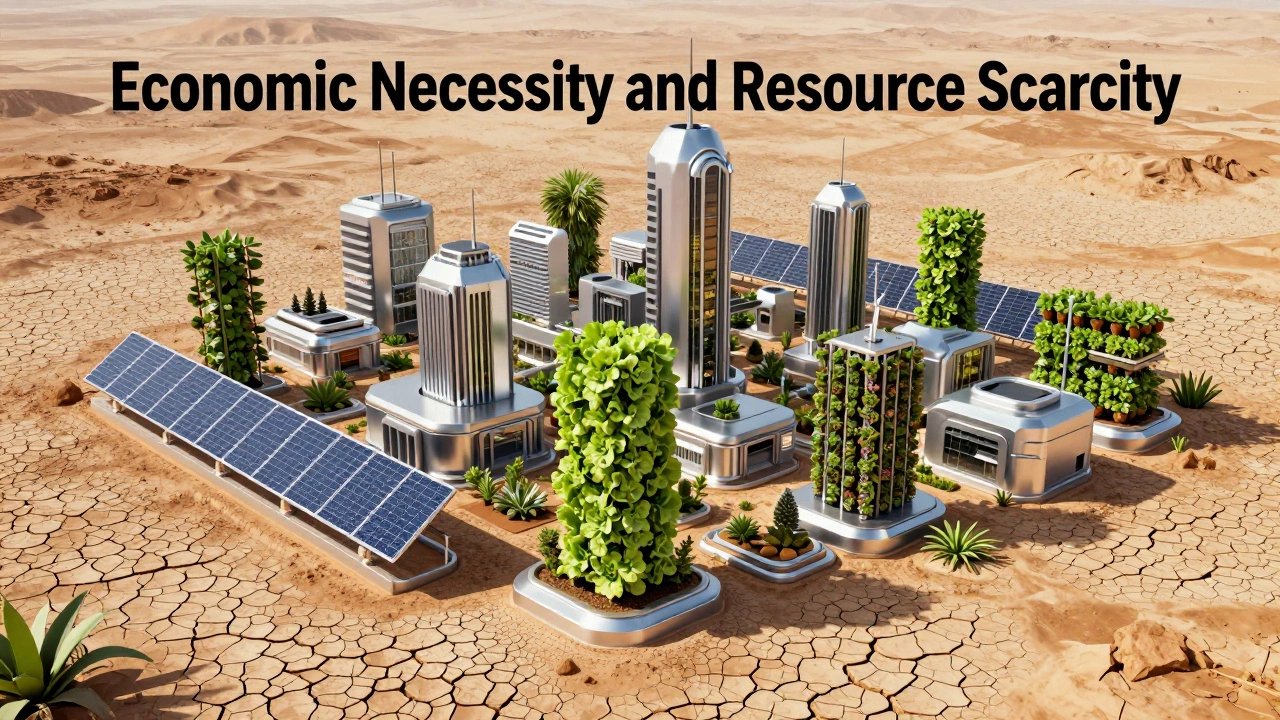
2. Economic Necessity and Resource Scarcity
Necessity is the mother of invention, and nothing creates necessity like running out of something. When a resource becomes too expensive or disappears, people find a way around it. This is often called "frugal innovation." For example, the rise of Renewable Energy wasn't just about saving the planet; it was driven by the volatility of oil prices and the need for energy security. When the cost of lithium dropped and the efficiency of silicon cells improved, solar became a financial no-brainer. If you want to find where the next big invention is coming from, look at the things we are currently running out of-be it fresh water, rare earth minerals, or affordable housing.
3. Government Policy and Regulation
Governments can either kill an idea with red tape or force it into existence with a mandate. Innovation Policy is the set of government actions and incentives designed to stimulate economic growth through the promotion of new technologies and processes. A great example is the shift toward electric vehicles (EVs). While Tesla helped the image, government subsidies and strict carbon emission targets in Europe forced every major car manufacturer to pivot. Without those regulatory "shoves," many companies would have clung to internal combustion engines for another twenty years. When a government says "you cannot do X anymore," it creates a vacuum that innovators rush to fill.
4. Market Demand and Consumer Behavior
Sometimes the technology exists, but nobody cares until a behavioral shift happens. We had the hardware for streaming video years before the infrastructure and consumer habits caught up. The driver here is the "job to be done." People didn't want a streaming service; they wanted to stop waiting for a DVD in the mail or dealing with late fees. When consumer preferences shift-like the current move toward health-conscious eating or remote work-companies are forced to innovate their delivery models. The shift to SaaS (Software as a Service) happened because businesses preferred a monthly subscription over a massive, one-time license fee that required a physical installation.
5. Competitive Pressure (The Red Queen Effect)
In biology and business, there is a concept called the Red Queen Effect: you have to run as fast as you can just to stay in the same place. If your competitor launches a feature that saves customers 10% of their time, you don't just need to match it; you need to beat it to avoid losing market share. This creates a cycle of continuous improvement. Think about the "smartphone wars" between Apple and Samsung. Every single year, they push the boundaries of screen brightness, camera zoom, and processing speed not because the user necessarily needs 100x zoom, but because they can't afford to be the "slower" option. Competition turns innovation from a luxury into a survival requirement.
6. R&D Investment and Venture Capital
Great ideas need money to survive the "valley of death"-that period between a prototype and a profitable product. R&D Investment (Research and Development) is the money spent by companies or governments to develop new products or improve existing ones. Venture capital plays a massive role here by betting on high-risk, high-reward ideas that traditional banks would never touch. When capital is cheap and available, we see an explosion of experimentation. This is why we saw a surge in Biotechnology and CRISPR gene-editing research; the funding allowed scientists to fail fast and iterate until they found a viable path forward.
| Driver | Primary Trigger | Speed of Impact | Example |
|---|---|---|---|
| Policy | Legal Mandates | Medium to Long | EV Subsidies |
| Convergence | Tech Merging | Fast | AI + Robotics |
| Scarcity | Lack of Resources | Immediate/Urgent | Lab-grown meat |
| Competition | Market Rivalry | Continuous | App Store updates |
7. Demographic Shifts and Social Changes
Who is using the product? As populations age or shift, the problems they face change. An aging population in Japan or Italy creates a massive driver for Healthcare Research specifically focused on longevity and robotic care assistants. Conversely, the rise of Gen Z as a dominant economic force has driven innovation in sustainable fashion and the "creator economy." When the average age of a consumer changes, the most valuable problems to solve change with them. Innovation is often just a response to who is currently holding the wallet.
8. Knowledge Spillovers and Open Collaboration
Innovation doesn't just happen inside a company; it leaks. Knowledge Spillovers are the unintended diffusion of ideas, technology, or expertise from one organization or person to another. This is why tech hubs like Silicon Valley or Shenzhen exist. When engineers from different companies hang out at the same bars or attend the same conferences, ideas cross-pollinate. Open-source software is the ultimate example of this. By sharing the core code of Linux, thousands of developers worldwide improved it faster than any single company ever could have. Collaboration speeds up the clock by allowing people to build on top of each other's work rather than starting from scratch.
9. Creative Destruction
To build something new, you often have to destroy something old. Creative Destruction is the process where innovative products or business models replace outdated ones, leading to economic evolution. It sounds violent, but it's the engine of capitalism. Digital photography didn't just improve film; it destroyed the film industry. This driver is often fueled by a "disruptive" mindset-looking at a legacy industry and asking, "Why is this still done this way?" When the cost of maintaining the old system becomes higher than the cost of building a new one, the switch happens almost overnight.
10. Global Crises and Black Swan Events
Nothing accelerates innovation like a panic. Black Swan events are rare, unpredictable occurrences that have a massive impact. The COVID-19 pandemic is the perfect case study. The world had been talking about Telemedicine for a decade, but it took a global lockdown to make it a standard of care in three months. Similarly, the urgent threat of Climate Change is pushing the development of carbon capture technology and green hydrogen at a pace that wouldn't happen in a stable environment. Crisis removes the fear of failure and replaces it with the fear of obsolescence or death.
Connecting the Dots: Which Driver Matters Most?
You'll rarely find just one of these drivers working alone. Usually, it's a chain reaction. A Global Crisis (Pandemic) leads to a change in Consumer Behavior (Remote Work), which creates Competitive Pressure for better collaboration tools, and finally results in Technological Convergence (AI integrated into video calls to remove background noise).
If you're an entrepreneur or a policymaker, the goal isn't to "invent' something, but to identify which of these drivers is currently active. Are you riding a wave of regulatory change? Or are you solving a problem created by resource scarcity? The most successful innovations don't fight the current; they plug into these drivers and let the momentum do the heavy lifting.
Can innovation happen without any of these drivers?
It's very rare. While a single person can have a creative idea, scaling that idea into a meaningful innovation usually requires an external driver. Without market demand, funding, or a policy shift, most "inventions" stay as prototypes in a lab and never reach the people who actually need them.
Which driver is most effective for sustainable development?
A combination of Government Policy and Resource Scarcity. When a government taxes carbon (Policy) and fossil fuels become more expensive or scarce (Scarcity), it creates a powerful financial incentive for companies to pivot toward green tech faster than they would if they were just following consumer trends.
What is the difference between an invention and an innovation?
An invention is the creation of a new product or process. An innovation is the successful application of that invention in a way that creates value. You can invent a time machine in your basement, but it only becomes an innovation when it's usable, scalable, and solves a problem for a group of people.
How does "Creative Destruction" help the economy in the long run?
While it's painful for the companies and workers in the dying industry, it frees up resources (labor and capital) to be used in more efficient, modern sectors. It prevents the economy from stagnating by ensuring that only the most productive and innovative methods survive.
Why are tech hubs like Silicon Valley so successful?
They maximize "Knowledge Spillovers." By concentrating talent, venture capital, and a culture of risk-taking in one geographic area, they reduce the friction of sharing ideas. An engineer can move from one startup to another, carrying valuable insights that accelerate the growth of the entire ecosystem.