Biotechnology Impact & Comparison Tool
Compare the environmental footprint of conventional livestock farming versus cellular agriculture (lab-grown meat) based on current scientific estimates.
Conventional Meat
Cultivated Meat
Visualize the exponential drop in the cost of sequencing a human genome, enabling personalized medicine.
Estimated Cost to Sequence Human Genome
In 2001, it cost nearly $2.7 billion and took 13 years. Today, it takes less than a day.
Imagine a world where diseases are cured before symptoms appear, crops grow in deserts without water, and meat is produced without slaughtering animals. This isn’t science fiction anymore. It’s the reality we live in today, thanks to biotechnology, which is the use of living systems and organisms to develop or make products. Over the last decade, this field has shifted from a niche scientific discipline to the backbone of modern innovation. But how exactly did we get here? And what does it mean for your daily life?
The answer lies in a series of breakthroughs that didn’t just improve existing processes-they completely rewrote the rules. We moved from simply observing nature to engineering it. Let’s look at the specific ways biotechnology has reshaped our health, food supply, and environment.
The End of One-Size-Fits-All Medicine
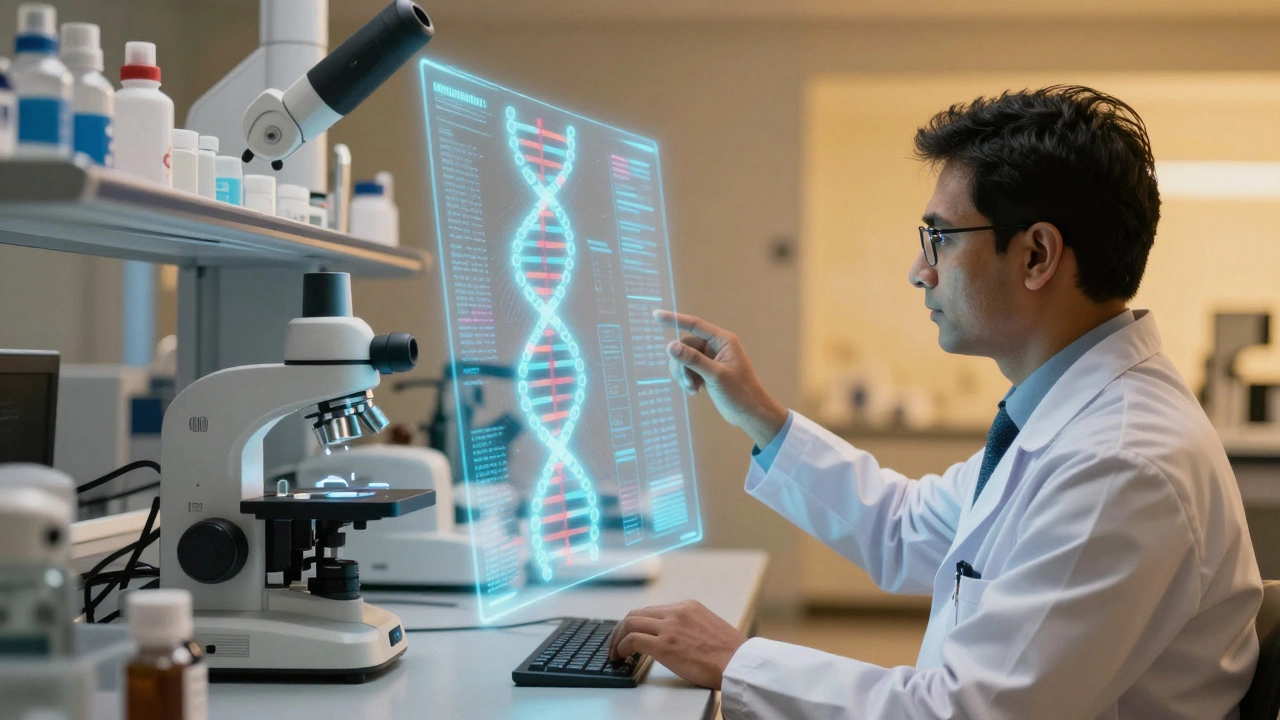
Gone are the days when doctors prescribed the same pill to everyone with the same diagnosis. Today, personalized medicine is a medical approach that tailors treatment to individual characteristics of each patient. This shift is driven by our ability to sequence DNA quickly and cheaply. In the early 2000s, sequencing the human genome cost billions and took years. Now, it costs under $1,000 and takes less than a day.
This speed allows us to identify genetic markers for diseases like cancer, Alzheimer’s, and heart conditions long before they manifest. For example, companies like 23andMe is a personal genomics and biotechnology company and AncestryDNA is a genetic genealogy service have made genetic testing accessible to millions. But it goes deeper than ancestry reports. Oncologists now use genomic profiling to select chemotherapy drugs that target the specific mutations driving a patient’s tumor, sparing them from ineffective treatments and severe side effects.
Then there’s mRNA technology. You likely remember its role during the pandemic, but its potential extends far beyond vaccines. Researchers are currently developing mRNA therapies for autoimmune diseases, HIV, and even age-related macular degeneration. The idea is simple: instead of introducing proteins into the body, you introduce the instructions (mRNA) for cells to produce those proteins themselves. It’s like sending blueprints to a construction site rather than delivering pre-built walls.
Editing Life’s Code with CRISPR
If personalized medicine is about reading the book of life, CRISPR-Cas9 is a revolutionary gene-editing technology derived from bacterial immune systems is about rewriting it. Discovered as a natural defense mechanism in bacteria, CRISPR allows scientists to cut and paste DNA sequences with unprecedented precision. Think of it as the "Find and Replace" function for your genes.
The implications are staggering. In 2024, the FDA approved the first CRISPR-based therapy, Casgevy, for sickle cell disease and transfusion-dependent beta-thalassemia. These are genetic disorders that cause chronic pain and organ damage. By editing the patient’s own stem cells to produce fetal hemoglobin, doctors can effectively cure these lifelong conditions. This wasn’t just an incremental improvement; it was a paradigm shift from managing symptoms to eliminating root causes.
Beyond humans, CRISPR is transforming agriculture. Scientists are creating crops resistant to drought, pests, and extreme temperatures without introducing foreign DNA-a key distinction from traditional GMOs. For instance, researchers have developed mushrooms that don’t brown when sliced, reducing food waste. They’ve also engineered wheat varieties that require less nitrogen fertilizer, lowering environmental impact while maintaining yield.
Farming Without Fields: The Rise of Cellular Agriculture
Our current food system is unsustainable. Livestock farming accounts for nearly 15% of global greenhouse gas emissions and uses vast amounts of land and water. Enter cellular agriculture is the practice of producing animal products by culturing cells directly. Also known as lab-grown meat, this technology involves taking a small sample of animal cells and growing them in a nutrient-rich solution until they form muscle tissue.
By 2026, several countries, including Singapore, the US, and Israel, have approved the sale of cultivated chicken and beef. Companies like Upside Foods is a cellular agriculture company focused on cultivated meat and Good Meat is a startup specializing in cultured meat production are leading the charge. The goal isn’t just to mimic conventional meat but to create superior products-leaner, antibiotic-free, and free from zoonotic diseases.
While cost remains a barrier, prices are dropping rapidly. When cultivated chicken launched commercially in Singapore in 2023, it cost around $50 per serving. By mid-2026, some producers aim to reach price parity with conventional poultry. This transition could spare billions of animals from factory farms and free up agricultural land for reforestation.
| Factor | Conventional Meat | Cultivated Meat |
|---|---|---|
| Land Use | High (pasture + feed crops) | Low (vertical bioreactors) |
| Water Consumption | Very High (~15,000 liters/kg beef) | Moderate (controlled environment) |
| Greenhouse Gas Emissions | High (methane from livestock) | Low (depends on energy source) |
| Antibiotic Use | Common (preventative) | None required |
| Disease Risk | Zoonotic transmission possible | Minimal (sterile environment) |
Synthetic Biology: Engineering Microbes for Good
While gene editing focuses on modifying existing organisms, synthetic biology is an interdisciplinary branch of biology and engineering that aims to design and construct new biological parts, devices, and systems builds entirely new biological systems. Imagine programming yeast cells like computers. That’s essentially what synthetic biologists do. They insert custom genetic circuits into microbes to make them produce valuable compounds.
This approach is already disrupting industries. Take insulin, for example. Before the 1980s, it was extracted from pig and cow pancreases. Today, recombinant DNA technology is a set of experimental techniques used to combine genetic material from multiple sources allows bacteria to produce human insulin safely and efficiently. Similarly, rare cancer drugs like artemisinin, once harvested from sweet wormwood plants, are now fermented by engineered yeast, ensuring stable supply chains.
Environmental applications are equally promising. Companies like LanzaTech is a biomanufacturing company that converts waste gases into chemicals and fuels use bacteria to convert industrial waste gases (like carbon monoxide) into ethanol and other chemicals. Another firm, Amyris is a bioengineering company that creates sustainable ingredients, produces fragrances and skincare ingredients using engineered fungi, replacing petroleum-based alternatives. Even fashion is getting in on the action: leather alternatives made from mycelium (mushroom roots) are gaining traction among luxury brands seeking ethical materials.
Bioplastics and the Circular Economy
Plastic pollution is one of the most visible environmental crises. Traditional plastics take hundreds of years to decompose, choking oceans and soil. Bioplastics are plastics derived from renewable biomass rather than fossil fuels offer a viable alternative. Unlike conventional plastics, many bioplastics are biodegradable or compostable under specific conditions.
Polylactic acid (PLA), derived from corn starch or sugarcane, is widely used in packaging and disposable cups. Polyhydroxyalkanoates (PHA), produced by bacteria feeding on sugars, break down in marine environments. While challenges remain-such as higher production costs and limited recycling infrastructure-the market is growing fast. Global demand for bioplastics is projected to exceed 2 million tons by 2027.
Moreover, scientists are developing enzymes that can digest plastic waste. A team at Kyoto University discovered an enzyme variant that breaks down PET plastic in just 10 hours, compared to centuries for natural degradation. If scaled up, this could turn plastic waste into raw materials for new products, closing the loop in a true circular economy.
Ethical Frontiers and Public Trust
With great power comes great responsibility. As biotechnology advances, ethical questions become harder to ignore. Who owns your genetic data? Should we edit embryos to prevent disease-or enhance traits like intelligence? How do we ensure equitable access to expensive therapies like CRISPR cures?
These aren’t hypothetical dilemmas. In 2018, the case of He Jiankui, who created the first gene-edited babies, sparked global outrage and calls for stricter regulations. Since then, international bodies have established guidelines emphasizing transparency, safety, and public engagement. However, enforcement varies widely across countries.
Public trust is crucial. Misinformation spreads easily, especially when topics involve invisible risks like GMOs or gene drives. Educating communities about the science behind these technologies helps build informed consent. After all, innovation thrives not just in labs but in societies that embrace change responsibly.
What’s Next? The Horizon of Bio-Innovation
We’re only scratching the surface. Future developments may include:
- Brain-computer interfaces enhanced by neural implants grown from bioengineered tissues.
- Carbon-negative buildings constructed using self-healing concrete infused with bacteria.
- Personalized probiotics tailored to your gut microbiome to treat mental health issues.
- Space agriculture where crops are genetically optimized for low-gravity, high-radiation environments.
The convergence of biotechnology with AI, nanotechnology, and robotics will accelerate progress further. Machine learning algorithms can predict protein structures (thanks to tools like AlphaFold), speeding up drug discovery. Nanobots might deliver medications directly to diseased cells. The possibilities seem endless-but so do the responsibilities.
Is CRISPR safe for human use?
CRISPR has shown remarkable promise, particularly in treating genetic blood disorders like sickle cell disease. However, off-target effects-unintended edits elsewhere in the genome-are still a concern. Rigorous clinical trials and regulatory oversight are essential to minimize risks. Current approvals are limited to somatic cells (non-reproductive), meaning changes aren’t passed to offspring.
Will lab-grown meat replace traditional livestock farming?
Not immediately, but it will likely complement it. Cultivated meat faces hurdles in scaling production and reducing costs. Yet, as technology matures and consumer acceptance grows, it could dominate premium markets first, gradually displacing conventional meat due to lower environmental impact and ethical advantages.
Are bioplastics truly eco-friendly?
It depends. Some bioplastics degrade only in industrial composters, not home bins or oceans. Others require significant agricultural inputs, raising concerns about land use. Look for certifications like OK Compost HOME or DIN CERTCO to verify end-of-life performance. Recycling infrastructure also needs improvement to handle mixed streams.
Can I get my DNA tested safely?
Yes, but read privacy policies carefully. Reputable companies encrypt data and allow deletion upon request. Avoid sharing results with third parties unless necessary. Remember, genetic information reveals insights about relatives too, so consider familial implications before testing.
How does synthetic biology differ from genetic engineering?
Genetic engineering modifies existing genes within an organism. Synthetic biology designs novel biological components or systems from scratch, often combining elements from different species. Think of genetic engineering as tweaking software code, while synthetic biology writes new programs entirely.