AI Personality & Feature Matcher
Not sure which AI fits your vibe? Select the characteristics you're looking for to see which model matches your needs.
Grok
The "Anti-Woke" Rebel
GPT-4
The Versatile Powerhouse
Claude
The Thoughtful Assistant
Click a model above to see why you should choose it!
Compare the real-time capabilities and philosophies of the top AIs.
The Quick Take: Yes, He Did
To answer the big question immediately: yes, Elon Musk has built an AI. Specifically, he founded a company called xAI to create a Large Language Model (LLM) named Grok. If you're wondering how this differs from ChatGPT or Claude, think of it as the "anti-woke" AI. It's designed to be edgy, a bit rebellious, and capable of accessing real-time data from X (formerly Twitter) to talk about things happening right this second.
| Feature | Grok (xAI) | GPT-4 (OpenAI) | Claude (Anthropic) |
|---|---|---|---|
| Real-time Data | Direct X Integration | Web Search/Plugins | Limited/Context-based |
| Personality | Sarcastic/Edgy | Neutral/Polite | Helpful/Cautious |
| Core Philosophy | Truth-seeking/Anti-censorship | Safety-first/Alignment | Constitutional AI |
The Origin Story: From OpenAI to xAI
It's ironic, but Musk was actually one of the founding members of OpenAI back in 2015. At the time, he wanted a non-profit that would develop Artificial General Intelligence (AGI)-the kind of AI that can actually think and reason like a human across any task-for the benefit of humanity. He put in millions of dollars to get it off the ground.
But things went south. Musk left OpenAI in 2018 after disagreements over how the company should be run. The real breaking point came when OpenAI shifted from a non-profit to a "capped-profit" model and partnered heavily with Microsoft. Musk felt the company had become a closed-source tool for a giant corporation, which is the opposite of why he started it. Fast forward to 2023, and he launches xAI to essentially do what he felt OpenAI had abandoned: build a "truth-seeking" AI that doesn't shy away from controversial topics.
How Grok Actually Works
When you talk to Grok, you're interacting with a Large Language Model. Like its competitors, it's trained on massive amounts of text data, but it has a secret weapon: the X firehose. Most AI models have a "knowledge cutoff," meaning they only know things up until the day their training ended. If you ask a standard AI about a news event that happened ten minutes ago, it might hallucinate or tell you it doesn't know.
Grok, however, pulls live data from X. This makes it incredibly fast at reporting breaking news or gauging public sentiment. But there's a trade-off. X is full of opinions, memes, and sometimes flat-out lies. Processing that noise into accurate information is the biggest technical hurdle xAI faces. They use a process called RLHF (Reinforcement Learning from Human Feedback) to tune the model, but instead of tuning it to be as polite as possible, they've tuned it to have a sense of humor and a bit of a bite.
The Hardware Beast: Colossus and Compute
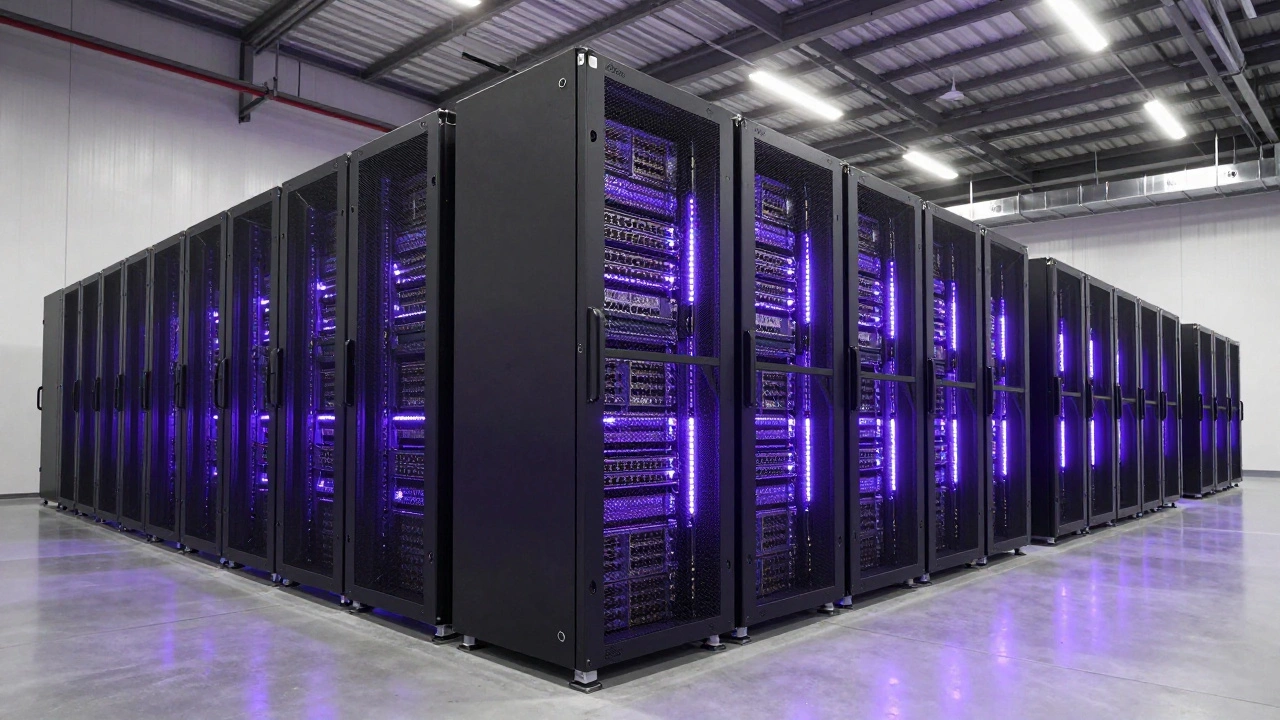
You can't build a world-class AI with just a few laptops. You need massive amounts of Compute. This is where Musk's experience with Tesla comes in. For years, Tesla has been building its own AI chips and supercomputers for Full Self-Driving (FSD). To power Grok, xAI built what they call the "Colossus" cluster.
Colossus is essentially a giant warehouse of Nvidia H100 GPUs. These chips are the gold standard for AI training because they can handle the billions of mathematical operations required for a neural network to "learn." By owning the hardware and the data, Musk is trying to create a vertical stack. He doesn't want to rent cloud space from Amazon or Google; he wants to own the silicon, the electricity, and the model.
The Connection Between Grok and Tesla
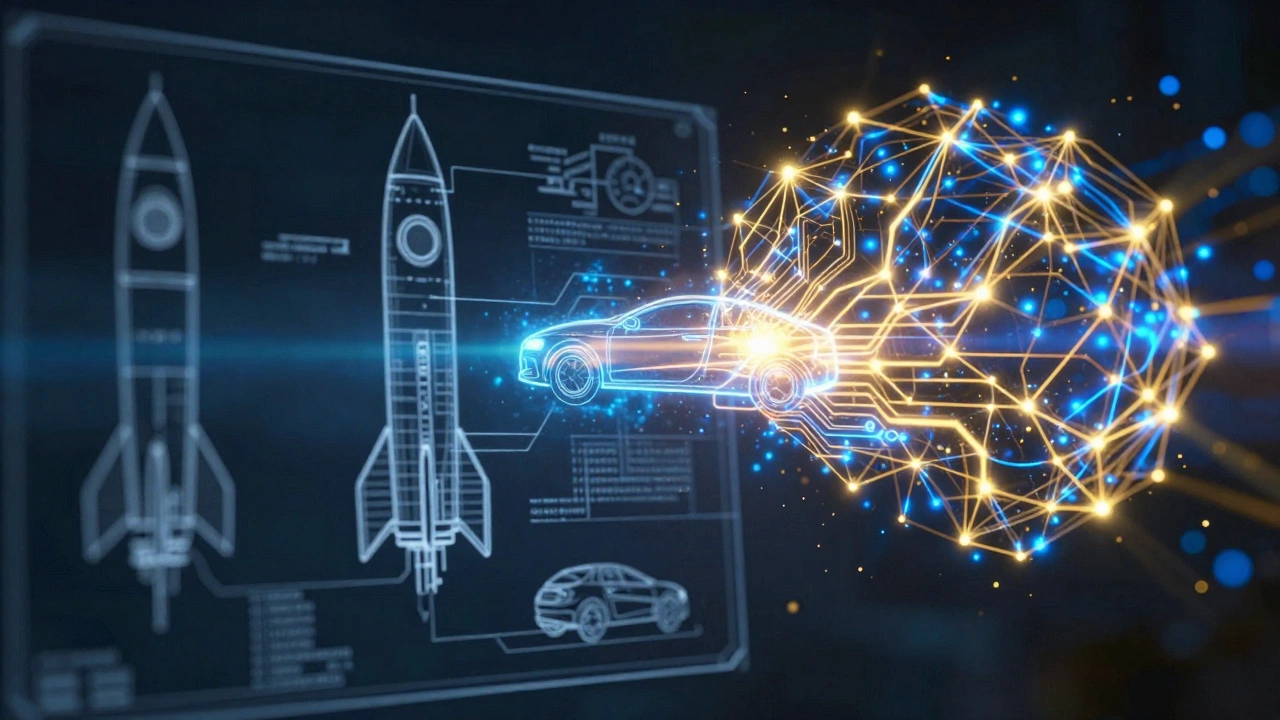
You might be wondering if Grok is just a chatbot for X users. Not exactly. There's a huge overlap between xAI and Tesla. Tesla is already an AI company in disguise. Every Tesla on the road is a data-collection machine, feeding video clips of the real world into a neural network to teach the car how to drive.
The goal is to merge these two worlds. Imagine a Tesla car that doesn't just follow a map but can actually converse with you using Grok's brain, understanding the context of the world around it. Musk wants to move from "narrow AI" (AI that only does one thing, like drive or write a poem) toward AGI. By combining the visual intelligence of Tesla's cameras with the linguistic intelligence of xAI, he's attempting to build a machine that understands both the physical and digital worlds.
The Risks: Bias, Safety, and the "Truth"
Musk claims Grok is designed to seek the truth, but here's the problem: what is "truth" in a world of polarized politics? While OpenAI and Google have built strict safety rails to prevent their AI from saying offensive things, Musk argues that these rails actually create a "woke" bias that hides the truth. He believes that if an AI is too censored, it becomes useless.
The risk here is that an AI with fewer guardrails can either be more honest or more prone to spreading misinformation. If Grok relies on X data, and X is currently trending with a conspiracy theory, there's a real chance the AI will repeat that theory as a fact. This is the eternal struggle of AI development: balancing safety (preventing harm) with utility (being honest and helpful).
Is xAI a Serious Competitor?
Right now, Artificial Intelligence is a winner-take-all game. To compete with the likes of Microsoft, Google, and Meta, you need three things: data, compute, and talent. Musk has the compute (Colossus) and the data (X). The third piece-talent-is the hardest. The best AI researchers usually flock to OpenAI or DeepMind.
However, Musk has a track record of disrupting industries. He didn't just build a car; he changed how we think about energy. He didn't just build a rocket; he made them reusable. If he can successfully leverage the real-time nature of X and the robotics of Tesla, xAI could move from being a "niche chatbot" to the brain of the next generation of physical robots (like the Optimus humanoid).
Did Elon Musk start OpenAI?
Yes, he was one of the original co-founders in 2015 and provided much of the initial funding. However, he left the board in 2018 due to conflicts of interest and disagreements over the company's direction.
What is Grok AI?
Grok is a Large Language Model (LLM) developed by xAI. It is designed to have a sarcastic personality and has real-time access to data and posts from the X platform, allowing it to discuss current events more fluidly than many other AIs.
Is xAI the same as Tesla?
No, they are separate companies. xAI focuses on the software and linguistic side of AI (LLMs), while Tesla focuses on the physical application of AI, such as autonomous driving and robotics. However, they often share goals and hardware resources.
Can I use Grok for free?
Generally, Grok is available to X Premium and Premium+ subscribers. It is not as widely available as the free tiers of ChatGPT or Gemini.
Why does Musk say other AIs are "woke"?
Musk believes that the safety guardrails installed by companies like OpenAI and Google lead to forced neutrality or a political bias that prevents the AI from stating certain facts or opinions, which he views as a form of censorship.
What to Watch Next
If you're following this space, keep an eye on two things: the integration of Grok into the Optimus robot and the release of newer versions of the Grok model. The jump from Grok-1 to Grok-2 showed a massive increase in reasoning capabilities. If xAI can continue to scale its hardware cluster and refine its training data, we might see a shift where AI isn't just something we chat with in a browser, but something that manages our cars and homes with a fully sentient-feeling personality.