Ice Age Climate Simulator
Drag the slider to travel through time from the peak of the last Ice Age (Glacial Maximum) to the modern era.
Visualizing the Shift
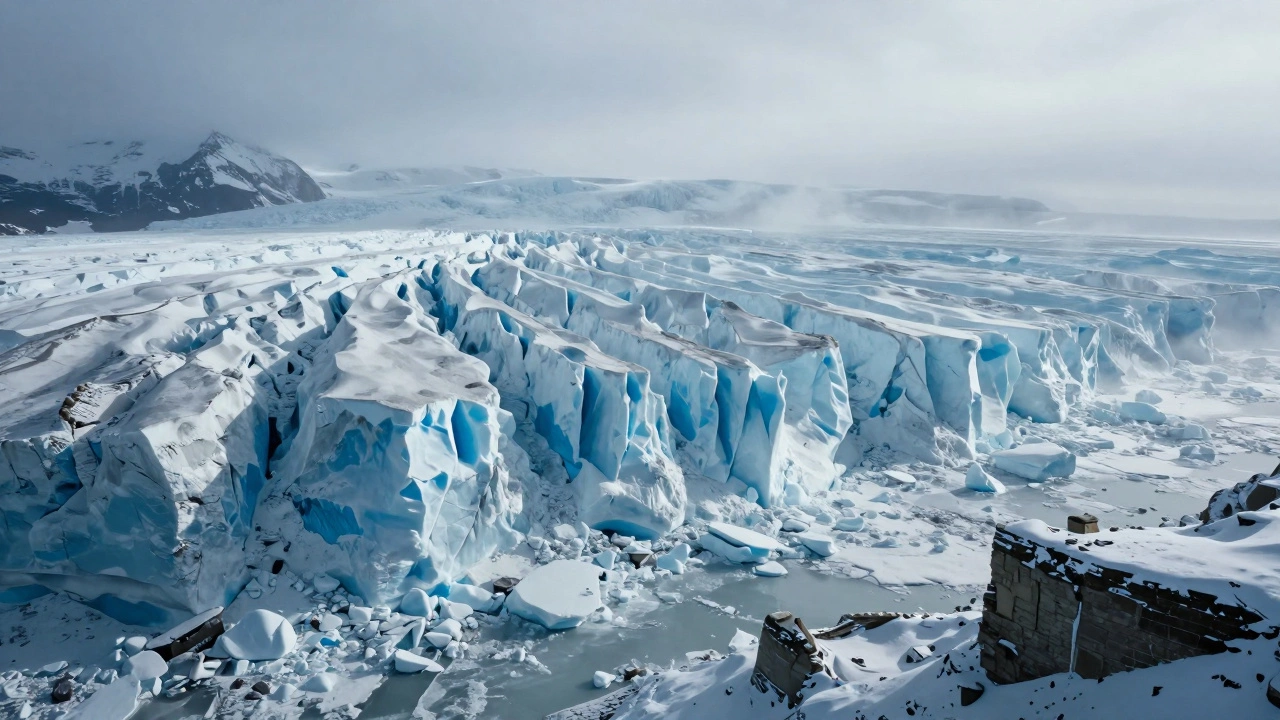
Massive ice sheets cover continents; oceans are significantly lower.
Imagine standing in what is now New York City, but instead of skyscrapers and traffic, you are looking at a wall of ice three miles thick. This wasn’t science fiction; it was reality for much of North America just 20,000 years ago. We often hear about global warming and rising temperatures, but our planet has spent more time frozen than warm. So, what actually caused the ice age? Was it a single event, or a complex chain reaction involving the sun, the ocean, and even volcanic ash?
The short answer is that there isn't one single switch that flips Earth into an ice age. It’s a combination of orbital mechanics, atmospheric chemistry, and ocean currents working together over tens of thousands of years. To understand why we were once buried under glaciers, we have to look at the engine that drives our climate system.
The Orbital Engine: Milankovitch Cycles
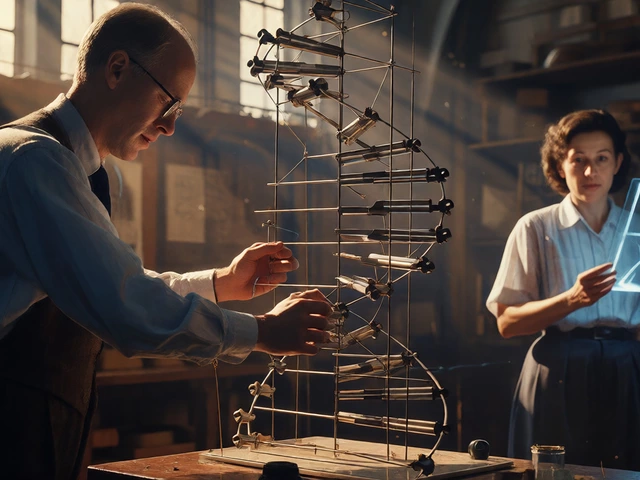
If you want to know the primary trigger for ice ages, you need to talk to the stars. Specifically, you need to look at how Earth moves through space. In the early 20th century, Serbian mathematician Milutin Milankovitch proposed that changes in Earth's orbit determine when ice ages start and end. These are now known as Milankovitch cycles, and they act like a slow-motion dimmer switch for the sunlight we receive.
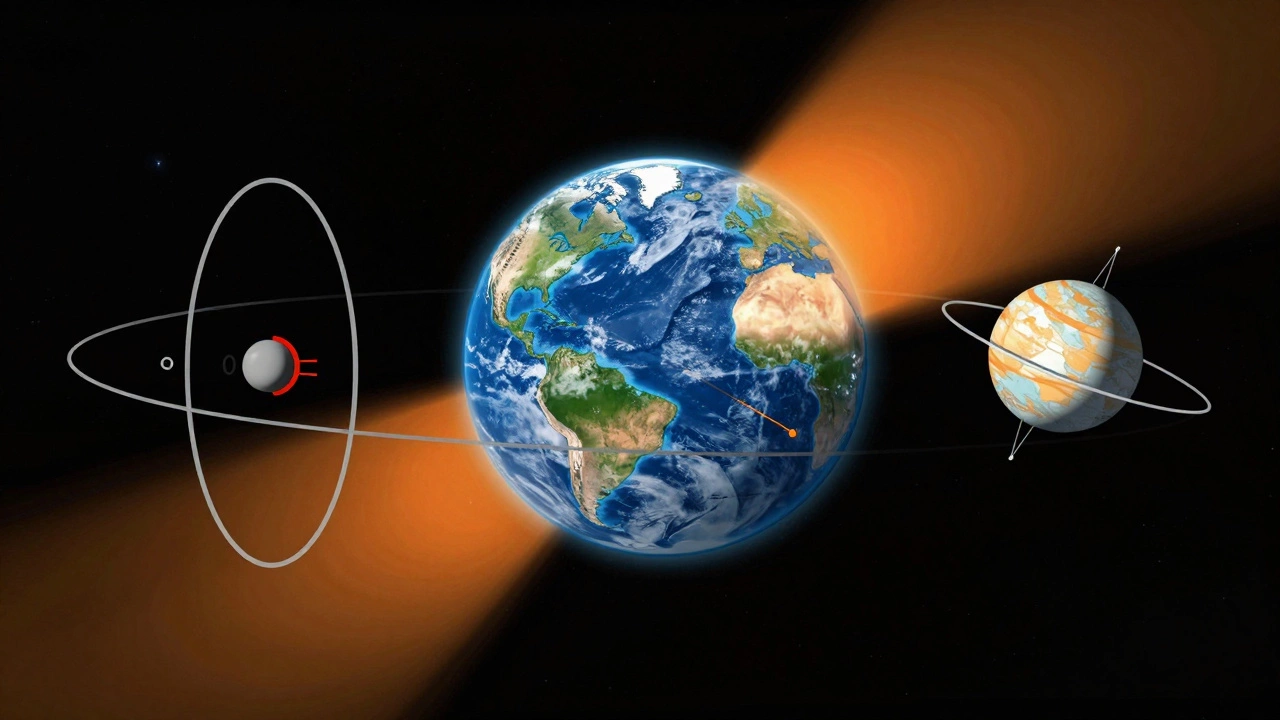
There are three main ways Earth’s movement changes:
- Eccentricity: This refers to the shape of Earth's orbit around the Sun. Sometimes the orbit is nearly circular, and sometimes it’s more elliptical (oval-shaped). When the orbit is more elliptical, the difference in distance between Earth and the Sun becomes significant. This cycle repeats roughly every 100,000 years. Currently, our orbit is fairly circular, meaning the seasons don't vary drastically due to distance alone.
- Tilt (Obliquity): Earth tilts on its axis by about 23.5 degrees. This tilt varies between 22.1 and 24.5 degrees over a 41,000-year cycle. A greater tilt means more extreme seasons-hotter summers and colder winters. A smaller tilt leads to milder seasons. For an ice age to start, you generally want a smaller tilt because it keeps high-latitude regions cooler in the summer, allowing snow to survive.
- Precession: Think of a spinning top wobbling as it slows down. Earth does this too. This wobble changes which hemisphere points toward the Sun during different parts of the year. This cycle takes about 26,000 years. Precession determines whether the Northern or Southern Hemisphere experiences summer when Earth is closest to the Sun.
When these three cycles align in a specific way-specifically, when northern summers become cool enough that winter snow doesn’t fully melt-you get the conditions necessary for glaciers to grow. Over thousands of years, that unmelted snow compacts into ice, reflecting more sunlight back into space and cooling the planet further.
The Greenhouse Effect and Carbon Dioxide
Orbital changes provide the initial nudge, but they aren't strong enough on their own to cause a full-blown ice age. That’s where carbon dioxide ($CO_2$) comes in. You might associate $CO_2$ with modern pollution, but naturally occurring levels of this gas have dictated Earth’s temperature for millions of years.
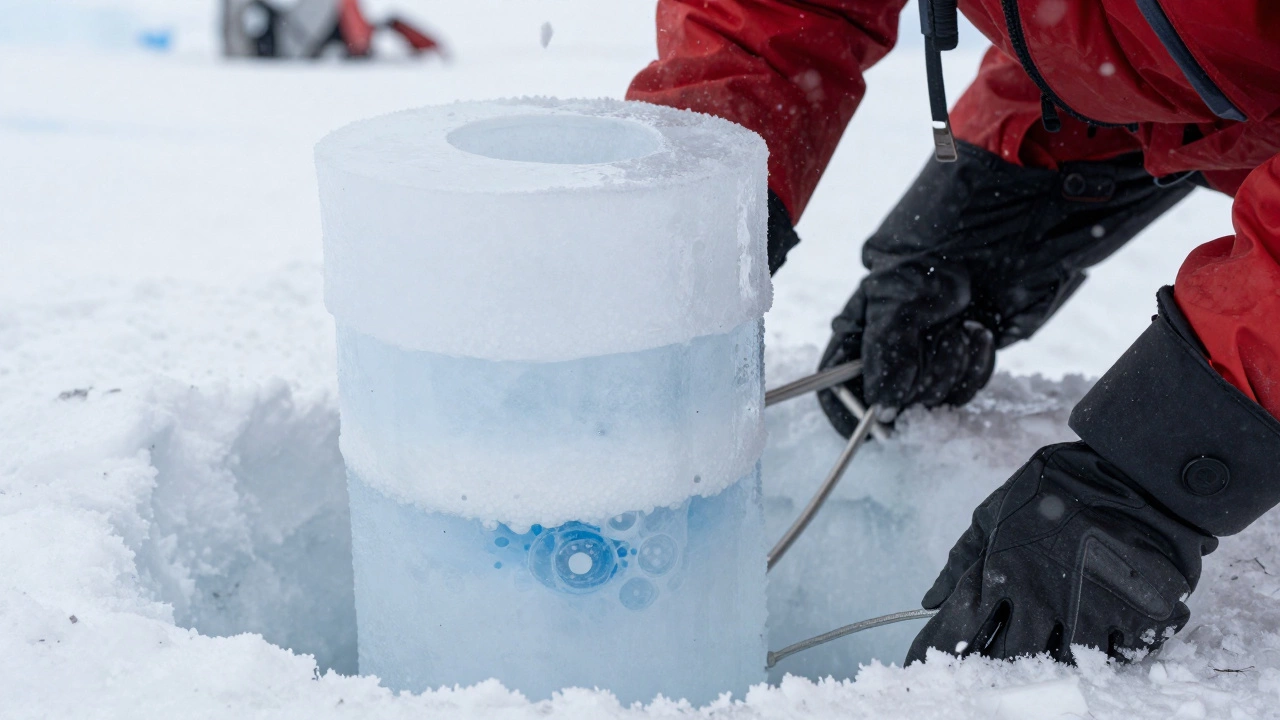
Ice cores drilled from Antarctica give us a direct record of the atmosphere from hundreds of thousands of years ago. These records show a tight correlation between temperature and $CO_2$ levels. During warm interglacial periods (like the one we are in now), $CO_2$ levels hover around 280-300 parts per million (ppm). During glacial periods, those levels drop to about 180 ppm.
Here is the tricky part: did the drop in $CO_2$ cause the cooling, or did the cooling cause the drop in $CO_2$? Evidence suggests it’s a feedback loop. As the oceans cool, they can absorb more gases. Cold water acts like a sponge, pulling $CO_2$ out of the atmosphere. With less $CO_2$ in the air, the greenhouse effect weakens, trapping less heat and causing the planet to cool even more. This positive feedback loop locks the ice age in place.
| Factor | Glacial Period (Ice Age) | Interglacial Period (Current) |
|---|---|---|
| Average Global Temperature | ~4-7°C cooler than today | Baseline pre-industrial average |
| Atmospheric $CO_2$ Levels | ~180 ppm | ~280-300 ppm (pre-industrial) |
| Sea Level | ~120 meters lower | Current baseline |
| Ice Sheet Coverage | Covers ~30% of land surface | Confined mostly to poles |
Ocean Circulation and the Heat Conveyor Belt
The ocean is Earth’s central heating system. It moves warm water from the equator toward the poles and cold water from the poles back toward the equator. This process is called thermohaline circulation, or the "global conveyor belt." If this belt slows down or stops, the distribution of heat changes dramatically.
During the last ice age, massive amounts of freshwater poured into the North Atlantic from melting ice sheets. Freshwater is less dense than salty seawater, so it floats on top. This layering prevented the cold, salty water from sinking, which is the engine that drives the deep-ocean current. When this sinking stopped, the flow of warm water to Europe and North America was cut off. Regions that should have been mild became significantly colder, facilitating the growth of continental ice sheets.
This mechanism explains why some climate shifts happened surprisingly fast. While orbital cycles take tens of thousands of years, changes in ocean circulation can shift regional climates within decades. Paleoclimate data shows abrupt warming events called Dansgaard-Oeschger events, where temperatures in the North Atlantic jumped several degrees in just a few years, likely triggered by sudden restarts or failures in this conveyor belt.
Volcanic Activity and Atmospheric Dust
We often think of volcanoes as sources of heat, but large eruptions can actually cool the planet. When a volcano erupts explosively, it spews sulfur dioxide ($SO_2$) high into the stratosphere. There, it reacts with water vapor to form sulfate aerosols-tiny reflective particles that block sunlight from reaching the surface.
While a single eruption won’t start an ice age, prolonged periods of intense volcanic activity can contribute to cooling. During certain geological epochs, such as the Late Ordovician period 450 million years ago, massive volcanic eruptions may have helped draw down $CO_2$ levels by weathering newly exposed rock surfaces. As rain falls on fresh lava rock, it chemically reacts with $CO_2$, locking it away in minerals. This natural carbon sequestration removed the greenhouse blanket, allowing the Earth to freeze.
In more recent ice ages, volcanic dust also played a role. Ash particles in the atmosphere increased the albedo (reflectivity) of clouds, making them brighter and better at reflecting solar radiation. This subtle increase in reflectivity would have compounded the cooling effects initiated by Milankovitch cycles.
Albedo Feedback: The Mirror Effect
Once the first patches of ice form, they help themselves along through a process called albedo feedback. Albedo is a measure of how much light hits a surface and bounces back. Dark surfaces like forests and oceans absorb most sunlight, turning it into heat. White surfaces like snow and ice reflect most sunlight back into space.
As the Earth cools slightly due to orbital changes, more snow survives the summer. This increases the white, reflective area of the planet. More reflection means less heat absorption, which leads to more cooling, which leads to more ice. It’s a self-reinforcing cycle. Once this feedback loop gets going, it’s very hard to stop without a major change in the external drivers, like a shift in Earth’s orbit back to a configuration that delivers more summer heat.
This is why ice sheets tend to stick around for long periods. They create their own local climate, keeping the surrounding areas cool and dry. The massive Laurentide Ice Sheet that covered North America was so high that it created its own weather patterns, including katabatic winds that swept down from the glacier, chilling the continents below.
Are We Entering Another Ice Age?
Given that Milankovitch cycles are still running, it’s natural to wonder if we are due for another freeze. Based on orbital mechanics alone, Earth is currently moving toward a phase that could theoretically lead to cooling in the distant future. Some models suggest that without human interference, we might see gradual cooling starting in a few thousand years.
However, human activity has fundamentally changed the equation. Since the Industrial Revolution, we have pumped billions of tons of $CO_2$ into the atmosphere, raising levels to over 420 ppm-far higher than any point in the last 800,000 years. This artificial greenhouse effect is overpowering the natural cooling trends driven by orbital cycles. The heat trapped by these emissions is effectively canceling out the dimming effect of Earth’s changing orbit.
So, while the astronomical triggers for an ice age are still ticking away in the background, the atmospheric conditions required to sustain one no longer exist. Instead of preparing for a new ice age, scientists are focused on mitigating the rapid warming caused by the very same greenhouse gases that once kept the ice at bay.
How long did the last ice age last?
The last major ice age, known as the Quaternary glaciation, began about 2.6 million years ago. However, it consisted of many individual glacial and interglacial periods. The most recent glacial maximum, when ice sheets were at their largest, occurred roughly 20,000 to 26,000 years ago. The current interglacial period, called the Holocene, started about 11,700 years ago and continues today.
Did humans live during the ice age?
Yes, modern humans (Homo sapiens) lived during the last ice age. Archaeological evidence shows that humans adapted to cold environments using advanced tools, clothing, and shelter. Cave paintings in France and Spain, dating back 30,000 to 40,000 years, depict animals like mammoths and woolly rhinos that thrived in the cold steppe-tundra ecosystems of that era.
What animals lived during the ice age?
The Pleistocene epoch was home to megafauna, or large animals, that are now extinct. These include woolly mammoths, saber-toothed cats, giant ground sloths, cave lions, and woolly rhinoceroses. Many of these species went extinct near the end of the ice age, likely due to a combination of climate change and hunting by early humans.
Why do ice ages happen in cycles?
Ice ages occur in cycles primarily due to Milankovitch cycles-predictable changes in Earth's orbit, tilt, and wobble. These changes alter the amount and distribution of solar energy reaching Earth. When combined with feedback loops involving carbon dioxide and ice albedo, these orbital shifts push the climate back and forth between glacial and interglacial states over tens of thousands of years.
Can a nuclear winter cause an ice age?
A nuclear war could cause a "nuclear winter," where smoke and dust from burning cities block sunlight, leading to severe global cooling for several years. However, this would be a temporary phenomenon lasting decades, not the multi-thousand-year geological ice age driven by orbital mechanics and long-term atmospheric changes. The cooling would eventually subside as the particulates settled out of the atmosphere.