Water Conservation Calculator
How Much Water Are You Using?
Estimate your daily water usage to see where you can make the biggest impact.
How Your Water Usage Compares
The average person uses 100-150 gallons of water per day. What about you?
When you turn on the tap, it feels endless. Rain falls, rivers flow, lakes refill - it’s easy to assume water is infinite. But here’s the hard truth: water isn’t renewable in the way solar or wind is. It doesn’t get created anew every day. It just moves. And how we use it is pushing many systems to the edge.
Water Isn’t Created - It’s Recycled
The water you drink today could have been part of a dinosaur’s bloodstream, a Roman aqueduct, or last week’s rain over Bangalore. The Earth has roughly the same amount of water now as it did 4 billion years ago. That’s because water doesn’t vanish - it cycles. The water cycle moves it from oceans to clouds to rivers to soil and back again. This process - evaporation, condensation, precipitation, infiltration - is nature’s way of recycling. But recycling doesn’t mean unlimited supply. It means limited volume, constantly shifting.
Think of it like a bathtub with a tiny faucet and a big drain. The tub holds 100 liters. The faucet adds 2 liters an hour. The drain pulls out 3. That’s not renewable. That’s depletion. That’s what’s happening in places like Cape Town, Chennai, and even parts of California. We’re pulling water out faster than nature can replenish it locally.
Renewable vs. Sustainable: The Key Difference
People often confuse renewable with sustainable. Solar panels? Renewable. They get hit by sunlight every day. Wind turbines? Renewable. The wind doesn’t run out. But water? It’s not created. It’s redistributed. So calling water renewable is misleading. It’s better to ask: is water sustainable?
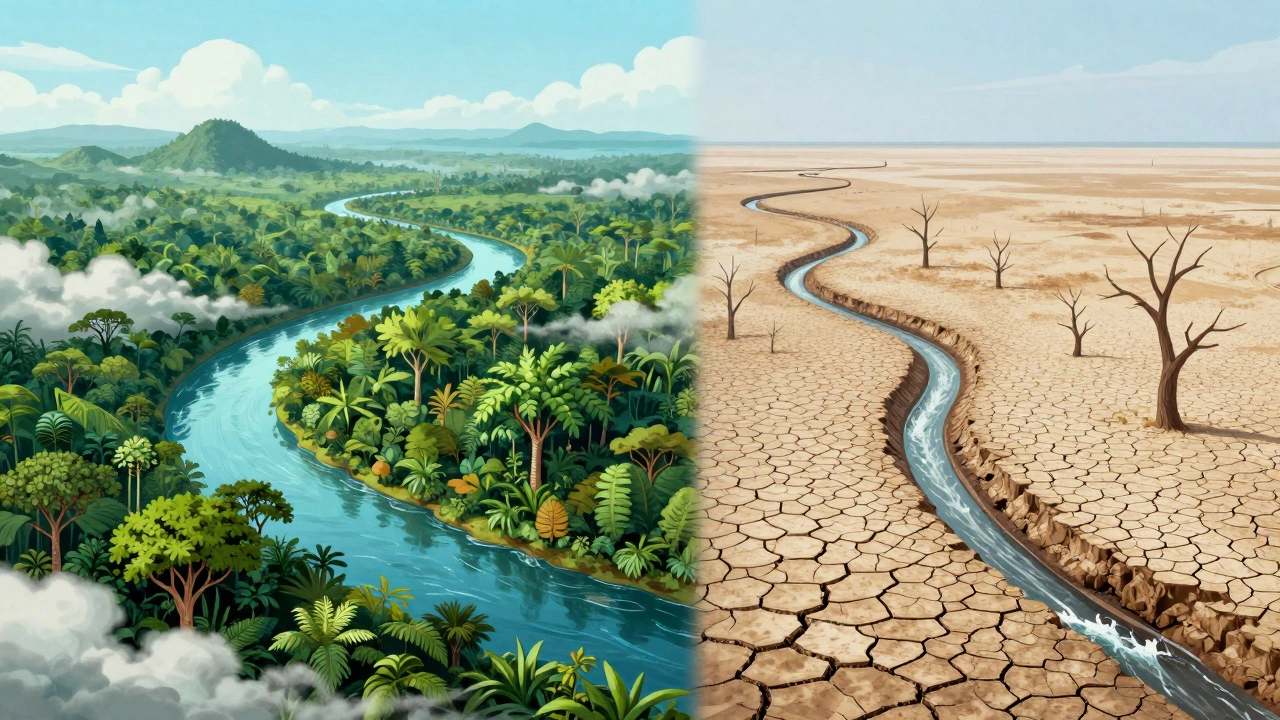
Sustainability depends on how fast we use it versus how fast it naturally returns. In the Amazon, rainfall replenishes aquifers quickly. In the Aral Sea region? Not so much. Decades of irrigation for cotton drained the sea dry. The water was there - but not replenished. That’s not renewable. That’s overdrawn.
The freshwater we rely on - the 2.5% of Earth’s water that’s not salt - is even more fragile. Most of it is locked in glaciers or deep underground. The shallow groundwater we pump for farms and cities? That’s often fossil water - ancient reserves from ice ages. Once it’s gone, it won’t return for thousands of years.
Where Water Runs Dry - Real Examples
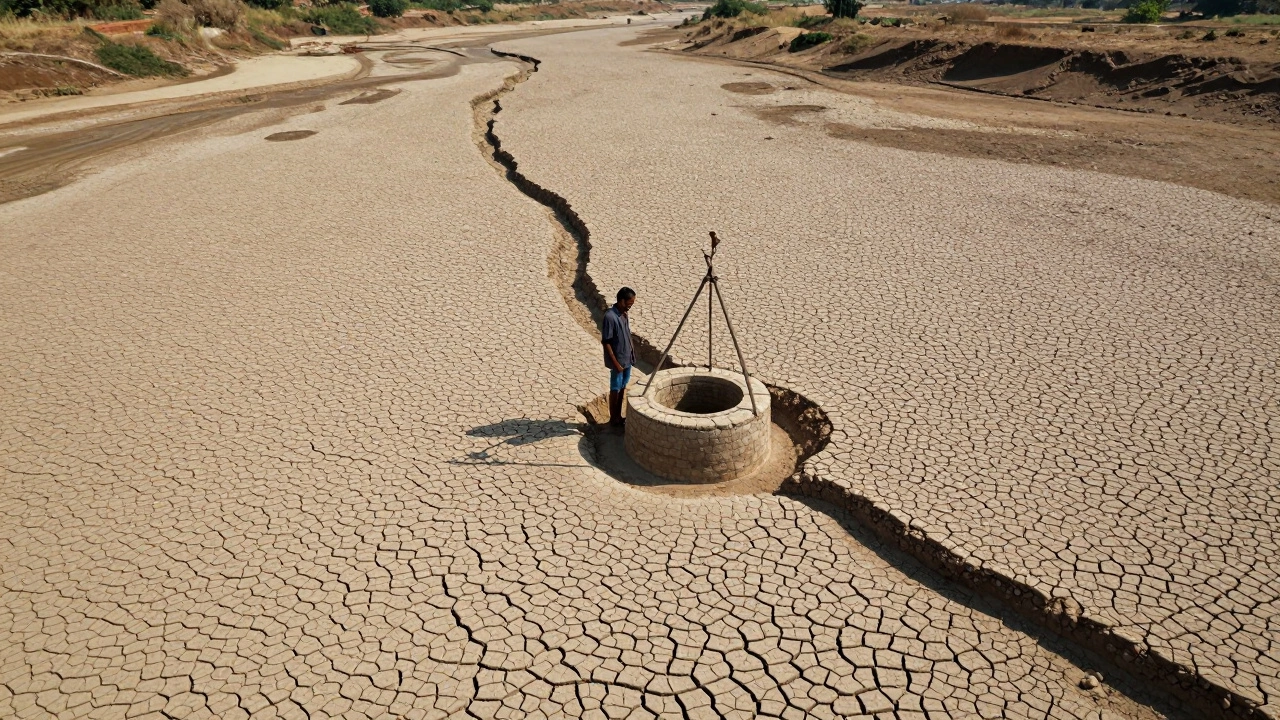
In 2024, India’s groundwater levels dropped to their lowest in 30 years, according to the Central Ground Water Board. Over 60% of districts are in critical or over-exploited zones. Farmers in Punjab are drilling deeper wells - 300, 400, even 600 meters - just to find water. The aquifers beneath them aren’t refilling fast enough. This isn’t a future problem. It’s happening now.
In California, the Ogallala Aquifer - which feeds 30% of U.S. irrigated farmland - is shrinking. Scientists estimate it could be 70% depleted by 2080. That’s not because the rain stopped. It’s because we’re using it faster than snowmelt and storms can restore it.
Even places with monsoons aren’t safe. Bangalore’s lakes, once full of fish and birds, are now choked with sewage and silt. Rainwater that once soaked into the ground now runs off concrete. The recharge rate? Down 60% since 1990.
Why This Matters for Renewable Energy
You might wonder: why is this in a renewable energy article? Because energy and water are locked together. Hydropower? Needs water. Nuclear plants? Need cooling water. Even solar farms need water to clean panels. And as we shift from coal to renewables, we’re not reducing water use - we’re just moving it around.
Coal plants use 20-50 gallons of water per kilowatt-hour. Solar PV uses 0.1 gallons. Wind? Almost none. So switching to renewables cuts water demand - big time. But if we keep wasting water elsewhere, we’re still losing the battle.
The real win? Using less water to make energy. And using energy more wisely to save water. That’s the link.
Can We Make Water Renewable?
Technically, no. We can’t create more water. But we can change how we manage it. That’s where real solutions live.
- Fix leaks. In cities like Delhi and Mumbai, up to 40% of treated water is lost through broken pipes. Fixing them is cheaper than building new dams.
- Reuse wastewater. Singapore turns sewage into clean drinking water. It’s called NEWater. It supplies 40% of their needs.
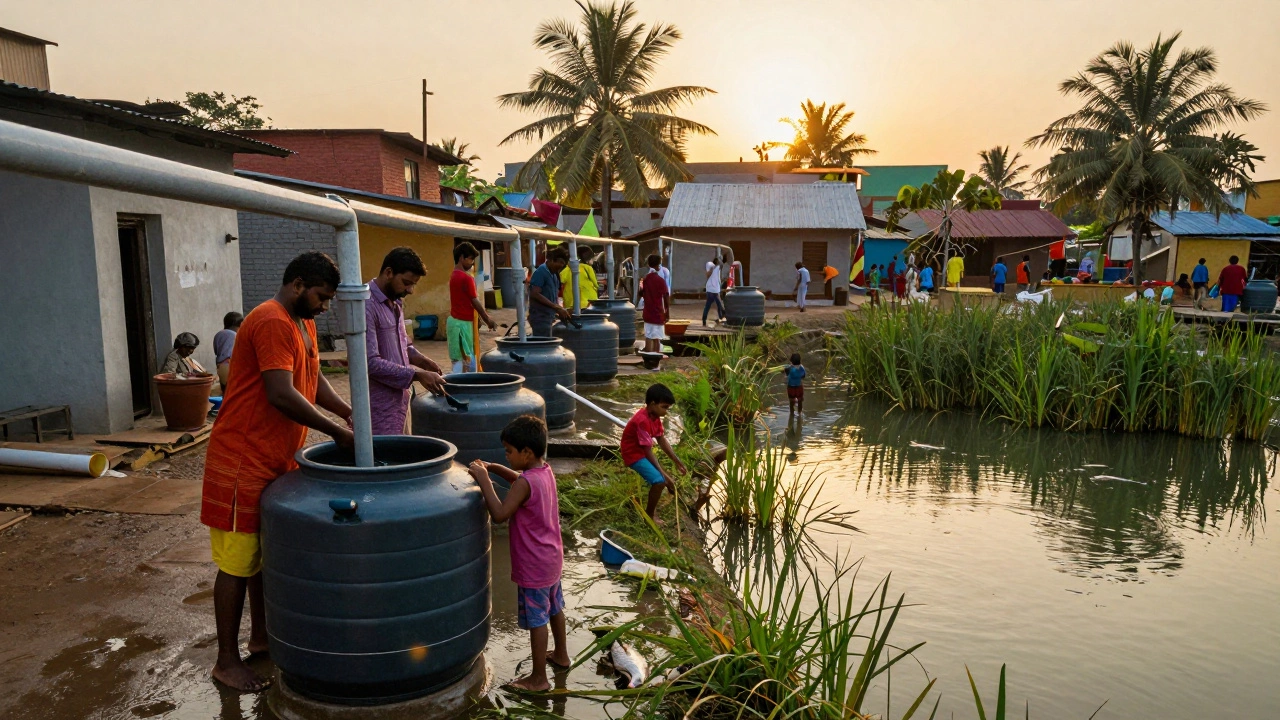
- Harvest rain. In Tamil Nadu, rooftop rainwater collection revived village wells. One village went from 30% water access to 95% in five years.
- Choose crops wisely. Rice uses 2,500 liters of water per kilogram. Millet uses 300. Shifting crops can cut farm water use by 80%.
- Protect wetlands. Wetlands filter water naturally. They recharge aquifers. They cost nothing to maintain - if we don’t pave them over.
These aren’t futuristic ideas. They’re proven. And they work at scale.
What You Can Do - Right Now
You don’t need a government policy to help. You just need to change habits.
- Take 5-minute showers. Cut 10 minutes off, save 50 liters.
- Fix a dripping tap. One drip a second = 30 liters a day.
- Don’t rinse dishes before loading the dishwasher. Modern ones don’t need it.
- Water plants in the evening. Less evaporation. More savings.
- Support brands that report water use. Companies like Patagonia and Unilever publish water footprints. Choose them.
Small changes add up. If every household in Bangalore saved 20 liters a day, we’d save 12 billion liters a year. That’s enough to fill 4,800 Olympic pools.
Bottom Line
Water isn’t renewable. But it’s not doomed either. It’s a resource we’ve treated like a magic tap - turn it on, it flows forever. It doesn’t. The cycle is intact. But our use isn’t. The question isn’t whether water is renewable. It’s whether we’re smart enough to stop treating it like we’re the last generation on Earth.
Is water a renewable resource?
Water as a whole is not renewable - it’s recycled through the water cycle. But the freshwater we use for drinking, farming, and industry is often drawn from sources that refill slowly or not at all. So while the global water supply stays constant, local supplies can be depleted faster than they’re renewed, making them effectively non-renewable in practice.
Why is groundwater not renewable?
Groundwater isn’t renewable because many aquifers refill over decades or centuries. We’re pumping out ancient water - sometimes from ice age glaciers - faster than rain and snowmelt can trickle down. In places like the High Plains Aquifer in the U.S. or the Deccan Trap in India, water tables are falling 1-3 meters every year. That’s not a cycle. That’s mining.
Can we run out of water?
We won’t run out of water globally - the planet has the same amount it always did. But we can run out of usable, accessible freshwater in specific places. Cities like Cape Town, Chennai, and São Paulo have come within days of running dry. That’s not a theoretical risk. It’s already happened. The problem isn’t scarcity - it’s mismanagement.
How does climate change affect water renewal?
Climate change doesn’t reduce total water - it redistributes it. Some areas get more rain, others get less. Glaciers melt faster, so rivers surge briefly, then dry up. Rain patterns shift, making monsoons unpredictable. In India, the monsoon now arrives late and dumps 30% more rain in 3 days - which just washes away instead of soaking in. This breaks the natural recharge cycle.
Does recycling wastewater make water renewable?
No, it doesn’t create new water - but it makes existing water sustainable. Treating and reusing wastewater cuts demand on freshwater sources. Singapore’s NEWater system cuts freshwater imports by 40%. It’s not renewable, but it’s smart. And that’s what matters.
Next Steps
If you’re in a city with water shortages, check your local utility’s water conservation program. Many offer free leak detectors, low-flow showerheads, or rebates for rain barrels. Join a community group that restores local ponds or trees - they’re nature’s water filters. And if you’re a policymaker, investor, or business owner: stop measuring success by how much water you use. Start measuring it by how little you waste.