
Nanoparticle Risk Estimator
Select the characteristics of the nanoparticle scenario below to see an estimated risk profile.
Risk Assessment Summary
Based on current nanotoxicology models regarding oxidative stress, accumulation, and barrier penetration.
Key Findings:
Quick Summary / Key Takeaways
- Nanoparticles can bypass traditional biological barriers like the blood-brain barrier and cell membranes due to their tiny size (1-100 nanometers).
- While nanomedicine offers targeted drug delivery with fewer side effects, unintended exposure to industrial or environmental nanoparticles poses potential respiratory and cellular risks.
- The shape, charge, and coating of a nanoparticle determine whether it is harmless or toxic; not all nanoparticles behave the same way in the human body.
- Current regulations are catching up, but long-term cumulative effects of low-dose nanoparticle exposure remain an active area of research in nanotoxicology.
- Consumer products containing engineered nanoparticles, such as sunscreens and cosmetics, generally show low risk when used as directed, but inhalation risks require caution.
You probably didn’t think about the size of the particles in your sunscreen or the air you breathe until now. But at the scale of one-billionth of a meter, matter behaves differently. This is the realm of Nanotechnology, which involves manipulating materials at the atomic and molecular level to create structures between 1 and 100 nanometers. As these technologies move from labs into our daily lives-from medical treatments to consumer electronics-the question isn't just what they do for us, but what they do to us.
We need to look past the hype. The interaction between engineered nanoparticles and human biology is complex. Some particles heal; others might harm. Understanding this duality requires looking at how these tiny invaders navigate the intricate landscape of the human body.
How Nanoparticles Enter and Move Through the Body
To understand the impact, we first have to track the entry points. Unlike larger particles that the body easily rejects or filters out, nanoparticles are small enough to slip through the cracks. They enter primarily through three routes: inhalation, ingestion, and dermal absorption.
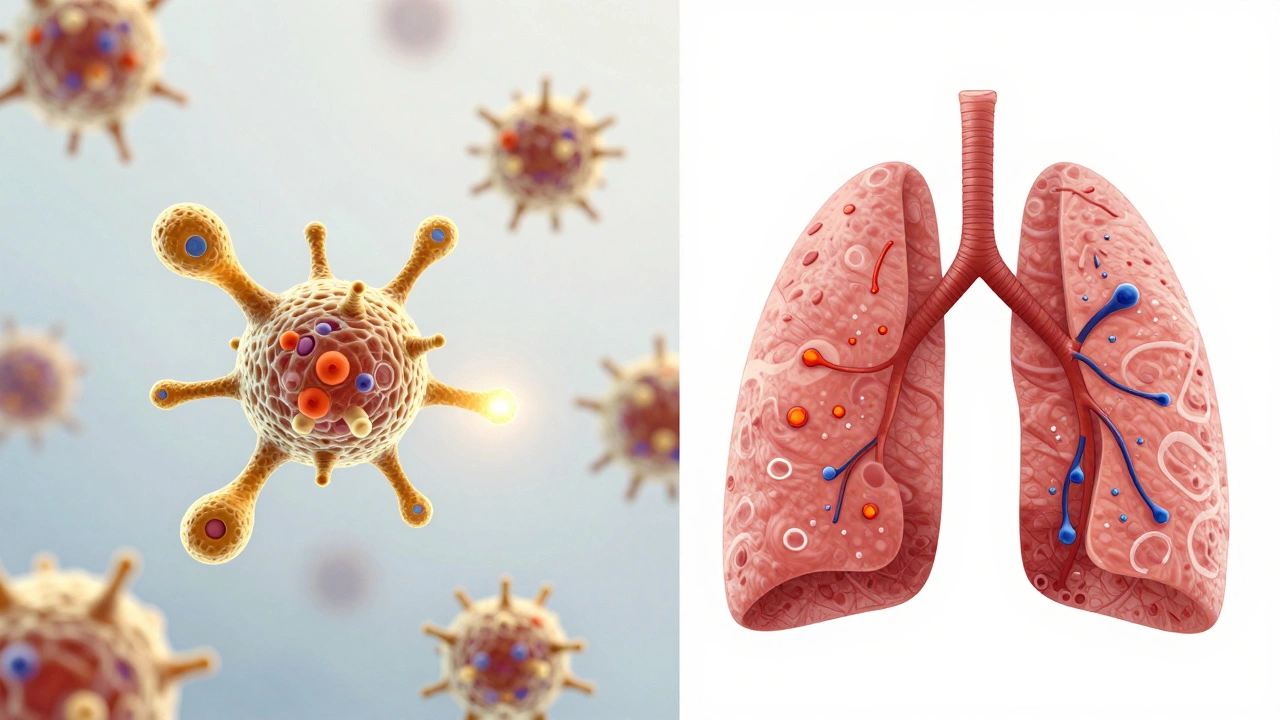
Inhalation is often the most immediate concern. When you breathe in airborne nanoparticles, they don't just stop in your nose or throat. Because of their minute size, they can travel deep into the alveoli-the tiny air sacs in your lungs where oxygen exchange happens. From there, some particles can cross the lung tissue and enter the bloodstream directly, bypassing the liver’s initial filtration system entirely.
Ingestion is another pathway. While the digestive tract has robust defenses, certain types of nanoparticles, particularly those designed for drug delivery, are engineered to survive stomach acid and be absorbed by intestinal cells. Once inside the bloodstream, these particles circulate throughout the body. Their journey doesn't end there. Due to their size, they can accumulate in organs like the liver, spleen, and kidneys, which act as the body's primary filtering systems.
Perhaps the most surprising route is through the skin. Intact skin is a formidable barrier, but nanoparticles can penetrate hair follicles and sweat glands. While full penetration into the bloodstream through healthy skin is rare, it is possible, especially if the skin is damaged or if the particles are specifically designed to enhance absorption, as seen in some transdermal drug patches.
The Double-Edged Sword: Medical Benefits vs. Cellular Stress
Let’s talk about why we use nanotechnology in medicine in the first place. In Nanomedicine, scientists design nanoparticles to deliver drugs directly to diseased cells, such as cancer tumors, sparing healthy tissue. This targeted approach reduces systemic side effects and increases treatment efficacy. For example, liposomal doxorubicin, a chemotherapy drug encapsulated in lipid nanoparticles, causes significantly less heart damage than traditional formulations.
However, this same ability to infiltrate cells can cause unintended stress. When nanoparticles enter a cell, they interact with organelles like mitochondria and lysosomes. If the particle is biocompatible, it may be broken down and excreted. If not, it can disrupt cellular functions. This disruption often manifests as oxidative stress-a condition where free radicals overwhelm the cell’s antioxidant defenses, leading to inflammation and DNA damage.
Consider gold nanoparticles, often touted for their safety in imaging applications. While elemental gold is inert, the surface chemistry matters. If coated with certain proteins or charged molecules, gold nanoparticles can trigger immune responses or accumulate in tissues over time. The key takeaway here is that material composition alone doesn't dictate safety; surface modification plays an equally critical role.

Breaching the Blood-Brain Barrier: A New Frontier of Risk
One of the most significant concerns in Nanotoxicology, the study of adverse effects of nanomaterials, is the potential for nanoparticles to cross the blood-brain barrier (BBB). The BBB is a highly selective semipermeable border that protects the brain from harmful substances in the blood. Traditionally, only small, fat-soluble molecules could pass through.
Nanoparticles, however, can exploit transport mechanisms meant for nutrients. Studies have shown that certain carbon-based nanoparticles and metallic oxides can traverse the BBB, potentially leading to neurotoxicity. Once in the brain, these particles may induce inflammation in glial cells, which support neurons. Chronic inflammation in the brain is linked to neurodegenerative diseases like Alzheimer’s and Parkinson’s.
This isn't just theoretical. Researchers have observed that prolonged exposure to ultrafine particles in polluted air correlates with increased markers of neuroinflammation in animal models. While direct causation in humans is harder to prove, the mechanism is plausible. The brain’s limited ability to clear foreign debris means that accumulated nanoparticles could pose long-term cognitive risks.
Respiratory Health: The Lungs as Ground Zero
Your lungs are the frontline defense against airborne threats, but they are also the most vulnerable organ to nanoparticle exposure. The surface area of the human lung is vast-roughly the size of a tennis court-providing ample opportunity for particle deposition.
When nanoparticles settle in the lungs, they can cause physical irritation and chemical reactions. Silica nanoparticles, commonly found in construction materials and some consumer products, are known to cause silicosis, a progressive lung disease. At the nanoscale, silica becomes even more reactive, potentially accelerating fibrosis (scarring) of lung tissue.
Moreover, nanoparticles can carry other pollutants deeper into the lung tissue. Think of them as Trojan horses, transporting heavy metals or organic toxins past the mucociliary escalator-the lung’s natural cleaning system. This synergistic effect amplifies the toxicity of both the carrier particle and the attached pollutant.
For workers in industries involving nanomaterial manufacturing, such as semiconductor fabrication or advanced composite production, strict occupational safety standards are essential. Respiratory protection and ventilation systems must be designed to capture particles smaller than 0.3 micrometers, which standard masks often miss.
Immune System Reactions: Friend or Foe?
The immune system is designed to identify and neutralize foreign invaders. Nanoparticles, being non-self, naturally attract attention from immune cells like macrophages. These cells engulf particles in a process called phagocytosis. Ideally, the macrophage breaks down the particle and removes it from circulation.
But what happens if the particle is too large for the macrophage to digest, or if it resists degradation? The macrophage may become "frustrated," releasing inflammatory signals that recruit more immune cells. This chronic inflammation can lead to tissue damage and autoimmune-like responses.
Additionally, some nanoparticles can mimic pathogens, triggering an exaggerated immune response. This is particularly relevant in vaccine adjuvants, where nanoparticles are used to boost immunity. While beneficial in controlled settings, accidental exposure to similar particles could theoretically sensitize individuals to allergies or asthma.
The charge of the nanoparticle surface also influences immune interaction. Positively charged particles tend to bind more strongly to negatively charged cell membranes, increasing uptake but also raising the risk of membrane disruption and cytotoxicity. Negative charges are generally better tolerated but may still activate complement proteins, part of the innate immune system.
Comparison of Common Nanomaterials and Biological Impact
| Nanomaterial | Primary Use | Potential Health Risk | Clearance Mechanism |
|---|---|---|---|
| Silver Nanoparticles | Antibacterial coatings, wound dressings | Oxidative stress, argyria (skin discoloration) | Kidneys, Liver |
| Carbon Nanotubes | Electronics, structural composites | Fibrosis, asbestos-like lung damage | Poorly cleared, accumulates in lungs |
| Titanium Dioxide (TiO2) | Sunscreens, food additives | DNA damage under UV light, mild inflammation | Feces, Urine |
| Gold Nanoparticles | Medical imaging, drug delivery | Low toxicity, potential accumulation | Liver, Spleen |
| Quantum Dots | Displays, bio-imaging | Heavy metal toxicity (cadmium, lead) | Liver, Kidneys (if coated properly) |
Regulatory Landscape and Future Safety Standards
As of 2026, regulatory bodies worldwide are grappling with how to classify and regulate nanomaterials. Traditional toxicology tests often fail to account for the unique properties of nanoparticles, such as high surface-area-to-volume ratios and quantum effects. Consequently, many existing safety guidelines are based on bulk material data, which may underestimate risks.
The European Union has been proactive with its REACH regulation, requiring registration and evaluation of chemicals, including nanomaterials. However, enforcement varies, and testing requirements can be burdensome for smaller companies. In the United States, the FDA and EPA are developing specific guidance for nanotechnology in food, drugs, and cosmetics, but comprehensive legislation is still evolving.
Future safety standards will likely focus on "safe-by-design" principles. This approach integrates safety considerations into the early stages of nanoparticle development, selecting materials and surface coatings that minimize toxicity while maintaining functionality. Biodegradable polymers and naturally derived nanoparticles are gaining traction as safer alternatives to synthetic metals and carbon structures.
Public awareness is also crucial. Consumers should look for transparent labeling regarding nanoparticle content in products. While current evidence suggests that approved consumer goods are safe, informed choices empower individuals to manage their exposure levels, particularly in occupational or high-risk environments.
Next Steps and Practical Advice
If you work with nanomaterials, prioritize engineering controls like closed systems and local exhaust ventilation. Wear appropriate personal protective equipment (PPE), including N95 or P100 respirators, depending on the particle type. Regular health monitoring, including lung function tests, is advisable for long-term exposure.
For general consumers, stick to established products from reputable manufacturers. Avoid inhaling powders labeled as nano-enabled unless necessary, and wash hands after handling such materials. Stay informed about emerging research, as our understanding of nanotoxicology continues to evolve rapidly.
Are nanoparticles in sunscreen dangerous?
Most studies indicate that titanium dioxide and zinc oxide nanoparticles in sunscreen do not penetrate intact skin deeply enough to cause harm. They reflect UV radiation effectively without entering the bloodstream. However, inhalation of spray sunscreens containing nanoparticles should be avoided to prevent lung irritation.
Can nanoparticles cause cancer?
Some nanoparticles, particularly carbon nanotubes and certain metal oxides, have shown carcinogenic potential in animal studies due to chronic inflammation and DNA damage. However, risk depends heavily on dose, duration of exposure, and particle characteristics. More human epidemiological data is needed to establish definitive links.
How does the body eliminate nanoparticles?
The body eliminates nanoparticles primarily through the kidneys (urine) and liver (bile/feces). Smaller particles (<5-6 nm) are filtered by the kidneys, while larger ones are processed by the liver and spleen. Some particles, however, may persist in tissues for years if they are not biodegradable.
Is nanotechnology safe for pregnant women?
Research on nanoparticle placental transfer is ongoing. Some studies suggest that certain nanoparticles can cross the placenta, potentially affecting fetal development. Until more data is available, pregnant women are advised to minimize unnecessary exposure to unknown nanomaterials, especially in occupational settings.
What is the difference between natural and engineered nanoparticles?
Natural nanoparticles occur in nature, such as volcanic ash or sea spray, and vary widely in composition. Engineered nanoparticles are manufactured with specific properties, sizes, and shapes for particular applications. Engineered particles often have higher reactivity and uniformity, which can influence their biological interactions differently than natural counterparts.