Renewable Energy Mix Calculator
Select the energy sources that would work best for your specific location or project needs to build your custom energy profile.
Solar Power
Photovoltaic & CSPWind Energy
Onshore & OffshoreHydropower
Flowing WaterGeothermal
Earth's HeatBiomass
Organic MatterTidal & Wave
Ocean RhythmsBiofuels
Liquid AlternativesLandfill Gas
Waste RecoveryBiogas
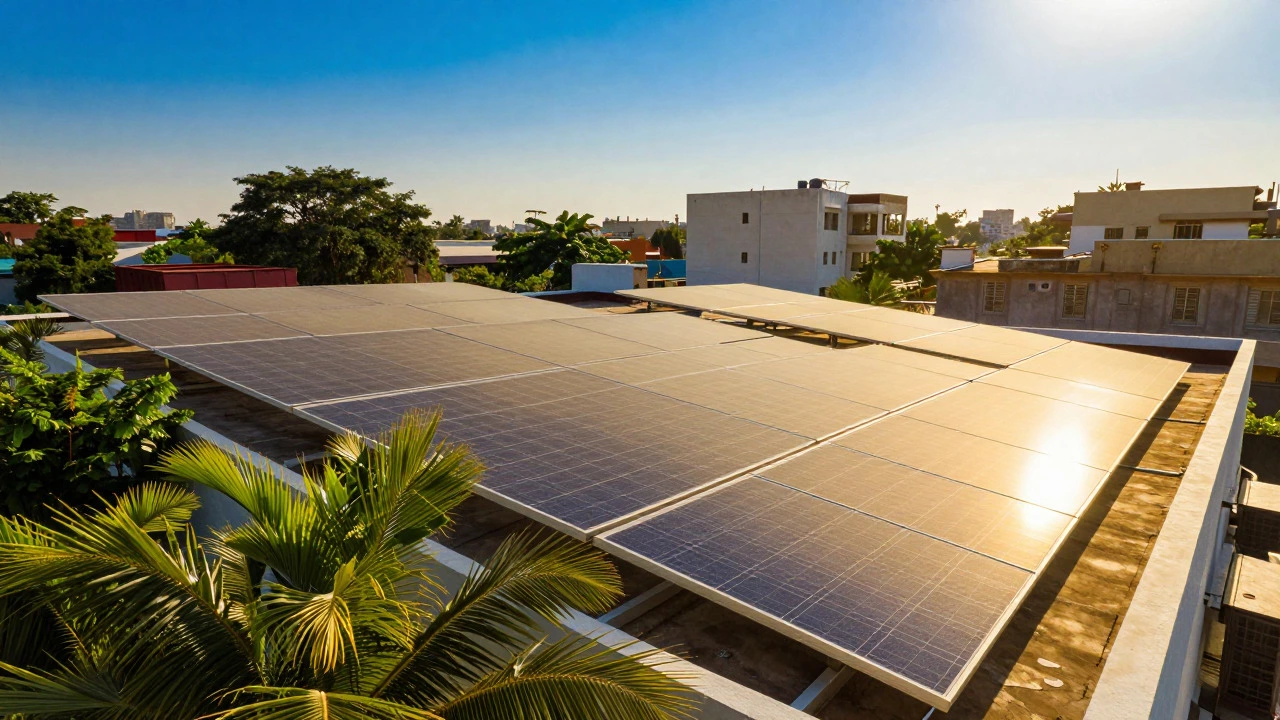
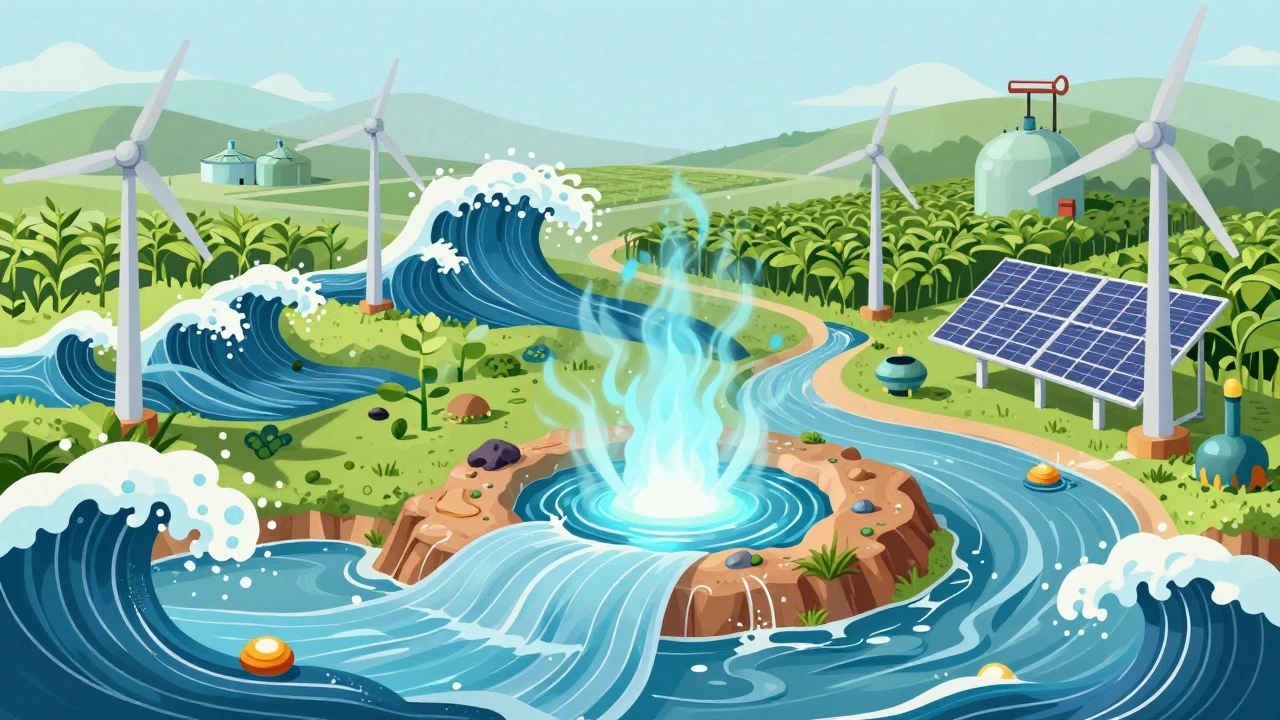
Anaerobic DigestionPicture this: it’s a scorching afternoon in Bangalore. The sun beats down on your rooftop, while a gentle breeze rustles the trees nearby. Beneath your feet, the earth holds steady heat, and rainwater fills local reservoirs. All around you, nature is generating power-free, clean, and endless. Yet, most people only think of "green energy" as solar panels or wind turbines. The reality is far richer. There are ten distinct renewable energy sources shaping our future, each with unique strengths, limitations, and real-world applications.
Understanding these sources isn’t just academic curiosity. It’s practical knowledge for homeowners deciding on installations, investors evaluating green tech, and citizens voting on climate policies. As we move through 2026, the global energy landscape is shifting rapidly. Countries are setting ambitious targets to phase out fossil fuels, and knowing which renewable options work best for specific needs can save money, reduce carbon footprints, and build energy independence.
What are the top 10 renewable energy sources?
The ten primary renewable energy sources are solar, wind, hydropower, geothermal, biomass, tidal, wave, biofuels, landfill gas, and biogas. Each harnesses natural processes like sunlight, air movement, water flow, or organic decomposition to generate electricity or fuel without depleting finite resources.
Solar Power: Harnessing the Sun’s Direct Energy
Solar power is energy derived directly from sunlight using photovoltaic cells or concentrated solar systems. This technology has seen exponential growth since 2010, with costs dropping by over 80%. In India alone, solar capacity surpassed 90 gigawatts by early 2026, making it one of the fastest-growing segments globally.
Photovoltaic (PV) panels convert sunlight into electricity at the atomic level when photons strike semiconductor materials like silicon. These panels can be installed on residential rooftops, commercial buildings, or large-scale solar farms. For example, the Bhadla Solar Park in Rajasthan spans over 14,000 acres and generates enough electricity to power hundreds of thousands of homes.
Concentrated Solar Power (CSP) uses mirrors to focus sunlight onto a receiver, creating high temperatures that drive steam turbines. While less common than PV due to higher costs, CSP offers thermal storage capabilities, allowing energy generation even after sunset. This makes it valuable for grid stability in regions with consistent sunshine.
- Ideal for sunny climates with minimal cloud cover
- Scalable from small home systems to utility-scale plants
- Low maintenance once installed
- Requires significant land area for large installations
Wind Energy: Capturing Air Movement
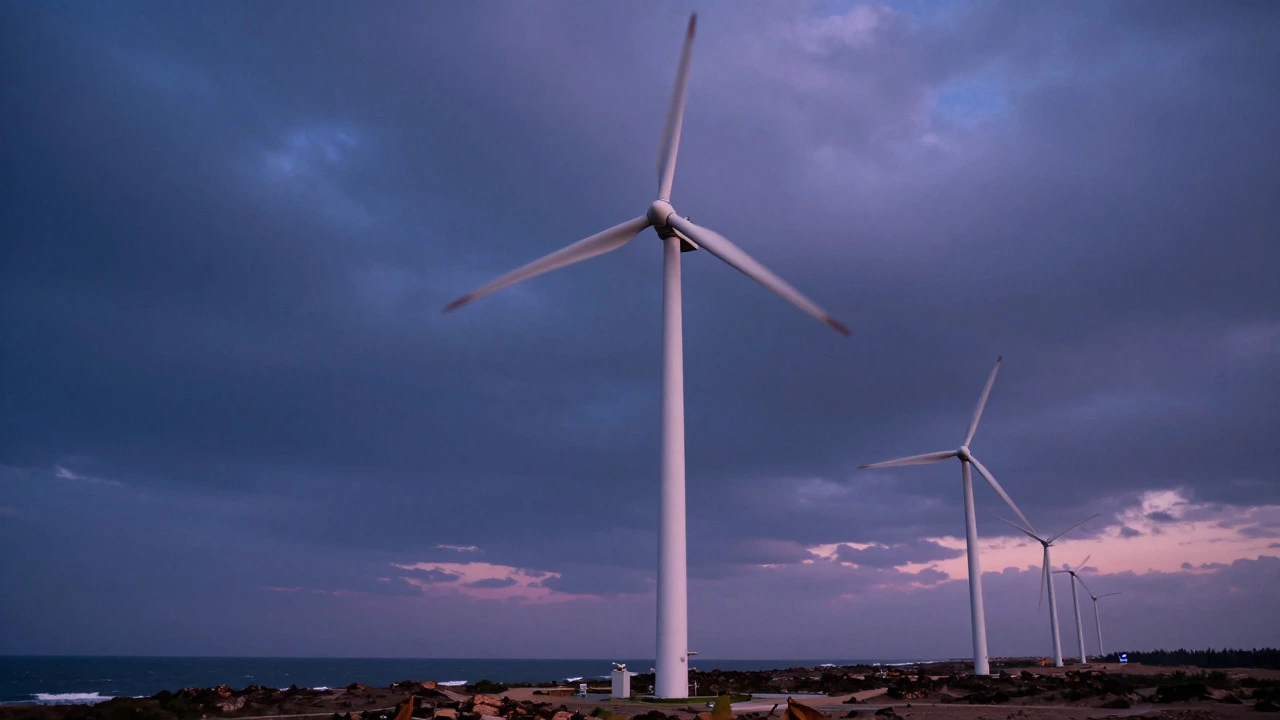
Wind energy is electricity generated by converting kinetic energy from wind into mechanical power via turbines. Modern wind turbines have rotors exceeding 150 meters in diameter, capable of producing up to 15 megawatts per unit. Offshore wind farms are particularly promising because winds are stronger and more consistent over oceans.
In 2025, India added nearly 5 GW of new wind capacity, bringing total installed capacity above 45 GW. States like Tamil Nadu and Gujarat lead production due to favorable geography. However, wind energy faces challenges including intermittency and noise concerns near residential areas.
Turbine placement matters significantly. Wind speed increases with altitude, so hilltops and coastal regions offer optimal conditions. Advanced forecasting algorithms now predict wind patterns hours ahead, helping grid operators balance supply and demand effectively.
- Best suited for windy locations such as coastlines and plains
- Offshore projects yield higher output but require deeper infrastructure investment
- Visual impact may affect local communities
- Complements solar well since wind often blows strongest at night
Hydropower: Flowing Water Generates Electricity
Hydropower is energy produced by flowing or falling water turning turbines connected to generators. It remains the largest source of renewable electricity worldwide, accounting for approximately 16% of global power generation. Large dams like the Three Gorges Dam in China produce terawatt-hours annually, though smaller run-of-river systems minimize environmental disruption.
Pumped storage hydropower acts as a giant battery. During low-demand periods, excess electricity pumps water uphill; during peak times, releasing it downhill generates additional power. This flexibility supports grid reliability as variable renewables like solar and wind expand.
India relies heavily on hydropower, especially in Himalayan states where rivers provide year-round flow. Projects in Himachal Pradesh and Uttarakhand contribute substantially to national grids. Yet ecological impacts-including fish migration barriers and sediment trapping-require careful management.
- Provides baseload power unlike intermittent sources
- High upfront construction costs
- Can disrupt aquatic ecosystems if poorly designed
- Small-scale solutions exist for rural electrification
Geothermal Energy: Tapping Earth’s Internal Heat
Geothermal energy is heat extracted from beneath the Earth's surface used for heating buildings or generating electricity. Unlike solar or wind, geothermal operates continuously regardless of weather conditions. Countries like Iceland derive over 70% of their electricity from geothermal plants located near volcanic activity zones.
Enhanced Geothermal Systems (EGS) drill deep wells into hot rock formations, injecting water to create steam. Though technically challenging, EGS could unlock vast potential beyond traditional tectonic boundaries. Pilot projects in California and France demonstrate feasibility despite initial drilling difficulties.
Direct-use applications include district heating networks supplying warmth to entire neighborhoods. In India, exploratory surveys identify promising sites in Ladakh and Andhra Pradesh, suggesting untapped opportunities for localized development.
- Consistent base-load capability
- Limited geographic availability currently
- High exploration and drilling expenses
- Minimal emissions compared to fossil fuels
Biomass Energy: Organic Matter Fuels Power Plants
Biomass energy is fuel created from plant material, agricultural waste, wood chips, or animal manure burned or converted into gases for energy. When managed sustainably, biomass maintains carbon neutrality because plants absorb CO₂ during growth, offsetting release upon combustion.
India produces millions of tons of crop residue annually, much of which farmers burn openly causing air pollution. Converting this waste into briquettes or pellets creates cleaner alternatives for cooking and industrial boilers. Co-firing biomass with coal reduces overall greenhouse gas emissions while utilizing existing infrastructure.
Modern biomass facilities employ gasification or anaerobic digestion to transform feedstock into syngas or biogas efficiently. These methods improve efficiency rates and lower particulate matter outputs relative to direct burning techniques.
- Utilizes abundant organic waste streams
- Supports circular economy principles
- Emissions depend on sourcing practices
- Logistics of collecting dispersed materials pose challenges
Tidal Energy: Predictable Ocean Rhythms
Tidal energy is power generated from predictable rises and falls of ocean tides driven by gravitational forces between moon, sun, and Earth. Unlike wind or solar, tidal cycles occur twice daily with remarkable precision, enabling accurate scheduling of electricity delivery.
The La Rance Plant in France has operated successfully since 1966, proving long-term viability. Newer designs use submerged turbines resembling underwater windmills, minimizing visual intrusion. Despite high installation costs, tidal energy attracts interest along India’s extensive coastline, particularly in Kerala and Gujarat.
Environmental assessments confirm minimal harm to marine life when properly sited away from critical habitats. Maintenance requirements remain elevated due to saltwater corrosion, necessitating durable materials and regular inspections.
- Highly predictable generation schedule
- Expensive initial setup
- Restricted suitable locations globally
- Long operational lifespan exceeds thirty years
Wave Energy: Riding Surface Swells
Wave energy is kinetic energy captured from surface waves moving across bodies of water. Devices range from floating buoys oscillating vertically to point absorbers rotating horizontally. Unlike tidal systems relying on lunar gravity, wave converters exploit wind-driven disturbances traveling across seas.
Testing sites off Scotland and Portugal showcase diverse technologies competing for commercialization breakthroughs. Wave intensity varies seasonally, requiring adaptive control strategies to maximize capture efficiency. Researchers continue refining converter geometries to withstand extreme storm conditions without structural failure.
India’s western seaboard experiences moderate wave activity conducive to pilot deployments. Collaboration between academic institutions and private firms accelerates prototype testing phases aimed at reducing levelized cost of energy below competitive thresholds.
- Untapped resource with enormous theoretical potential
- Technology still maturing commercially
- Durable engineering essential for harsh environments
- Complements other offshore renewables synergistically
Biofuels: Liquid Alternatives to Petroleum
Biofuels are liquid transportation fuels derived from biological sources like corn, sugarcane, soybeans, or algae. Ethanol blends widely replace gasoline in vehicles equipped for flexible fuel operation. Biodiesel substitutes petroleum diesel in heavy machinery and trucks.
Second-generation biofuels utilize non-food crops and lignocellulosic residues, avoiding food-versus-fuel debates plaguing earlier generations. Cellulosic ethanol production scales gradually as enzymatic breakdown processes become economically viable. Algae-based fuels promise superior yields per acre but face cultivation complexity hurdles.
India mandates blending 20% ethanol into petrol by 2026 under its National Policy on Biofuels. Sugarcane-rich states benefit economically while reducing import dependence on crude oil. Sustainable land use planning ensures biodiversity preservation alongside agricultural expansion.
- Drop-in replacements compatible with current engines
- Land competition risks if improperly regulated
- Carbon footprint depends on farming inputs
- Advances in fermentation chemistry enhance purity levels
Landfill Gas Recovery: Turning Waste Into Worth
Landfill gas recovery is methane extraction from decomposing solid waste buried in municipal dumps. Methane constitutes roughly half of landfill gas composition and possesses twenty-five times greater warming potential than carbon dioxide over a century timeframe.
Capturing methane prevents atmospheric escape while providing combustible fuel for boilers, generators, or vehicle fleets. Cities like Mumbai operate landfill gas-to-energy facilities diverting thousands of cubic meters daily. Proper sealing prevents groundwater contamination alongside odor mitigation benefits.
Regulatory frameworks increasingly mandate gas collection systems for newly constructed landfills. Financial incentives encourage private sector participation through carbon credit trading mechanisms recognizing emission avoidance contributions.
- Reduces potent greenhouse gas emissions
- Creates revenue stream from otherwise wasted resource
- Site-specific feasibility dictated by waste volume
- Improves public health outcomes locally
Biogas Production: Anaerobic Digestion Solutions
Biogas production involves microbial breakdown of organic matter in oxygen-free tanks yielding methane-rich gas. Household digesters serve rural populations lacking grid access, supplying cookstoves and lighting simultaneously. Larger commercial units process sewage sludge or dairy farm effluent profitably.
Residual digestate serves as nutrient-dense fertilizer replacing synthetic chemicals in agriculture. Closed-loop systems integrate livestock operations with crop cultivation sustainably. Government subsidies promote adoption among smallholder farmers seeking affordable cooking alternatives.
Design considerations encompass temperature regulation, mixing frequency, and retention time optimization. Modular kits simplify deployment scaling according to community size requirements. Training programs empower technicians maintaining system functionality reliably.
- Decentralized solution ideal for remote areas
- Produces valuable byproduct fertilizers
- Operational simplicity encourages widespread uptake
- Performance sensitive to feedstock consistency
Comparing Renewable Energy Options
| Source | Availability | Cost Trend | Maturity Level | Key Challenge |
|---|---|---|---|---|
| Solar | Daylight hours | Falling rapidly | Commercially mature | Intermittency |
| Wind | Varies regionally | Declining steadily | Well established | Grid integration |
| Hydropower | Continuous flow | Stable historically | Highly developed | Ecological impact |
| Geothermal | Location dependent | High initial cost | Niche markets | Exploration risk |
| Biomass | Abundant waste | Moderate pricing | Established industry | Supply chain logistics |
| Tidal/Wave | Predictable cycles | Expensive currently | Emerging stage | Technological infancy |
| Biofuels | Agricultural output | Competitive blended | Policy driven | Feedstock sustainability |
| Landfill Gas | Urban waste sites | Profitable niche | Proven concept | Site limitation |
| Biogas | Rural/industrial | Affordable scalable | Growing popularity | Maintenance knowledge |
Choosing the Right Mix for Your Needs
No single renewable source solves all energy problems universally. Geographic location dictates suitability profoundly. Desert regions favor solar arrays, whereas mountainous terrains support hydroelectric schemes. Coastal communities explore tidal and wave innovations actively.
Diversification strengthens resilience against variability inherent in individual technologies. Hybrid systems combining solar plus wind plus storage deliver uninterrupted service reliably. Microgrids empower isolated villages independently accessing reliable power supplies affordably.
Policy interventions shape market dynamics significantly. Feed-in tariffs guarantee minimum prices encouraging investor confidence. Tax credits accelerate consumer adoption domestically. International cooperation facilitates technology transfer accelerating developing nation transitions equitably.
Education empowers informed decision-making collectively. Understanding trade-offs enables balanced progress toward decarbonization goals responsibly. Engaging stakeholders early builds consensus supporting transformative change sustainably.
Which renewable energy source is cheapest?
Solar photovoltaics and onshore wind typically offer the lowest levelized cost of electricity today, often under $0.05 per kilowatt-hour depending on location and scale. Utility-scale installations achieve economies of scale driving prices downward consistently.
Can renewable energy fully replace fossil fuels?
Yes, technically feasible pathways exist involving diversified portfolios complemented by advanced storage, smart grids, and demand response strategies. Transition timelines vary based on political will, economic structures, and technological readiness factors.
How does geothermal energy work?
Geothermal plants tap underground reservoirs of heated water or steam rising naturally or injected artificially. Turbines spin driven by expanding vapor converting thermal motion into electrical current efficiently.
Is biomass really renewable?
Biomass qualifies as renewable provided harvested materials regrow faster than consumption rates. Sustainable forestry practices and dedicated energy crops maintain carbon cycle equilibrium preventing net atmospheric accumulation.
What role do batteries play in renewable systems?
Energy storage bridges gaps between fluctuating generation patterns and constant consumer demands. Lithium-ion batteries dominate short-duration buffering while pumped hydro handles longer seasonal shifts effectively.