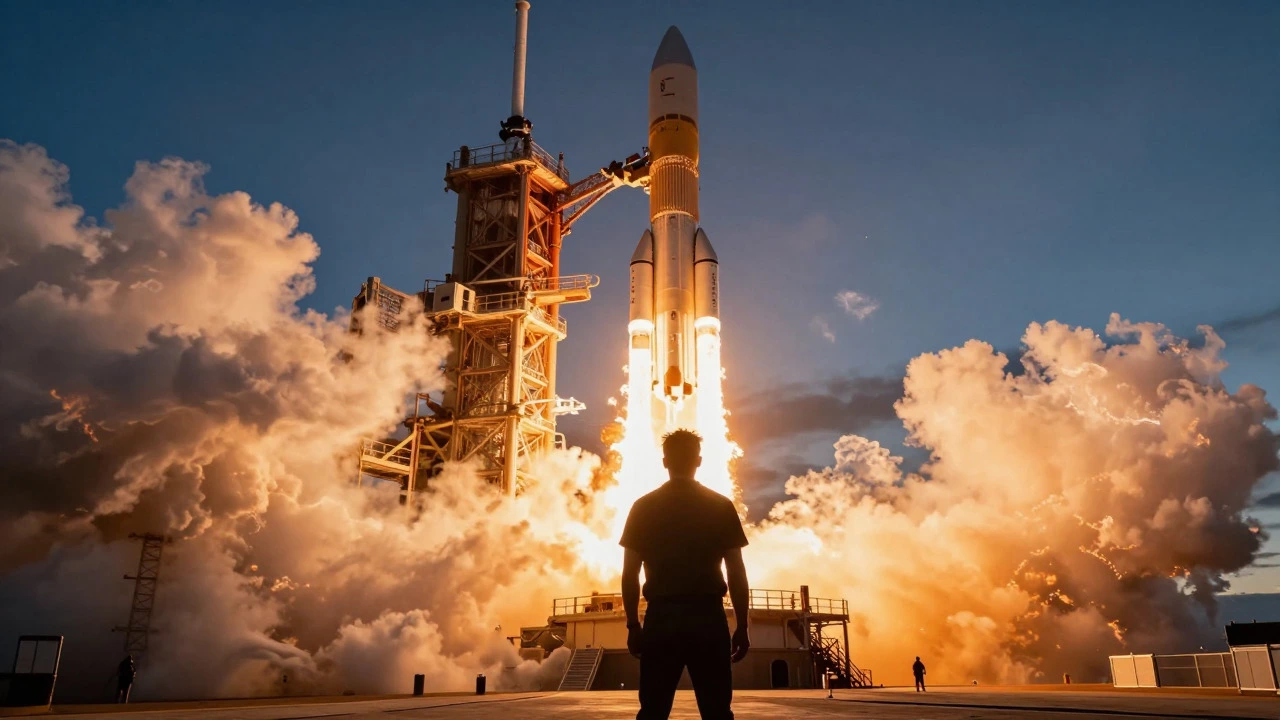
SpaceX Mission Explorer & Musk Flight Tracker
Select a Mission to Analyze
Click on a mission card to see detailed comparisons against Elon Musk's potential future travels.
No Mission Selected
Choose a mission from the list to compare its altitude, duration, and crew type against Elon Musk's current status.
It is one of the most common questions popping up on social media and search engines: Has Elon Musk actually been to space? The short answer is no. As of August 2026, despite building rockets that carry astronauts to the International Space Station (ISS) and sending private citizens into orbit, Musk himself has never left Earth’s atmosphere.
This might seem surprising. After all, he is the CEO and CTO of SpaceX, a leading aerospace manufacturer and space transportation services company founded in 2002. He owns Tesla, which aims to accelerate sustainable energy, and Neuralink, which works on brain-computer interfaces. But when it comes to personal spaceflight, Musk has remained firmly grounded. Why? And more importantly, will he ever go?
The Reality of Musk’s Role in Space Travel
To understand why Musk hasn’t gone to space, you have to look at what he does. He is not an astronaut; he is an engineer and a businessman. His job is to build the vehicles, manage the teams, and secure the funding. While astronauts train for years to handle the physical and psychological demands of zero gravity, Musk spends his time in boardrooms, factory floors, and Twitter threads (now X).
There is also a practical reason. Risk management. Even though SpaceX has achieved remarkable safety records with its Falcon 9 rocket, a reusable two-stage-to-orbit launch vehicle designed to reliably transport people and payloads into space, spaceflight is inherently dangerous. Sending the head of the company into orbit creates a single point of failure for the entire organization. If something went wrong during a mission involving Musk, the impact on SpaceX, Tesla, and his other ventures would be catastrophic.
Furthermore, Musk has stated in interviews that he prefers to stay on Earth to oversee operations. He believes his contribution is more valuable managing the logistics and engineering challenges from the ground than being a passenger in the cabin. This is a common stance among tech CEOs who enable technology rather than use it directly as end-users.
Musk’s Private Citizens: Who Has Gone Instead?
If Musk hasn’t gone, who has flown on his rockets? In recent years, SpaceX has shifted significantly toward commercial crewed missions. These aren’t just NASA astronauts; they are private individuals funded by themselves or their organizations. Here are the key missions where SpaceX carried non-professional astronauts:
- Inspiration4 (September 2021): This was the first all-private orbital spaceflight. It launched four civilians aboard a Crew Dragon capsule. The mission was funded entirely by Jared Isaacman, a billionaire entrepreneur. The crew included Chris Sembroski, Hayley Arceneaux, and Sian Proctor. They orbited Earth for three days without docking with the ISS. Musk watched the launch from the pad but stayed on the ground.
- Axiom Mission 1 (April 2022): This mission marked the first commercial flight to the International Space Station. Four astronauts, including Michael López-Alegría (mission commander), Mark Pathy, Eytan Stibbe, and Larry Connor, flew to the ISS. While López-Alegría was a veteran astronaut, the others were paying customers. This proved that private entities could access low Earth orbit regularly.
- Polaris Dawn (October 2024): Funded by Jared Isaacman again, this mission pushed boundaries further. The crew performed the first commercial spacewalks. They tested new suits developed by SpaceX and reached higher orbits than previous private missions. This demonstrated that private groups could conduct complex scientific and technical tasks in space.
These missions show that while Musk provides the ride, he isn’t taking the seat. He is enabling others to experience space, creating a market where billionaires, researchers, and even future tourists can buy tickets. This strategy aligns with his long-term goal of making life multi-planetary, but it doesn’t require him to be the first passenger.
The Starship Factor: Will Musk Go on the First Flight?
Things might change with the development of Starship, a fully reusable super heavy-lift launch vehicle designed by SpaceX to carry crew and cargo to Mars, the Moon, and beyond. Starship is different from Falcon 9. It is massive, capable of carrying up to 100 people, and designed specifically for deep space exploration. Musk has hinted multiple times that he wants to die on Mars, implying he intends to make the journey there eventually.
However, early test flights of Starship are risky. The vehicle undergoes rigorous testing to ensure safety. In 2023 and 2024, several prototypes exploded during ascent tests. These failures were part of the iterative design process. By 2025, Starship had achieved successful orbital insertion and return, marking a major milestone. But certified human-rating takes time. NASA requires extensive data before allowing humans on board.
Musk has said he might fly on a later mission, perhaps when Starship is ready for lunar landings or Mars transit. He is likely waiting until the risk is minimized. For now, he remains the director of the show, not an actor on stage. His focus is on getting the hardware right so that thousands of others can follow.
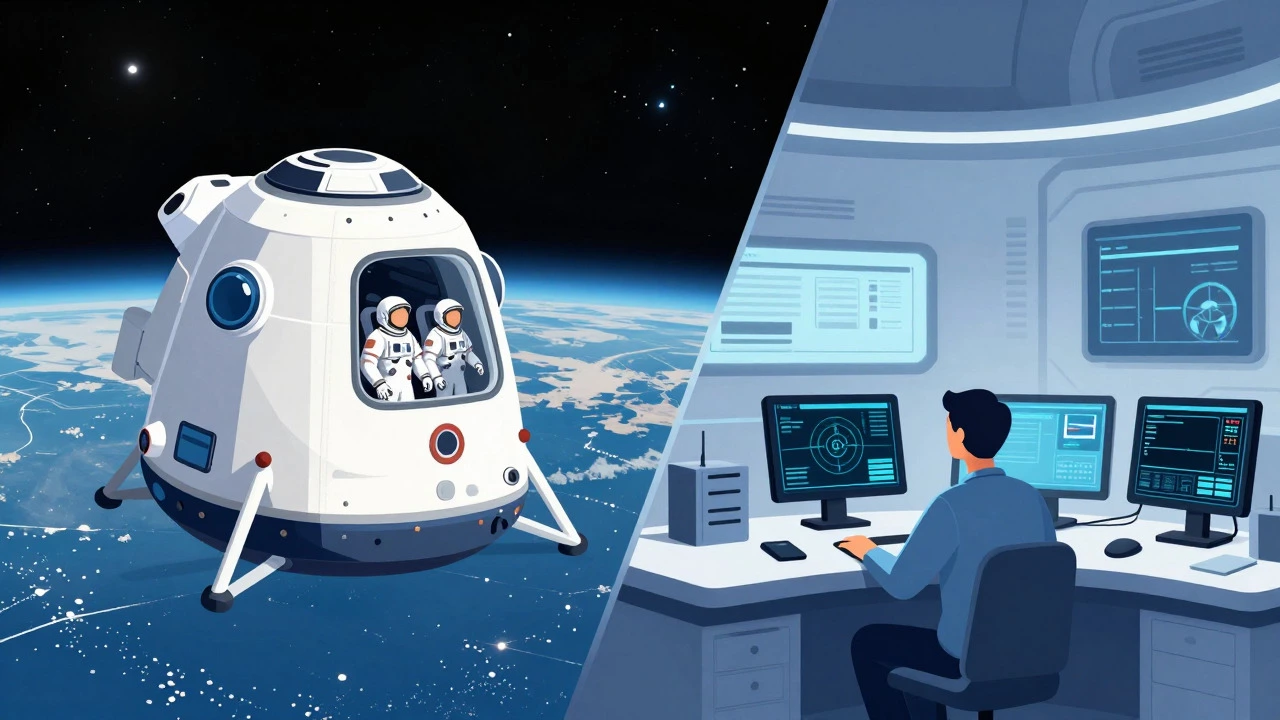
Comparison: Musk vs. Other Tech Billionaires in Space
| Person | Company | Has Been to Space? | Mission Details |
|---|---|---|---|
| Elon Musk | SpaceX | No | CEO/CTO; focuses on engineering and management |
| Jeff Bezos | Blue Origin | Yes | Flew on New Shepard in July 2021; suborbital flight |
| Richard Branson | Virgin Galactic | Yes | Flew on VSS Unity in July 2021; suborbital flight |
| Jared Isaacman | Shift4 Payments | Yes | Commanded Inspiration4 and Polaris Dawn; orbital flights |
Note the difference in altitude. Bezos and Branson went on suborbital flights, meaning they crossed the Kármán line (100 km above sea level) but didn’t achieve full orbit. They experienced minutes of weightlessness. Musk’s SpaceX missions achieve full orbit, circling the Earth at speeds of about 28,000 km/h. So while Bezos and Branson have technically been to space, Musk’s vehicles go much farther, yet he stays behind.
Why Does This Matter?
You might wonder why anyone cares if Musk goes to space. The answer lies in symbolism and inspiration. When a leader experiences what their product delivers, it builds credibility. Bezos and Branson used their flights to promote their companies’ visions. Musk relies on the success of his launches and the achievements of his customers. The fact that Inspiration4 and Polaris Dawn succeeded proves SpaceX is reliable. Musk doesn’t need to be in the cockpit to validate the technology.
Additionally, Musk’s absence highlights the shift from government-led space exploration to commercial partnerships. NASA pays SpaceX to launch astronauts. Private companies pay SpaceX to visit the ISS. This ecosystem reduces costs and increases frequency. Musk’s role is to keep the machine running efficiently. His personal travel plans are secondary to the broader goal of colonizing Mars.
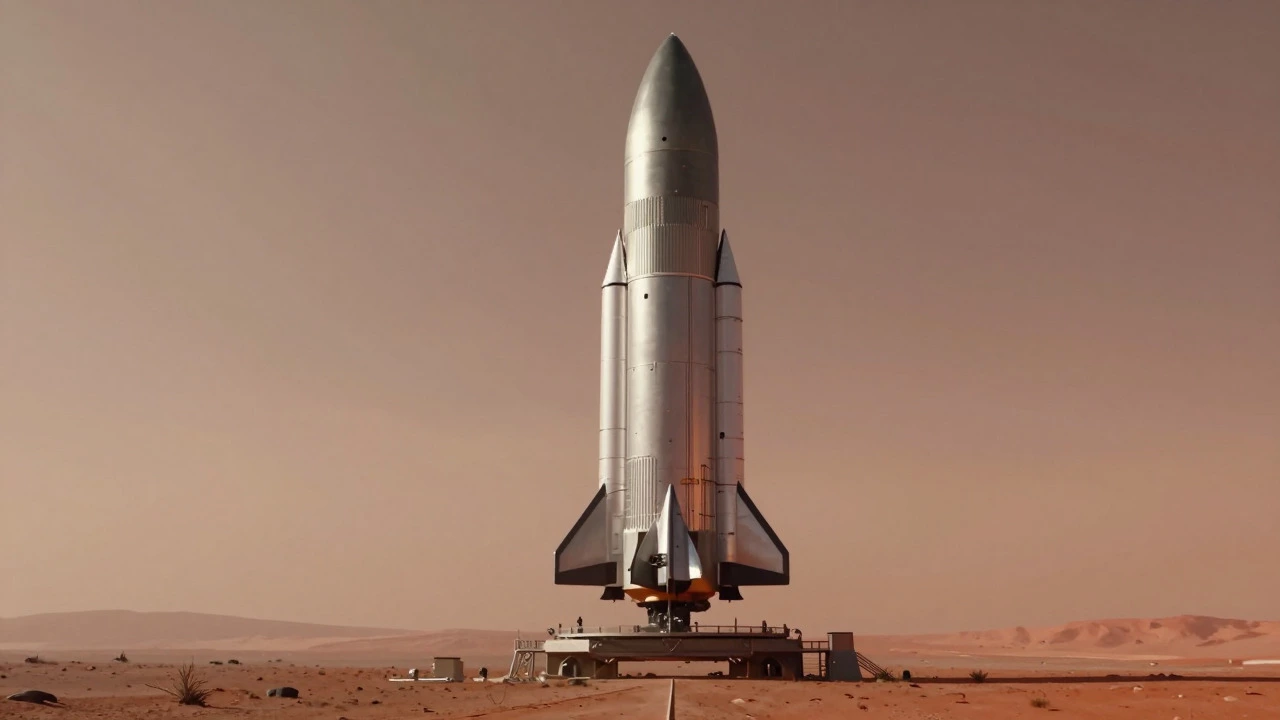
Future Possibilities: When Might Musk Fly?
Speculation suggests Musk could fly on a Starship mission to the Moon or Mars within the next decade. NASA’s Artemis program aims to return humans to the Moon by 2026-2027 using Starship as the lunar lander. If Starship proves safe enough for Artemis astronauts, it might be cleared for civilian passengers soon after. Musk has expressed interest in seeing Mars with his own eyes. Given his age (he turned 53 in June 2024), he has time to make such a trip if health permits.
However, don’t expect a quick announcement. SpaceX prioritizes operational cadence. Every launch window is precious. Adding a high-profile passenger like Musk introduces logistical complexity. He is more likely to send family members, close colleagues, or selected pioneers first. Once the routine is established, he may join them. Until then, we watch from Earth as his rockets pierce the sky.
Common Misconceptions About Musk and Space
With so much information online, myths spread quickly. Let’s clear up some common misunderstandings:
- Misconception: Musk flew secretly on a test flight.
Fact: All SpaceX crewed missions are publicly broadcast and documented. No secret flights have occurred. - Misconception: Musk is training to become an astronaut.
Fact: There is no evidence of Musk undergoing astronaut training. He delegates this to professional crews. - Misconception: SpaceX only flies NASA astronauts.
Fact: Since 2021, SpaceX has flown numerous private citizens and international partners, diversifying its customer base.
Understanding these facts helps separate hype from reality. Musk’s influence on space exploration is undeniable, but his personal involvement in flying is minimal. That distinction is important for evaluating his legacy.
Conclusion: The Architect Behind the Scenes
So, has Elon Musk been to space? Not yet. He remains the architect, not the traveler. His contributions lie in designing the systems that make space accessible to others. Whether he eventually boards a Starship to Mars depends on safety certifications, mission priorities, and personal choice. For now, his legacy is built on the rockets that leave the ground, not the person inside them. As SpaceX continues to innovate, the question shifts from "Will Musk go?" to "Who will go next?" And that is a sign of progress.
Has Elon Musk ever been to the International Space Station (ISS)?
No, Elon Musk has never visited the International Space Station. While SpaceX Crew Dragons dock with the ISS regularly, Musk has always remained on Earth to manage operations.
Why hasn't Elon Musk gone to space if he owns SpaceX?
Musk has cited risk management and operational focus as reasons. As CEO, his presence on the ground ensures continuity of leadership. Additionally, spaceflight carries inherent risks, and losing the head of the company would be detrimental to SpaceX and its partners.
Did Elon Musk fly on the Inspiration4 mission?
No, Elon Musk did not fly on Inspiration4. The mission was commanded by Jared Isaacman, who funded the trip. Musk watched the launch from Cape Canaveral but did not participate as a crew member.
When might Elon Musk go to Mars?
There is no confirmed date. Musk has stated he hopes to die on Mars, suggesting he intends to go eventually. However, this depends on Starship achieving full reliability and safety certification for human transport, which may take several more years of testing.
What is the difference between suborbital and orbital spaceflight?
Suborbital flights, like those by Blue Origin and Virgin Galactic, cross the boundary of space but do not circle the Earth. Orbital flights, like those by SpaceX, achieve sufficient speed to maintain a stable orbit around the planet, allowing for longer durations and more complex missions.
Is Starship ready for human passengers?
As of mid-2026, Starship has completed successful orbital test flights but is still undergoing certification processes for human rating. NASA and FAA reviews are ongoing. Crewed missions are expected in the late 2020s, pending final approvals.
Who are the other billionaires who have been to space?
Jeff Bezos (Blue Origin), Richard Branson (Virgin Galactic), Jared Isaacman (Inspiration4/Polaris Dawn), and Laurence Rockefeller (Axiom Mission 2) are among the notable billionaires who have flown to space. Their missions ranged from suborbital hops to full orbital tours.
Does Elon Musk plan to retire from SpaceX?
Musk has not announced any retirement plans. He remains actively involved in daily operations, engineering decisions, and public communication regarding SpaceX's future projects, including Starship and Mars colonization efforts.