Renewable Intermittency & Storage Simulator
Adjust the sliders to simulate different weather conditions and household demand. See how much energy storage is needed to keep the lights on when the sun sets or the wind dies.
Simulation Inputs
Grid Balance Analysis
Daily Load Profile Visualization
You flip the light switch, and it turns on. You plug in your laptop, and it charges. It feels effortless, but behind that simple action lies a complex balancing act that renewable energy struggles to master alone. The core issue isn't that solar panels don't work or that wind turbines are broken. The main problem is intermittency. Unlike coal or nuclear plants that can run at full throttle day and night, renewables depend on weather conditions that nature doesn't schedule for our convenience.
This creates a mismatch between when we need power and when we can generate it. We use the most electricity in the evening when people come home from work. But solar peaks at noon. Wind often blows hardest when everyone is asleep. This gap forces grid operators to scramble, sometimes burning fossil fuels just to keep the lights on because the sun has set and the wind has died down. Solving this isn't just about building more panels; it's about solving the physics of time-shifting energy.
The Mismatch Between Supply and Demand
Think of the electrical grid like a giant bathtub. Water flows in (generation) and water drains out (consumption). For the system to stay stable, the inflow must exactly match the outflow every single second. Traditional power plants let us control the faucet-we turn them up when demand spikes and down when it drops. Solar photovoltaic systems do not have a faucet. They produce what the sun gives them, regardless of whether anyone wants that electricity at that moment.
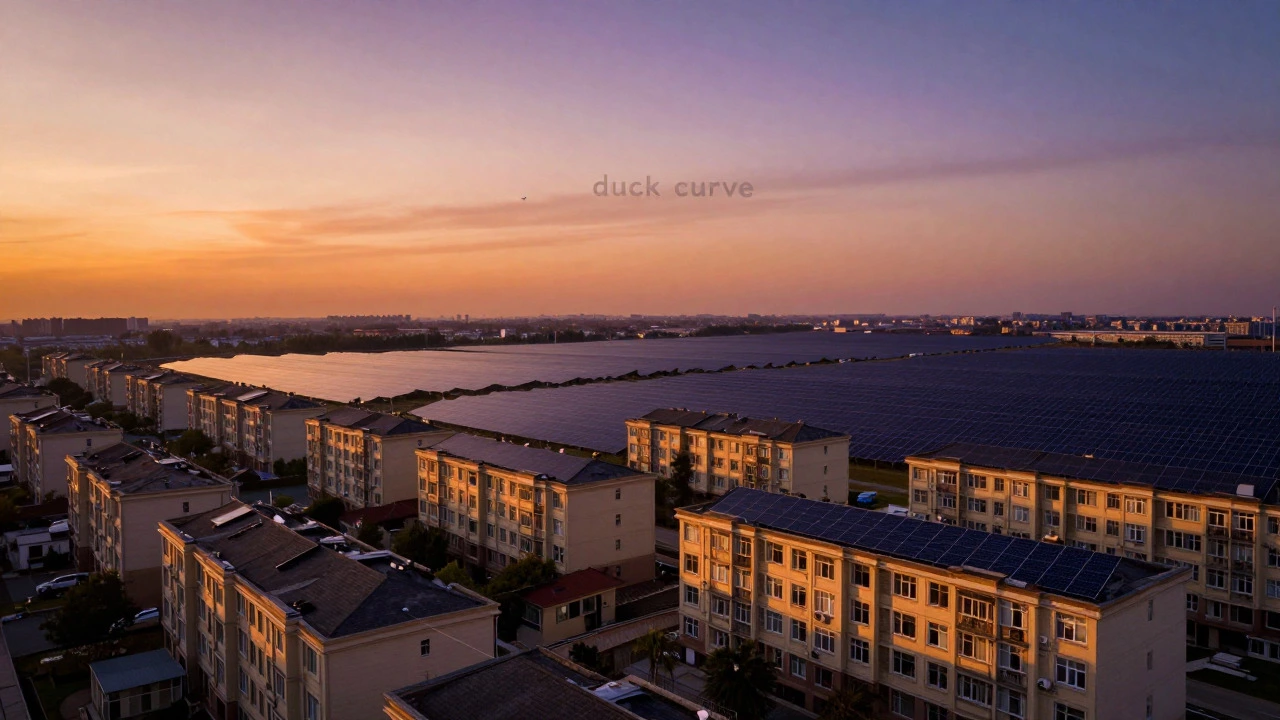
This lack of dispatchability is the root cause of many headaches for utility companies. In places like California or Germany, you might see negative electricity prices during sunny afternoons. Why? Because there is so much solar power flooding the grid that there is nowhere to put it, yet demand is low. Conversely, as the sun sets, generation plummets while residential demand skyrockets. This rapid drop-off, known in the industry as the "duck curve," requires other power sources to ramp up incredibly fast to fill the hole. If they can't, the grid becomes unstable.
Why Energy Storage Is the Real Bottleneck
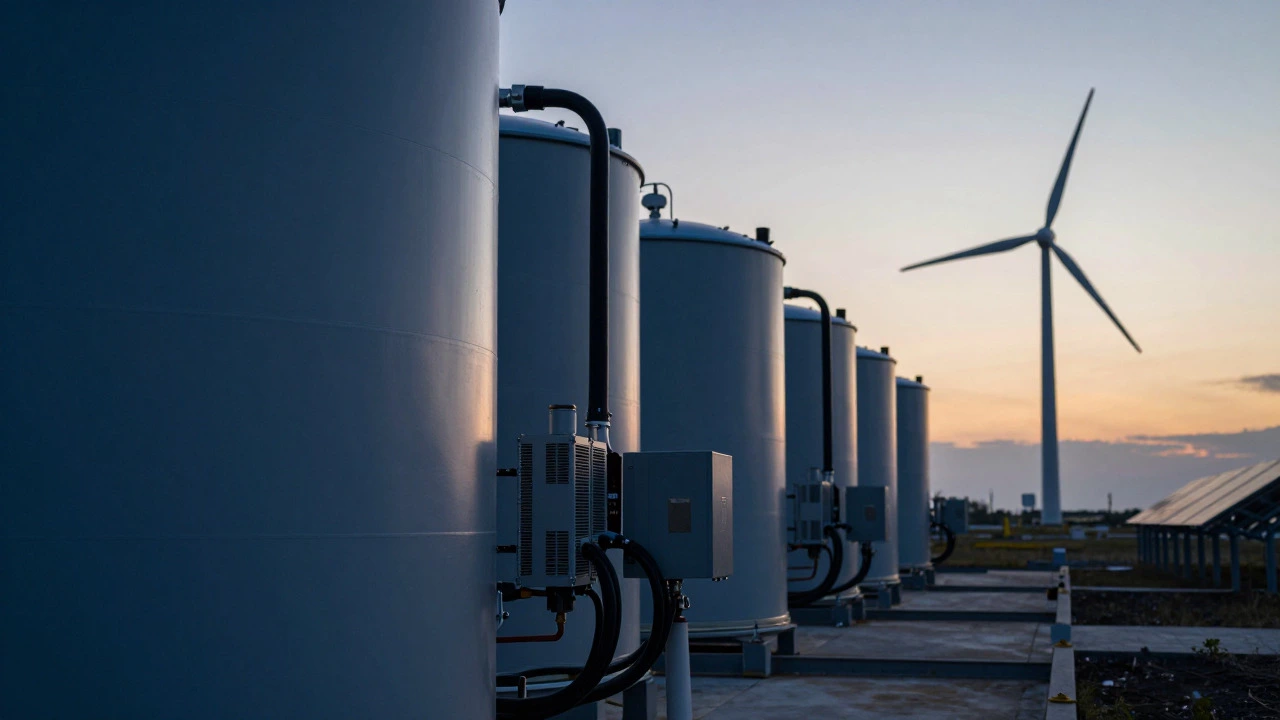
If we can't control when the sun shines, the logical fix seems obvious: store the extra energy generated during the day and use it at night. This brings us to the second half of the main problem: energy storage technology is still expensive and limited in capacity compared to liquid fuels. Batteries are great for short-term shifts-say, storing noon energy for the 6 PM peak. But they struggle with seasonal changes.
Consider winter. In northern climates, days are short, and sunlight is weak. You might go weeks without significant solar generation. A battery bank sized to cover three cloudy days would be astronomically expensive and physically massive if it had to cover three months of winter. Current lithium-ion batteries, while improving rapidly, generally offer cost-effective storage for four to eight hours. Beyond that, the economics break down. We need solutions for long-duration storage, which remains an unsolved engineering challenge at scale.
| Storage Type | Ideal Duration | Current Cost Status | Main Limitation |
|---|---|---|---|
| Lithium-Ion Batteries | 1-8 Hours | Falling rapidly | Degradation over cycles; resource scarcity |
| Pumped Hydro | Days-Weeks | High upfront capex | Geographic constraints; environmental impact |
| Green Hydrogen | Seasonal | Very High | Low efficiency (round-trip losses) |
| Molten Salt | Hours-Days | Niche application | Only works with concentrated solar |
Grid Infrastructure Can't Keep Up
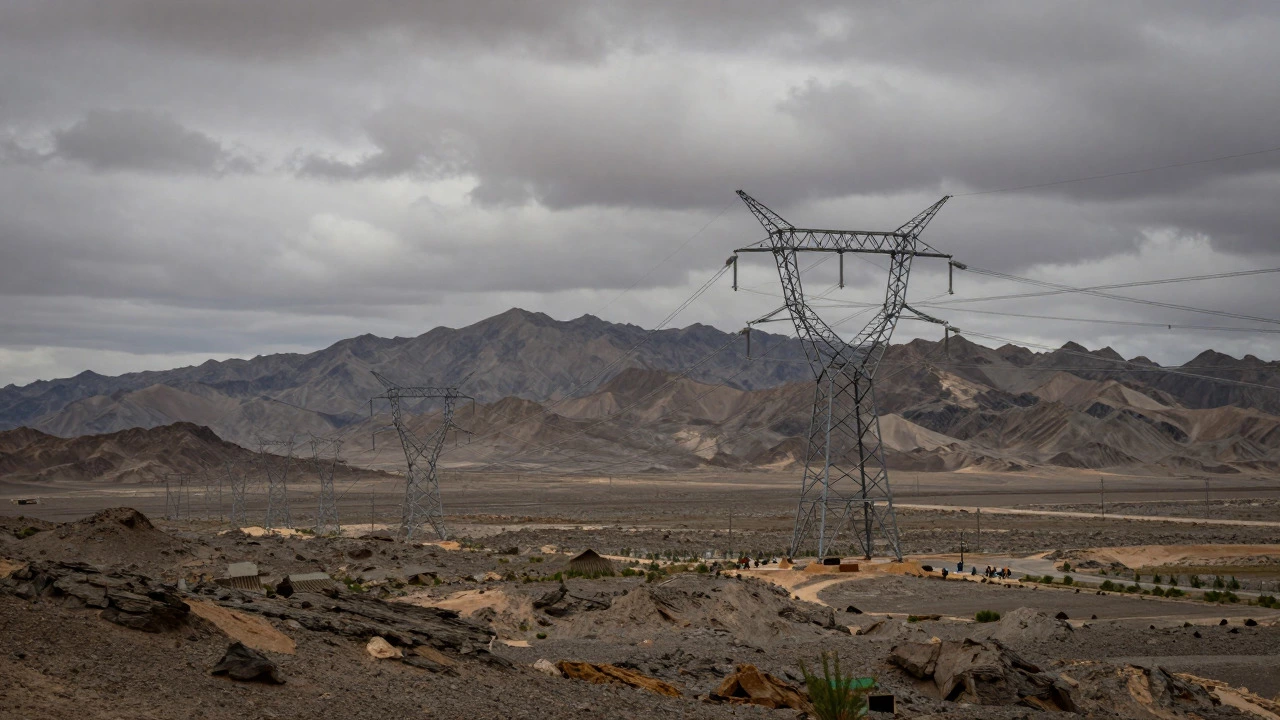
Even if we solved storage tomorrow, we'd hit another wall: transmission. Most renewable resources aren't located where people live. The best wind farms are offshore or in the Great Plains. The best solar sites are in deserts. But the cities needing that power are thousands of miles away. Our current grid was built for centralized power plants near population centers, not for moving massive amounts of power across continents.
High-voltage direct current (HVDC) lines can solve this, but they take years to permit and build. Permitting processes for new transmission lines in the US and Europe often stretch beyond ten years. By the time a line is ready, the technology landscape may have changed again. Meanwhile, local grids get congested. When too much power tries to flow through old wires, voltage rises, and operators have to curtail-meaning they literally throw away clean energy because they physically cannot move it to where it's needed.
The Reliability Myth and Backup Costs
Critics often argue that renewables make the grid unreliable. Proponents counter that modern grids are smarter. Both sides miss the economic nuance. The problem isn't that renewables fail; it's that they require backup capacity that sits idle most of the time. To guarantee power when the wind stops blowing for five straight days, utilities must maintain gas peaker plants or other flexible sources. These plants burn fuel only occasionally, making them expensive to operate per kilowatt-hour delivered.
This hidden cost is often excluded from the levelized cost of energy (LCOE) calculations that make renewables look cheap. When you factor in the capital cost of building redundant capacity to ensure reliability, the true price of a fully renewable grid is higher than the sticker price of a solar panel suggests. We are essentially paying for insurance against bad weather, and that premium hasn't disappeared.
Material Constraints and Environmental Trade-offs
Solving the intermittency problem requires hardware, and hardware requires materials. Scaling up to replace fossil fuels entirely means mining vast quantities of copper, lithium, cobalt, and rare earth elements. The extraction of these minerals has its own environmental footprint, including water usage and habitat disruption.
For instance, producing one electric vehicle uses significantly more copper than a traditional car. Multiplying that by hundreds of millions of vehicles, plus all the wiring needed for new solar farms and wind turbines, puts immense pressure on global supply chains. There is no free lunch here. Replacing carbon emissions with mineral extraction impacts shifts the environmental burden rather than eliminating it completely. Sustainable mining practices and recycling rates need to improve drastically to prevent this from becoming the next major bottleneck.
Key Takeaways
- Intermittency is the core technical hurdle: Renewables produce power based on weather, not human demand schedules.
- Storage is limited by duration: Current batteries handle daily cycles well but struggle with seasonal gaps.
- Transmission bottlenecks: Best resources are far from cities, and grid upgrades face slow permitting.
- Hidden costs exist: Backup capacity for reliability adds to the true cost of renewable integration.
- Resource intensity: Massive scaling requires significant mining for critical minerals.
Frequently Asked Questions
Is renewable energy really unreliable?
Not inherently, but it is variable. A mix of diverse renewable sources (wind, solar, hydro) combined with storage and smart grid management can provide high reliability. The unreliability usually stems from poor planning or lack of complementary technologies, not the sources themselves.
Why can't we just build more batteries?
We can, but it gets exponentially expensive for long durations. Lithium-ion batteries are efficient for shifting energy by a few hours. Storing enough energy to last through a calm, cloudy week requires vastly more material and space, making the cost prohibitive for entire grids today.
Does this mean we should stick with fossil fuels?
No. Fossil fuels have their own severe problems, primarily climate change and air pollution. The goal is to solve the intermittency issue through better storage, grid infrastructure, and diversified energy mixes, not to abandon clean energy.
What is the duck curve?
It is a graph showing net load (demand minus solar generation) over a day. It looks like a duck because solar reduces daytime demand sharply, then leaves a steep climb in the evening as solar fades and demand peaks. This shape illustrates the difficulty of balancing the grid.
How does hydrogen help with renewable energy?
Hydrogen acts as a chemical battery. Excess renewable electricity splits water into hydrogen, which can be stored indefinitely and used later for industrial heat or power generation. It solves the seasonal storage problem but currently suffers from low round-trip efficiency.
Next Steps for Grid Modernization
If you're looking at the future of power, watch for advancements in solid-state batteries and green hydrogen electrolyzers. These technologies aim to crack the long-duration storage nut. Simultaneously, policy reforms aimed at speeding up transmission line permits are crucial. Without faster infrastructure deployment, even perfect batteries won't reach the homes that need them.