NASA Name Quiz
How Much Do You Know About NASA's Name?
Take this short quiz to test your knowledge about NASA's official name and history. Each question has one correct answer.
1. What is NASA's full legal name?
2. When was NASA officially founded?
3. Which agency preceded NASA?
4. What does NASA NOT typically do?
Correct Answers Explained
People often ask, "What is NASA's real name?" as if it’s some hidden secret, a code name buried under layers of government secrecy. But the truth is simpler-and more straightforward-than most think. NASA isn’t hiding anything. Its "real name" is right there in plain sight: National Aeronautics and Space Administration. It’s not a nickname. It’s not a codename. It’s the full legal name of the agency, written into law in 1958.
Where Did NASA Come From?
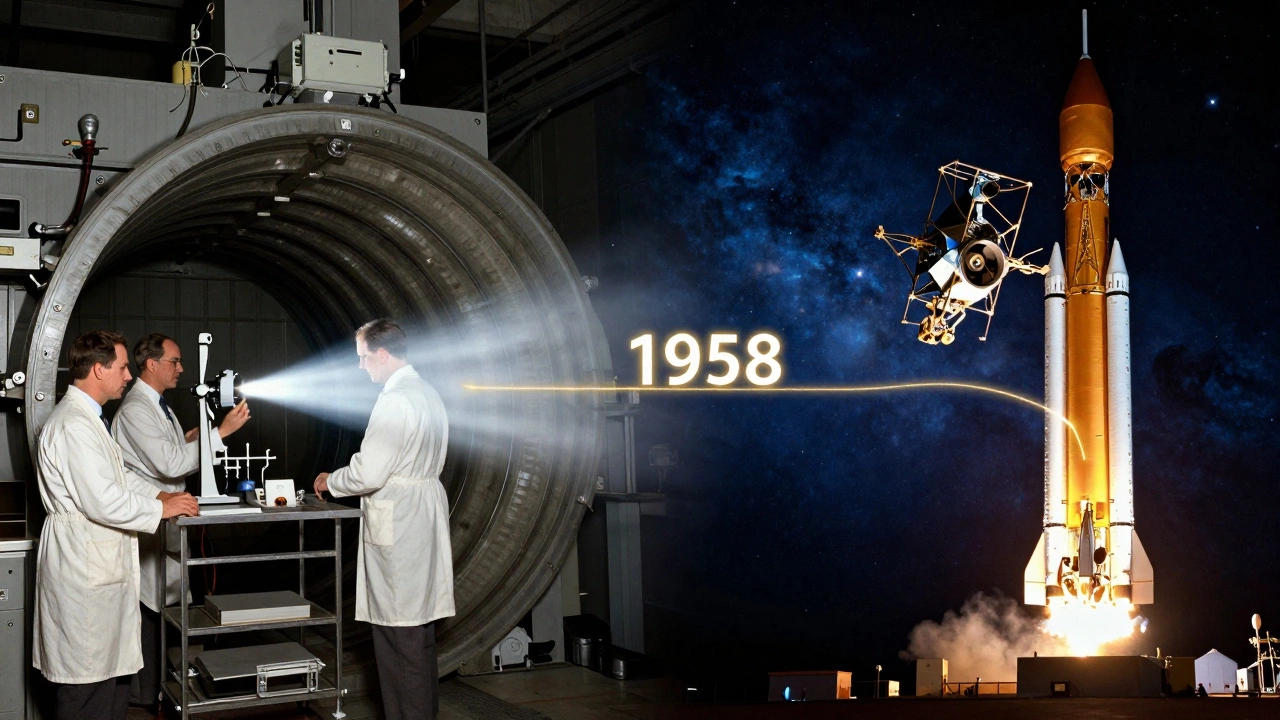
NASA didn’t pop up out of nowhere. Before NASA, the United States had the National Advisory Committee for Aeronautics, or NACA. Founded in 1915, NACA was focused on aircraft research-wind tunnels, wing designs, engine efficiency. It was a small, quiet group of engineers and scientists working behind the scenes. By the 1950s, with the Cold War heating up and the Soviet Union launching Sputnik in 1957, it became clear that the U.S. needed a bigger, bolder agency to lead in space.
The National Aeronautics and Space Act of 1958 was signed by President Dwight D. Eisenhower on July 29. It dissolved NACA and transferred all its assets, labs, and 8,000 employees to the newly formed NASA. The law didn’t just rename an old group-it restructured the entire American approach to space. NASA was given a mission: to conduct research into flight within and beyond Earth’s atmosphere, to explore space, and to share findings with the world.
Why Does NASA Sound Like an Acronym?
It’s not just an acronym-it’s an agency built on one. The name was chosen deliberately. "National" meant it was a federal agency, funded by taxpayers and answerable to Congress. "Aeronautics" covered flight in Earth’s air-planes, drones, hypersonic vehicles. "Space" was the new frontier. And "Administration" signaled it wasn’t just a research lab; it was a full-scale government body with budgets, contractors, launch sites, and international partnerships.
Some people think NASA stands for something else-"North American Space Agency," "National Aerospace Administration," even "Never A Straight Answer." Those are myths. They’re jokes, urban legends, or misunderstandings. The official name has never changed. The acronym NASA was chosen because it was short, easy to say, and had a strong, memorable sound. It wasn’t an afterthought. It was part of the branding from day one.
What Does NASA Actually Do?
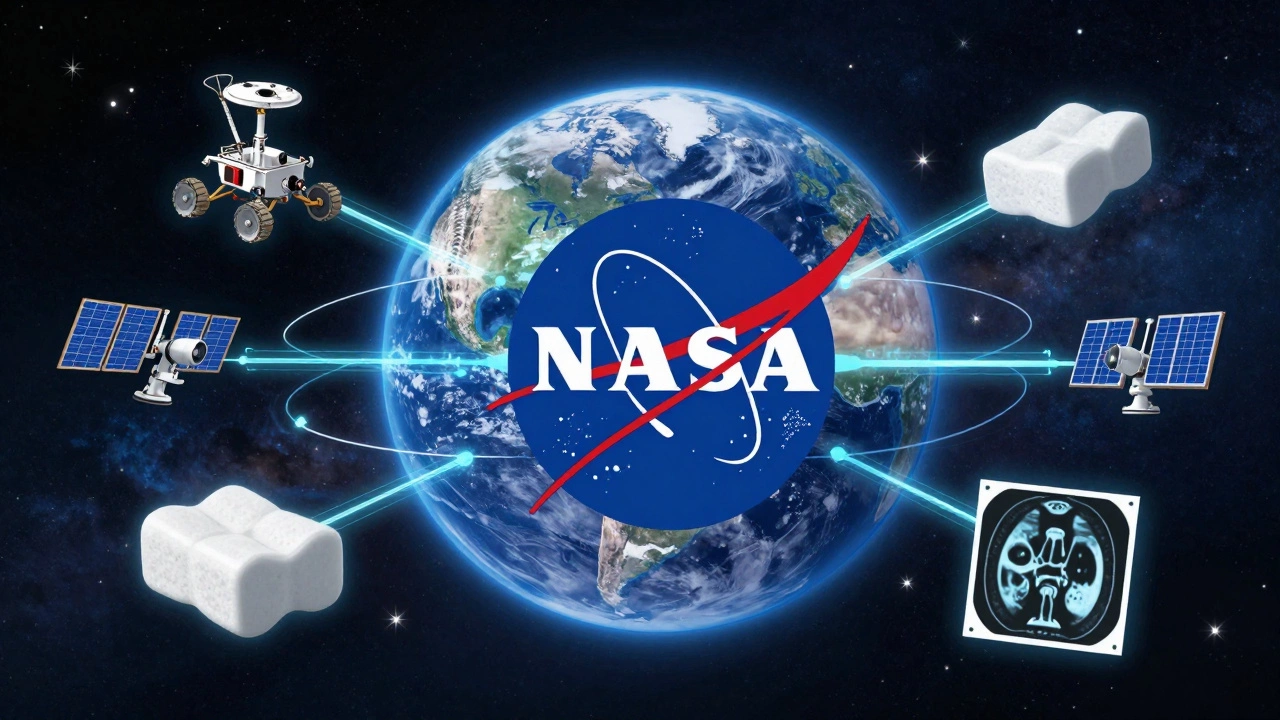
People often think NASA is only about sending astronauts to the Moon. But that’s just one part of its job. NASA’s work includes:
- Building and operating space telescopes like the James Webb Space Telescope
- Monitoring Earth’s climate from orbit with satellites
- Testing new propulsion systems for deep space travel
- Collaborating with private companies like SpaceX and Boeing on crewed missions
- Studying Mars rovers and planning future human missions to the Red Planet
- Developing technologies used in everyday life, from memory foam to water purification systems
It’s not just about going to space. It’s about understanding how space affects us-our weather, our technology, even our health. NASA’s research helped improve solar panels, medical imaging, and disaster response tools. The agency doesn’t just explore space. It brings space down to Earth.
Is NASA the Only Space Agency With a Long Name?
No. Most major space agencies have long, formal names too. The European Space Agency is officially the "European Space Agency"-no hidden meaning there. Russia’s agency is called the "Roscosmos State Corporation for Space Activities." China’s is the "China National Space Administration." Even Japan’s JAXA stands for "Japan Aerospace Exploration Agency."
There’s a pattern: space agencies tend to use "National" or "Agency" in their titles to show they’re government-run. The names aren’t meant to be secret. They’re meant to be official. NASA’s name follows the same logic. It’s not unusual-it’s standard.
Why Do People Think NASA Has a Secret Name?
Conspiracy theories thrive on mystery. When something sounds technical-like "National Aeronautics and Space Administration"-some people assume there must be more to it. They imagine secret projects, hidden agendas, or classified programs with different names. Movies and TV shows fuel this. In shows like "The X-Files," government agencies are always hiding something.
The truth? NASA is one of the most transparent agencies in the world. It publishes every mission plan, every budget line, every scientific paper. Its data is public. Its images are free to download. Its engineers and scientists give public talks. If NASA had a secret name, you’d know it by now. There’s no code. No hidden meaning. Just a clear, legal name that’s been used for over 65 years.
What’s in a Name? More Than You Think
The name "National Aeronautics and Space Administration" tells you exactly what NASA is: a government body focused on flight and space. It’s not a corporation. Not a nonprofit. Not a university. It’s a federal agency with a specific mandate. That name carries weight. It means accountability. It means public trust. It means the U.S. government is investing in science, not just for military use, but for human progress.
When you hear "NASA," you think of astronauts, rockets, and stars. But behind that word is a system of laws, budgets, engineers, and scientists working in labs across the country-from Houston to Pasadena to Huntsville. The name isn’t just a label. It’s a promise: that we’ll keep exploring, learning, and pushing boundaries.
Does NASA Ever Use a Shorter Name?
Of course. In everyday speech, everyone says "NASA." Even the agency itself uses it on its website, in press releases, and on social media. The full name appears only in legal documents, congressional reports, and official seals. You won’t see "National Aeronautics and Space Administration" on a SpaceX rocket or a NASA T-shirt. But that doesn’t make it any less real.
Think of it like the U.S. Department of Defense. No one calls it that in casual conversation. They say "Pentagon." But the full name still exists on paper, in law, and in history. Same with NASA. The short name is for convenience. The long name is for accuracy.
Final Answer: NASA’s Real Name Is What It Always Was
There’s no secret. No hidden code. No alternate name. NASA’s real name is National Aeronautics and Space Administration. It was chosen in 1958, written into law, and used ever since. The agency doesn’t hide behind acronyms-it owns them. And that’s why, after more than six decades, NASA still stands for something real: curiosity, courage, and the relentless pursuit of what’s beyond the horizon.