Solar Growth Calculator
Current Solar Capacity
Wind Energy Comparison
Enter values and click Calculate to see solar's growth advantage
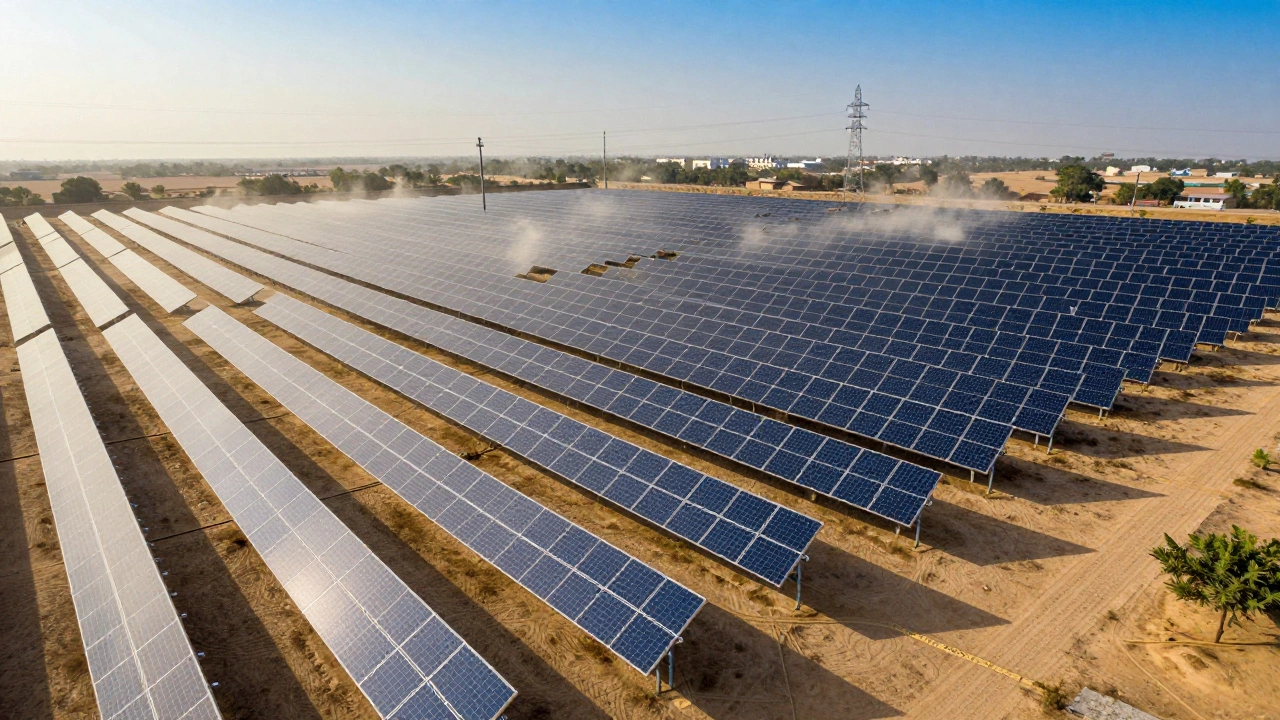
By 2025, solar power wasn’t just growing-it was exploding. In just five years, global solar capacity jumped from 1.2 terawatts to over 2.7 terawatts. That’s more than the entire electricity output of Germany and Japan combined. And it’s not slowing down. While wind, hydro, and geothermal all added capacity, none came close to the speed and scale of solar. The fastest growing renewable energy in the world right now is solar power-and it’s changing everything.
Why solar is pulling ahead
It’s not magic. It’s math. Solar panels have gotten cheaper, better, and easier to install. In 2010, a typical solar panel cost over $2 per watt. Today, it’s under $0.30. That’s an 85% drop in 15 years. Meanwhile, efficiency jumped from 15% to over 23% for standard commercial panels. High-end models now hit 25%.
That price drop didn’t happen by accident. China produced over 80% of the world’s solar panels in 2025. Factories in Xinjiang, Guangdong, and Jiangsu churned out modules at a rate of 500 gigawatts per year. That’s more than the total solar capacity of the entire United States in 2020. The scale of production drove costs down further, creating a feedback loop: lower prices → more installations → more production → even lower prices.
Where the growth is happening
The biggest solar surges aren’t in Europe or North America-they’re in India, Brazil, Vietnam, and Saudi Arabia. India added 18 gigawatts of solar in 2024 alone, more than the entire U.S. added in 2020. Brazil’s rooftop solar market exploded after new net metering rules let homeowners sell excess power back to the grid. In Saudi Arabia, the NEOM project is installing 20 gigawatts of solar by 2030, enough to power 2 million homes.
Even countries with little sun are going all in. The Netherlands, which gets less daylight than Seattle, installed more solar per capita than any other EU country in 2024. Why? Because solar works even on cloudy days, and rooftops, parking lots, and even farmland are being turned into power plants.
Solar vs wind: the real comparison
Wind energy is strong. Offshore wind farms in the North Sea and off the coast of China are producing record power. But wind growth is slower-and more uneven. Wind needs big open spaces, steady winds, and long transmission lines. It’s also harder to install quickly. A 100-megawatt wind farm can take two years to build. A 100-megawatt solar farm? Six months.
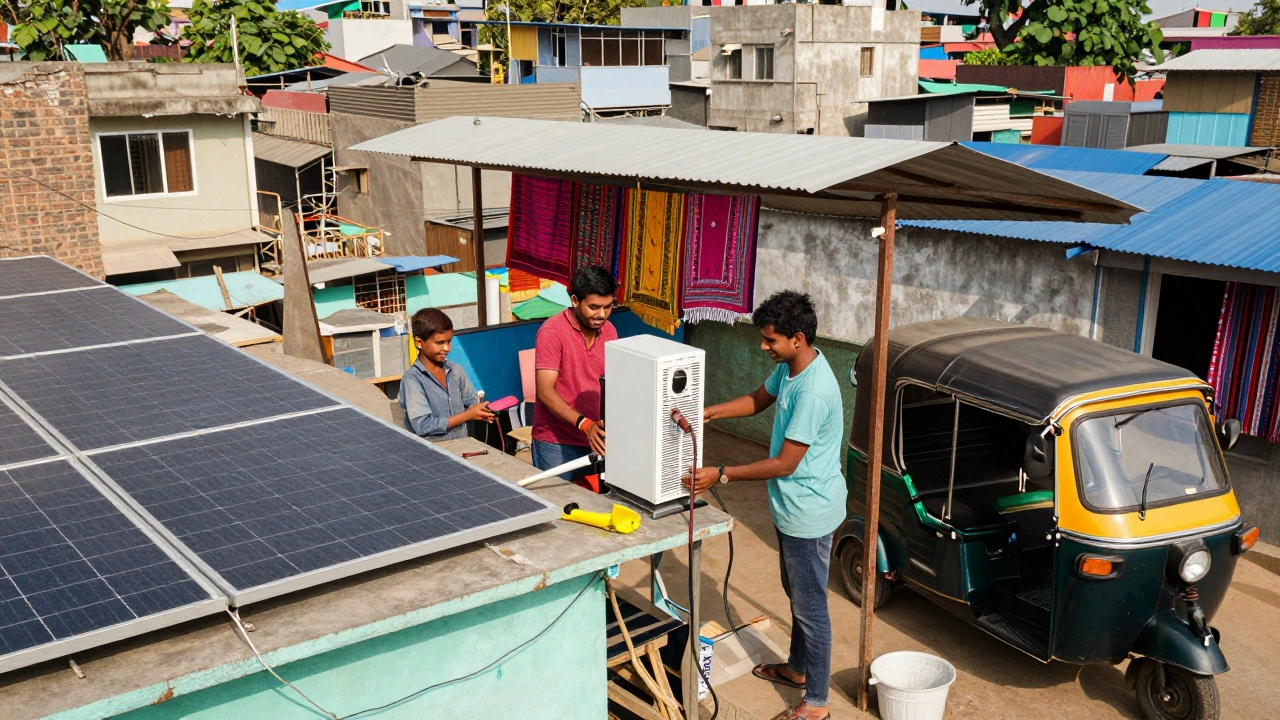
Solar also scales better. You don’t need to wait for a utility to build a giant plant. A family can install solar on their roof in a day. A small business can add panels to their warehouse. A village in rural Kenya can power its clinic with a 5-kilowatt solar array. Wind can’t do that. Solar’s flexibility makes it the go-to for both cities and remote areas.
Storage is the game-changer
Solar doesn’t work at night. But that’s no longer a dealbreaker. Lithium-ion battery prices have fallen 90% since 2010. In 2025, the average home battery system cost under $6,000 and could store 10 kilowatt-hours-enough to power a typical home for 4-6 hours after sunset.
Companies like Tesla, CATL, and LG Energy Solution are building gigafactories faster than ever. In 2024, global battery storage capacity tripled compared to 2021. That means solar isn’t just generating power anymore-it’s delivering it when you need it. In California, solar plus storage now provides more than 20% of evening electricity demand. That’s a first.
Policy and investment are accelerating the shift
The U.S. Inflation Reduction Act pumped $370 billion into clean energy. The EU’s REPowerEU plan set a target of 45% renewable electricity by 2030. India’s Production Linked Incentive scheme gave $2.5 billion to local solar manufacturers. China’s 14th Five-Year Plan included over $500 billion for renewables.
Private money followed. In 2025, investors poured $520 billion into solar projects worldwide. That’s more than oil and gas exploration combined. Banks stopped funding new coal plants. Insurance companies raised premiums for coal-dependent businesses. The market didn’t just change-it flipped.
What’s next for solar
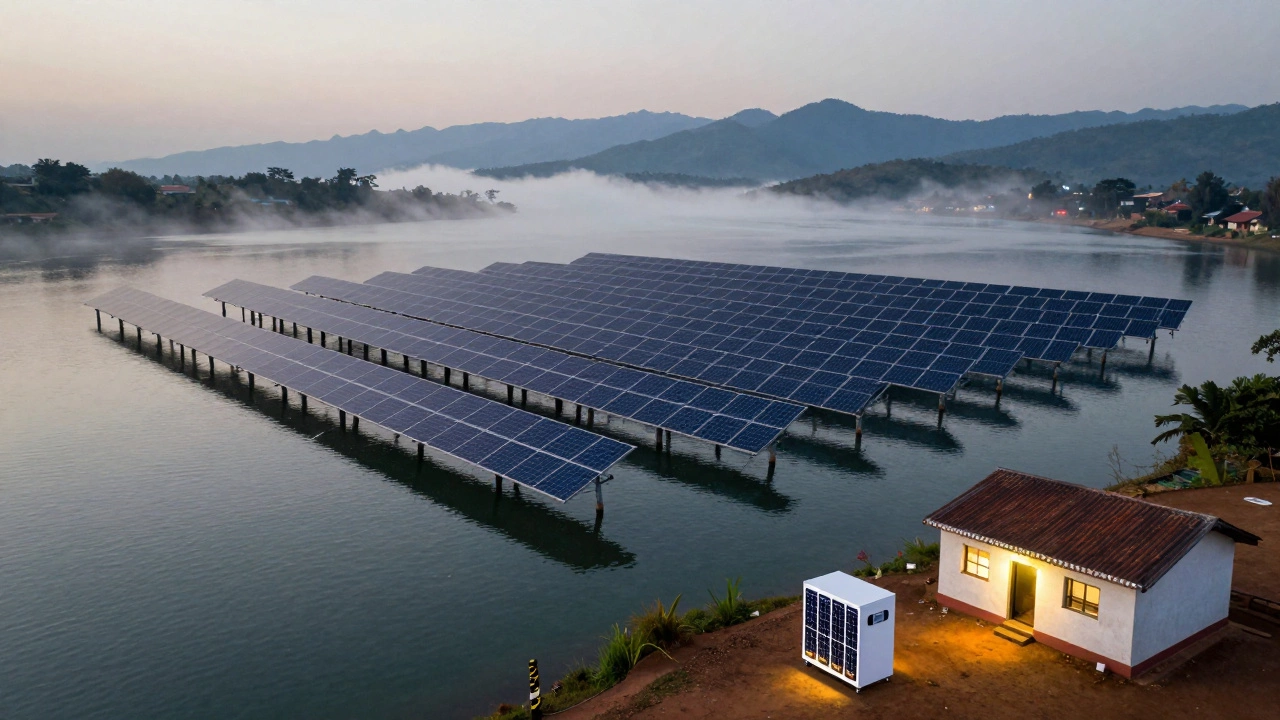
The next wave is bifacial panels, which capture sunlight from both sides, and agrivoltaics-putting panels over crops so farms generate power and grow food at the same time. Floating solar farms on reservoirs and lakes are popping up in Japan, Singapore, and even Texas. In 2025, a 1.2-gigawatt floating solar plant opened on a reservoir in China, the largest ever built.
By 2030, experts predict solar will supply over 30% of global electricity. That’s up from 6% in 2020. In some countries, it’s already the cheapest source of new power. In Saudi Arabia, solar bids came in at $0.012 per kilowatt-hour-cheaper than running a gas plant.
Why this matters for everyone
Solar isn’t just about the environment. It’s about energy access. Over 700 million people still live without electricity. Solar microgrids are bringing power to villages in Nigeria, Nepal, and the Philippines faster than any grid extension ever could. It’s also about jobs. The solar industry employed over 14 million people globally in 2025-more than coal, oil, and gas combined.
And it’s not just the rich countries. In Bangladesh, over 6 million households now have solar home systems. In Kenya, solar-powered refrigerators keep vaccines cold in remote clinics. In India, farmers use solar pumps to irrigate fields without diesel. Solar isn’t a luxury anymore. It’s a basic tool for survival and growth.
What’s holding solar back?
It’s not the technology. It’s the grid. Many countries still rely on old power systems designed for centralized, fossil-fueled plants. Adding solar at scale requires smarter grids, better storage, and updated rules. Some utilities still charge solar users extra fees or limit how much they can sell back.
Supply chains are another risk. While solar panels are cheap, the materials-polysilicon, silver, copper-are still vulnerable to trade restrictions and mining shortages. Recycling programs for old panels are just starting. In 2025, less than 10% of decommissioned panels were recycled. That’s going to change fast.
Final takeaway
Solar power is the fastest growing renewable energy because it’s simple, scalable, and getting cheaper every year. It doesn’t need massive dams, deep mines, or huge turbines. It just needs sunlight and space-anywhere you can put a panel. From rooftop to desert to floating lake, solar is everywhere. And it’s growing faster than any other energy source in history. The question isn’t whether solar will dominate. It’s how fast the rest of the world will catch up.
Is solar power really the fastest growing renewable energy?
Yes. In 2025, solar added over 400 gigawatts of new capacity worldwide-more than wind, hydro, and geothermal combined. Its annual growth rate has been above 25% for five straight years. No other renewable source comes close.
Why isn’t wind power growing faster than solar?
Wind needs large, open areas with consistent wind, long transmission lines, and complex permitting. It’s harder to install quickly and doesn’t scale as easily for small users. Solar can be installed on rooftops, parking canopies, or even farmland in weeks-not years. That flexibility gives solar a massive advantage in speed and reach.
Can solar power work in cloudy or cold climates?
Absolutely. Solar panels generate electricity from daylight, not just direct sunlight. Countries like Germany, the UK, and even Norway get most of their renewable power from solar. Cold temperatures actually improve panel efficiency. The real issue is shorter winter days, not lack of sun.
What’s the biggest challenge for solar right now?
The biggest challenge isn’t technology-it’s the grid. Most power systems were built for big power plants, not thousands of small solar sources. Upgrading grids to handle two-way power flow, storage integration, and variable supply is slow and expensive. Policy delays and utility resistance also hold back faster adoption.
How long will solar stay the fastest growing renewable?
At least through 2030. With costs still falling and storage improving, solar’s growth rate is expected to stay above 20% annually. Wind and green hydrogen may catch up in niche areas, but solar’s versatility, low cost, and rapid deployment mean it will remain the leader for the next decade.