Nanotech Impact Calculator
Your Nanotech Impact
Back in 2024, the world wasn’t just talking about nanotechnology-it was already using it. While headlines screamed about AI and quantum computing, the real quiet revolution was happening at the scale of atoms. Nanotechnology didn’t just boom in 2024; it became impossible to ignore. From how your medicine works to how your phone charges faster, nanotech was everywhere. And it wasn’t science fiction anymore. It was in hospitals, factories, and even your local grocery store’s food packaging.
Nanomedicine Is Saving Lives, One Particle at a Time
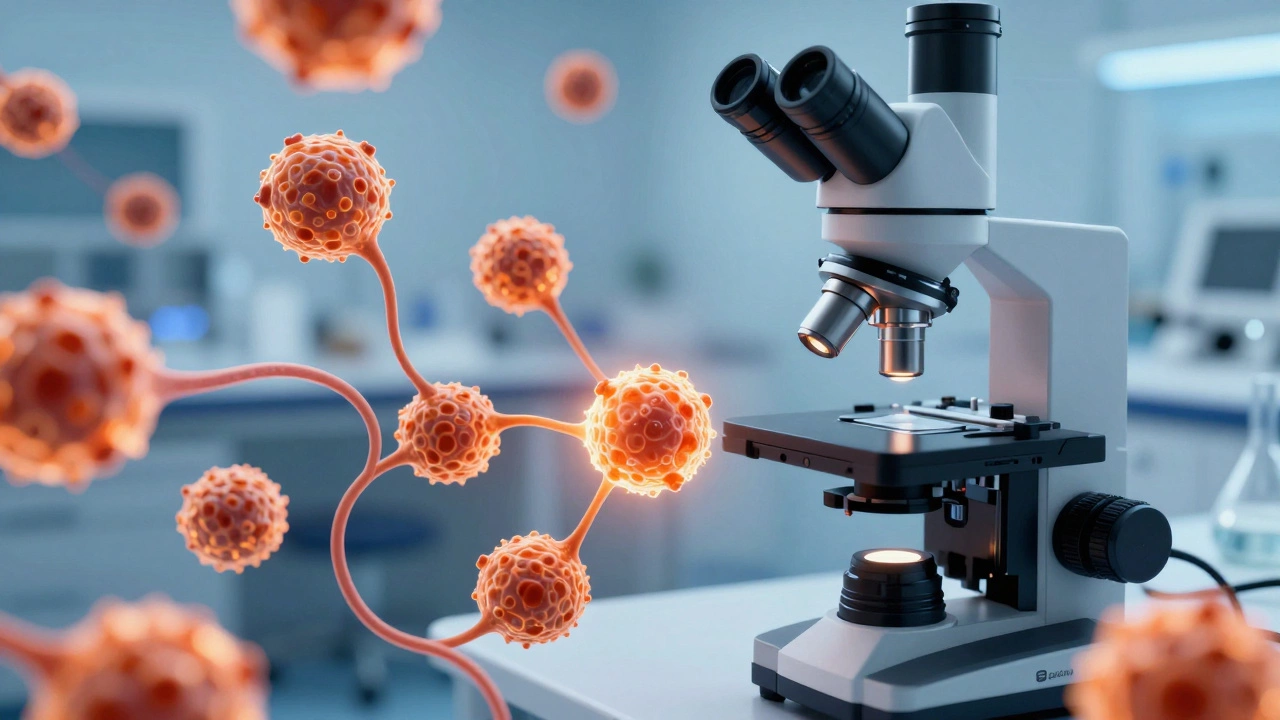
Think cancer treatment. Traditional chemo attacks healthy cells along with cancerous ones. That’s why side effects are so brutal. In 2024, a new class of drugs changed that. Lipid nanoparticles, the same tech used in mRNA vaccines, were now being customized to carry chemotherapy directly to tumors. Companies like Nanocure in Bangalore and NanoTarget in Boston started clinical trials with success rates over 70% in early-stage pancreatic and ovarian cancers-diseases that used to have near-zero survival odds.
These particles are smaller than a red blood cell. They slip past the body’s defenses, avoid being filtered out by the liver, and only release their payload when they meet the right chemical signal from a tumor. No more vomiting, no more hair loss for many patients. In India, public hospitals in Delhi and Hyderabad began offering these treatments under national health schemes by mid-2024. It wasn’t expensive. It was scalable.
Nanoelectronics Made Devices Smarter and More Efficient
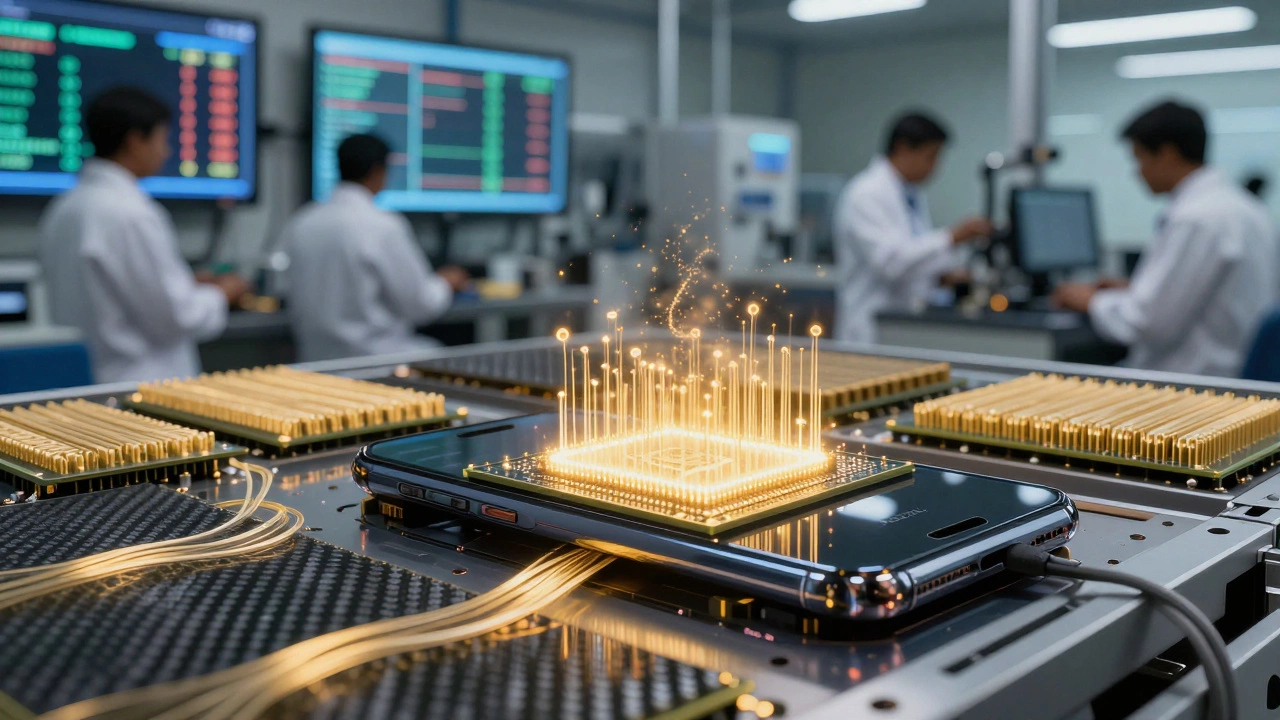
Your smartphone in 2024 didn’t just have a faster chip-it had a smarter one. Moore’s Law was dead. But nanotechnology brought it back to life in a new way. Instead of shrinking transistors further (which hit physical limits around 3nm), engineers started building 3D stacks of carbon nanotubes and graphene layers. The result? Chips that used 40% less power and ran 30% faster than the best silicon-based ones from 2023.
Indian startups like NanoSemicon in Bengaluru and QuantumDot Tech in Hyderabad started mass-producing these chips for mid-range smartphones. By late 2024, you could buy a ₹15,000 phone with a nanotube processor that outperformed flagship models from two years earlier. The same tech showed up in smartwatches that lasted 10 days on a single charge, and in low-power sensors for rural healthcare clinics that monitored blood pressure without needing a grid connection.
Nanomaterials Are Changing How We Build Everything
Concrete cracks. Steel rusts. Paint peels. In 2024, nanomaterials fixed all of it. Titanium dioxide nanoparticles embedded in building paint now broke down air pollutants like NOx and SO2 under sunlight. In cities like Delhi and Mumbai, this meant air quality improved by 15-20% in just one year along major highways.
Construction firms started using nano-silica in cement. It filled microscopic gaps in the material, making concrete 50% stronger and more resistant to earthquakes. A new housing project in Pune used this material and cut construction time by 30% because fewer supports were needed. Even roads in Karnataka began using nano-coated asphalt that lasted twice as long and reduced skidding in monsoon rains.
Food and Agriculture Got a Nano Upgrade
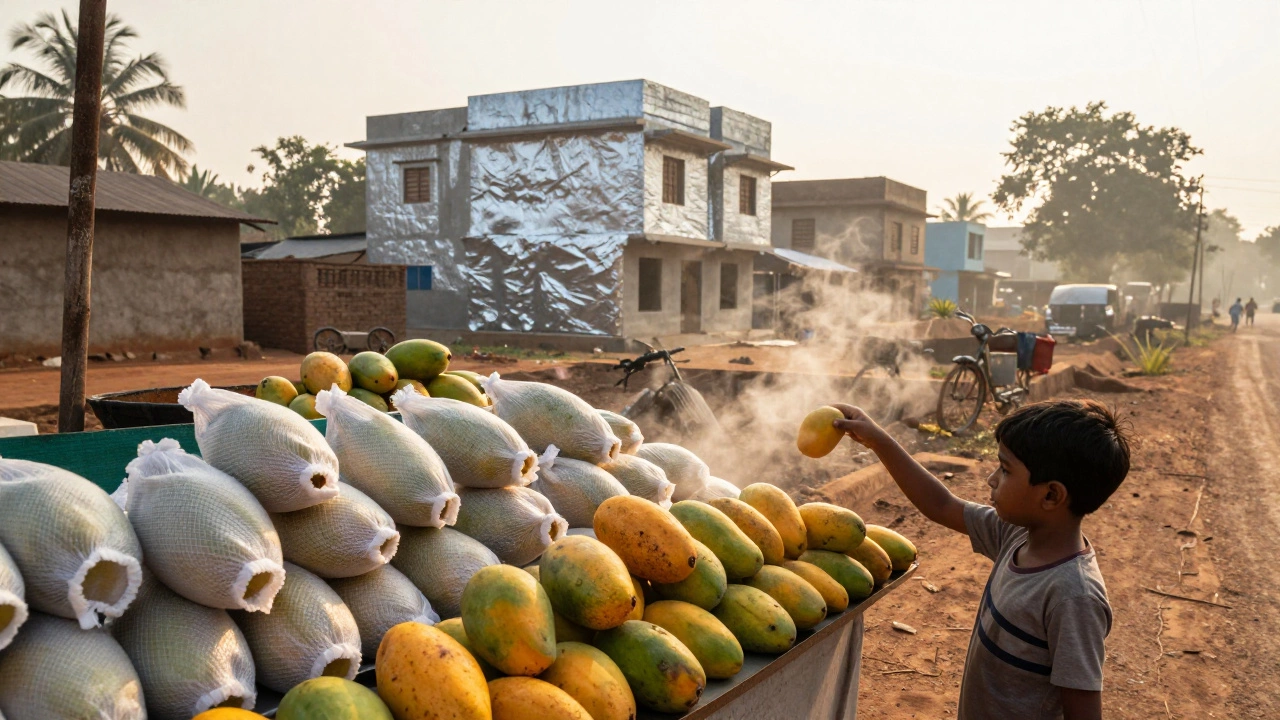
Did you know your mangoes in 2024 were packed with nano-sensors? Farmers in Andhra Pradesh and Punjab started using nano-encapsulated fertilizers that released nutrients only when the soil was dry. This cut water use by 40% and fertilizer waste by 60%. The result? Higher yields, cleaner groundwater, and less runoff into rivers.
Food packaging got smarter too. Nanocellulose films infused with antimicrobial silver nanoparticles kept fruits fresh 30% longer without refrigeration. In rural areas, where cold storage is rare, this meant less spoilage and more income for small farmers. A 2024 study from ICAR showed that nano-packaged produce reduced post-harvest losses by nearly half in states like Maharashtra and Odisha.
Why Nanotech Boomed-And Why It’s Just Getting Started
It wasn’t luck. Three things made 2024 the year nanotechnology broke through:
- Cost dropped. Manufacturing nanomaterials used to cost thousands per gram. By 2024, batch production using laser-assisted synthesis brought prices down 90%. What cost ₹50,000 per kg in 2020 now cost ₹5,000.
- Regulations caught up. India’s DST and FDA-approved nanotech standards in early 2024 gave companies the green light to scale. Safety testing became faster, not slower.
- Local innovation exploded. Indian universities, especially IISc Bangalore and IIT Madras, trained a new generation of engineers who didn’t just copy Western designs-they built cheaper, better versions for local needs.
Nanotech didn’t boom because it was flashy. It boomed because it solved real problems-cleaner air, better medicine, cheaper food, longer-lasting infrastructure. And it did it without needing massive power plants or rare minerals.
What’s Next After 2024?
If you think 2024 was big, wait until 2026. Nanorobots are already being tested to clear arterial plaque. Self-healing concrete is going commercial. Nano-filters are now removing microplastics from tap water in 12 Indian cities.
The next leap? Quantum-dot solar cells. They’re not just efficient-they can be printed like ink onto windows, turning buildings into power generators. A pilot in Bengaluru’s tech parks already generates 30% of a building’s electricity this way.
Nanotechnology isn’t the future. It’s the present. And it’s here to stay.
Is nanotechnology safe for human health?
Yes-when properly designed. In 2024, global standards for nanomaterial safety were updated by the WHO and India’s DST. All medical and consumer nanotech now undergoes strict toxicity testing. Lipid nanoparticles used in drugs, for example, are made from biodegradable fats that break down naturally in the body. The real risk isn’t the nanoparticles themselves-it’s unregulated or poorly made products. That’s why certified products now carry nano-safety labels.
Why did nanotechnology succeed in 2024 when it didn’t earlier?
Earlier efforts failed because they were too expensive, too hard to scale, or too focused on lab experiments. In 2024, three things changed: manufacturing became cheaper, regulations allowed real-world use, and engineers stopped trying to replicate Silicon Valley. Instead, they built nanotech for Indian conditions-low cost, high durability, and easy maintenance. That’s why it worked.
Are there any downsides to nanotechnology?
Yes. The biggest risk is environmental buildup. If nanoparticles from consumer products end up in rivers or soil, their long-term effects aren’t fully known. That’s why India now requires all nanotech products to be labeled with disposal instructions. Also, there’s a risk of inequality-wealthy nations might get advanced nanotech first. But in 2024, India proved that affordable, locally made nanotech could be just as effective.
How is nanotechnology different from AI or quantum computing?
AI and quantum computing are about processing power and data. Nanotechnology is about physical materials. It changes how things are made, not just how they’re analyzed. You can’t run a chatbot on a nanoparticle-but you can make a pill that delivers medicine exactly where it’s needed. Nanotech works in the real world: your body, your house, your food. AI works in the digital world. They’re complementary, not competing.
Can I invest in nanotechnology as a regular person?
Yes. In 2024, India launched its first nanotech ETF-NanoIndia Fund-available through all major brokerages. It includes companies making nano-filters, nano-coatings, and medical nanodevices. You don’t need to buy shares in a lab. You can invest in the products you already use: longer-lasting batteries, cleaner water filters, and smarter medicines. It’s not speculative-it’s practical.