Renewable vs. Fossil Fuel Cost Calculator
Solar PV
Utility Scale
Onshore Wind
Consistent Winds
Natural Gas
Combined Cycle
Coal
Thermal Plant
Cost Breakdown
Base Generation Cost (LCOE)
Total System Cost (With Storage)
Global Comparison Ranking
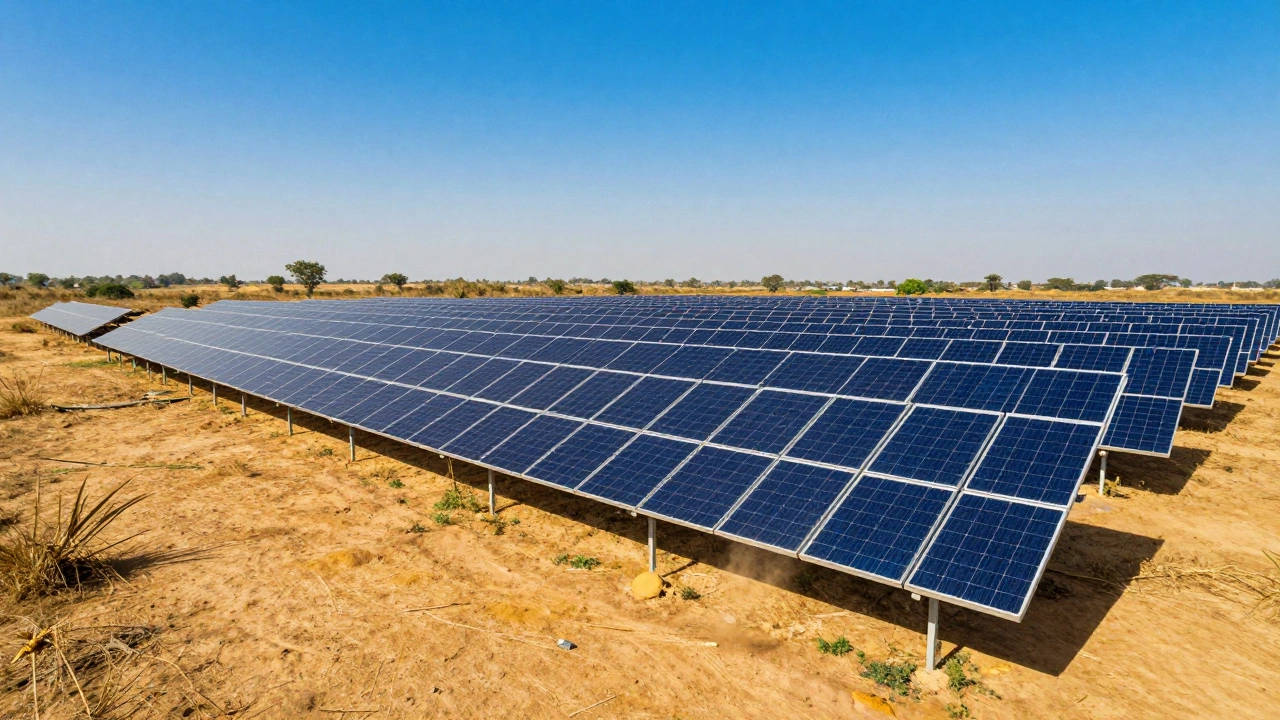
Who would have thought that the sun and the wind could beat coal on price? For decades, we were told that clean energy was a luxury item-a noble but expensive experiment. That narrative has completely collapsed. As of mid-2026, the answer to which is the cheapest source of energy is no longer a matter of debate among economists; it is a matter of basic arithmetic. In most parts of the world, new utility-scale solar photovoltaic (PV) and onshore wind farms are now significantly cheaper than building or running existing coal and gas plants.
This isn't just about being green anymore. It is about saving money. When you look at the Levelized Cost of Energy (LCOE)-the average net present cost of electricity generation for a generating plant over its lifetime-the data is stark. According to the latest reports from Lazard and BloombergNEF, unsubsidized solar PV costs between $24 and $96 per megawatt-hour (MWh), while onshore wind ranges from $24 to $75 per MWh. Compare that to coal, which sits comfortably between $68 and $166 per MWh, and natural gas combined cycle plants at $39 to $101 per MWh. The gap is widening every quarter.
Understanding the True Cost: What Is LCOE?
To understand why solar and wind have won the price war, you first need to understand how we measure energy costs. We use a metric called Levelized Cost of Energy, or LCOE. Think of LCOE as the all-inclusive ticket price for a vacation. It doesn't just cover the flight (building the plant); it covers the hotel, the food, the maintenance, and the fuel for the entire trip (operating the plant for its lifespan).
LCOE calculates the total lifetime cost of building and operating a power plant, divided by the total electricity it produces over that same period. This gives us a single number, usually in dollars per megawatt-hour ($/MWh), that allows us to compare apples to oranges-or in this case, nuclear reactors to solar panels. If a technology has a low LCOE, it means it is efficient and cheap to run over time. If it has a high LCOE, it is either expensive to build, expensive to fuel, or both.
| Energy Source | Low End ($/MWh) | High End ($/MWh) | Fuel Cost |
|---|---|---|---|
| Onshore Wind | $24 | $75 | None |
| Solar PV (Utility) | $24 | $96 | None |
| Natural Gas (CCGT) | $39 | $101 | High/Volatile |
| Coal | $68 | $166 | Moderate |
| Nuclear | $141 | $221 | Low |
The table above shows the global averages. However, geography plays a massive role. In places like India, Chile, and Australia, where sunlight is intense and consistent, solar PV can drop below $20/MWh. In regions with strong, consistent winds like the North Sea or the Great Plains of the US, onshore wind can hit similar lows. Conversely, in cloudy, flat regions without wind resources, these numbers will be higher, potentially making natural gas more competitive locally.
Why Solar and Wind Are So Cheap Now
You might wonder, what changed? Why was solar so expensive ten years ago, and why is it dirt cheap today? The answer lies in three main drivers: learning curves, economies of scale, and supply chain maturation.
Solar Photovoltaics is a technology that converts sunlight directly into electricity using semiconductor materials. Since the 1970s, the cost of solar modules has dropped by more than 90%. This follows a pattern known as Wright's Law, which states that for every cumulative doubling of production volume, the cost falls by a constant percentage. For solar, that percentage has been around 20-30%. Manufacturers in China and elsewhere have built massive gigafactories that produce panels at speeds and scales previously unimaginable. The silicon used in these panels is essentially purified sand, a material that is abundant and cheap.
Wind Turbines are large machines that convert kinetic energy from wind into mechanical power, then into electricity. Similarly, wind turbines have grown larger and more efficient. A modern onshore turbine can stand taller than the Eiffel Tower, with blades spanning wider than a football field. Larger turbines capture more energy at lower wind speeds, increasing their capacity factor (the percentage of time they actually generate power). The manufacturing processes for steel towers and composite blades have also become highly optimized, driving down the capital expenditure (CapEx).
There is also a financial shift. Investors now view renewables as low-risk assets compared to fossil fuels, which face regulatory risks and stranded asset dangers. This lowers the cost of capital (the interest rate on loans) for solar and wind projects, further reducing their LCOE.
The Hidden Costs: Integration and Storage
If solar and wind are so cheap, why hasn't the grid switched entirely yet? Here is where the conversation gets tricky. The LCOE numbers I mentioned earlier are "unbundled" costs. They tell you how much it costs to generate one unit of electricity when the sun shines or the wind blows. They do not tell you what happens when the sun sets or the wind dies down.
This is the problem of intermittency. Electricity demand does not always match renewable supply. You need a system that can balance the grid 24/7. This introduces two major additional costs: grid integration and energy storage.
Battery Energy Storage Systems (BESS) are systems that store electrical energy, typically using lithium-ion batteries, for later use. Batteries allow you to store excess solar power generated at noon and release it during the evening peak. While battery prices have also plummeted-dropping roughly 90% since 2010-they still add significant cost to the equation. Adding four hours of battery storage to a solar project can increase the effective cost by $30-$60 per MWh, depending on the location and technology.
However, even with storage added, the combination of solar-plus-storage is often still cheaper than building new natural gas peaker plants, which are traditionally used to handle evening peaks. Furthermore, grid flexibility tools like demand response (paying consumers to reduce usage during peak times) and long-distance transmission lines help mitigate these costs without relying solely on batteries.
Fossil Fuels: The Illusion of Stability
Proponents of coal and gas often argue that while renewables are cheap to build, they are unreliable, whereas fossil fuels provide "baseload" power. But let's look at the economics. Fossil fuel plants have low upfront construction costs but high ongoing operational costs because they must buy fuel every day. The price of natural gas is volatile. Remember the energy crises of 2021-2022? Gas prices spiked, causing electricity bills to skyrocket across Europe and Asia. Solar and wind have zero fuel costs. Once built, their marginal cost of producing an extra kilowatt-hour is effectively zero.
Coal is facing a different kind of death spiral. It is not only becoming more expensive due to carbon pricing mechanisms in many countries but also suffers from aging infrastructure. Many coal plants are past their design life. Retrofitting them with carbon capture technology is prohibitively expensive, adding another $30-$50 per MWh to their already high LCOE. In many markets, it is now economically rational to retire coal plants early, even if they still have useful life left, simply because running them loses money compared to buying power from the spot market dominated by renewables.
Regional Variations: Where Does Your Location Matter?
While the global trend is clear, your local reality depends on your geography. Let's take Bangalore, India, as an example. India has some of the lowest solar tariffs in the world. In recent auctions, solar tariffs have dipped below ₹2.50 per kWh (approximately $0.03/kWh). This makes solar the undisputed king of cheap electricity in South India. The state has excellent solar irradiance and a supportive policy framework.
In contrast, consider Northern Europe. Countries like Denmark and Germany have less sunshine but incredible wind resources. Offshore wind has become a cornerstone of their energy strategy. While offshore wind is more expensive than onshore wind (due to complex installation and maintenance), it benefits from stronger, more consistent winds, leading to higher capacity factors. In these regions, a mix of offshore wind, imported hydroelectricity, and interconnectors with neighbors provides the cheapest reliable power.
In resource-poor regions, such as landlocked countries with little wind or sun, the calculus changes. Here, nuclear or hydroelectric dams (if geographically feasible) might offer better long-term value despite higher upfront costs, primarily because they provide firm, dispatchable power without the need for massive storage investments.
The Future Price Trajectory
Looking ahead to the rest of 2026 and beyond, the cost curve for renewables continues to bend downward. Next-generation technologies like perovskite solar cells promise even higher efficiencies and lower manufacturing costs. Green hydrogen, produced using excess renewable electricity, is emerging as a storage solution for heavy industry and long-duration storage, though it remains expensive today.
Meanwhile, the cost of fossil fuels is expected to remain volatile and likely rise as governments implement stricter carbon taxes and methane regulations. The economic divergence is accelerating. By 2030, it is projected that over 90% of new electricity capacity added globally will come from variable renewables, not because of subsidies, but because they are the cheapest option available.
Is solar energy really cheaper than coal everywhere?
In most sunny regions, yes. Utility-scale solar PV is now cheaper than new coal plants in over 90% of the world. However, in areas with poor sunlight or high grid integration costs, existing coal plants might still appear cheaper in the short term if you ignore environmental externalities and carbon taxes. But for new builds, solar wins overwhelmingly.
What is the biggest barrier to switching to cheap renewable energy?
The biggest barrier is not the cost of generation, but the cost of grid integration and storage. Renewables are intermittent, meaning they don't produce power on demand. Upgrading transmission lines, building battery storage, and modernizing grid management systems require significant investment, even if the electricity itself is cheap.
How does battery storage affect the cost of solar power?
Battery storage adds to the upfront cost of a solar project. Currently, adding four hours of lithium-ion storage can increase the levelized cost by $30-$60 per MWh. However, battery prices are falling rapidly. Even with storage, solar-plus-battery systems are often cheaper than alternative sources like natural gas peaker plants for providing evening peak power.
Why is nuclear energy so expensive compared to renewables?
Nuclear energy has very high capital costs (construction takes years and costs billions) and long lead times. While its fuel costs are low, the financing costs during construction are enormous. Additionally, safety regulations and waste management requirements add to the complexity and expense. In contrast, solar and wind projects can be built in months with modular components.
Will fossil fuels ever become cheaper again?
It is unlikely. The cost of renewables is driven by technological innovation and manufacturing scale, which continue to improve. Fossil fuel costs are driven by commodity markets, which are volatile. As carbon pricing becomes more widespread globally, the true cost of fossil fuels will rise, making them increasingly uncompetitive against zero-fuel-cost renewables.