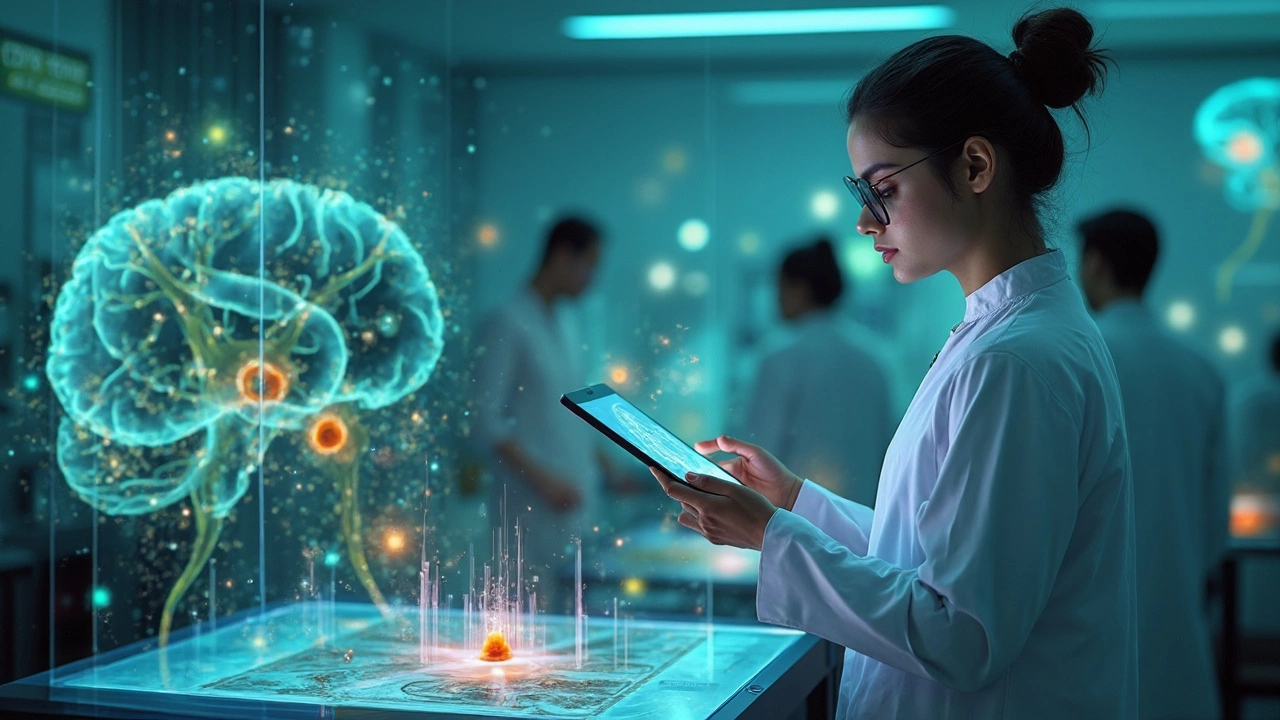
Brain: How Neuroscience and Technology Are Shaping India's Future
When we talk about the brain, the complex organ that controls thought, memory, emotion, and movement. Also known as the central nervous system’s command center, it’s not just biology—it’s the blueprint for artificial intelligence, medical breakthroughs, and even how we design better tools for learning and work. Every AI system that learns, every brain-computer interface being tested in Indian labs, and every new drug for Alzheimer’s or epilepsy starts with a question about the brain.
The AI, systems that mimic human thought using data and rules. Also known as machine intelligence, it’s built on how neurons fire and connect. The simplest AI? Rule-based systems that follow if-then logic—exactly how early neuroscientists thought the brain worked. Today’s deep learning models? They’re inspired by layered neural networks in the brain. And in India, researchers are using these models to decode EEG signals, predict seizures, and even help stroke patients regain movement.
Neuroscience, the scientific study of the nervous system, especially the brain. Also known as brain science, it’s behind every public health program targeting mental health, addiction, or cognitive decline. From polio vaccination drives that protect children’s developing brains to programs that teach rural teachers how to spot learning disorders, understanding the brain changes how we deliver care. And it’s not just hospitals—biotech companies in Bengaluru and Hyderabad are using brain-inspired algorithms to design smarter drug delivery systems and diagnostic tools.
The neurotechnology, tools that measure, stimulate, or interface with the brain. Also known as brain-machine interfaces, they’re no longer science fiction. Indian engineers are building low-cost EEG headsets for schools, startups are creating AI-powered tools to detect early signs of Parkinson’s from voice patterns, and labs are training neural networks to predict depression from speech and typing rhythms. These aren’t lab curiosities—they’re real, scalable tools being tested in cities and villages alike.
What ties all this together? The brain isn’t just a biological organ—it’s the most powerful computer we know, and we’re just beginning to understand how to work with it. Whether you’re curious about how data scientists talk to doctors to improve patient outcomes, how biotech is curing brain-related diseases, or why AI systems are getting better at mimicking human thought, the answers all start with the brain. Below, you’ll find real stories from Indian labs, clinics, and startups that are turning brain science into real-world change.