Scientific Partnership Impact Quiz
Explore the dynamics of history's greatest scientific partnerships. Answer questions based on the article to see how well you understand the nuances of collaboration, credit, and impact.
Loading question...
Quiz Complete!
Your Score:
Reviewing your answers...
You might think the greatest partnership in history belongs to business titans like Steve Jobs and Steve Wozniak, or perhaps political allies who reshaped maps. But if you look closer at how our world actually works-how we cure diseases, build phones, and understand the universe-you’ll find that scientific collaboration is the real engine of progress. It’s rarely a lone genius having an "aha!" moment in a garage. More often, it’s two (or more) minds combining different skills to solve a puzzle neither could crack alone.
So, what qualifies as the greatest partnership? Is it about fame? Money? Or is it about impact? Let’s break down the contenders, focusing on those that changed everything for everyone, not just shareholders.
The DNA Duo: Watson, Crick, and the Missing Third
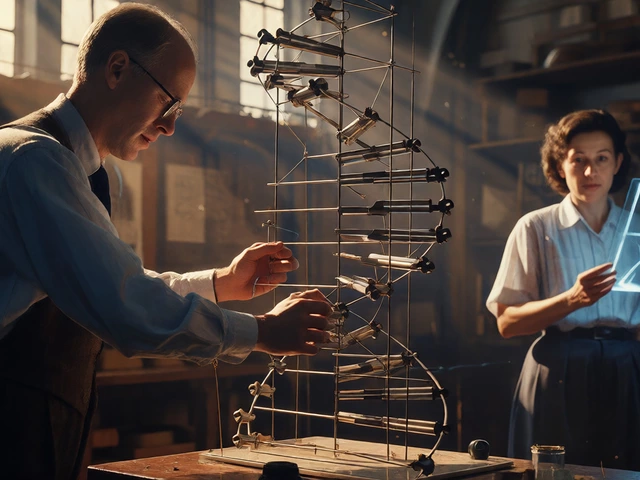
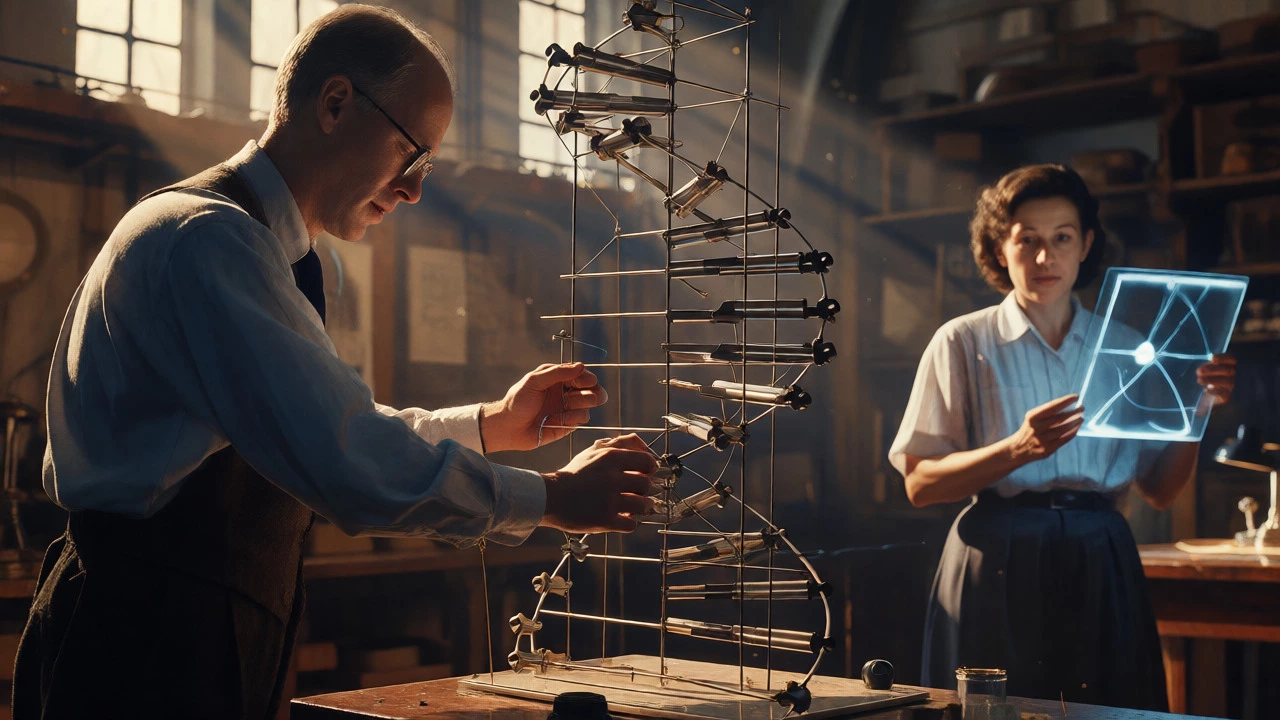
When people ask this question, the first name that pops up is usually James Watson and Francis Crick. In 1953, they proposed the double-helix structure of DNA. This wasn’t just a cool shape; it was the blueprint of life itself. It explained how traits are passed from parents to children and opened the door to modern genetics, forensics, and medicine.
But here’s the twist: calling it a duo ignores the most critical part of the story. The "partnership" was messy, competitive, and arguably unfair. Watson and Crick were theorists who loved models. They needed data. That data came from Rosalind Franklin, whose X-ray crystallography images, specifically "Photo 51," provided the evidence they needed. Without her work, their model would have been just another guess.
Why does this matter? Because it shows that scientific partnerships aren’t always handshake deals. Sometimes, they’re tense negotiations over credit. Watson and Crick won the Nobel Prize in 1962. Franklin had died by then, and Nobels aren’t given posthumously. Was it the greatest partnership? In terms of outcome, yes. In terms of ethics, it’s complicated. It teaches us that collaboration requires transparency, something many teams still struggle with today.
Curie and Curie: Chemistry in Love
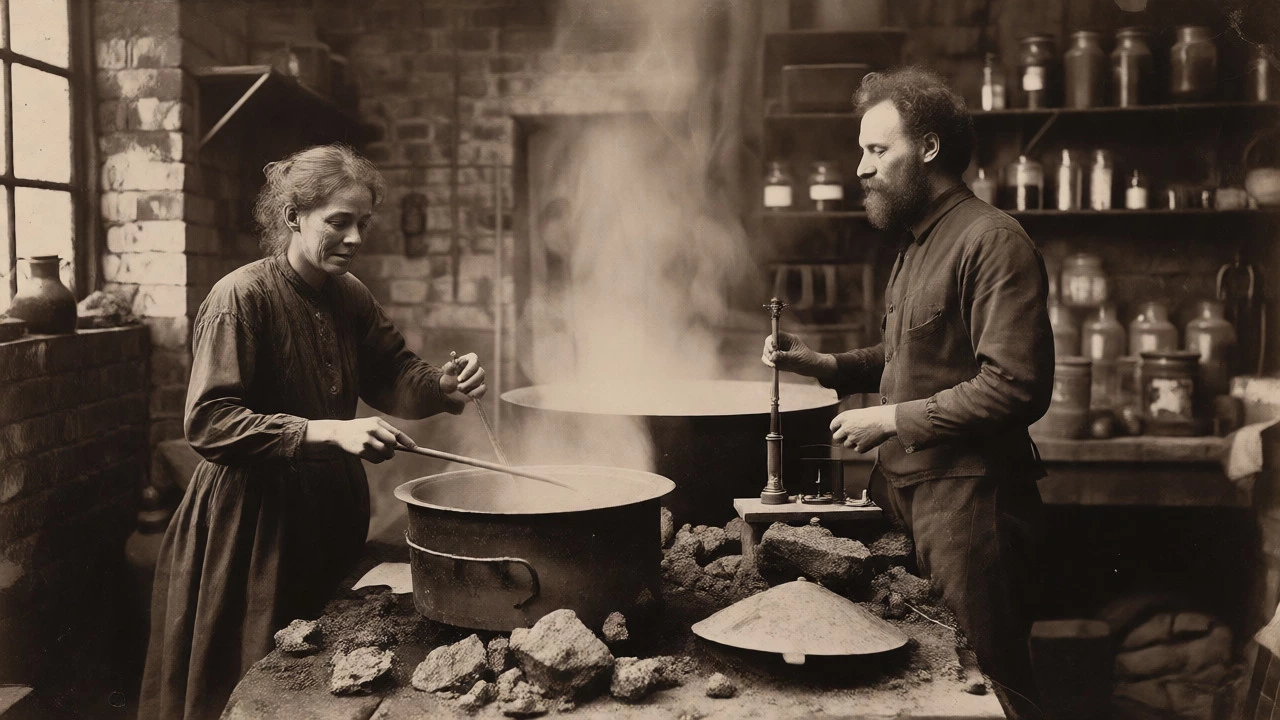
If you want a partnership where both partners got equal credit (mostly), look no further than Marie Curie and Pierre Curie. Working in a drafty shed in Paris around 1898, they discovered two new elements: polonium and radium.
This wasn’t just lab work; it was a physical slog. Marie processed tons of pitchblende ore by hand, stirring boiling cauldrons until her arms ached. Pierre joined her, bringing his expertise in electrometry to measure the radioactivity. Their partnership was built on mutual respect and shared hardship. When they won the Nobel Prize in Physics in 1903, it was awarded to them jointly (along with Henri Becquerel). Later, after Pierre’s tragic death, Marie continued the work, winning a second Nobel in Chemistry in 1911.
The Curies’ partnership stands out because it defied the gender norms of their time. Pierre didn’t just support Marie; he relied on her intellect. They published together, argued together, and succeeded together. For many, this is the ideal model: two equals pushing each other to greater heights. It’s less about one person being the "brain" and the other the "hands," and more about two brains working in sync.
The Manhattan Project: Scale Over Intimacy
Not all great partnerships are between two people. Some involve thousands. The Manhattan Project during World War II brought together physicists, engineers, chemists, and military leaders under J. Robert Oppenheimer. While Oppenheimer is the face, the project only worked because of massive, structured collaboration across borders and disciplines.
Think about the logistics. You had scientists fleeing Nazi Europe, American industrial capacity, and British theoretical physics coming together. Niels Bohr and Albert Einstein weren’t working side-by-side in a small room, but their ideas connected through letters, visits, and shared networks. The partnership here was institutional. It proved that when you align resources, talent, and urgency, you can achieve things that seem impossible.
However, this scale comes with a cost. Communication barriers, security clearances, and political tensions often slowed things down. It reminds us that while big collaborations produce big results, they require strong leadership to keep everyone moving in the same direction. Oppenheimer’s role wasn’t just scientific; it was managerial. He had to be the glue holding a fractious group of geniuses together.
Modern Partnerships: Open Source and Global Health
Fast forward to today. The nature of scientific collaboration has shifted. We’ve moved from closed labs to open networks. Take the Human Genome Project, completed in 2003. It involved thousands of researchers across six countries. No single person could claim credit. Instead, the partnership was global, funded by governments and private entities alike.
Or consider the recent development of mRNA vaccines for COVID-19. Companies like Pfizer and BioNTech partnered to bring the vaccine to market quickly. This wasn’t just corporate synergy; it was a scientific necessity. BioNTech had the platform technology; Pfizer had the manufacturing and distribution muscle. Neither could have done it alone at that speed.
These modern examples show that the "greatest" partnership isn’t necessarily the oldest or the most famous. It’s the one that solves the most urgent problems efficiently. Today, collaboration means sharing data instantly, using cloud computing to process petabytes of information, and breaking down silos between academia and industry.

What Makes a Partnership Great?
Looking at these examples, certain patterns emerge. What do Watson/Crick, the Curies, and the Manhattan Project have in common? They combined complementary skills. One partner couldn’t do what the other did. If everyone in the room thinks the same way, you don’t need a partnership; you just need a meeting.
| Partnership | Key Contribution | Dynamics | Legacy |
|---|---|---|---|
| Watson & Crick | DNA Structure | Theory + Data (Controversial) | Foundation of Genetics |
| Marie & Pierre Curie | Radium/Polonium | Equal Peers | Pioneered Radioactivity |
| Manhattan Project | Nuclear Bomb | Institutional/Large Scale | Atomic Age |
| BioNTech & Pfizer | mRNA Vaccine | Tech + Manufacturing | Global Health Response |
Another factor is trust. The Curies trusted each other implicitly. Watson and Crick had to trust that Franklin’s data was accurate, even if they didn’t always treat her fairly. Modern partnerships rely on digital trust-verifying data sources, ensuring reproducibility, and maintaining ethical standards.
Finally, timing matters. The Curies worked when radioactivity was barely understood. Watson and Crick worked when X-ray crystallography had just become viable. The best partnerships happen when the tools exist, but the insight doesn’t. You’re filling a gap that others see but can’t bridge.
The Future of Collaborative Science
As we move into an era of AI-driven research and climate change challenges, partnerships will become even more critical. Problems like carbon capture or pandemic preparedness are too big for any single nation or discipline. We’ll see more cross-border, cross-disciplinary teams. Imagine biologists working with computer scientists, or economists partnering with ecologists.
The definition of "partner" is also expanding. It’s not just humans anymore. Researchers are collaborating with algorithms that predict protein structures (like AlphaFold). These AI tools act as silent partners, crunching numbers faster than any human team. The greatest partnership of the future might be human intuition paired with machine precision.
So, is there a single greatest partnership? Probably not. Each era has its defining collaborations. But if you had to pick one that symbolizes the power of combining different strengths to unlock nature’s secrets, the Curies remain a powerful symbol of equality and perseverance. Watson and Crick remind us of the impact of theory meeting data. And modern projects show us that scale and speed can save lives.
Next time you hear about a breakthrough, look behind the headline. Who helped? Who provided the data? Who built the tool? Science is a team sport, and the best victories come from the best teams.
Who is considered the greatest scientific partnership in history?
While subjective, James Watson and Francis Crick are frequently cited for discovering the DNA double helix. However, Marie and Pierre Curie are often celebrated for their equal partnership in discovering radioactivity, and large-scale efforts like the Manhattan Project are recognized for their collaborative impact on world history.
Did Rosalind Franklin share the Nobel Prize for DNA?
No. The Nobel Prize was awarded to James Watson, Francis Crick, and Maurice Wilkins in 1962. Rosalind Franklin had died in 1958, and Nobel Prizes are generally not awarded posthumously. Her critical contribution via X-ray diffraction images was essential to the discovery.
How has scientific collaboration changed in the 21st century?
Collaboration has become more global, interdisciplinary, and digitally integrated. Projects now often involve international teams sharing data in real-time, leveraging AI for analysis, and partnering between academic institutions and private corporations to accelerate innovation.
Why is diversity important in scientific partnerships?
Diverse teams bring varied perspectives and problem-solving approaches, which leads to more robust and innovative solutions. Homogeneous groups may overlook blind spots, whereas diverse collaborations can challenge assumptions and foster creativity.
Can AI be considered a scientific partner?
Increasingly, yes. AI tools like AlphaFold assist scientists by predicting complex structures and analyzing vast datasets much faster than humans. While they lack intent, they function as powerful collaborators that enhance human capability.