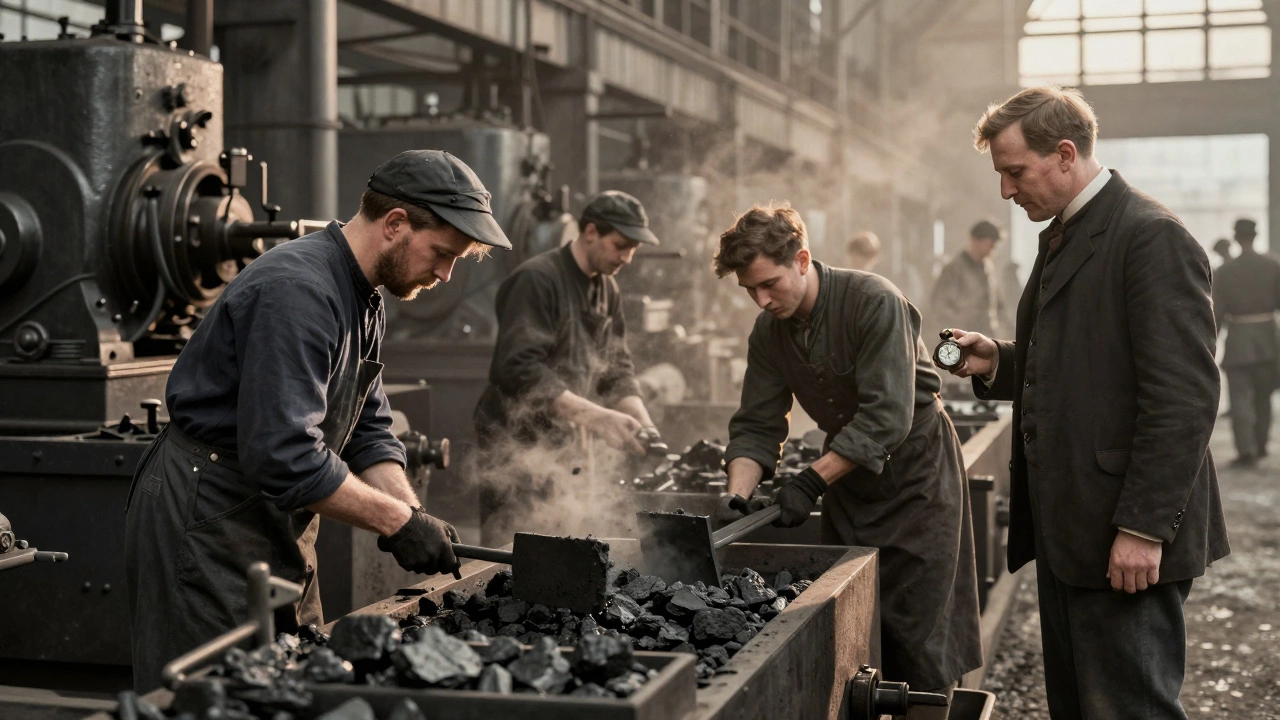
Before smartphones, before email, before agile sprints - there was Frederick Winslow Taylor. In the early 1900s, factories were chaotic. Workers did tasks the way they always had, with little thought to speed, consistency, or waste. Taylor didn’t care about tradition. He cared about numbers. He watched workers, timed their motions, and asked: What if we could do this better? His answer became the foundation of modern workplace efficiency - and it still shapes how teams work today.
The Four Core Principles of Taylor’s Scientific Management
Taylor didn’t just suggest improvements. He built a system. Four clear rules. No fluff. No guesswork. Just science applied to labor.
- Replace rule-of-thumb work methods with scientific analysis. Before Taylor, bosses relied on experience. A foreman knew a worker who was fast with a hammer - so he gave him more hammers. Taylor said: don’t guess. Time every motion. Measure every step. Record how long it takes to swing a pickaxe, shovel coal, or assemble a gear. Then find the one best way - the most efficient path - and make everyone follow it.
- Scientifically select, train, and develop each worker. Taylor rejected the idea that any worker could do any job. He believed people had different strengths. One person might be great at lifting heavy loads. Another might have steady hands for fine assembly. He insisted managers find the right person for each task - then train them to do it perfectly. No more hiring whoever showed up. No more hoping someone "has a knack" for it.
- Bring together scientific knowledge and worker expertise through close cooperation. This one is often missed. Taylor didn’t want to replace workers with machines. He wanted managers and workers to work as a team. Managers brought the data, the timing, the optimal methods. Workers brought the real-world feedback: "This grip hurts," or "The tool slips when it’s hot." Taylor said: listen to them. Adjust the process. Make it work for the person doing it.
- Divide work and responsibility equally between management and workers. Management’s job? Plan. Measure. Optimize. Train. Workers’ job? Execute. Follow the plan. Report problems. Taylor flipped the old model. Before, managers told workers what to do and left them alone. Taylor said: if management wants results, they need to own the system. Workers don’t need to figure out how to be efficient - management must design it for them.
Why These Principles Mattered - and Still Do
Taylor’s ideas didn’t just change factories. They changed how we think about work itself. Before him, productivity was seen as something that came from hard work. After him, productivity became something you could engineer.
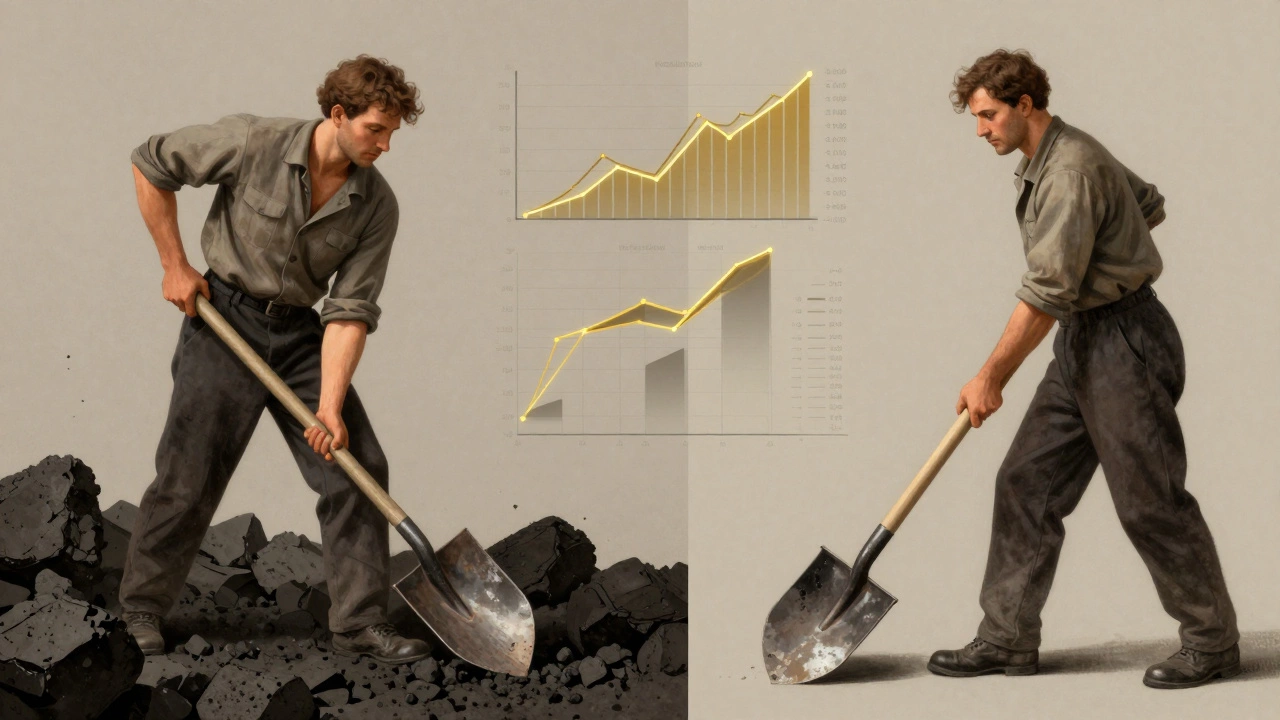
At the Bethlehem Steel plant, Taylor studied shoveling. He tested 40 different shovel designs. He found that the optimal shovel held 21.5 pounds of material - not more, not less. Too light? Workers got tired from too many lifts. Too heavy? They couldn’t swing it fast enough. He trained workers to use the right shovel for the right material. Productivity jumped 300%. Wages went up. The company saved money.
That’s the power of the first principle: replace guesswork with data. Today, that’s exactly what Google does when it A/B tests button colors. Or what Amazon does when it times how long it takes a warehouse worker to pick an item. Taylor’s method is alive in every efficiency metric, every time-tracking app, every workflow automation tool.
Where Taylor’s Theory Falls Short
But Taylor’s system had a dark side. Critics called it dehumanizing. Workers felt like cogs. If you didn’t hit the target time, you were fired. If you questioned the method, you were silenced. In some factories, supervisors used stopwatches to catch workers "slacking."
Taylor didn’t care about job satisfaction. He cared about output. He didn’t design for creativity, teamwork, or morale. He designed for control. And that’s why his ideas were later challenged by human-centered approaches - like Elton Mayo’s Hawthorne Studies - which showed that workers performed better when they felt seen, heard, and respected.
Modern workplaces don’t follow Taylor blindly. But they don’t throw him out either. The best teams today use his data-driven mindset - without his authoritarian style. They measure performance, but they also ask: "How does this affect you?" They optimize workflows, but they let workers suggest improvements.
How Taylor’s Principles Live On Today
You don’t need a factory to see Taylor’s influence.
- Software teams use time-tracking tools like Jira and Toggl - not to punish, but to find bottlenecks. That’s scientific analysis.
- Companies hire specialists for specific roles - frontend devs, QA testers, DevOps engineers - instead of expecting everyone to do everything. That’s scientific selection.
- Agile retrospectives? That’s Taylor’s third principle: managers and workers collaborating to improve the process.
- Managers now spend more time on training, onboarding, and process design than just giving orders. That’s the fourth principle: shared responsibility.
Even in healthcare, Taylor’s legacy shows up. Hospitals time how long it takes to move a patient from ER to ICU. They standardize checklists for surgeries. They train nurses using simulation labs. All of it - rooted in Taylor’s belief that work can be studied, improved, and repeated.

What Taylor Teaches Us About Collaboration
Science collaboration isn’t just about researchers sharing data. It’s about aligning how people work together. Taylor showed that collaboration isn’t just about talking. It’s about designing systems where everyone knows their role, has the right tools, and can improve the process together.
His biggest lesson? Efficiency isn’t about working harder. It’s about working smarter - together.
Today’s teams don’t need stopwatches. But they still need clarity. They still need data. They still need to ask: "Is this the best way?" And they still need to trust that the person doing the work has the insight to say: "No, here’s how we can do it better."
What are the four principles of Taylor’s scientific management?
The four principles are: (1) Replace rule-of-thumb methods with scientific analysis; (2) Scientifically select, train, and develop each worker; (3) Bring together scientific knowledge and worker expertise through close cooperation; and (4) Divide work and responsibility equally between management and workers. These principles aim to maximize efficiency by removing guesswork and creating standardized, optimized workflows.
Is Taylor’s theory still relevant today?
Yes, but not in its original form. Modern workplaces use Taylor’s data-driven approach - like time studies, process optimization, and role specialization - but without his rigid control. Today’s teams combine his focus on efficiency with human-centered practices like feedback loops, autonomy, and psychological safety. Tools like Jira, Toggl, and agile retrospectives are direct descendants of his ideas.
Did Taylor’s methods improve worker satisfaction?
Not always. In Taylor’s original system, worker satisfaction was secondary to output. Managers often used stopwatches and strict quotas, which led to resentment and burnout. Later studies, like the Hawthorne Experiments, showed that workers performed better when they felt valued and heard - a lesson modern management has since adopted. Today, efficiency without empathy fails.
How did Taylor’s theory change factory work?
Taylor transformed factories from chaotic, experience-based environments into engineered systems. At Bethlehem Steel, he increased shoveling efficiency by 300% by testing shovel designs and matching workers to optimal tools. He introduced standardized procedures, specialized roles, and performance metrics - laying the groundwork for mass production and modern operations management.
What’s the difference between Taylor’s theory and modern teamwork?
Taylor’s model was top-down: management designed the system, workers followed it. Modern teamwork is collaborative: workers help design the system. Today’s teams use data from Taylor’s principles - but add feedback, experimentation, and autonomy. The goal isn’t just to increase output - it’s to create sustainable, engaging, and adaptable work.
What Comes After Taylor?
Today, we’re moving beyond efficiency alone. We care about innovation, well-being, and adaptability. But Taylor gave us the first real tool to ask: "How do we know this is the best way?"
That question still matters. Whether you’re managing a lab, a startup, or a hospital shift - if you want to improve, you need to measure. You need to test. You need to listen. You need to design work that works.
Taylor didn’t have all the answers. But he asked the right first question - and that’s why his four principles still matter.