Power Plant Lifespan Calculator
Compare the operational longevity of different energy sources based on design life and extension potential.
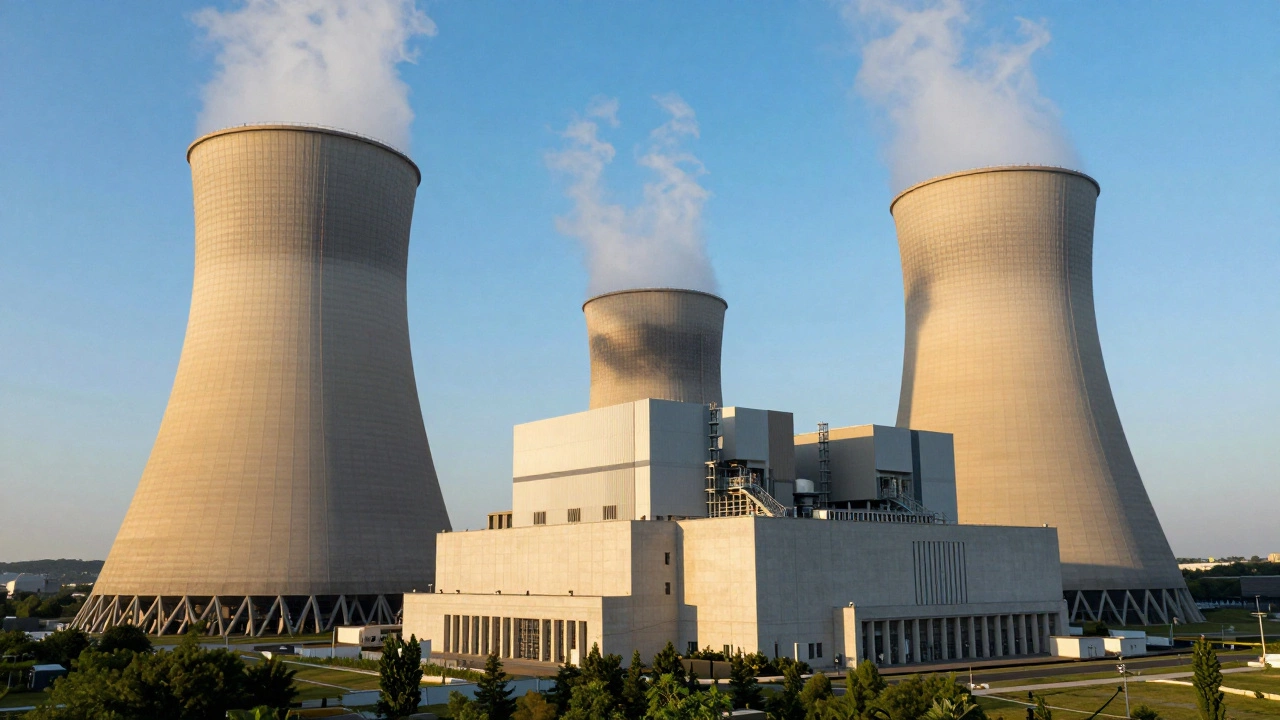
Imagine building a machine that keeps running for over a century without needing a complete rebuild. Sounds like science fiction, right? In the world of electricity generation, it’s actually the reality for one specific type of facility. When you ask which power plant will have the highest operating life, the answer isn't the solar farm on your neighbor's roof or the wind turbine spinning in the distance. It’s the nuclear power plant, which is a facility that uses nuclear fission to generate heat and produce electricity, known for its exceptional structural longevity and operational lifespan extending up to 100 years.
We often think about energy in terms of cost per kilowatt-hour or carbon emissions. But there is another metric that matters deeply for grid stability and long-term investment: how long does the hardware last? If you are planning infrastructure for the next half-century, knowing the durability of different energy sources is crucial. Let’s break down the lifespans of major power generation technologies, from the ancient coal plants to the futuristic small modular reactors.
The Centurion: Nuclear Power Plants
Nuclear energy stands alone when it comes to sheer duration. A typical nuclear reactor is designed with a license period of 40 to 60 years. However, this is just the starting point. Thanks to advanced materials and rigorous maintenance protocols, many operators are successfully extending these licenses. The U.S. Nuclear Regulatory Commission (NRC) has approved lifetime extensions to 80 years for dozens of reactors. More importantly, engineers are designing next-generation plants specifically for 100-year operational lives.
Why do they last so long? It comes down to construction quality. Nuclear containment structures are built like bunkers. They use thick reinforced concrete and steel designed to withstand extreme pressures, earthquakes, and even aircraft impacts. This robustness means the physical shell of the plant outlasts almost any other industrial structure. While the internal components-like fuel rods and control mechanisms-need regular replacement, the core infrastructure remains intact for generations.
Consider the case of the Oskarshamn 3 reactor in Sweden. Originally licensed for 40 years, it operated well beyond that before being retired for economic reasons rather than technical failure. Similarly, plants in France and Japan routinely operate for 50+ years with high availability rates. The key takeaway here is that nuclear plants are not just energy sources; they are long-term civil engineering projects that pay dividends in stability over decades.
The Workhorse: Conventional Thermal Plants
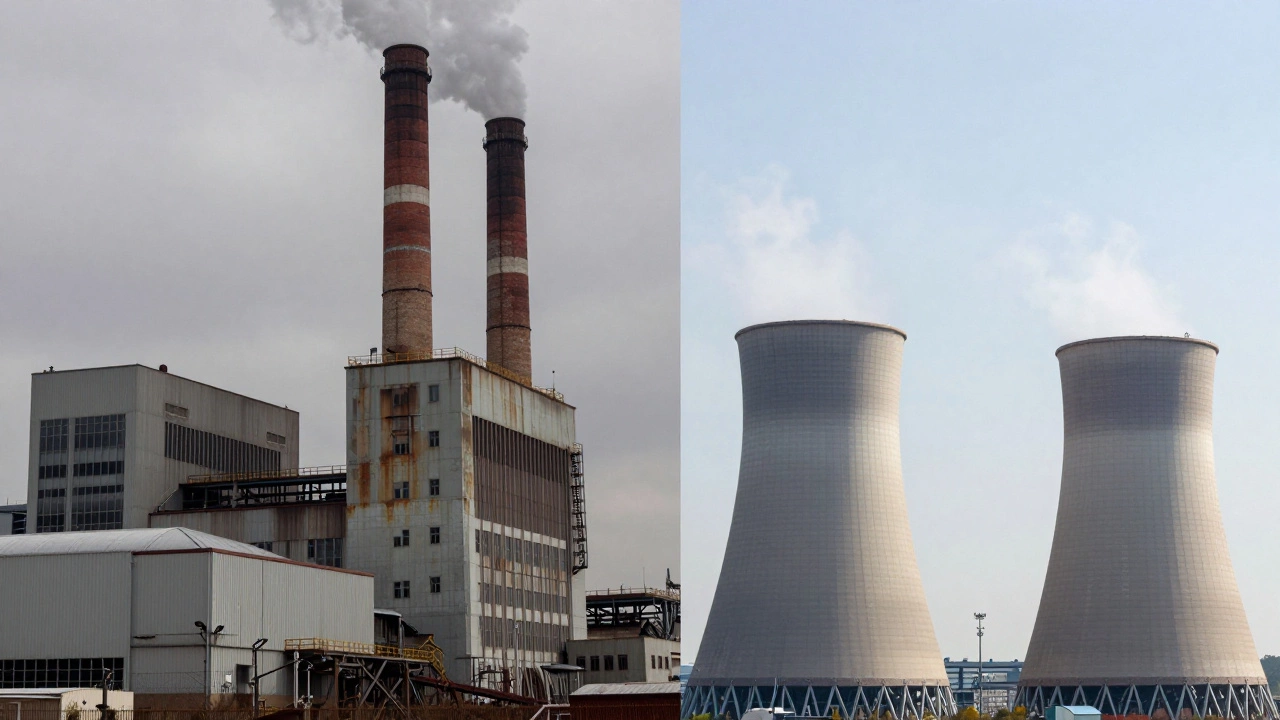
If nuclear is the marathon runner, conventional thermal plants-specifically coal and natural gas-are the sprinters who keep getting pushed to run longer. These plants burn fossil fuels to create steam, which spins turbines. Historically, a coal-fired power plant was expected to last between 30 and 40 years. Natural gas combined-cycle plants usually had a slightly shorter horizon, around 25 to 30 years.
However, the definition of "operating life" is shifting due to environmental regulations. Many coal plants in Europe and North America are being decommissioned early, not because they broke down, but because they became too expensive to comply with carbon limits. Yet, technically, the boilers and turbines can still function. With modern upgrades, some coal plants have been kept running for 50 years or more. The wear and tear from constant heating and cooling cycles is significant, but metallurgy has improved enough to handle it.
Natural gas plants face a different challenge. They are simpler and cheaper to build, which sometimes leads to lighter construction standards. But their flexibility allows them to survive in markets where renewables are intermittent. They act as backup, turning on and off frequently. This cycling stresses the equipment differently than steady-state operation. Despite this, a well-maintained gas turbine can deliver reliable service for three decades, making them a solid mid-tier option for longevity compared to pure renewables.
The Fragile Giants: Wind and Solar
Now let’s look at the stars of the renewable revolution: wind turbines and solar panels. Here, we need to separate the technology from the individual components. A wind turbine is a complex mechanical beast. It has blades, gears, generators, and yaw systems exposed to harsh weather. The industry standard for a wind turbine’s operational life is typically 20 to 25 years. After that, the gearbox often fails, and the blades become brittle due to UV exposure and fatigue. Replacing these parts is costly, and often, it makes more sense to replace the entire turbine.
Solar photovoltaic (PV) systems tell a slightly different story. The panels themselves are passive devices with no moving parts. Manufacturers usually guarantee performance for 25 to 30 years. In practice, many panels continue to generate electricity well beyond that mark, albeit at reduced efficiency. A panel installed in 1990 might still be producing power today, but it won’t hit its original peak output. The inverters, however, are the weak link. These electronic boxes convert DC to AC power and typically need replacing every 10 to 15 years.
So, while the *site* of a solar farm might remain active for 40 years, the actual hardware undergoes significant turnover. You aren’t getting a single unit that lasts a century. You’re getting a system that requires periodic refreshes. This contrasts sharply with the nuclear model, where the core structure remains largely unchanged for the same period.
The Heavyweights: Hydroelectric Dams
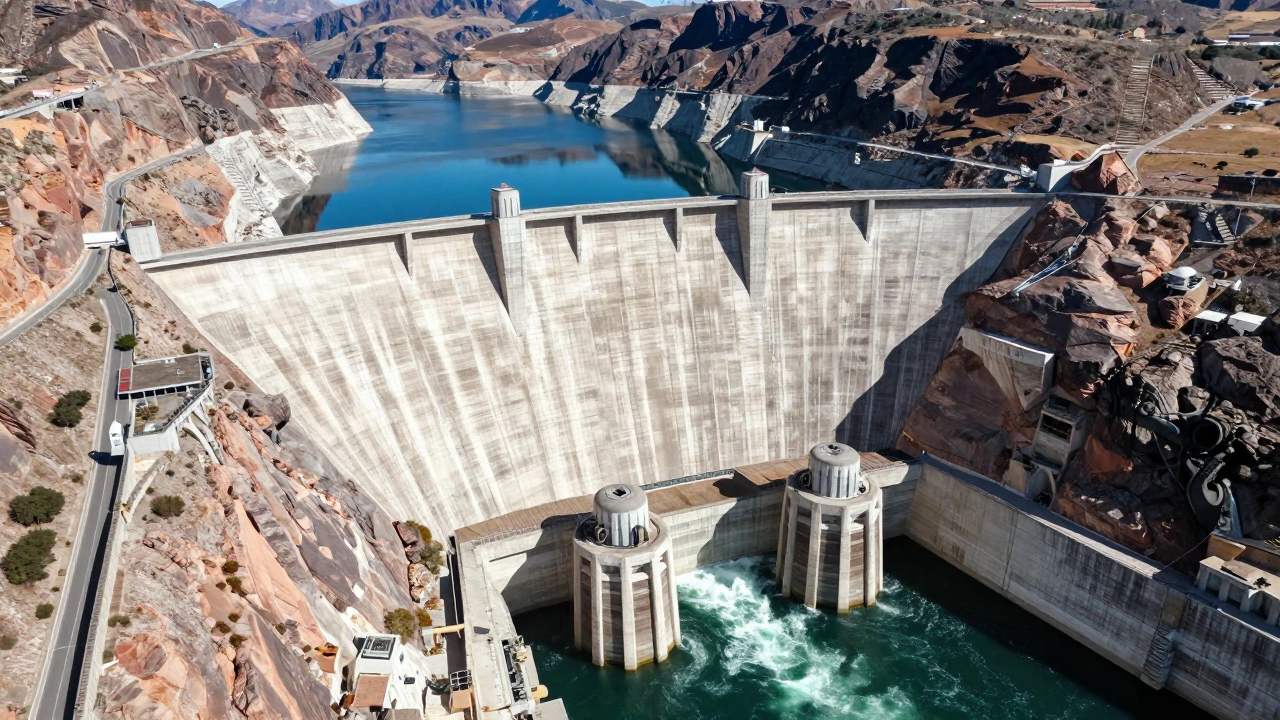
We cannot discuss long-lasting power plants without mentioning hydroelectricity. Large dams are arguably the most durable energy infrastructure ever built. Concrete gravity dams, like the Hoover Dam or the Three Gorges Dam, are designed to last indefinitely. Their structural lifespan often exceeds 100 years, with some older dams operating for over a century after minor repairs.
The limitation isn’t the dam itself, but the electromechanical equipment inside-the turbines and generators. These components suffer from erosion caused by water-borne sediment and cavitation. Typically, turbines need major refurbishment every 20 to 30 years. However, because the civil structure (the dam) is so massive and permanent, the overall facility continues to operate seamlessly. From an investor’s perspective, a hydro plant offers the longest continuous service life, rivaling nuclear energy in total duration but differing in maintenance patterns.
Comparing Operating Lifespans
To visualize the differences, let’s look at a direct comparison of expected operational lifetimes for various power generation technologies. Note that these figures represent the typical design life before major overhaul or decommissioning becomes economically necessary.
| Power Plant Type | Typical Design Life | Extended Potential | Key Limiting Factor |
|---|---|---|---|
| Nuclear Power Plant | 40-60 years | 80-100+ years | Regulatory licensing & component aging |
| Hydroelectric Dam | 50-100 years | Indefinite (structure) | Turbine erosion & sedimentation |
| Coal-Fired Plant | 30-40 years | 50-60 years | Environmental regulations & boiler wear |
| Natural Gas Plant | 25-30 years | 40 years | Turbine degradation & cycling stress |
| Wind Turbine | 20-25 years | 30 years (with upgrades) | Blade fatigue & gearbox failure |
| Solar PV System | 25-30 years | 40+ years (panels only) | Inverter failure & efficiency drop |
Why Longevity Matters for the Grid
You might wonder why we care if a plant lasts 20 years versus 80 years. The answer lies in grid inertia and capital recovery. Building a power plant is incredibly expensive. A nuclear plant can cost billions upfront. If it runs for 80 years, the annualized cost of that capital investment drops significantly. Shorter-lived assets like wind and solar require frequent reinvestment. Every time a turbine blade cracks or a solar inverter dies, money leaves the system.
Furthermore, long-lived plants provide baseline stability. They don’t fluctuate with the weather. A nuclear or hydro plant provides consistent baseload power, allowing grid operators to plan decades ahead. Renewable sources, while clean, introduce variability. To compensate, grids need backup capacity-often from shorter-lived gas plants or battery storage systems, which also have limited lifespans (batteries degrade after 10-15 years).
As we transition to cleaner energy, we face a dilemma. We want the low-carbon benefits of renewables, but we lose the durability of traditional baseload sources. Small Modular Reactors (SMRs) aim to bridge this gap. These next-gen nuclear units promise the longevity of traditional nuclear power with faster deployment times and enhanced safety features. If successful, they could dominate the long-term energy landscape for the rest of the century.
Maintenance vs. Replacement: The Hidden Cost
A critical distinction in "operating life" is whether the plant stays online through maintenance or requires full replacement. For a nuclear plant, refueling outages happen every 18-24 months. During this time, the plant is offline, but the structure remains. For a solar farm, the panels stay, but the inverters change. For a wind farm, the towers stay, but the nacelles (housing the generator) are swapped out.
This means that while a "solar park" might exist for 40 years, the actual machinery generating the power has been replaced once or twice. In contrast, a nuclear reactor vessel might never be replaced during its entire operational history. This difference affects waste management, supply chains, and skilled labor requirements. Keeping old nuclear plants running requires specialized technicians who understand legacy systems. Replacing wind turbines requires a steady stream of new manufacturing capacity.
Can nuclear power plants really last 100 years?
Yes, many modern nuclear reactors are designed with a 60-year license initially, with provisions for extension to 80 or even 100 years. The limiting factor is usually regulatory approval and economic viability rather than physical impossibility. Countries like the US and France are actively pursuing these extensions to maximize return on investment and ensure grid stability.
What happens to wind turbines after 25 years?
After 25 years, most wind turbines reach the end of their optimal economic life. The blades often show signs of fatigue and may need replacement. Gearboxes and generators may also fail. Operators can choose to repower the site by installing newer, more efficient turbines on the existing foundations, or decommission the site entirely. Recycling composite blade materials remains a challenge.
Are hydroelectric dams truly indefinite in lifespan?
The concrete structure of large gravity dams can indeed last indefinitely if maintained properly. However, the mechanical components like turbines and gates require regular replacement due to wear from water flow and sediment. Additionally, reservoirs can fill with silt over decades, reducing capacity. So while the dam stands forever, the power generation capability needs periodic mechanical renewal.
Why do solar panels lose efficiency over time?
Solar panels degrade due to exposure to sunlight, temperature fluctuations, and moisture. This process, known as Light-Induced Degradation (LID) and Potential-Induced Degradation (PID), causes a gradual drop in power output. Most manufacturers guarantee 80% of original output after 25 years. While they still produce electricity, they are less efficient, making replacement economically attractive sooner rather than later.
How does climate change affect power plant lifespans?
Climate change poses risks to all power plants. Higher temperatures reduce the efficiency of thermal plants (coal, gas, nuclear) because cooling water is warmer. Extreme weather events like hurricanes and floods can damage wind turbines and solar farms. Conversely, droughts reduce hydroelectric output. Resilience engineering is becoming a key part of extending plant lifespans in a changing climate.