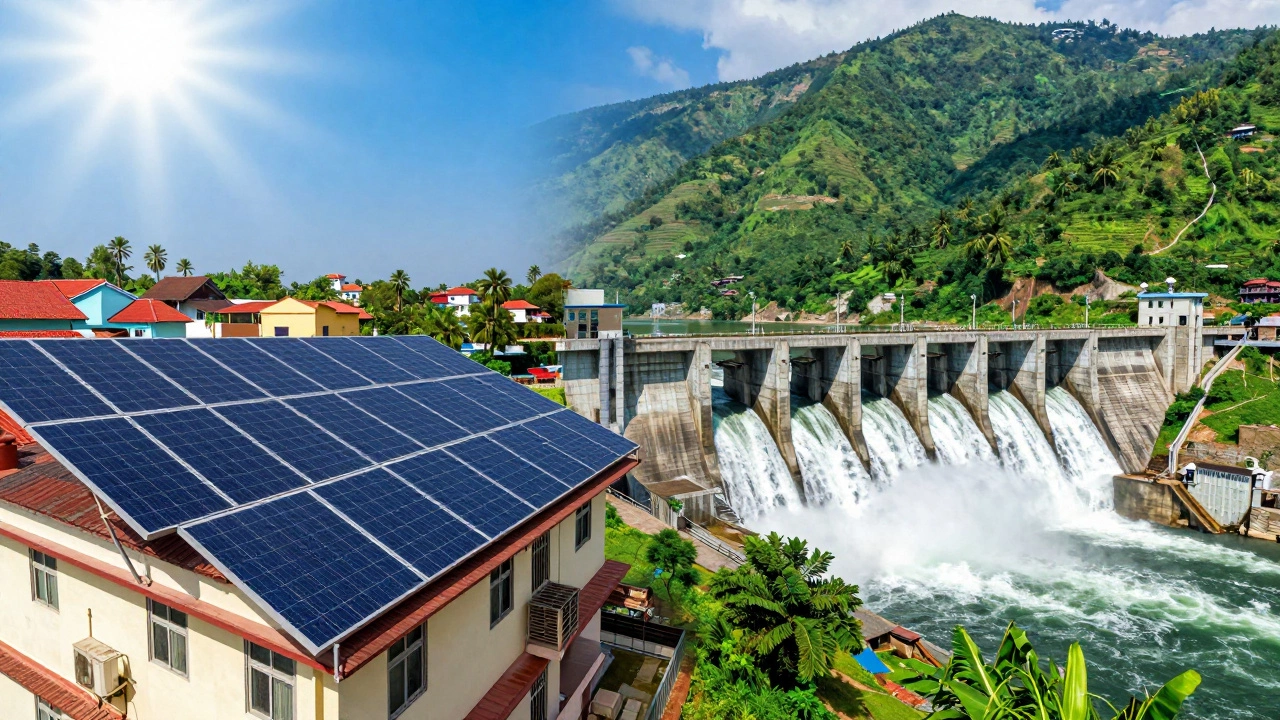
Renewable Energy Effectiveness Calculator
Quick Reference
Solar PV: 15-22% efficiency
Average cost: $0.03-$0.08/kWh
Wind: 35-50% capacity factor
Best in windy regions
Hydro: 90%+ efficiency
Location dependent
There is no single "best" renewable energy source. That’s the first thing you need to know if you’re trying to pick a winner for your home, business, or country. The most effective renewable energy depends entirely on where you are, what time of year it is, and how much space you have. In 2026, the conversation has shifted from "which one is greenest?" to "which one delivers reliable power at the lowest cost per kilowatt-hour?"
If you live in Arizona, solar is king. If you’re in Texas or offshore in the North Sea, wind takes the crown. And if you’re in Norway or parts of India with massive river systems, hydropower remains the steady backbone. This guide breaks down the real-world effectiveness of the major players-solar, wind, hydro, geothermal, and biomass-so you can stop guessing and start planning based on hard data.
The Efficiency Trap: Why Conversion Rates Don’t Tell the Whole Story
When people ask about effectiveness, they often look at conversion efficiency. They see that Solar Photovoltaic (PV) panels convert only 15% to 22% of sunlight into electricity and think, "That’s bad." But here’s the catch: the sun is free. You don’t pay for the photons that miss the panel. Wind turbines, by contrast, capture kinetic energy from air movement, which is also free, but their blades face physical limits due to aerodynamics.
Hydropower is different. It uses the gravitational potential energy of falling water. Because water is dense, hydroelectric dams can achieve efficiencies of over 90%. That sounds incredible, but building a dam is expensive, ecologically disruptive, and limited to specific geographic locations. You can’t just put a dam anywhere. So, while hydro is technically the most efficient at converting natural force into electricity, it isn’t the most *effective* solution for everyone because of its high upfront costs and environmental impact.
To judge true effectiveness, we need to look at three metrics:
- Levelized Cost of Energy (LCOE): How much does it cost to generate one unit of electricity over the system's lifetime?
- Capacity Factor: How often does the plant actually produce power compared to its maximum potential?
- Intermittency: Can you rely on it when the grid needs it most?
Solar Power: The Scalability Champion
In 2026, Solar Energy is the undisputed leader in new installations globally. Why? Because it scales beautifully. You can install a 5kW system on your rooftop in Bangalore, or build a 5GW farm in Rajasthan. The technology works at both extremes.
The cost of solar modules has plummeted. We are seeing LCOE figures for utility-scale solar drop below $0.03 per kWh in sunny regions. For homeowners, the payback period is now often under five years in many Indian states due to net metering policies. However, solar’s biggest weakness is intermittency. The sun doesn’t shine at night. Cloud cover reduces output significantly. Without battery storage, solar alone cannot provide baseload power-the constant minimum level of demand on an electrical grid.
That’s why the effectiveness of solar is increasingly tied to storage. Lithium-ion batteries have become cheaper, but solid-state batteries and flow batteries are emerging as better long-term solutions for grid-scale storage. If you’re evaluating solar for effectiveness, you must include the cost of storage in your calculation. A solar panel without a battery is like a car without a gas tank-it only works when you’re filling it up.
Wind Power: The Night Shift Worker
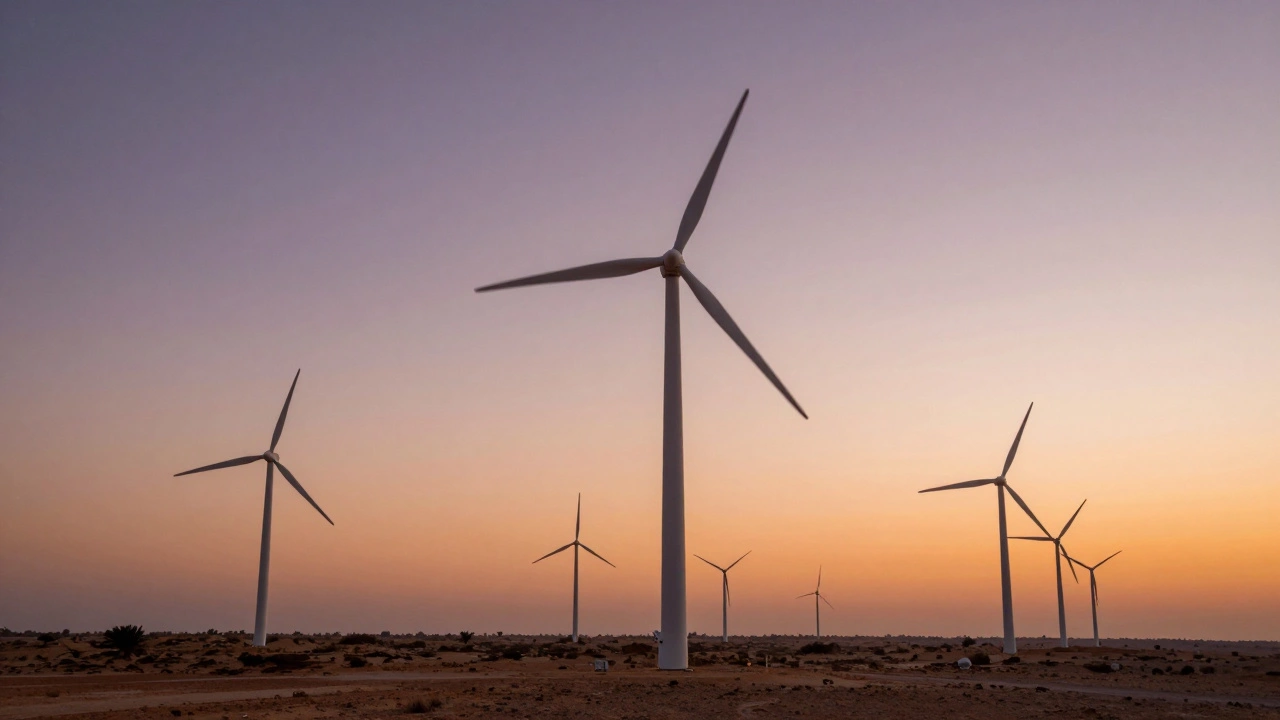
Where solar sleeps, Wind Energy often wakes up. Wind patterns are less predictable than the sun’s daily cycle, but they frequently peak during evening hours when solar drops off. This complementarity makes wind and solar a powerful pair.
Onshore wind is mature and cheap. Turbines today are taller, with larger rotors that can capture slower winds. This increases their capacity factor-the percentage of time they are generating power. Modern onshore turbines can achieve capacity factors of 40-50% in good sites. Offshore wind is even more consistent. Winds over the ocean are stronger and steadier, allowing offshore farms to reach capacity factors above 50%. However, offshore projects are far more expensive to build and maintain. Subsea cables, corrosion-resistant materials, and specialized installation vessels drive up the price tag.
For countries with long coastlines or vast plains, wind is highly effective. For dense urban areas, it’s impractical. Small-scale residential wind turbines rarely make economic sense unless you live in a consistently windy rural area. The noise, visual impact, and maintenance issues usually outweigh the benefits for individual homes.
Hydropower: The Grid Stabilizer
Hydropower is the old guard of renewables. It provides something solar and wind struggle with: inertia. Large spinning generators in hydro plants help stabilize the frequency of the electrical grid. When demand spikes, hydro can ramp up production in minutes. Solar and wind take longer to adjust, especially if they are connected via inverters that decouple them from the grid’s mechanical rhythm.
Pumped storage hydro is essentially a giant battery. During times of low demand (like the middle of the night), excess electricity pumps water uphill into a reservoir. When demand peaks, the water is released downhill through turbines. This technology currently accounts for the majority of global energy storage. Its effectiveness lies in reliability, not novelty. But new large-scale dam projects are facing intense scrutiny. Environmental regulations are stricter, and social opposition is higher. The era of massive, ecosystem-altering dams is largely over. Future hydro growth will come from run-of-river projects and upgrading existing facilities.
Geothermal and Biomass: The Niche Players
Geothermal Energy taps into the Earth’s internal heat. It’s available 24/7, making it a baseload power source like nuclear or coal. But it’s geographically restricted. You need volcanic activity or hot rock formations near the surface. Iceland runs almost entirely on geothermal and hydro. In most of the world, including most of India, geothermal resources are too deep or too cool to be economically viable for electricity generation. Enhanced Geothermal Systems (EGS) aim to change this by fracturing hot dry rocks, similar to fracking, but the technology is still risky and expensive.
Biomass Energy burns organic material-wood, agricultural waste, landfill gas-to create heat and electricity. It’s dispatchable, meaning you can turn it on when needed. But it’s controversial. Burning biomass releases CO2, even though the plants absorbed it while growing. Critics argue this isn’t truly carbon-neutral if the regrowth takes decades. Biomass is most effective when it uses waste products that would otherwise decompose and release methane, a potent greenhouse gas. It’s a waste-management solution that happens to generate power, rather than a primary energy strategy.
Comparison: Which Source Wins Where?
| Source | Avg. Capacity Factor | LCOE Trend (2026) | Best Use Case | Main Limitation |
|---|---|---|---|---|
| Solar PV | 15-25% | Very Low | Rooftops, Arid Regions | Nighttime/Clouds |
| Onshore Wind | 35-50% | Low | Plains, Coastal Areas | Intermittent, Noise |
| Offshore Wind | 45-60% | Moderate-High | Coastal Nations | High Installation Cost |
| Hydropower | 40-60% | Low (Existing) | Grid Stability, Storage | Geographic Limits |
| Geothermal | 70-90% | High | Volcanic Regions | Location Specific |
The Real Answer: Hybrid Systems
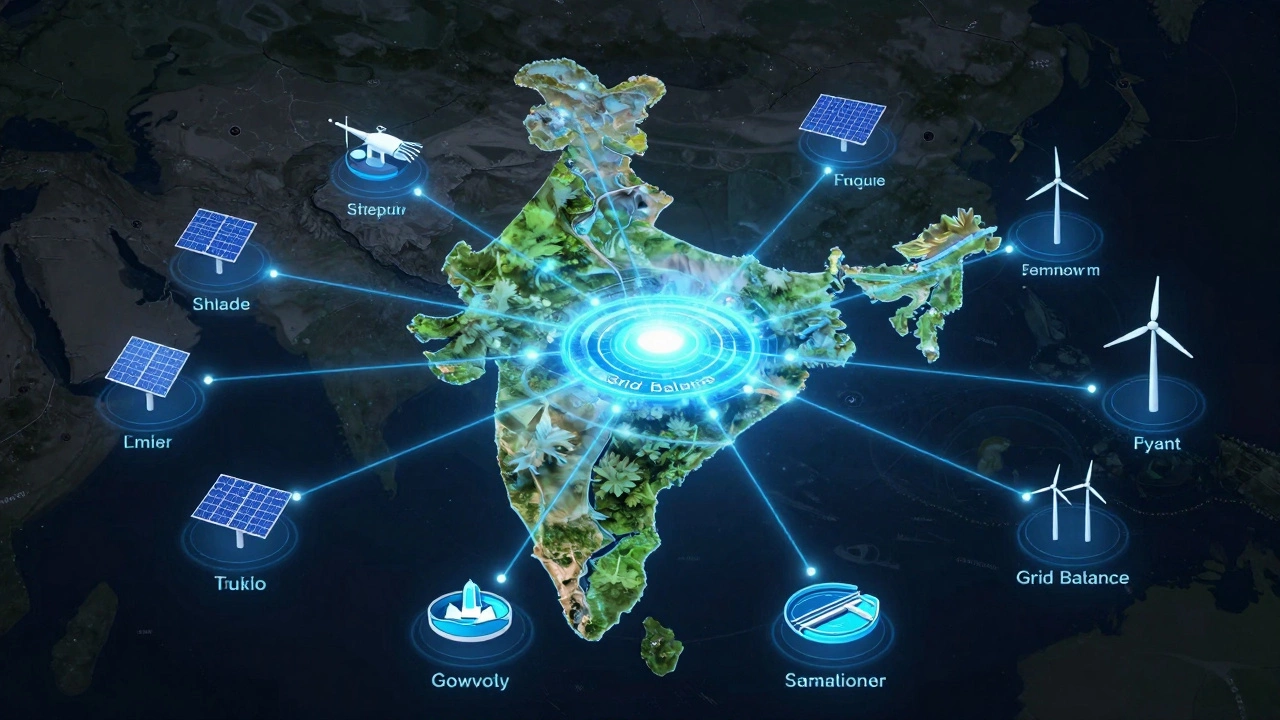
So, which is most effective? The answer is a mix. No single renewable source can power a modern civilization alone. The most effective strategy in 2026 is a hybrid grid. Imagine a system where solar powers your day, wind picks up in the evening, hydro or batteries handle the night peak, and geothermal provides a steady baseline if available.
This approach smooths out the intermittency problems. When the sun is weak, the wind might be strong. When both are low, stored energy or dispatchable hydro kicks in. Countries like Denmark and Germany have shown that you can run grids with high percentages of variable renewables by investing in interconnectors (cables connecting to neighboring grids) and flexible demand management.
For individuals, this means looking at your local context. If you’re in a sunny city, solar is your best bet. If you’re in a windy rural area, wind might work. But for national policy, the focus must be on integration. Building smart grids that can balance these diverse inputs is just as important as building the power plants themselves.
Future Outlook: What Changes by 2030?
Technology moves fast. By 2030, we expect perovskite solar cells to boost efficiency beyond 30%, making solar effective even in cloudy climates. Green hydrogen, produced using excess renewable electricity to split water, will allow us to store energy for weeks or months, solving the seasonal storage problem. Floating solar farms on reservoirs will save land and reduce evaporation. These innovations won’t replace the current leaders; they will enhance their effectiveness.
The goal isn’t to find one perfect source. It’s to build a resilient, diversified portfolio that keeps the lights on, lowers emissions, and stays affordable. That’s the true measure of effectiveness.
Is solar or wind more effective for home use?
For most homes, solar is more effective. Rooftop space is readily available, and solar panels are modular and quiet. Residential wind turbines require significant height and consistent wind speeds that few neighborhoods offer. Solar also integrates easier with standard household batteries.
Why is hydropower considered more efficient than solar?
Hydropower converts over 90% of available energy into electricity, whereas solar panels typically convert 15-22%. However, efficiency isn't everything. Hydropower requires massive infrastructure and specific geography, while solar can be deployed almost anywhere with sunlight.
Can renewable energy provide baseload power?
Individually, solar and wind are intermittent. However, when combined with large-scale battery storage, pumped hydro, or geothermal, a renewable grid can provide reliable baseload power. The key is diversity and storage, not relying on a single source.
What is the cheapest renewable energy source in 2026?
Utility-scale solar PV and onshore wind are generally the cheapest sources of new electricity generation in most parts of the world, with LCOE often lower than new coal or gas plants. Existing hydropower is also very cheap to operate.
Does weather affect the effectiveness of renewables?
Yes, significantly. Solar output drops with cloud cover, and wind output varies with atmospheric conditions. This is why geographic diversification and grid interconnection are critical. A storm in one region might mean calm winds elsewhere, balancing the supply.