Wood Energy Calculator
How Much Wood Would Power Your Energy Needs?
This calculator shows the massive amount of wood needed to match modern energy sources. Based on data from the article, wood produces 15-18 MJ/kg, while coal produces 24-30 MJ/kg and natural gas 50-55 MJ/kg.
- Wood: 16.5 MJ/kg (midpoint)
- Coal: 27 MJ/kg (midpoint)
- Natural gas: 52.5 MJ/kg (midpoint)
- Solar: 0.5 kW/acre (average output)
Wood Energy Requirements
Enter energy value to see results
Health and Environmental Impact
Wood burning produces harmful pollutants including PM2.5, carbon monoxide, and benzene. The WHO estimates over 3.2 million premature deaths annually from indoor air pollution from wood burning. Wood combustion emits more pollutants per unit of energy than any mainstream fuel.
Modern Alternative Comparison
To generate the same energy, modern alternatives require far less land and resources:
Wood was once the main source of energy for humans. For thousands of years, we burned it to cook food, stay warm, and power early industries. Even today, over 2 billion people around the world still rely on wood and other biomass for heating and cooking. So why don’t we use wood as a major energy source in modern power grids, factories, or electric systems? The answer isn’t about scarcity-it’s about efficiency, health, and scale.
Wood Burns, But Not Well
When you light a log on fire, you get heat. That’s simple. But how much energy do you actually get out? A kilogram of dry wood produces about 15-18 megajoules of energy. That sounds impressive until you compare it to coal, which gives you 24-30 megajoules per kilogram, or natural gas, which delivers 50-55 megajoules per kilogram when burned as methane. Wood just doesn’t pack the same punch.
And it’s not just about energy density. Wood burns slowly and unevenly. You need constant feeding to keep a fire going. Modern power plants need steady, controllable heat to generate electricity efficiently. You can’t run a turbine on a campfire. Even advanced biomass plants that burn wood pellets require massive preprocessing-drying, grinding, compressing-and still struggle to match the reliability of gas or nuclear plants.
Smoke Is the Real Problem
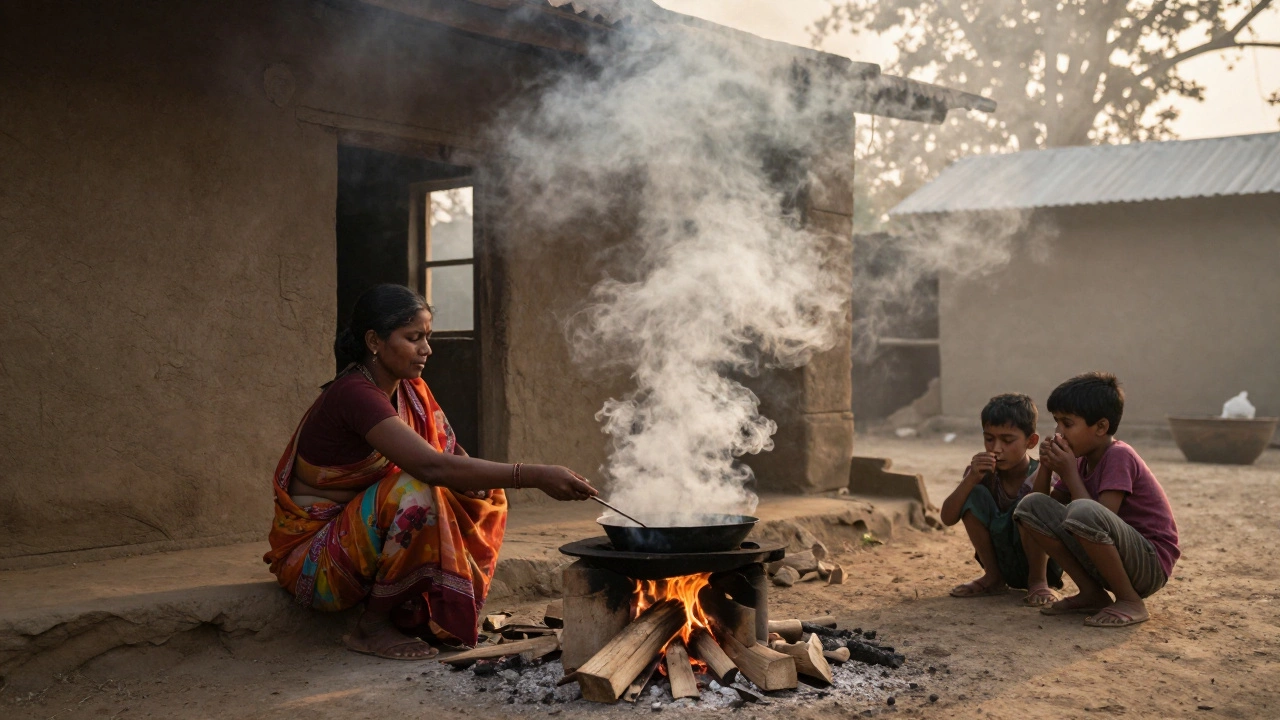
Every time wood burns, it releases smoke. That smoke isn’t just visible-it’s deadly. It contains fine particulate matter (PM2.5), carbon monoxide, benzene, formaldehyde, and other toxins. The World Health Organization estimates that indoor air pollution from burning wood and other solid fuels causes over 3.2 million premature deaths every year. Most of those deaths happen in low-income households in India, Sub-Saharan Africa, and Southeast Asia, where families cook over open fires or basic stoves.
Even in places with advanced air filters, wood combustion still emits more pollutants per unit of energy than any other mainstream fuel. Modern coal plants have scrubbers. Gas plants emit mostly CO₂ and water vapor. But wood? It releases a toxic cocktail that lingers in the air, damages lungs, and worsens asthma and heart disease. No government wanting to improve public health would choose wood as a primary energy source.
Deforestation Isn’t a Myth
You might think: ‘But wood is renewable, right?’ It is-if you manage it carefully. But here’s the catch: trees grow slowly. A pine tree takes 20-30 years to reach harvestable size. A hardwood like oak can take 50-80 years. Meanwhile, the world burns billions of tons of wood every year-not just for energy, but for paper, furniture, and construction.
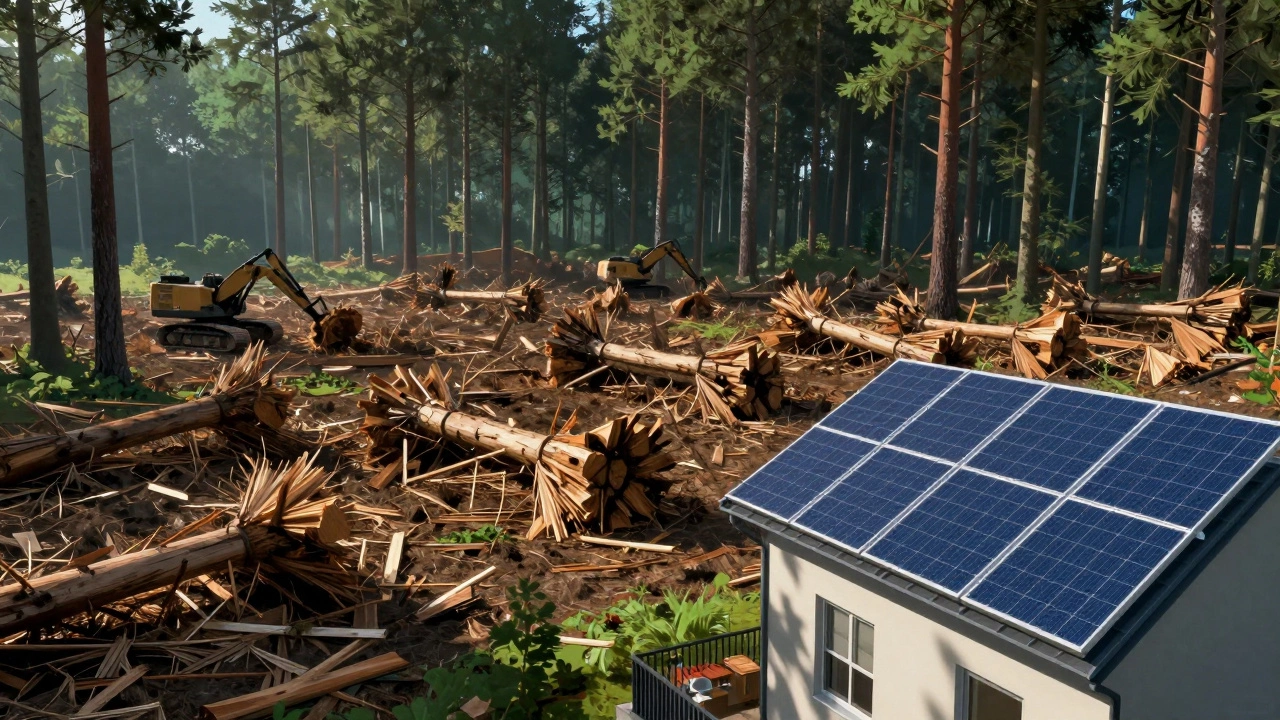
In countries like India and Nigeria, demand for firewood outpaces forest regeneration. The Food and Agriculture Organization reports that over 10 million hectares of forest are lost annually to fuelwood collection. That’s not sustainable. Even in places like Sweden or Canada, where forestry is tightly regulated, wood energy only makes up a small fraction of total energy use-not because it’s inefficient, but because scaling it up would require clearing vast areas of forest, which defeats the purpose of being ‘green’.
Land Use and Competition
Imagine trying to power a city like Bangalore with wood. To generate 1 gigawatt of electricity continuously, you’d need about 3 million tons of dry wood per year. That’s the equivalent of harvesting every tree from a forest the size of 100,000 football fields. Where would you put that forest? Would you cut down food crops? Urban parks? Protected wildlife areas?
Land is already under pressure. We need space for housing, farming, biodiversity, and recreation. Using huge tracts of land just to grow trees for fuel doesn’t make sense when we have better options. Solar panels on rooftops or wind turbines on farmland can produce far more energy per square meter. A single acre of solar panels in Karnataka can generate as much electricity as 20 acres of fast-growing eucalyptus trees-without cutting down anything.
Logistics Are a Nightmare
Coal and gas come in neat packages: trains, pipelines, tankers. Wood? It’s bulky, wet, and messy. You can’t pipe it. You can’t store it for months without it rotting or catching fire. Transporting wood over long distances is expensive and carbon-intensive. A truck carrying wood pellets emits nearly as much CO₂ as the energy those pellets will produce when burned.
Compare that to solar panels, which once installed, need no fuel delivery. Or batteries, which store electricity without moving a single log. In urban centers, where most energy is consumed, bringing in truckloads of wood every day isn’t practical. It’s not just inefficient-it’s chaotic.
Modern Alternatives Are Cheaper and Cleaner
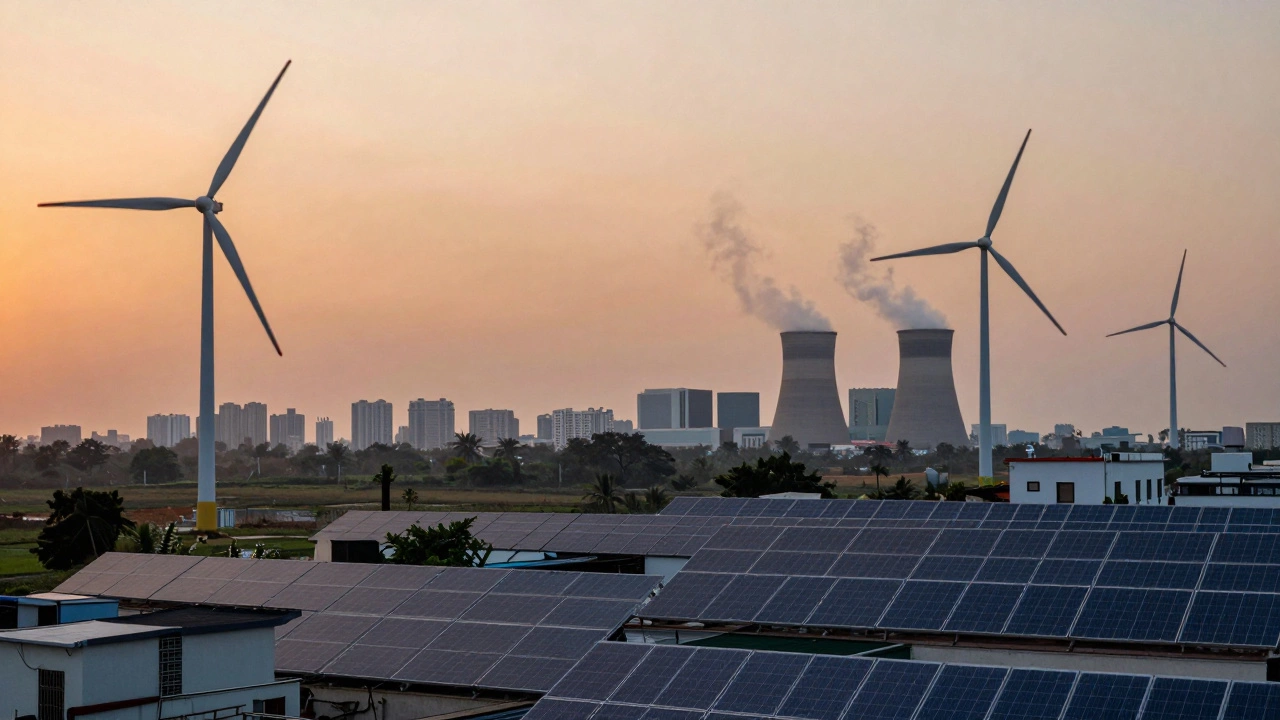
Since 2010, the cost of solar power has dropped by over 80%. In India, utility-scale solar now costs less than ₹2.50 per unit. Wind is even cheaper in some regions. Battery storage is catching up fast. Meanwhile, the cost of collecting, drying, transporting, and burning wood hasn’t changed much in 50 years.
And when you add in the hidden costs-healthcare for respiratory diseases, lost productivity from air pollution, reforestation efforts-the economics of wood energy look worse. Governments and utilities aren’t ignoring wood because they’re stuck in the past. They’re moving away from it because solar, wind, and hydro are now more reliable, cheaper, and healthier.
Wood Still Has a Role-Just Not the One You Think
That doesn’t mean wood has no place in our energy future. In rural areas without grid access, improved cookstoves that burn wood more cleanly can save lives. In industrial zones, waste wood from sawmills or furniture factories can be burned in controlled, high-efficiency boilers to produce steam. Some countries use wood ash as fertilizer, closing the nutrient loop.
But these are niche uses. They’re not replacements for coal or gas in power plants. They’re about reducing waste and improving efficiency where alternatives are still out of reach. The goal isn’t to bring back the fireplace. It’s to use every scrap of biomass smarter-before we even think about burning it.
What’s Next?
The future of renewable energy isn’t about going back to old ways. It’s about using technology to make clean energy more accessible, affordable, and safe. Solar panels on rooftops. Wind turbines over farmland. Hydrogen from electrolysis. Batteries that store sunshine for the night. These aren’t sci-fi ideas-they’re happening now, in villages in Tamil Nadu and cities in Maharashtra.
Wood will always be part of our history. But as a fuel for the 21st century? It’s a relic. Not because we can’t burn it. But because we now know better.