Renewable Energy Matchmaker
Select Your Criteria
Select the factors that apply to your situation to find the most suitable energy sources.
Recommended Sources
Select criteria on the left to see which renewable energy sources match your profile.
Imagine a world where your electricity bill is zero, or at least significantly lower, because the sun and wind are doing the heavy lifting. That future isn't science fiction; it's happening right now through renewable energy. But when people talk about "green energy," they usually just picture solar panels on roofs or giant wind turbines in fields. The reality is much richer and more diverse. There are actually nine distinct types of renewable energy sources, each with its own unique way of harnessing nature's power.
Understanding these nine types is crucial whether you're a homeowner looking to cut costs, a student studying environmental science, or an investor watching the green tech boom. Each source has different strengths, weaknesses, and ideal locations. Let's break down exactly what they are, how they work, and why they matter for our planet's future.
1. Solar Energy: Harnessing the Sun
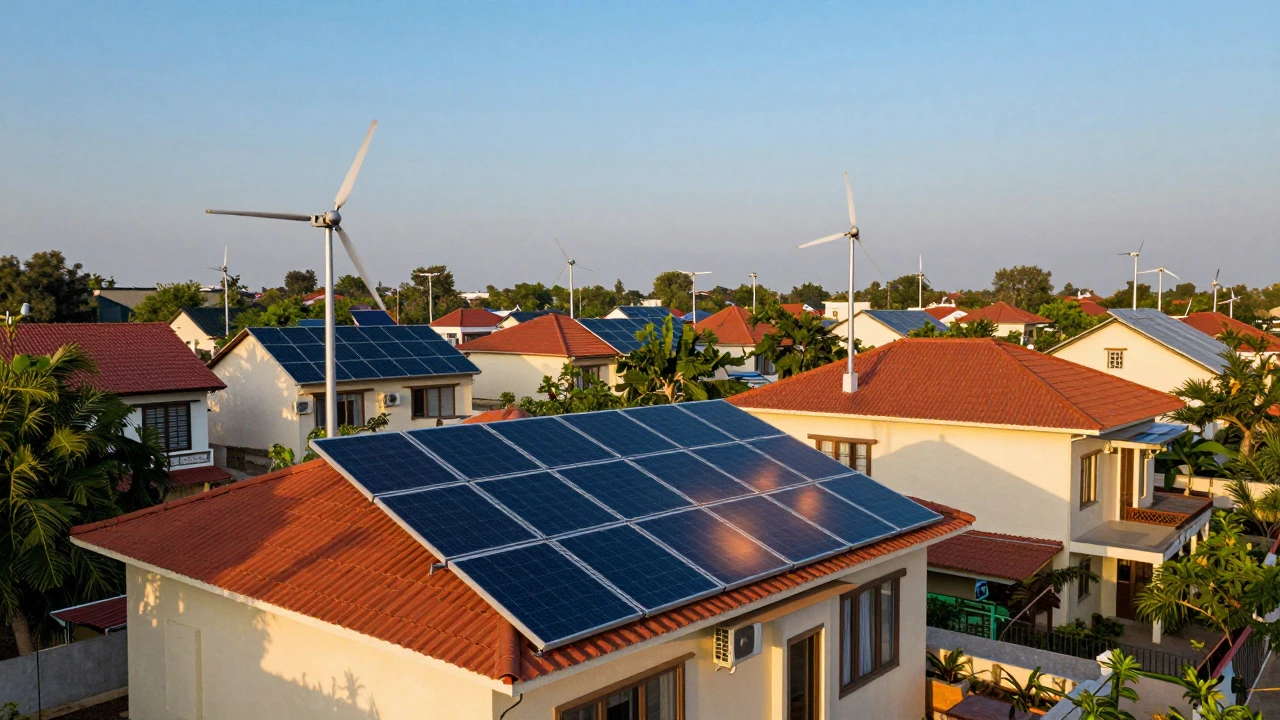
Solar energy is probably the most recognizable form of renewable power. It works by capturing sunlight and converting it into electricity using photovoltaic (PV) cells, which are semiconductor devices that generate electric current when exposed to light. When photons from the sun hit these cells, they knock electrons loose, creating an electrical flow. You see this technology everywhere, from small calculators to massive solar farms in deserts.
There are two main ways we use solar power. First, there's photovoltaics, which generates electricity directly. Second, there's concentrated solar power (CSP), which uses mirrors to focus sunlight onto a receiver, heating a fluid to create steam that drives a turbine. CSP is great for large-scale utility projects because it can store heat to produce power even after sunset. For most households, however, rooftop PV panels are the go-to solution. They require relatively low maintenance and have become drastically cheaper over the last decade, making them accessible to millions of people worldwide.
2. Wind Energy: Power from the Breeze
Wind energy converts the kinetic energy of moving air into electricity. This process relies on wind turbines, which are machines that convert wind speed into rotational mechanical energy, then into electricity via a generator. As the wind blows, it pushes against the turbine blades, causing them to spin. This rotation turns a shaft connected to a generator, producing power. Modern turbines are engineering marvels, with blades so long they can span the length of a football field.
Wind farms can be located on land (onshore) or out at sea (offshore). Offshore wind is particularly promising because winds over the ocean are stronger and more consistent than those on land. While the installation costs for offshore projects are higher due to the need for underwater foundations and specialized vessels, the energy yield is often greater. Onshore wind remains the most common and cost-effective option for many regions, especially in rural areas with plenty of open space. The key challenge with wind is intermittency-when the wind doesn't blow, the turbines stop spinning-which is why battery storage systems are becoming essential partners to this technology.
3. Hydropower: The Force of Water
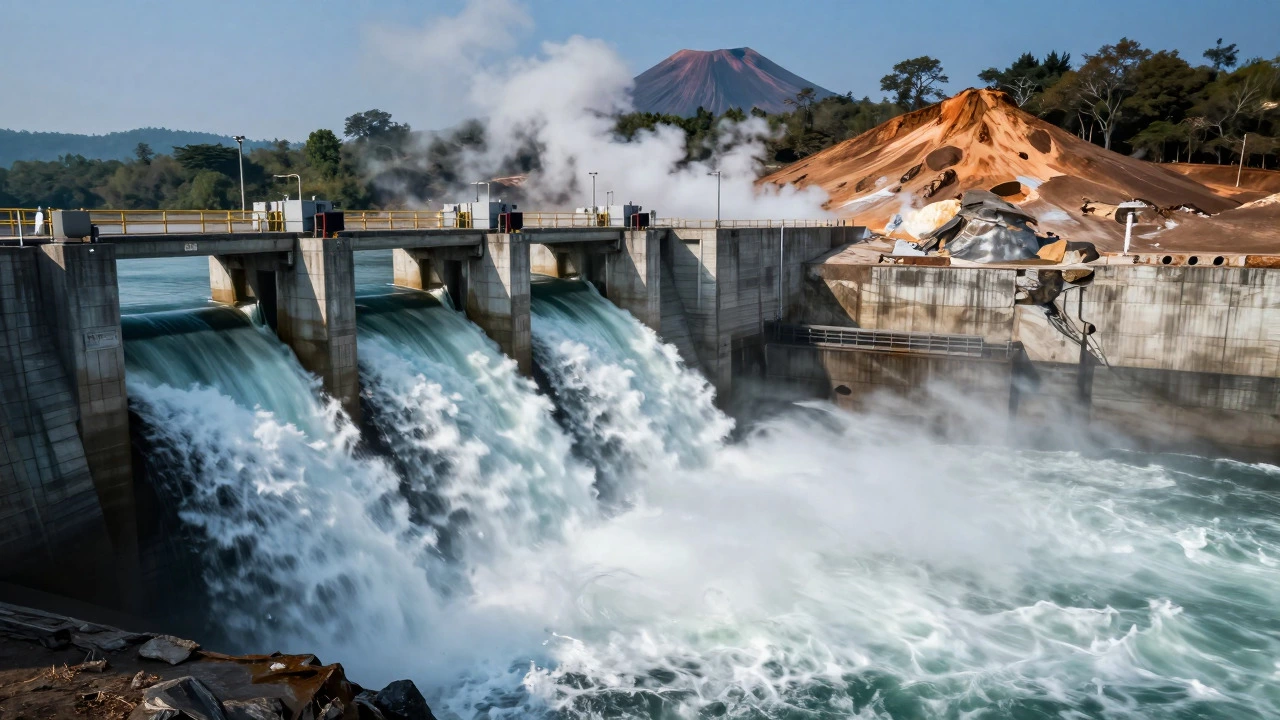
Hydropower, or hydroelectricity, is the oldest and largest source of renewable electricity globally. It works by using the gravitational force of falling or flowing water to turn turbines. Most hydropower comes from dams built across rivers. These dams create reservoirs that hold back water. When electricity is needed, gates open, releasing water through penstocks (large pipes) that direct the flow onto turbine blades. The spinning turbines drive generators to produce electricity.
Beyond traditional dams, there are other forms of hydropower. Run-of-river systems channel a portion of a river through a canal to spin a turbine without needing a large reservoir, minimizing environmental impact. Pumped-storage hydropower acts like a giant battery: during times of low electricity demand, excess power is used to pump water uphill into a reservoir. When demand spikes, the water is released downhill to generate power quickly. This makes hydropower incredibly valuable for grid stability, as it can ramp up production almost instantly compared to coal or nuclear plants.
4. Geothermal Energy: Heat from Within
Geothermal energy taps into the Earth's internal heat. Deep beneath our feet, temperatures rise steadily. In some places, this heat brings water close to the surface, creating hot springs or geysers. We can drill wells into these underground reservoirs to bring steam or hot water to the surface. This steam spins turbines connected to generators, creating electricity. Unlike solar or wind, geothermal energy is baseload power, meaning it runs 24/7 regardless of weather conditions.
This source is highly location-specific. Countries like Iceland, New Zealand, and the Philippines sit on tectonic plate boundaries where the Earth's crust is thinner, making geothermal resources easily accessible. In the US, states like California and Nevada have significant geothermal potential. Beyond electricity, geothermal heat pumps can be used almost anywhere for heating and cooling buildings. These systems circulate fluid through shallow ground loops, taking advantage of the constant temperature just below the surface to regulate indoor climates efficiently.
5. Biomass Energy: Organic Matter as Fuel
Biomass energy comes from organic materials such as wood, agricultural crops, waste, and even manure. When these materials are burned, they release stored chemical energy as heat. This heat can be used directly for cooking or heating homes, or it can generate steam to drive turbines for electricity. The idea behind biomass is that it's carbon-neutral: the plants absorbed CO2 while growing, so burning them releases roughly the same amount back into the atmosphere, closing the loop.
Biomass takes several forms. Solid biomass includes firewood and pellets. Liquid biofuels, like ethanol and biodiesel, are made from corn, sugarcane, or soybeans and can power vehicles. Biogas is produced through anaerobic digestion, where bacteria break down organic waste in the absence of oxygen, creating methane-rich gas. This is particularly useful for managing landfill waste and sewage treatment plant effluent. However, critics argue that if not managed sustainably, biomass can lead to deforestation and compete with food crops for land, so careful sourcing is critical.
6. Tidal Energy: The Pull of the Moon
Tidal energy harnesses the movement of tides caused by the gravitational pull of the moon and the sun. Tides are highly predictable, unlike wind or solar, which depend on weather. There are three main technologies for capturing tidal power. Tidal barrages are dam-like structures built across estuaries. As tides rise and fall, water flows through turbines in the barrage, generating electricity. Tidal stream generators look like underwater wind turbines; they are placed in fast-flowing tidal currents and spin as the water moves past them.
A third method involves dynamic tidal power, which uses long walls extending from the coast into the sea to create artificial tidal ranges. Currently, tidal energy is still in its early stages of commercial development. The infrastructure costs are high, and the marine environment poses challenges for equipment durability. However, countries with strong tidal ranges, such as the United Kingdom, Canada, and South Korea, are investing heavily in pilot projects. The predictability of tides makes this a potentially reliable partner to intermittent sources like solar and wind.
7. Wave Energy: Riding the Ocean's Surface
While tidal energy focuses on horizontal water movement driven by gravity, wave energy captures the energy from surface waves generated by wind. Waves carry immense power, especially in coastal regions with frequent storms. Various devices have been developed to capture this energy. Point absorbers are floating buoys that move up and down with the waves, driving hydraulic pumps. Attenuators are long, segmented floats that bend as waves pass over them, creating motion that powers generators.
Oscillating water columns are another approach, where waves push air through a chamber, forcing it through a turbine. Wave energy is still largely experimental compared to solar or wind. The harsh ocean environment causes significant wear and tear on equipment, leading to high maintenance costs. Additionally, connecting offshore devices to the grid requires expensive underwater cables. Despite these hurdles, the energy density of waves is very high, offering a promising avenue for coastal communities seeking local, renewable power.
8. Ocean Thermal Energy Conversion (OTEC): Temperature Differences
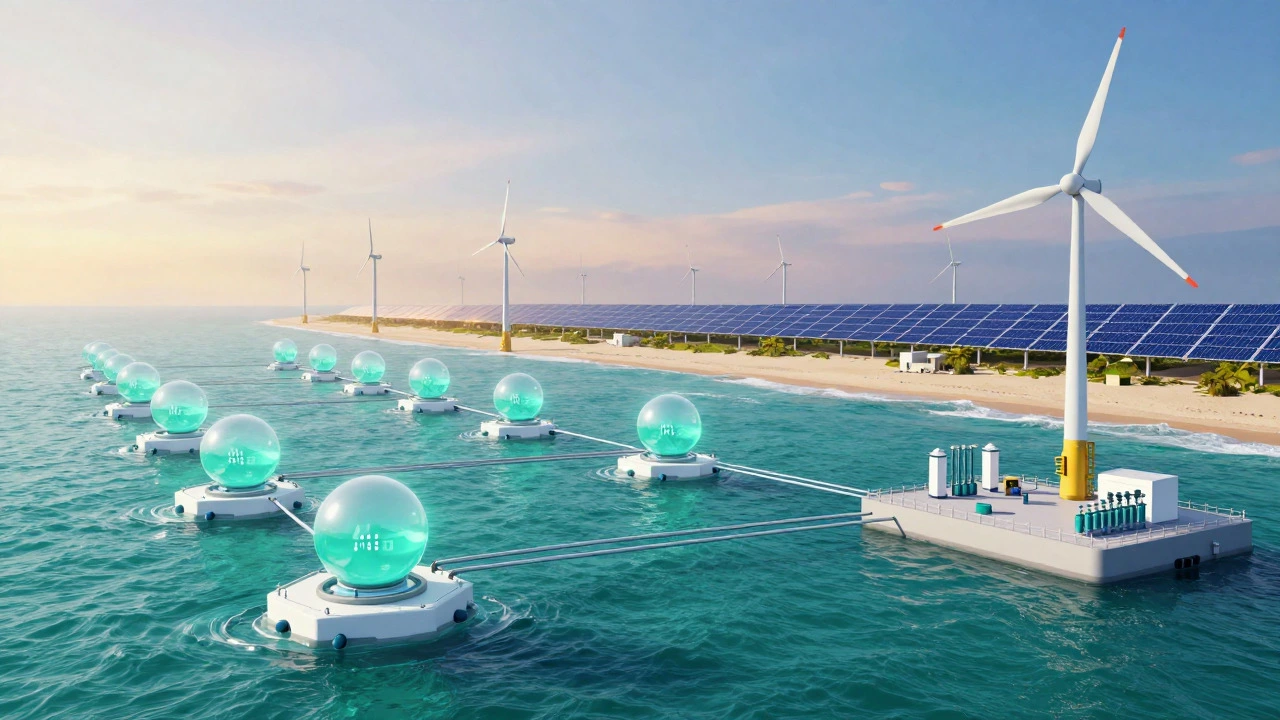
Ocean Thermal Energy Conversion, or OTEC, exploits the temperature difference between warm surface water and cold deep-water in tropical oceans. Even a small temperature difference can drive a heat engine. In a closed-cycle system, a working fluid with a low boiling point, like ammonia, is vaporized by warm surface water. The expanding vapor spins a turbine to generate electricity. The vapor is then condensed back into liquid using cold deep-water pumped up from hundreds of meters below the surface.
OTEC is unique because it provides continuous, baseload power, similar to geothermal. It also produces chilled water as a byproduct, which can be used for air conditioning or aquaculture. However, the efficiency of OTEC is low because the temperature differential is small, requiring large volumes of water and massive infrastructure. Currently, only a few demonstration plants exist, primarily in Hawaii, Japan, and France. The high capital costs and technical complexity have slowed widespread adoption, but research continues to improve efficiency and reduce expenses.
9. Hydrogen Energy: The Clean Carrier
Hydrogen itself is not a primary energy source like the sun or wind; it is an energy carrier. However, it is increasingly classified among renewables when produced using clean methods. Green hydrogen is created through electrolysis, splitting water molecules into hydrogen and oxygen using electricity from renewable sources like solar or wind. This hydrogen can then be stored and used later in fuel cells to generate electricity, emitting only water vapor as a byproduct.
Hydrogen solves one of the biggest problems with renewables: storage and transport. Batteries are great for short-term storage, but hydrogen can be stored in large quantities for months or transported via pipelines to industries that are hard to electrify, such as steel manufacturing and shipping. While gray hydrogen (made from natural gas) is currently dominant, the shift toward green hydrogen is accelerating. Governments worldwide are investing billions in hydrogen hubs to build the necessary infrastructure for this clean fuel economy.
| Energy Source | Primary Mechanism | Intermittency | Maturity Level |
|---|---|---|---|
| Solar | Photovoltaic cells / Concentrated heat | High (Day/Night) | Commercial |
| Wind | Kinetic energy of air | Medium-High | Commercial |
| Hydropower | Flowing/Falling water | Low (Dispatchable) | Mature |
| Geothermal | Earth's internal heat | Very Low (Baseload) | Commercial |
| Biomass | Combustion of organic matter | Low (Dispatchable) | Mature |
| Tidal | Gravitational tide movement | Predictable | Emerging |
| Wave | Surface wave motion | Variable | Experimental |
| OTEC | Temperature gradient in ocean | Very Low (Baseload) | Experimental |
| Green Hydrogen | Electrolysis via renewables | Depends on source | Scaling Up |
Choosing the Right Mix
No single renewable source can power the entire world alone. The key to a sustainable energy future lies in diversification. A robust energy mix combines intermittent sources like solar and wind with dispatchable options like hydropower, biomass, and geothermal. Emerging technologies like tidal and wave energy add resilience, while green hydrogen offers a pathway for decarbonizing heavy industry. By understanding these nine types, we can better appreciate the complexity and opportunity of the global transition to clean energy.
Which renewable energy source is the most efficient?
Efficiency depends on how you measure it. Hydropower has the highest capacity factor, often exceeding 90%, meaning it produces power consistently. Solar panels typically have an efficiency rate of 15-22% in converting sunlight to electricity, while modern wind turbines can reach 40-50% aerodynamic efficiency. Geothermal plants also offer high capacity factors, around 90%, making them extremely reliable for baseload power.
Is hydrogen considered a renewable energy source?
Hydrogen is an energy carrier, not a primary source. It is considered renewable only when produced using renewable electricity, known as "green hydrogen." If it is made from natural gas (gray hydrogen), it emits carbon dioxide. Therefore, its renewability status depends entirely on the production method.
What is the difference between tidal and wave energy?
Tidal energy is generated by the gravitational pull of the moon and sun, causing predictable vertical and horizontal water movements in bays and estuaries. Wave energy is generated by wind blowing across the ocean surface, creating chaotic and less predictable surface waves. Tidal energy is more predictable, while wave energy has higher energy density but is harder to harness consistently.
Can I install any of these energy sources at home?
Most homeowners can install solar panels and small-scale wind turbines. Geothermal heat pumps are also available for heating and cooling. Hydropower is possible if you live near a flowing stream with sufficient drop. Tidal, wave, OTEC, and large-scale biomass are generally not feasible for residential use due to size, cost, and location requirements.
Why is OTEC not widely used yet?
Ocean Thermal Energy Conversion (OTEC) faces challenges due to low thermodynamic efficiency, requiring massive infrastructure to capture small temperature differences. High capital costs, technical difficulties in maintaining underwater pipes, and limited geographic availability (tropical regions only) have slowed its commercial adoption despite its potential for baseload power.